Wine labels are one of the most information-dense objects in retail. In a small space, they pack the winery’s name, the grapes used, the region they came from, the year they were harvested, the alcohol content, and often a quality classification — all in typography that can range from clean and functional to archaic and ornate. The problem is not that the information isn’t there; it is that the conventions for presenting it differ enormously between Old World and New World wines, between French and Italian appellations, between a £9 supermarket bottle and a £150 classified Bordeaux. This guide walks through every significant element of a wine label in plain English, so that next time you are standing in a wine shop or scrolling a restaurant list, the label actually tells you something useful.
In this article
The Two Labelling Systems: New World vs Old World
Before going through individual label elements, it helps to understand the fundamental split in how wine is labelled globally. It explains why a Californian label and a French label look so different while containing essentially the same types of information.
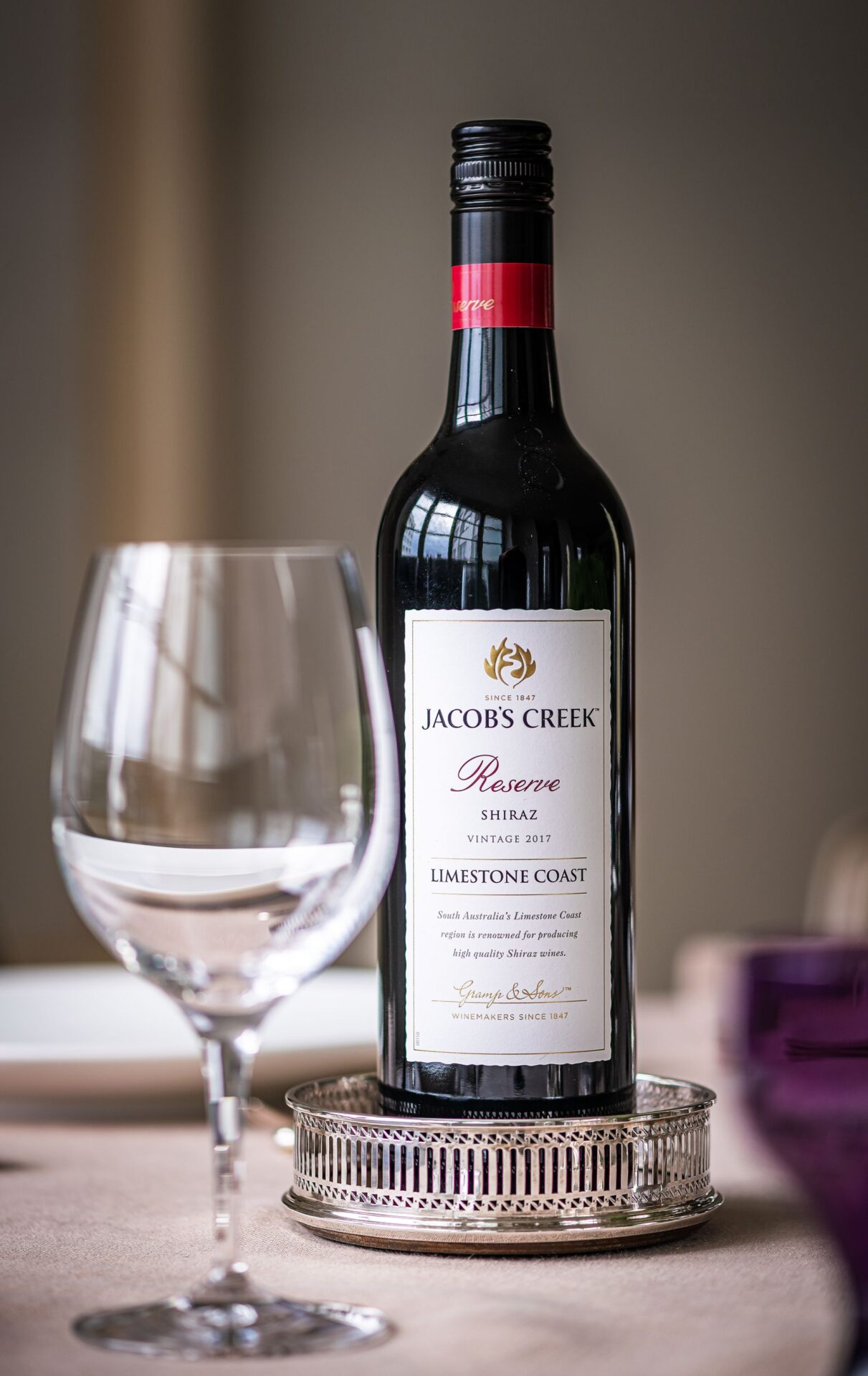
New World wines (from the USA, Australia, New Zealand, Chile, Argentina, South Africa) are typically labelled by grape variety. Pick up a bottle of Australian Shiraz or California Chardonnay and the grape will be prominently displayed on the front label. The region may be present but plays a secondary role to the variety name.
Old World wines (from France, Italy, Spain, Germany, Austria, and other traditional European regions) are typically labelled by region or appellation, with the grape variety either absent from the front label entirely or relegated to the back. A bottle of Chablis does not say “Chardonnay” on the front because, by French law, Chablis is Chardonnay — the appellation rules specify exactly which grapes are permitted. A bottle of Chianti Classico does not say “Sangiovese” for the same reason.
The practical implication for beginners: New World labels are generally easier to decode at a glance. Old World labels require knowing which grapes grow in which regions — a library of knowledge that takes time to build, but which becomes second nature with practice. Our wine varieties guide is a good starting reference for the most important regional-to-grape associations.
The Six Elements of a Wine Label
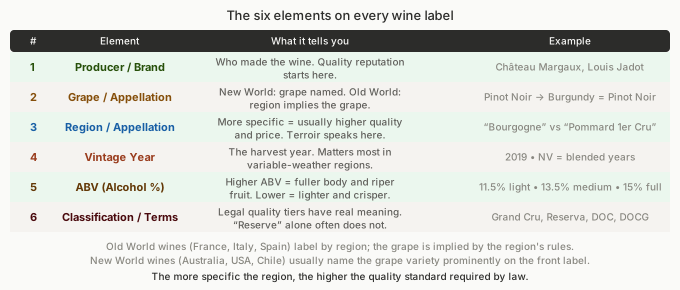
1. The Producer or Brand Name
Usually the most prominent text on the front label — the name of the winery, estate, or brand that made the wine. On a Bordeaux château wine, this is the château name (Château Margaux, Château Lynch-Bages). On a Burgundy, it may be the négociant or domaine (Louis Jadot, Domaine de la Romanée-Conti). On a New World bottle, it may be the winery brand name (Penfolds, Cloudy Bay, Ridge).
The producer name is often the single most useful piece of information for experienced buyers — a trusted producer in a given region is a more reliable quality signal than any classification or appellation. For beginners, it is less useful until you have tried enough wines to have formed impressions of specific producers.
2. Grape Variety or Appellation
On New World labels, the grape variety is usually named explicitly: Cabernet Sauvignon, Pinot Grigio, Syrah. On Old World labels, the regional appellation carries the same information implicitly — knowing that Chablis is Chardonnay, that Barolo is Nebbiolo, that Sancerre is Sauvignon Blanc is what allows you to decode the label.
A note on varietal percentages: most countries require a minimum percentage of a stated variety for it to appear on the label. In the EU and Australia and New Zealand, the minimum is 85%. In the US, it is also 85% (or 95% for AVA-designated wines). In Chile and South Africa, it is 75%. This means a wine labelled “Chardonnay” can legally contain up to 15% other grapes. Most producers stick to single-variety wines when they label varietally, but blended wines will sometimes list multiple grape names (Cabernet Sauvignon / Merlot) or use a proprietary blend name.
3. Region or Appellation
The region tells you where the grapes were grown, which tells you about the climate, soil, and winemaking traditions that shaped the wine. A broader regional designation (simply “Bourgogne” or “California”) indicates grapes sourced from a wide area; a narrower designation (“Pommard Premier Cru” or “Rutherford AVA”) indicates a more specific origin.
The specificity principle: as a general rule, the more specific the geographic designation, the higher the quality standard required by law and the higher the price. This is not universal — a specific but obscure appellation may be less prestigious than a broader but famous one — but as a starting guide it holds reasonably well. “Bourgogne” is the broadest Burgundy designation; “Chambole-Musigny Premier Cru” is a specific, prestigious vineyard tier within the region; “Muséé de Chambolle” (a Grand Cru vineyard) represents the highest and most specific tier.
Appellation abbreviations to know:
- AOC / AOP (France) — Appellation d’Origine Contrôlée / Protégée: the main French quality designation, guaranteeing geographic origin and compliance with regional production rules.
- DOC / DOCG (Italy) — Denominazione di Origine Controllata (and Garantita for the higher tier): Italy’s quality classification system. DOCG is the more strictly regulated category.
- DO / DOCa (Spain) — Denominación de Origen and the higher-tier DOCa (Calificada). Only Rioja and Priorat hold DOCa status.
- AVA (USA) — American Viticultural Area: a defined geographic area. Naming a specific AVA requires 85% of grapes from that area (95% for some AVAs).
- GI (Australia) — Geographic Indication: Australia’s system for naming wine regions.
4. Vintage Year
The four-digit year on the label is the vintage — the year the grapes were harvested. It is never the year the wine was bottled or released. A wine may sit in barrel for two years after harvest before bottling, and then age in bottle for several more years before reaching a shop shelf, but the year on the label remains the harvest year.
When to pay attention to it: in regions with variable weather (Bordeaux, Burgundy, Champagne, Barolo, German Riesling), the vintage year is meaningful — the difference between a great and a difficult year can be dramatic in both character and price. In consistent warm-climate regions (Barossa, Mendoza, most of California), vintage variation is much less pronounced. For everyday drinking wines, buying the most recent available vintage gives you the freshest fruit.
NV (Non-Vintage) on the label means the wine blends grapes from multiple harvest years. For a full explanation, see our guide to what vintage wine means.
5. ABV: Alcohol by Volume
The percentage figure (e.g., 13.5%) tells you what proportion of the wine is ethanol. ABV is useful as a style indicator: higher alcohol generally means a fuller-bodied, richer, riper wine; lower alcohol generally means a lighter, crisper, more delicate wine. As a rough guide:
- Under 12.5%: light-bodied, high acidity, often from cool climates. Gamay, Mosel Riesling, Vinho Verde.
- 12.5–13.5%: medium-bodied, versatile. Most everyday red and white wines.
- 13.5–14.5%: medium to full-bodied. Most quality reds and richer whites.
- Above 14.5%: full-bodied, warming, often from very warm climates. Barossa Shiraz, Napa Cabernet, Amarone.
A legal note: the stated ABV may legally differ from the actual content by up to ±1.5% in most countries. The label figure is a reasonable approximation, not a precise measurement. Our red wine ABV guide covers the full range by grape variety and region.
6. Classification and Quality Terms
This is the most variable element — and the one most prone to confusion, because some quality terms are legally defined and meaningful, while others are pure marketing.
Terms with Legal Meaning
- Grand Cru / Premier Cru (France, particularly Burgundy) — legally defined vineyard tiers. Grand Cru is the highest; Premier Cru is the second tier. These are not marketing terms; they have strict legal meaning tied to specific named vineyards.
- Reserva / Gran Reserva (Spain) — legally defined minimum ageing periods in barrel and bottle. Reserva Rioja must age at least 3 years total; Gran Reserva at least 5. These terms have real meaning in Spain and guarantee a minimum standard of maturation.
- Riserva (Italy) — similar to the Spanish system but varies by appellation. Barolo Riserva must age at least 5 years from harvest; Chianti Classico Riserva requires a minimum 24 months of ageing.
- Crianza (Spain) — the entry-level ageing category in most Spanish regions; requires a minimum period in barrel and bottle before release.
- Kabinett / Spätlese / Auslese (Germany) — German Prädikat quality levels based on the ripeness of the grapes at harvest. Kabinett is the driest/lightest; the scale rises through Spätlese, Auslese, Beerenauslese, Trockenbeerenauslese to Eiswein.
- Estate Bottled (USA) — legally defined: the winery must have grown, crushed, and bottled the wine at their estate. A meaningful quality and authenticity indicator.
Terms That Are Often Just Marketing
- “Reserve” (without a country-specific legal framework, particularly in the USA and many New World contexts) — no single federal definition in the US. Any producer can put “Reserve” on any bottle without legal backing. It may or may not indicate anything meaningful.
- “Private Selection,” “Winemaker’s Choice,” “Premium” — essentially decorative on most labels without a legally defined meaning in the producing country.
- Gold medal stickers — wine competition medals are proliferating to the point of near-meaninglessness. The same wine can receive a gold medal at one competition and nothing at another. Treat these as a minor data point, not a quality guarantee.
The Back Label: Often More Useful Than the Front
Many Old World producers that omit the grape variety from the front label include it on the back — specifically to help international consumers who are not familiar with regional conventions. The back label often also includes food pairing suggestions, serving temperature, brief tasting notes from the producer, vine age, ageing details, and the importer’s name (a useful quality signal — respected importers tend to have carefully curated portfolios).
For sparkling wines, particularly Champagne, look for the disgorgement date (often printed as “DG” followed by a date on the back label). This tells you when the wine’s ageing on lees ended and the clock started ticking — a recently disgorged NV will taste fresher than one disgorged two years earlier.
A Practical Shortcut for the Wine Shop
When choosing a bottle under time pressure, a quick four-step scan covers most of what you need:
- Grape or region — does this match a style you enjoy? (Use the front label on New World wines; look at the region and check the back label on Old World wines for the grape.)
- ABV — does the alcohol level match the body and occasion you want?
- Vintage — for everyday wines, is it recent? For a serious wine, is the year reputable?
- Producer — do you recognise the name, or does the importer’s name on the back suggest a quality-focused portfolio?
For specific help understanding what each major grape variety tastes like once you have found it on a label, see our comprehensive guide to wine grape varieties. And for the vocabulary you will encounter on tasting notes and back labels, our wine tasting terms guide explains every word in plain language.
Frequently Asked Questions
How do you read a wine label for beginners?
Start with six elements: the producer name, the grape variety (on New World wines) or appellation (on Old World wines), the region, the vintage year, the ABV, and any classification terms. The most immediately useful for choosing a wine are the grape variety or region (which tells you the style), the ABV (which tells you the body), and the vintage (which tells you the age and how fresh the wine is). New World wines like those from Australia, the USA, and Chile name the grape clearly on the front; Old World wines from France, Italy, and Spain label by region, with the grape implied by the regional rules.
Why don’t French wines say the grape on the label?
In France and other Old World wine countries, the wine is labelled by its region of origin (appellation) rather than the grape variety, because French wine law specifies exactly which grapes are permitted in each appellation. A bottle of Chablis does not say Chardonnay because, by law, Chablis can only be made from Chardonnay — the information is implied by the appellation name. A bottle of Burgundy red does not say Pinot Noir because red Burgundy can only be Pinot Noir. Learning which grapes correspond to which regional names is the key skill for reading Old World labels. Many producers now add the grape variety on the back label to help international buyers.
What does Reserve mean on a wine label?
It depends entirely on where the wine is from. In Spain, Reserva and Gran Reserva are legally defined minimum ageing classifications — a Rioja Reserva must be aged a minimum of three years total (one in barrel, two in bottle); a Gran Reserva a minimum of five years. In Italy, Riserva is similarly regulated by each DOC/DOCG appellation. In the United States and most New World countries, however, “Reserve” has no single legal definition and can be placed on any bottle by any producer without meeting any specific standard. It may indicate something genuinely special from that producer, or it may be purely decorative marketing language.
What is the ABV on a wine label?
What is the difference between DOC and DOCG on Italian wine labels?
DOC (Denominazione di Origine Controllata) and DOCG (Denominazione di Origine Controllata e Garantita) are Italy’s two main quality classification tiers. DOCG is the higher designation and is subject to stricter production rules, lower maximum yields, and mandatory tasting panel approval before release — the “Garantita” (guaranteed) element means an official tasting committee must approve the wine before it can be sold under that designation. DOC wines follow regulated production rules for their appellation but without the additional tasting panel requirement. Italy’s most prestigious wines — Barolo, Brunello di Montalcino, Chianti Classico, Amarone — are all DOCG.
What does NV mean on a wine label?
NV stands for Non-Vintage and means the wine was blended from grapes harvested in two or more different years, rather than from a single harvest. It is most commonly seen on Champagne labels, where houses deliberately blend reserve wines from previous years into the current year’s base wine to produce a consistent house style. NV does not indicate lower quality — non-vintage Champagne from a great house is a carefully crafted, high-quality wine. Other wines labelled NV include many Sherries, Ports, and some Crémant and sparkling wines produced outside Champagne. A wine without a year on the label is a non-vintage wine.