
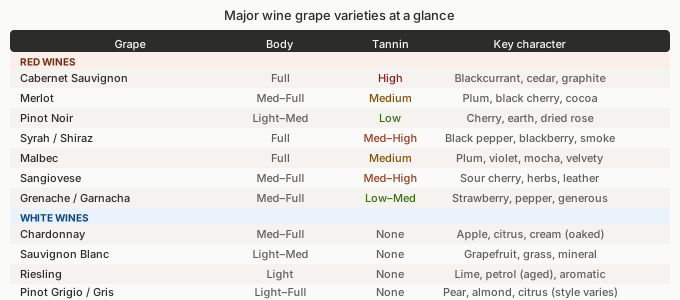
There are more than 10,000 grape varieties in the world, but the overwhelming majority of wine you will encounter in shops, restaurants, and on wine lists comes from a remarkably small number of them. Knowing the ten or twelve key varieties — their characteristic flavours, their body, their tannin levels, and where they grow — gives you a mental framework for navigating any wine list with confidence. This guide covers the most important red and white wine grape varieties, explains what each tastes like, and links each to the deeper guides on this site where they are covered in more detail.
In this article
How Grape Variety Shapes the Wine
The grape variety is the starting point for everything about a wine’s character. It determines the fundamental flavour profile (what fruit, floral, or herbal notes the wine can develop), the structural potential (how much tannin, acidity, and sugar the grape naturally contains), and to a significant degree the wine’s colour and body.
But variety is only one of three major forces that shape a wine. Terroir — the place where the grapes grow, including its soil, climate, and topography — transforms the same variety dramatically between regions. Chardonnay from Chablis and Chardonnay from Napa Valley taste almost nothing alike, despite being genetically identical grapes. The third force is winemaking: the decisions made in the cellar (oak or no oak, how long to ferment, how long to age) layer further character on top of what the variety and terroir have established.
The practical implication: knowing the grape variety tells you the general direction of a wine, but not its exact expression. A Pinot Noir will always be lighter and lower in tannin than a Cabernet Sauvignon. But a Burgundy Pinot Noir and a Californian Pinot Noir are still very different wines. Keep both forces — variety and origin — in mind when reading a label.
The Major Red Wine Varieties
Cabernet Sauvignon
The world’s most planted red grape. Cabernet Sauvignon produces full-bodied, firmly tannic wines built for aging. Its hallmark flavours are blackcurrant (cassis), black cherry, cedar, graphite, and sometimes green bell pepper in cooler climates (from a compound called methoxypyrazine). High tannins and high acidity mean it demands food and/or age to show at its best. Its spiritual home is Bordeaux (particularly the Medoc’s Left Bank), but it thrives globally — Napa Valley, Maipo Valley in Chile, Coonawarra in Australia, Stellenbosch in South Africa.
Cabernet Sauvignon is the blending partner of Merlot in Bordeaux, where Merlot softens Cab’s tannins and adds richness. Alone, a young Cabernet can be austere; with age, it develops extraordinary complexity. It is not the best starting point for beginners but is essential for any red wine drinker to explore eventually.
Merlot
Soft, plummy, and more immediately approachable than Cabernet. Merlot is medium to full in body with softer, rounder tannins. Its flavour centres on plum, black cherry, and cocoa, with secondary notes of vanilla, mocha, and sometimes bay leaf from aging. It is Bordeaux’s most planted grape overall and dominates the Right Bank (Saint-Émilion, Pomerol) where it produces some of the most complex and expensive wines on earth (Pétrus). Globally, it is grown almost everywhere: Chile, California, Washington State, Italy, New Zealand.
Merlot suffered a reputation hit after the 2004 film Sideways but has never lost favour outside the US. It is an excellent beginner red and a genuinely versatile food wine. For a full flavour guide, see our Merlot taste profile.
Pinot Noir
The most terroir-sensitive red grape in the world. Pinot Noir is light to medium in body, low in tannin, and high in acidity. Its flavour profile is built around red fruit — cherry, raspberry, strawberry — with earthy, forest-floor, and dried rose notes that develop with age. The grape’s thin skins make it difficult to grow but produce wine of extraordinary delicacy and complexity when the conditions are right.
Burgundy is its spiritual home, where it produces the world’s most complex and expensive red wines. Oregon (Willamette Valley), New Zealand (Central Otago, Marlborough), and Germany (Spätburgunder) are the leading New World addresses. It is the outstanding gateway red for beginners and one of the most versatile reds for food pairing.
Syrah / Shiraz
Two names, one grape, different personalities. Syrah (the French name, used in the Rhône and most Old World contexts) produces wines of great elegance and savouriness: black pepper, smoked meat, olive, blackberry, and violet, with firm but fine tannins. Northern Rhône Syrah (Hermitage, Crozes-Hermitage, Saint-Joseph) is among the world’s most thrilling red wines. Shiraz (the name used in Australia and increasingly in the New World) tends toward fuller-bodied, riper, more fruit-forward expressions: blackberry jam, chocolate, eucalyptus. Barossa Valley Shiraz is the benchmark for the warm-climate style.
The grape is almost always full-bodied, with medium-high to high tannins. It ages exceptionally well in both styles and is a natural companion for grilled red meat.
Malbec
Argentina’s signature grape and one of the best-value reds in the world. Malbec produces deep, inky wines with soft, velvety tannins and a flavour profile built around plum, blackberry, blueberry, violet, and mocha. Its most distinguishing visual feature is its vivid magenta-pink rim. Originally from Cahors in southwest France (where it is called Côt and produces a far darker, more tannic wine), it found its greatest expression in the high-altitude vineyards of Mendoza, Argentina. The grape is an excellent entry point for those transitioning from Merlot to fuller-bodied reds. See our full Malbec vs Cabernet comparison for detail on how it differs from the other major full-bodied reds.
Sangiovese
Italy’s most important grape and the backbone of Chianti. Sangiovese is medium to full in body with high acidity and medium-high tannins. Its characteristic flavour is sour cherry, with herbal notes (dried tomato leaf, bay, oregano), leather, and earthy undertones. It is the foundation of Chianti, Chianti Classico, Brunello di Montalcino, Vino Nobile di Montepulciano, and Morellino di Scansano — all essentially the same grape expressing itself through different terroirs and winemaking approaches in Tuscany.
Its high acidity makes it an outstanding food wine, particularly with Italian cuisine. It is not the softest introduction for beginners (the acidity and tannins can feel demanding) but becomes deeply rewarding once the palate adjusts. Our Sangiovese taste guide covers it in depth.
Grenache / Garnacha
Warm, generous, and low in tannin. Grenache thrives in hot, dry climates and produces wines with high alcohol, ripe red fruit (strawberry, raspberry, kirsch), white pepper, dried herb, and sometimes a slightly sweet impression despite being technically dry. Tannins are low to medium, making it approachable and food-friendly. It is the dominant grape in the southern Rhône (Châteauneuf-du-Pape, Gigondas, Côtes du Rhône), Priorat, and many Spanish Garnacha-labelled wines. Often blended with Syrah and Mourvèdre (the classic GSM blend).
The Major White Wine Varieties
Chardonnay
The world’s most widely planted white grape and the most stylistically variable. Chardonnay is naturally neutral — it does not have a strongly assertive flavour of its own — which makes it extraordinarily responsive to both terroir and winemaking. Unoaked, it produces lean, mineral, citrus-forward wines (Chablis is the benchmark). Oak-aged, it develops cream, butter, vanilla, and hazelnut character alongside the fruit. Warmer climates produce tropical fruit, stone fruit, and riper, fuller wines. It is white Burgundy’s grape and the basis of most Champagne (alongside Pinot Noir).
The oaked vs. unoaked question is the most important decision point when choosing a Chardonnay. Our guide to Chardonnay food pairing explains the practical implications for both styles.
Sauvignon Blanc
Crisp, aromatic, and unmistakably herbal. Sauvignon Blanc is a high-acid, light to medium-bodied white with a distinctive character that varies from mineral and flinty (Sancerre, Pouilly-Fumé in the Loire Valley) to explosively tropical (New Zealand Marlborough, where it became globally famous). The grape’s aromatic signature includes green herbs (cut grass, nettles), citrus (grapefruit, lime), and gooseberry. Marlborough adds passionfruit and tropical fruit. Sancerre adds white stone and mineral notes. Almost always unoaked. Almost always bone dry.
One of the most immediately recognisable white wine varieties, and an excellent entry point for those new to white wine. Pairs naturally with seafood, fresh goat’s cheese, and herb-driven dishes.
Riesling
The world’s most food-versatile white grape. Riesling is characterised by high acidity, light body, and intense aromatics — lime, white peach, blossom, and in aged examples, the distinctive petrol or kerosene note that is its most polarising but also most complex feature. The sweetness level varies enormously, from bone-dry German Trocken to lusciously sweet Trockenbeerenauslese, and the label terminology is notoriously confusing. The key regions are Germany (Mosel, Rhine) and Alsace (France), with excellent examples from Australia’s Clare and Eden Valleys.
Off-dry Riesling is unique among white wines for its ability to pair with spicy Asian food. For the full guide to sweetness levels and pairings, see our Riesling food pairing guide.
Pinot Grigio / Pinot Gris
One grape, two very different styles. Italian Pinot Grigio (the dominant commercial style worldwide) is light, neutral, and crisp — a reliable, easy-drinking white with subtle pear and almond notes and clean acidity. Alsatian Pinot Gris is a completely different proposition: fuller-bodied, more aromatic, with stone fruit, ginger, and sometimes a touch of honey. The Alsatian style has the weight to handle richer food; the Italian style is best with delicate preparations.
German Grauburgunder (a third name for the same grape) tends toward the fuller, more textured end. The name on the label tells you the style to expect: Pinot Grigio = lighter and Italian; Pinot Gris = fuller and more aromatic; Grauburgunder = structured and Germanic.
Other Important White Varieties
- Chenin Blanc — Loire Valley’s great white grape, producing wines from bone-dry Savennieres to lusciously sweet Quarts de Chaume. High natural acidity gives all styles exceptional longevity. South Africa is the second major Chenin Blanc region. Covered in depth in our Chenin Blanc guide.
- Viognier — aromatic, full-bodied, with stone fruit (apricot, peach) and floral (violet, jasmine) notes. Northern Rhône (Condrieu) is its prestige address; the Languedoc and Australia produce excellent value examples. Low acidity; best drunk young.
- Albariño — Spain’s finest white grape, from Rias Baixas in Galicia. Crisp, citrus-driven, with a natural saline quality and high acidity. Outstanding with seafood.
- Gruner Veltliner — Austria’s signature white grape. Dry, peppery (from the compound rotundone, shared with Syrah), with citrus and herbal notes. One of white wine’s great food partners.
- Vermentino — Sardinia and Liguria’s aromatic white, with herbal, citrus, and slightly bitter almond notes. Excellent with seafood and Mediterranean food.
Old World vs New World: Why the Same Grape Tastes Different
Many beginners are surprised to discover that a Chardonnay from Burgundy and a Chardonnay from California taste almost nothing alike. Or that a Shiraz from Australia and a Syrah from the Rhône seem like different grapes. The explanation is the interplay between variety, climate, and winemaking tradition.
Old World wines (France, Italy, Spain, Germany, Austria) are shaped by cooler climates, centuries of tradition, and a philosophy that emphasises terroir expression over fruit intensity. They tend to be more restrained, more acidic, drier, and more earthy. Labels often use the appellation name (Chablis, Chianti, Rioja) rather than the grape variety.
New World wines (California, Australia, New Zealand, Chile, Argentina, South Africa) are shaped by warmer climates, younger winemaking traditions, and a philosophy that often emphasises ripe fruit and approachability. They tend to be more generous, fruit-forward, and often higher in alcohol. Labels usually use the grape variety name.
Neither approach is inherently superior. The practical implication is that when you are choosing between two bottles of the same grape variety, origin matters enormously. A “Sauvignon Blanc” from New Zealand and one from Sancerre are legally the same variety but practically very different experiences.
Where to Start: A Suggested Path Through the Major Varieties
If you are new to wine and want to build familiarity with the major varieties systematically, this sequence works well for most palates:
- Start with whites: Pinot Grigio (neutral, easy), then Sauvignon Blanc (aromatic, distinctive), then unoaked Chardonnay (more body), then oaked Chardonnay (richer), then Riesling (high acid, variable sweetness).
- Then light reds: Gamay / Beaujolais (almost no tannin), then Pinot Noir (light tannin, high complexity), then Grenache (medium body, ripe fruit), then Merlot (fuller, softer tannins).
- Then fuller reds: Malbec (dark, velvety), then Sangiovese (acidic, savoury), then Syrah (peppery, structured), then Cabernet Sauvignon (the most demanding and rewarding).
For practical guidance on the best approachable starting points, see our guide to the best red wines for beginners and our low tannin wines guide for those who find bold reds challenging.
Frequently Asked Questions
What is a wine varietal?
A wine varietal is a wine made primarily from a single grape variety, and labelled with that variety’s name. Cabernet Sauvignon, Chardonnay, Pinot Noir, and Riesling are all varietals. In most New World wine-producing countries (Australia, USA, Chile, New Zealand, South Africa), wines are labelled by the grape variety. In most Old World countries (France, Italy, Spain), wines are more commonly labelled by the region of origin (Chablis, Chianti, Rioja) — though the grape variety behind each regional name is consistent and learnable. Varietals are distinct from blended wines, which combine two or more grape varieties (like classic red Bordeaux, which blends Cabernet Sauvignon, Merlot, and other grapes).
What are the most popular wine grape varieties?
The most widely planted red wine grapes globally are Cabernet Sauvignon (the most planted of all), Merlot, Tempranillo, Grenache/Garnacha, Syrah/Shiraz, Pinot Noir, and Sangiovese. The most widely planted white wine grapes are Chardonnay, Sauvignon Blanc, Riesling, Pinot Grigio/Pinot Gris, and Chenin Blanc. These twelve grapes account for the overwhelming majority of what you will encounter in wine shops and restaurants, so understanding their basic character provides a reliable framework for most wine choices you will ever make.
What is the difference between a grape variety and an appellation?
A grape variety (or varietal) is the type of grape used to make the wine: Chardonnay, Cabernet Sauvignon, Pinot Noir. An appellation is a legally defined geographic region with rules about which grapes can be grown and how the wine must be made. In France, Italy, and Spain, wine labels often show the appellation (Chablis, Chianti, Rioja) rather than the variety. Once you know which grape or grapes are grown in each major appellation, you can read both types of label fluently: Chablis = Chardonnay from northern Burgundy; Chianti = Sangiovese from Tuscany; Rioja = Tempranillo from northern Spain.
Which wine grape is easiest to drink?
For red wine, Gamay (Beaujolais) and Pinot Noir are the easiest to drink because they have the lowest tannins and most immediately appealing fruit character. Merlot is the most popular choice for its plush, soft texture. For white wine, Pinot Grigio (Italian style) is the most neutral and accessible; Sauvignon Blanc is more aromatic but still very approachable. The “easiest” grape to drink is always the one with the lowest tannin (for reds) or the most balanced acidity (for whites) — which is why Pinot Noir and Pinot Grigio appear so often at the top of beginner recommendations.
How many wine grape varieties are there?
There are estimated to be over 10,000 wine grape varieties worldwide, though most are obscure local varieties grown in small quantities. Only around 150 grape varieties are planted commercially on a significant scale, and only about 20 account for the majority of global wine production. Understanding those 20 — especially the 10–12 covered in this guide — is sufficient to navigate almost any wine list or wine shop with confidence. Variety exploration beyond those core grapes is one of wine’s great pleasures, but the foundation comes from knowing the majors well.
What is the difference between Old World and New World wine?
Old World wines come from traditional European wine-producing countries (France, Italy, Spain, Germany, Austria, Portugal) and tend to be more restrained, earthier, higher in acidity, and labelled by region rather than grape variety. New World wines come from more recently developed wine regions (California, Australia, New Zealand, Chile, Argentina, South Africa) and tend to be more fruit-forward, fuller-bodied, higher in alcohol, and labelled by grape variety. The same grape variety can taste very different between Old and New World origins: Burgundy Pinot Noir is earthy and restrained; California Pinot Noir is riper and more generous. Neither style is inherently better — they suit different occasions and different palates.