
Malbec is a grape with one of the strangest career paths in wine. It spent centuries as a minor supporting player in Bordeaux, tolerated for the colour and flesh it added to blends but never trusted to carry a wine on its own. Then, in the space of about thirty years, it became the single most important grape in Argentina and the reason millions of people who could not name another French wine grape now order Malbec by name. This guide covers what Malbec grapes actually taste like, why the same grape produces such different wines in Argentina and France, where it grows best, and what to put on the plate next to it.
In this article
Malbec Wine, at a Glance
- Colour: deep, opaque purple with a bright magenta-pink rim — one of the most recognisable “tells” in blind tasting.
- Body: medium to full.
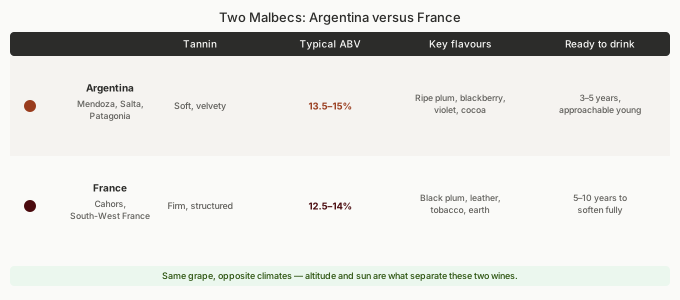
- Tannin: soft and velvety in Argentina; firmer and more structured in France.
- Acidity: medium in Argentina; medium-plus to high in France.
- Typical ABV: 13–15% in warm, high-altitude Argentina; 12.5–14% in cooler France.
- Main flavours: black cherry, plum, blackberry, violet, and — with oak — cocoa and tobacco.
- Where it’s grown: mainly Argentina (around three-quarters of the world’s Malbec vineyards), with a smaller but historic presence in Cahors, south-west France.
From Bordeaux Reject to Argentina’s National Grape
Malbec’s home ground is Cahors, in south-west France, where it has been grown since at least the Middle Ages under its older name, Côt (also Auxerrois locally, not to be confused with the unrelated white grape of the same name). For centuries it was one of six varieties permitted in a Bordeaux red blend alongside Cabernet Sauvignon, Merlot, Cabernet Franc, and Petit Verdot — useful for adding colour and body, but rarely given star billing. Its thin, disease-prone skin made it unreliable in Bordeaux’s damp, changeable climate, and growers there increasingly turned to hardier varieties instead.
A catastrophic frost in 1956 destroyed a huge share of France’s remaining Malbec vines, and the grape never fully recovered its old French footprint. But by then Malbec had already found a second home. French agronomist Michel Pouget brought cuttings to Mendoza, Argentina, in the 1850s, planting them alongside Cabernet Sauvignon and Merlot in the foothills of the Andes. For over a century Malbec was simply one more grape in Mendoza’s vineyards. Only from the 1990s onward, as a wave of investment modernised Argentine winemaking, did producers realise what the altitude and sunshine of Mendoza could do to this grape — and Malbec quietly became Argentina’s calling card. Today Argentina holds roughly three-quarters of all Malbec plantings worldwide, and Malbec alone accounts for a large share of the country’s wine exports by value. Wine Folly’s comprehensive guide to Malbec covers this history and the grape’s parentage in more depth.
What Malbec Grapes Actually Taste Like
Malbec’s calling card is its colour: a deep, almost opaque purple with a distinctive bright magenta rim, dense enough that it is one of the easier grapes to identify in a blind tasting. In the glass, expect dark fruit first — black cherry, blackberry, and plum — layered with violet florals and, in oak-aged examples, cocoa powder, vanilla, and a savoury edge of tobacco or smoke. Tannin is where styles diverge most: Argentine Malbec is typically soft, rounded, and approachable even young, while French Malbec from Cahors carries a firmer, more gripping structure that needs time to soften.
Acidity follows a similar pattern. Argentine Malbec, especially from warm, high-altitude Mendoza, tends toward medium acidity balanced by ripe fruit; Cooler regions such as Patagonia and the higher reaches of the Uco Valley push acidity and red-fruit character higher, alongside more floral lift. Cahors Malbec, grown in a cooler, damper climate, is consistently the most acidic and the most tannic of the three, with flavours that lean savoury and earthy — black plum, leather, dried herbs — rather than sweet. For more on how to put language to sensations like these in your own glass, see our guide to describing wine taste.
Two Malbecs: Argentina Versus France
Altitude is the single biggest reason Argentine and French Malbec taste so different. Mendoza’s vineyards sit anywhere from 600 to over 1,500 metres above sea level, with intense daytime sun and a sharp overnight temperature drop. That combination ripens the grape’s tannins and sugars fully while still preserving enough acidity to keep the wine balanced — the result is a lush, fruit-forward style that drinks well young. Cahors, by contrast, is a cooler, lower-altitude, more marginal climate for ripening a thick-skinned grape like Malbec, which is exactly why its wines come out firmer, leaner, and slower to soften.
Where Malbec Grows
Mendoza, Argentina produces the large majority of the country’s Malbec, with meaningful style differences even within the province. Luán de Cuyo, one of the original Malbec zones, tends toward a generous, classic style; the Uco Valley, planted at higher and cooler elevations, produces more refined, higher-acid wines with pronounced floral notes. Further north, Salta grows Malbec at some of the highest vineyard altitudes in the world — in places over 3,000 metres — yielding intensely concentrated, mineral-driven wines. Patagonia, in the south, offers a cooler climate that produces brighter acidity and more red-fruit character than Mendoza’s ripe, dark-fruited norm.
Cahors, France remains Malbec’s historic home and the only French region built entirely around the grape; local rules require Malbec (still often called Côt here) to make up at least 70% of any red wine labelled Cahors. Bordeaux still permits a small amount of Malbec in its blends, though it is now a minor player there compared with Cabernet Sauvignon and Merlot. Beyond these two heartlands, Malbec also has smaller plantings in Chile, California, South Africa, and Australia, generally producing riper, more fruit-forward wines closer in style to Argentina’s than to Cahors. Decanter’s Malbec grape variety profile is a useful reference for region-by-region detail beyond what this guide covers.
Food Pairing
Malbec’s combination of soft tannin, dark fruit, and moderate-to-full body makes it one of the most food-friendly red wines available, and its reputation as the classic partner for grilled red meat is well earned: the tannin binds with the protein and fat in a steak or lamb chop, and each element makes the other taste better. Argentine asado culture — slow, wood-fired grilling of beef and other meats — grew up alongside Malbec for exactly this reason, and the pairing remains one of the most reliable in this guide’s entire set of wine pairing principles.
Beyond steak, Malbec pairs well with hearty stews, roast lamb, duck, and dark meat poultry, and its softer, fruitier profile makes it more forgiving with mildly spiced dishes than a harder-edged Cabernet Sauvignon would be. One genuinely surprising match is blue cheese: a little salt and funk brings out Malbec’s fruit in a way that plainer cheeses do not. Cahors Malbec, being firmer and more savoury, leans toward richer, more traditional French fare — duck confit, roast pork, or a well-aged hard cheese.
Malbec vs Other Big Reds
Malbec is often reached for as a softer, more immediately drinkable alternative to Cabernet Sauvignon: both are full-bodied and dark-fruited, but Malbec’s tannins are rounder and its fruit riper, while Cabernet leans more structured and built for ageing. We cover this specific comparison, tannin structure, and food pairing differences in detail in our Malbec vs Cabernet Sauvignon guide. Against a lighter, high-acid red like Pinot Noir, Malbec sits at the opposite end of the body spectrum entirely — for a full sense of where different reds fall on that scale, see our guide to full-bodied red wine.
How to Serve and Choose a Bottle
Serve Malbec a little cooler than room temperature, around 15–18°C (60–65°F) — too warm and the alcohol starts to dominate the fruit. A young, fruit-forward Argentine Malbec does not strictly need decanting, but 20 to 30 minutes in a decanter or a large-bowled glass helps open up its aromatics. Firmer, more structured Cahors Malbec benefits more from this step, sometimes needing a full hour to soften and reveal its fruit underneath the tannin. Older bottles of either style should be decanted carefully, off any sediment that has formed with age.
Price is a reasonably reliable style guide with Malbec. Entry-level bottles, usually $12–$20, focus on soft, juicy, primary fruit with little or no oak, and are built for drinking within a year or two of release. Mid-range bottles, roughly $20–$50, typically see more careful vineyard selection and oak ageing, adding the cocoa, vanilla, and smoke notes that define a more serious style. Above that, small-production Malbec from top sites in the Uco Valley or Salta, or a serious Cahors from an ambitious producer, can rival far more expensive wines from Bordeaux or Napa, which is a large part of Malbec’s appeal: it rarely asks a high price for real quality.
Most everyday Argentine Malbec is best enjoyed within three to five years of release, while it is still vibrant and fruity; reserve and single-vineyard bottlings can develop further over eight to ten years. Cahors Malbec, with its firmer tannic backbone, often rewards five to ten years of patience and can continue evolving for considerably longer in a good vintage. If you are new to the grape, Argentina’s April 17th “Malbec World Day” — marking the date in 1853 that new vines were requested from France — is as good an excuse as any to try a few side by side.
Frequently Asked Questions About Malbec Wine
What does Malbec wine taste like?
Malbec typically tastes of dark fruit such as black cherry, blackberry, and plum, with floral violet notes and, in oaked examples, cocoa, vanilla, and a touch of tobacco or smoke. Argentine Malbec is usually soft, rounded, and fruit-forward, while French Malbec from Cahors is firmer, more tannic, and leans toward earthier, more savoury flavours like leather and dried herbs.
Is Malbec a French or an Argentine wine?
Malbec originated in France, in the Cahors region of the south-west, where it has been grown since the Middle Ages under the name Côt. It was brought to Argentina in the 1850s and found ideal growing conditions in the high-altitude vineyards of Mendoza. Argentina now grows roughly three-quarters of the world’s Malbec and has become far more closely associated with the grape than its country of origin.
Why does Argentine Malbec taste different from French Malbec?
The difference comes down to climate and altitude. Mendoza’s vineyards sit at high altitude with intense sun and cool nights, which fully ripens the grape’s tannins and sugars while preserving acidity, producing a soft, fruit-forward wine. Cahors, in south-west France, is cooler and more marginal for ripening this thick-skinned grape, which results in firmer tannin, higher acidity, and more savoury, earthy flavours.
What food pairs best with Malbec?
Grilled red meat is the classic pairing, since Malbec’s tannin binds with protein and fat in the same way it does with any tannic red, and its softer tannin makes it especially forgiving. Steak, lamb, and hearty stews all work well, as does roast duck or dark meat poultry. A less obvious but genuinely good match is blue cheese, where the cheese’s salt and funk bring out the wine’s fruit.
Is Malbec a full-bodied wine?
Yes, Malbec is generally medium to full-bodied, particularly in its Argentine form, where high altitude and sunshine ripen the grape fully and produce a rich, dense wine. French Malbec from Cahors can be similarly full in body but carries firmer tannin and higher acidity alongside that weight, giving it a more structured feel than the plusher Argentine style.
How can you identify Malbec in a blind tasting?
Malbec’s classic tell is its colour: a deep, nearly opaque purple with a bright magenta-pink rim, more vivid than most other major red grapes show. Combined with soft tannin, ripe dark fruit, and a floral violet note, this combination of colour and texture is one of the more reliable clues available in a blind tasting.