Every wine on every shelf, from a Tuesday-night bottle to a vintage Champagne saved for a wedding, starts from exactly the same place: crushed grapes. What separates red from white, still from sparkling, and Port from Prosecco is not a different plant or a secret ingredient — it is a short series of decisions made in the hours and days after harvest. This guide walks through all six types of wine — red, white, rosé, sparkling, fortified, and orange — covering how each is actually made, what to expect in the glass, typical alcohol levels, and the grape varieties that define the style. It also works as a map to the rest of this site: wherever you land below, a deeper, dedicated guide is one click away.
In this article
- 1 One Decision Explains Almost Every Type of Wine
- 2 Red Wine
- 3 White Wine
- 4 Rosé Wine
- 5 Sparkling Wine
- 6 Fortified Wine
- 7 Orange Wine
- 8 Which Type of Wine Should You Actually Open Tonight?
- 9 Frequently Asked Questions About Types of Wine
- 9.1 What are the six main types of wine?
- 9.2 What is the actual difference between red and white wine?
- 9.3 Is rosé wine a blend of red and white wine?
- 9.4 What makes a wine sparkling instead of still?
- 9.5 What is fortified wine, and is it stronger than regular wine?
- 9.6 Is orange wine made from orange grapes?
One Decision Explains Almost Every Type of Wine
Before going category by category, it is worth naming the single variable that does more work than any other in defining wine style: how long the juice stays in contact with grape skins.
Grape flesh and juice are almost colourless, whatever the variety. Colour, tannin, and much of a wine’s aromatic weight live in the skins. Winemakers can let juice spend anywhere from zero seconds to several weeks touching those skins, and that one dial — skin contact time — is what turns identical grapes into wines that look, taste, and age nothing alike.
The Skins Rule
No skin contact produces white wine. A few hours produces rosé. Days to weeks of contact, for red-skinned grapes, produces red wine. And skin contact applied to white grapes — the one combination most drinkers never think to try — produces orange wine. Sparkling and fortified wines are really a second production step layered on top of any of the above: bubbles and added spirit do not care whether the base wine underneath started red, white, or rosé. Once you see it, nearly every type of wine on this list stops looking like a separate category and starts looking like a variation on one process.
Keep that dial in mind through the sections below — nearly every “why does this wine look and taste this way” question traces back to it. It is also, worldwide, a moving target: according to the International Organisation of Vine and Wine, white and rosé wine together now account for more than half of global consumption, a reversal from the red-dominated market of twenty years ago.
Red Wine
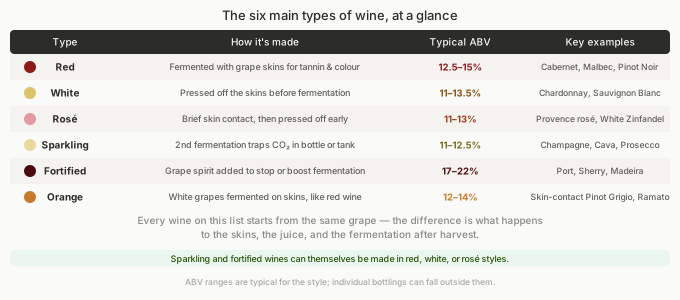
Red wine is fermented with grape skins left in the tank, sometimes for as little as five days, sometimes for a month or more. As yeast converts sugar into alcohol, the rising alcohol acts as a solvent, pulling anthocyanin pigments and tannins out of the skins. That is why red wine gets darker — not lighter — the longer it spends on the skins, and why a tannic young red can soften after a few years in bottle: tannins polymerise and mellow over time.
Because red winemaking pulls flavour and structure directly from solid grape material, reds tend to run fuller-bodied and higher in alcohol than most whites: typically 12.5–15% ABV, though warm-climate Zinfandel, Amarone, and some New World Shiraz push past 15%. For a closer look at what “full-bodied” actually means in practice and which reds qualify, see our guide to full-bodied red wine.
Key grape varieties:
- Cabernet Sauvignon & Merlot: the backbone of Bordeaux blends — structured, tannic, age-worthy.
- Pinot Noir: lighter-bodied, high acid, red-fruited and floral.
- Syrah/Shiraz: full-bodied, peppery, dark-fruited.
- Malbec: soft tannin, plush dark fruit, Argentina’s signature export.
- Sangiovese: Chianti’s high-acid, savoury backbone.
- Tempranillo: Rioja’s oak-aged, leathery, red-fruited signature.
A simple pairing rule: match tannin to fat. A tannic Cabernet cuts cleanly through a fatty ribeye; a lighter Pinot Noir suits duck or mushroom dishes that heavier tannin would overpower.
White Wine
White wine skips the skin-contact step almost entirely. Grapes — which can be white-skinned or even black-skinned, since the juice inside nearly every grape is pale — are pressed promptly, and only the free-run and lightly pressed juice goes on to ferment. Without skins or seeds steeping in the tank, white wine picks up very little tannin and keeps a paler colour and a more direct, brighter fruit character.
With no skin extraction to shape the wine, winemakers lean on two other tools: fermentation temperature (cooler ferments, often 12–16°C, preserve delicate aromatics) and vessel choice (steel keeps things crisp; oak adds richness and vanilla-spice notes, as in a classic oaked Chardonnay). Malolactic fermentation — a secondary conversion trading sharp malic acid for softer lactic acid — is another lever, responsible for the buttery character in many Californian Chardonnays.
Typical ABV sits lower than red, usually 11–13.5%, though botrytis-affected dessert whites and some warm-climate examples run higher.
Key grape varieties:
- Chardonnay: endlessly adaptable, from lean and mineral (Chablis) to rich and buttery (California).
- Sauvignon Blanc: high acid, herbaceous, citrus-driven.
- Riesling: aromatic and versatile, ranging from bone-dry to lusciously sweet.
- Pinot Grigio/Pinot Gris: light and neutral in Italy, riper and rounder in Alsace.
- Chenin Blanc: equally at home dry, sweet, or sparkling.
If you want the vocabulary to describe what you are tasting in any of these, our guide to describing wine taste is the natural next stop, and Wine Folly’s deep dive on wine types is a useful reference for further grape-level detail.
Rosé Wine
Rosé is not red wine and white wine blended together — that blending method is actually banned across the EU for still wines, with a single, well-known exception carved out for rosé Champagne. Real rosé comes from red-skinned grapes handled with deliberately limited skin contact, using one of three methods:
- Direct press (vin gris in France): red grapes are pressed immediately, the same way white grapes are, and only the faint pink juice that bleeds out during pressing is fermented. This produces the palest, most delicate rosé styles, common in Provence.
- Maceration: crushed red grapes sit with their skins for a controlled window, typically 2 to 20 hours, before pressing. Longer maceration and warmer temperatures pull more colour and body; winemakers taste constantly and press the moment the shade looks right.
- Saignée (French for “bleeding”): a by-product of red wine production. A portion of pink juice is drawn off early from a red-wine tank, concentrating the remaining red wine while yielding a usually darker, more structured rosé on the side.
Rosé typically lands at 11–13% ABV, with dry, high-acid styles now dominating the market — a shift from the sweeter blush wines that defined rosé’s reputation a generation ago.
Key grape varieties: Grenache, Cinsault, and Syrah (Provence), Sangiovese (Italy), Tempranillo and Garnacha (Spain), and Pinot Noir, used for both still and sparkling rosé worldwide. For how rosé’s colour compares with every other style side by side, see our guide to wine colours explained.
Sparkling Wine
Every sparkling wine starts as an unremarkable still wine, then goes through a deliberate second fermentation to trap carbon dioxide. How and where that second fermentation happens is what separates an everyday Prosecco from a vintage Champagne.
Traditional method (méthode champenoise, used for Champagne, Franciacorta, Cava, and English sparkling wine): the second fermentation happens inside the very bottle the wine is sold in. Winemakers add sugar and yeast (liqueur de tirage) to a still base wine, cap the bottle, and let a slow fermentation trap CO₂ while the wine ages on its spent yeast, or lees — often for years, which is what gives it a toasty, brioche-like depth. The bottle is then riddled (rotated to collect sediment in the neck), the frozen sediment plug is disgorged, and a small dosage of sugar and wine sets the final sweetness.
Tank method (Charmat or Martinotti method, used for Prosecco and most Moscato d’Asti): the second fermentation happens in a large, sealed pressure tank instead of individual bottles, taking weeks rather than years and skipping extended lees contact. The result favours fresh, primary fruit over the bready complexity of the traditional method — and costs a fraction as much to produce.
That final dosage step also gives sparkling wine its own sweetness scale, from driest to sweetest: Brut Nature (under 3g/L sugar), Extra Brut, Brut (the most common, under 12g/L), Extra Dry, Sec, Demi-Sec, and Doux (over 50g/L). Confusingly, “Extra Dry” is actually sweeter than “Brut” — a labelling quirk left over from when tastes ran sweeter across the board.
Sparkling wine typically runs 11–12.5% ABV. For the full story on how Champagne, Cava, and Prosecco specifically differ, see our guides to non-vintage Champagne and Prosecco vs Champagne vs Cava.
Fortified Wine
Fortified wines add a distilled grape spirit, usually a neutral brandy, directly to the wine, both to preserve it and to push the alcohol up to 17–22% ABV. Fortification once kept wine from spoiling on long sea voyages; today it is valued purely for the style it creates.
Timing decides sweetness. Add the spirit partway through fermentation, and the alcohol kills the yeast before it can consume all the grape sugar — the method behind sweet Port. Add the spirit after fermentation finishes naturally, and the result is dry, as in most Sherry.
- Port (Douro Valley, Portugal): fortified mid-fermentation with grape brandy, built from indigenous varieties like Touriga Nacional and Touriga Franca, and aged in styles ranging from fresh Ruby to decades-old Tawny and single-vintage bottlings.
- Sherry (Jerez, Spain): fortified after fermentation, made mainly from Palomino grapes, and matured through the solera system, a stack of barrels where younger wine is blended into progressively older barrels, so no bottle ever comes from a single vintage. Some styles (Fino, Manzanilla) age under a protective yeast layer called flor; others (Oloroso) age oxidatively for a deeper, nuttier profile.
- Madeira: heated deliberately during ageing (estufagem), producing a uniquely stable, caramelised wine that can survive open on a counter, or in the bottle, for decades.
Fortified wines pair naturally with nuts, hard cheese, and rich desserts — pour them in small measures, since the category runs far higher in alcohol than anything else on this list.
Orange Wine
Orange wine flips white winemaking on its head: white grapes are fermented with their skins left in, exactly as if making a red wine. The result has more tannin, more texture, and a deeper amber colour than any conventional white — “orange” is a genuine colour category here, not a flavour, and no actual oranges are involved.
The style is ancient — Georgia has fermented skin-contact white wine in buried clay qvevri vessels for roughly 8,000 years — but it re-entered the modern wine conversation through natural winemakers in Friuli and Slovenia in the 2000s, and now appears on wine lists worldwide.
Typical ABV runs 12–14%, close to a full-bodied conventional white. For the complete picture — taste, food pairing, and how orange wine relates to the natural wine movement — see our dedicated guide to orange wine.
Which Type of Wine Should You Actually Open Tonight?
Skip the grape variety for a moment: choosing between types of wine is often just a question of occasion.
- Weeknight dinner, red meat or tomato sauce: red.
- Weeknight dinner, fish, chicken, or vegetables: white.
- Hot afternoon, no food commitment yet: rosé.
- Celebrating something, or starting any meal: sparkling.
- After dinner, with cheese or something sweet: fortified.
- You already know red and white cold and want a genuinely new texture: orange.
This is a starting heuristic, not a rule — a chilled light red or a full-bodied orange wine will happily break every line of it. But it is a faster way into an unfamiliar wine list than memorising a hundred grape varieties.
Every wine on every list ultimately sorts into one of these six types of wine, however many grape varieties or regional names sit on the label in front of it. For the grape varieties that define each category in more depth, see our complete wine varieties guide.
Frequently Asked Questions About Types of Wine
What are the six main types of wine?
The six main types of wine are red, white, rosé, sparkling, fortified, and orange. Each starts from the same crushed grapes; the difference is how long the juice stays in contact with grape skins, plus, for sparkling and fortified wines, an extra step (a second fermentation for bubbles, or added spirit for fortification) layered on top. Some classifications split out dessert wine as a seventh category, but most dessert wines are themselves either fortified or made from very ripe or botrytis-affected grapes using otherwise ordinary winemaking.
What is the actual difference between red and white wine?
The difference is skin contact, not grape colour. Red wine is fermented with the grape skins left in the tank, which pulls colour, tannin, and body into the wine. White wine is pressed immediately, with the skins removed before fermentation, so it stays pale, light-bodied, and low in tannin. Because the juice inside almost every grape is pale, white wine can technically be made from black-skinned grapes too, as long as the skins are removed quickly enough after pressing.
Is rosé wine a blend of red and white wine?
No. Blending finished red and white wine together to make rosé is actually banned across the European Union for still wines, with one specific exception for rosé Champagne. Real rosé is made from red-skinned grapes given deliberately limited skin contact, using direct pressing, a controlled maceration of a few hours, or the saignée method, which draws off pink juice early from a red-wine tank. The colour comes from brief contact with the skins, not from mixing two finished wines.
What makes a wine sparkling instead of still?
A deliberate second fermentation that traps carbon dioxide in the wine. In the traditional method, used for Champagne and Cava, this second fermentation happens inside the sealed bottle the wine is sold in, and the wine ages for months or years on its spent yeast before disgorgement. In the tank method, used for Prosecco, the second fermentation happens in a large sealed pressure tank instead, which is faster and cheaper but skips the extended yeast contact that gives traditional-method wines their toasty depth.
What is fortified wine, and is it stronger than regular wine?
Fortified wine has a distilled grape spirit, usually a neutral brandy, added directly to it, which raises the alcohol to roughly 17 to 22 percent, noticeably higher than the 11 to 15 percent typical of unfortified red, white, rosé, and sparkling wine. Port, Sherry, and Madeira are the best-known examples. Whether the finished wine is sweet or dry depends on when the spirit is added: partway through fermentation preserves natural grape sugar and produces a sweet wine, while adding it after fermentation finishes produces a dry one.
Is orange wine made from orange grapes?
No. Orange wine is made from ordinary white wine grapes, fermented with their skins left in rather than pressed off immediately, exactly as red wine is made from red grapes. That extended skin contact gives the finished wine a deeper amber-orange colour, more tannin, and more texture than a conventional white, which is where the name comes from. The style is ancient, with roots in Georgian qvevri winemaking, and re-entered modern wine culture through natural winemakers in the 2000s.