When someone recommends a “full bodied red wine,” they are describing something specific: a wine that feels rich, heavy, and substantial in your mouth, with intense flavour, high alcohol, and prominent tannins. It is the red wine equivalent of full-fat cream compared to skimmed milk. The wines most people picture when they think of serious red wine — a Napa Valley Cabernet Sauvignon, a Barolo, an Australian Shiraz — are full bodied wines. But “full bodied” is a spectrum, not a single point, and understanding exactly what contributes to it — and which grapes and regions reliably produce it — gives you a reliable framework for choosing the right bottle for the right occasion.
In this article
What Does Full Bodied Mean in Wine?
Body in wine refers to the sensation of weight and fullness in the mouth — how heavy or light the wine feels as you taste it. The comparison commonly used: skimmed milk (light bodied), whole milk (medium bodied), and double cream (full bodied). It is a physical sensation rather than a flavour, felt in the weight and viscosity of the wine as it coats your palate.
Four main factors determine how full bodied a wine is:
- Alcohol — the most significant contributor to body. Alcohol molecules are heavier than water, so wines with higher alcohol feel heavier in the mouth. Full bodied red wines typically have 13.5–15% ABV; wines above 14.5% almost always feel full bodied regardless of other factors.
- Tannins — the phenolic compounds from grape skins, seeds, and oak that create the drying, grippy sensation on the gums. High tannins add structural weight and contribute significantly to the perception of fullness and density. Full bodied wines are almost always high in tannin.
- Glycerol — a naturally occurring alcohol produced during fermentation that adds viscosity and a slightly sweet, slippery sensation. Higher glycerol creates a richer, more coating mouthfeel.
- Extract — the concentration of flavour compounds, colour pigments, and other dissolved solids in the wine. High-extract wines feel denser and more intense. This is why wines from low-yielding vines in warm climates tend to be fuller bodied: less water in the fruit, more concentrated flavour compounds.
Climate is the underlying force behind all of these: warmer climates produce grapes with higher sugar levels (which convert to higher alcohol), riper tannins (smoother and rounder than the harsh tannins of under-ripe fruit), and more concentrated flavour compounds. This is why Napa Valley Cabernet Sauvignon typically feels fuller bodied than Bordeaux Cabernet Sauvignon from the same grape variety: more sunshine, riper fruit, higher alcohol.
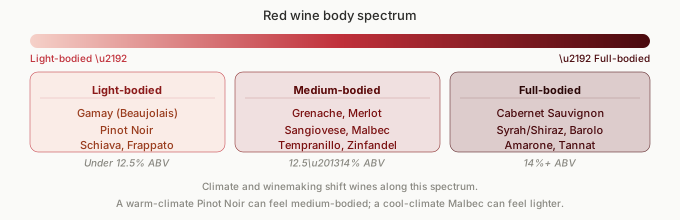
Light, Medium, and Full Bodied Red Wine: The Difference
Understanding body means understanding the full spectrum rather than just the full bodied end of it.
Light bodied reds (typically under 12.5% ABV): feel lean and delicate in the mouth, closer in weight to a rich fruit juice than a cream. Examples: Gamay (Beaujolais), Pinot Noir, Schiava, Frappato. These wines have low to medium tannins, high acidity, and vivid but delicate fruit. They can be served slightly chilled and pair well with lighter food. They are the most immediately approachable reds for beginners and those sensitive to tannin. Our low tannin wines guide covers these in depth.
Medium bodied reds (typically 12.5–14% ABV): feel satisfying without heaviness — they fill the mouth without coating it. Examples: Merlot, Grenache, Sangiovese, Tempranillo, Barbera, lighter Malbec. Medium tannins, good acidity, and fruit that balances red and dark tones. The most versatile category for food pairing. Most everyday red wine sits here. See our beginner red wine guide for the best approachable picks across this category.
Full bodied reds (typically 14%+ ABV): feel rich, dense, and weighty, coating the palate with dark fruit, firm tannins, and a warmth from the alcohol. They demand food — particularly fatty, protein-rich dishes — and often demand age. They can be overwhelming drunk alone or alongside delicate food, but paired correctly they are among the most rewarding wine experiences available.
The Best Full Bodied Red Wine Varieties
Cabernet Sauvignon: The Benchmark
Cabernet Sauvignon is the world’s most planted red grape and the most widely recognised full bodied red wine. Its thick skins produce high tannins; its warm-climate growing sites produce high alcohol; and its intense dark fruit (blackcurrant, black cherry, plum) and complex secondary notes (cedar, graphite, tobacco, sometimes green bell pepper in cooler climates) make it one of the most structured and age-worthy wines produced anywhere.
The key regional styles:
- Bordeaux (Left Bank) — the classic, structured, terroir-driven style. Cool climate produces firm tannins, high acidity, and restrained fruit. These wines are leaner and more austere than New World Cabernet when young but develop extraordinary complexity with age. Pauillac, Saint-Estèphe, Margaux, and Saint-Julien are the key appellations.
- Napa Valley (California) — the opulent, generous New World style. Warmer climate produces riper tannins, higher alcohol (often 14.5%+), and more immediate dark fruit. These wines are impressive and hedonistic from a younger age. Among the fullest-bodied Cabernets produced anywhere.
- Maipo Valley (Chile) — the value tier of serious Cabernet. Good structure, dark fruit, firm tannins, and a characteristic eucalyptus/mint note. Excellent quality-to-price ratio at £15–30.
- Coonawarra (Australia) — the distinctive terra rossa soil over limestone produces Cabernet with a characteristic mint and cassis character alongside the full body.
Syrah / Shiraz: Peppery Power
Syrah (France) and Shiraz (Australia) are the same grape producing wines that feel like different varieties. Both are reliably full bodied, but the style differences are significant:
- Northern Rhône Syrah (Hermitage, Crozes-Hermitage, Côte-Rôtie) — savoury, peppery, with smoked meat, olive, blackberry, and violet. Structured, powerful, and built for long ageing. Côte-Rôtie with its Viognier co-fermentation (up to 20%) adds a floral, aromatic lift unusual in full bodied reds.
- Australian Shiraz (Barossa Valley, McLaren Vale) — riper, richer, and more fruit-forward. Blackberry jam, dark chocolate, eucalyptus, and a warmer alcohol impression. Often higher in ABV (14.5–16%). The Barossa Shiraz style is among the fullest bodied red wines produced anywhere in the world.
- Languedoc and Pays d’Oc Syrah — the value tier: full bodied but more accessible in youth, often at excellent prices under £15.
Barolo and Barbaresco: Italy’s Finest
Barolo and Barbaresco, both made from the Nebbiolo grape in Piedmont, are the pinnacle of Italian full bodied red wine. They combine extraordinarily high tannins with high acidity and complex aromas of dried rose, tar, leather, truffle, and iron. Young Barolo is one of the most demanding wines to enjoy without food and age: the tannins are fierce and the wine is austere. With 10–15 years of age, it becomes silky, complex, and one of wine’s great experiences.
Barolo is known as “the king of Italian wines” for a reason. The wine’s extraordinary structure — the combination of tannin, acidity, and fruit concentration — gives it ageing potential of 20–40 years in great vintages. Barbaresco, from the neighbouring zone, is somewhat more approachable in youth while sharing the same grape and underlying character.
Amarone della Valpolicella: Maximum Concentration
Amarone is produced from partially dried Corvina grapes in the Valpolicella zone of Veneto, Italy. The drying process (appassimento) concentrates sugars, flavour compounds, and tannins dramatically before fermentation. The result is a wine of extraordinary density: very full bodied, very high in alcohol (typically 15–17%), with intense dried fruit (prune, fig, dark cherry), chocolate, tobacco, and earth. It is one of the richest and most intense red wines in the world.
Amarone is not an everyday wine — its power and richness mean it suits very specific occasions and foods (aged cheese, braised meat, rich game). But for those who want to experience the upper limit of what full bodied red wine can be, it is an essential reference point.
Malbec: The Approachable Full Bodied Red
Argentine Malbec occupies the borderline between medium and full bodied, but warm-climate high-altitude examples from Mendoza — particularly the Uco Valley — are firmly in full bodied territory. The grape’s appeal for those exploring fuller reds is its softness: despite the body and alcohol, Malbec’s tannins are characteristically round and velvety rather than harsh and grippy. It is one of the most accessible full bodied reds and an excellent stepping stone toward the more structured styles. See our Malbec vs Cabernet comparison for a detailed breakdown of how these two full bodied grapes differ.
Other Notable Full Bodied Reds
- Petite Sirah (Durif) — extremely tannic, very dark, inky. Primarily from California. Dense blueberry and blackberry with pepper and dark chocolate. Often used as a blending component for its colour and structure but increasingly bottled solo by quality producers.
- Tannat (Madiran, France; Uruguay) — one of the most tannic red grapes in the world. Madiran Tannat is structured, dark, and earthy; Uruguayan Tannat is somewhat softer. High antioxidant content — Madiran in southwest France has one of the lowest rates of cardiovascular disease in the world, attributed partly to regular consumption of Tannat.
- Sagrantino (Montefalco, Umbria) — the highest-tannin grape measured by any scientific study. Very full bodied, very structured, requires significant age. A specialist choice for those who have explored the other full bodied styles.
- Priorat (Garnacha and Carignan, Spain) — from low-yielding, ancient vines on llicorella (slate and quartz) soils. Concentrated, mineral, powerful. One of Spain’s two DOCa appellations (alongside Rioja).
- Zinfandel (California) — when made in the riper, higher-alcohol style (which most Zinfandel is), it is firmly full bodied: jammy dark fruit, high alcohol (sometimes 15%+), bold spice. Lower-alcohol, more restrained examples sit in medium territory.
Food Pairing: What Full Bodied Red Wine Needs
Full bodied red wines are designed to be eaten with food. Drunk alone, the tannins can feel harsh and the alcohol heavy; alongside the right dish, both become integrated and the wine transforms. The food pairing principle is structural: fat and protein tame tannins. The fat molecules in a ribeye steak bind with tannin molecules in a Cabernet Sauvignon, making both the wine and the meat taste smoother. This is not a matter of taste preference; it is chemistry.
- Red meat — ribeye, T-bone, brisket, short rib. The fattier the cut, the better. A Napa Cabernet alongside a well-marbled ribeye is the textbook pairing. For Barolo, slow-braised short ribs or roasted veal are the traditional Piedmontese choices.
- Game — venison, wild boar, duck, pigeon. Game’s intensity and distinctive flavour meets full bodied reds’ own intensity. A Hermitage Syrah or aged Rioja Gran Reserva with venison is a combination that highlights both.
- Lamb — roast leg or slow-braised shoulder with Cabernet Sauvignon or Rioja is one of the great traditional pairings in European cooking. The herb character of the wine echoes rosemary and garlic. Our wine with lamb guide covers every lamb preparation.
- Hard, aged cheeses — aged Cheddar, Manchego, Comté, Parmigiano. The salt and protein in aged cheese tames tannins in the same way fat does, making it an excellent non-meat option alongside full bodied reds.
- Hearty stews and braises — beef bourguignon, osso buco, oxtail, braised short ribs. Dishes where protein has been slow-cooked in its own fat are ideal companions.
- Mushroom-based dishes — porcini pasta, mushroom risotto. The umami in mushrooms softens tannin perception. Our wine with mushrooms guide covers the details.
What to avoid: delicate fish and seafood (tannins create a metallic clash), light vegetable dishes (overwhelmed by the wine’s power), very spicy food (capsaicin amplifies the burn of high alcohol and harsh tannins), and sweet desserts (the wine’s dryness tastes harsh against sweetness).
How to Serve Full Bodied Red Wine
- Temperature: 17–19°C. Full bodied reds served too warm (above 20°C) taste alcoholic and heavy; the fruit character is overwhelmed by the warmth of the alcohol. Serve at the cooler end of “room temperature” or give the bottle 10–15 minutes in the fridge if your room is warm.
- Decanting: Young full bodied reds — particularly structured wines like Barolo, Cabernet, and Syrah under 10 years — benefit significantly from decanting. Pour the wine into a decanter and allow it to breathe for 30–120 minutes before serving. This softens the tannins, opens the fruit, and integrates the alcohol. Very old wines (20+ years) should be decanted carefully and briefly — they may be fragile and can deteriorate quickly once exposed to air.
- Glassware: Use a large-bowled Bordeaux glass for Cabernet Sauvignon and Merlot; a Burgundy glass (slightly wider bowl) for Pinot Noir and Syrah. The large bowl allows the wine to breathe and concentrate its aromas at the rim.
Where to Start with Full Bodied Red Wine
If you are moving into full bodied reds for the first time, the suggested path is:
- Start with Malbec — full bodied but with velvety, approachable tannins. Argentine Mendoza Malbec at £12–18 is the most forgiving entry point into the category.
- Move to Syrah / Shiraz — Australian Barossa Shiraz is generous and fruit-forward; Northern Rhône Syrah is more savoury and structured but equally full bodied.
- Then Cabernet Sauvignon — start with Chilean or Australian Cabernet (£15–25) before moving to Bordeaux or Napa, where both the complexity and the price demand more context to appreciate.
- Then Barolo or Amarone — the most demanding full bodied styles. Approach with a rich meal, ideally with some bottle age, and ideally with some prior experience of the simpler full bodied styles first.
For a broader framework covering how body sits within the full range of red wine character — tannin, acidity, and fruit — our wine tasting terms guide explains each structural element in plain language, and our wine varieties guide maps all the key grapes across the body spectrum.
Frequently Asked Questions
What is full bodied red wine?
Full bodied red wine refers to wine that feels rich, heavy, and substantial in the mouth — the wine equivalent of cream compared to skimmed milk. Full bodied reds are characterised by high alcohol content (typically 13.5–15%+ ABV), prominent tannins, dense dark fruit flavours, and a long, warming finish. The most widely recognised full bodied red wines include Cabernet Sauvignon, Syrah/Shiraz, Barolo (Nebbiolo), Malbec, and Amarone. They are best served alongside rich, fatty food — particularly red meat, aged cheese, and braised dishes — which softens the tannins and allows the wine’s full complexity to emerge.
What are examples of full bodied red wine?
The most widely available full bodied red wines are: Cabernet Sauvignon (Bordeaux, Napa Valley, Chile, Australia), Syrah or Shiraz (Northern Rhône, Barossa Valley), Malbec (Mendoza, Argentina), Barolo and Barbaresco (Nebbiolo, Piedmont, Italy), Amarone della Valpolicella (Italy), Zinfandel (California), Petite Sirah (California), and Tannat (Madiran, France; Uruguay). Among these, Malbec is the most approachable for those new to full bodied reds; Cabernet Sauvignon is the most widely available; and Barolo and Amarone are the most complex and demanding.
What makes a red wine full bodied?
Four main factors make a red wine full bodied: high alcohol content (from grapes grown in warm climates with high sugar levels), high tannins (from thick-skinned grape varieties, prolonged skin contact during fermentation, or oak ageing), high glycerol (a natural fermentation product that adds viscosity and richness), and high extract (concentration of flavour compounds from low-yielding vines in good terroir). Climate is the most important underlying force: warm climates produce riper grapes with higher sugar and alcohol, rounder tannins, and more concentrated flavours — which is why warm-climate regions (Napa, Barossa, Mendoza) tend to produce fuller bodied wines than cooler ones.
Is Cabernet Sauvignon a full bodied red wine?
Yes — Cabernet Sauvignon is the world’s most widely recognised full bodied red wine. Its thick grape skins produce high tannins; it is predominantly grown in warm climates that produce high alcohol; and its concentrated dark fruit, complex secondary notes (cedar, graphite, tobacco), and firm structure all define the full bodied style. The degree of body varies by region: Napa Valley Cabernet is typically the fullest bodied, often over 14.5% ABV; Bordeaux Cabernet is somewhat more restrained and structured; Chilean and Australian Cabernet sits between the two in approachability and price.
What food goes with full bodied red wine?
Full bodied red wine pairs best with rich, fatty, protein-dense food where the fat and protein tame the wine’s tannins. The best pairings are: fatty cuts of beef (ribeye, brisket, T-bone), roast lamb, game (venison, wild boar, duck), hearty braises and stews, hard aged cheeses (Manchego, Parmigiano, aged Cheddar, Comté), and mushroom-based dishes where the umami softens the tannins. Avoid pairing full bodied reds with delicate fish, light vegetable dishes, very spicy food, or sweet desserts — in all these cases, either the food is overwhelmed by the wine or the wine is made to taste harsh and unbalanced.
What is the difference between full bodied and medium bodied red wine?
The difference is primarily in alcohol, tannin, and mouthfeel. Full bodied reds (typically 14%+ ABV) feel rich, heavy, and coating, with dense dark fruit and firm, grippy tannins. Medium bodied reds (typically 12.5–14% ABV) feel satisfying but not heavy, with moderate tannins, good acidity, and a balance of red and dark fruit. Examples: Cabernet Sauvignon and Syrah are full bodied; Merlot, Sangiovese, and Grenache are medium bodied. The practical difference: full bodied reds demand richer, fattier food; medium bodied reds are more versatile and suit a wider range of dishes without overwhelming them.