
Advice on how to decant wine tends to contradict itself, and there is a simple reason why: “decanting” is really two unrelated jobs sharing one name. Pour a bottle of aged Bordeaux and a young, tightly-wound Cabernet Sauvignon into the same decanter using the same technique, and you will likely do the right thing for one and the wrong thing for the other. This guide walks through both versions of decanting step by step, which wines actually need which one, how long to let a wine sit, how to choose a decanter, and the handful of mistakes that undo the whole exercise.
In this article
- 1 Decanting Wine, at a Glance
- 2 The Two Reasons to Decant (and Why the Techniques Are Nearly Opposite)
- 3 Which Wines Actually Need Decanting
- 4 How to Decant for Sediment Removal, Step by Step
- 5 How to Decant for Aeration, Step by Step
- 6 How Long Should Wine Actually Breathe?
- 7 Choosing (or Improvising) a Decanter
- 8 Common Decanting Mistakes
- 9 Double Decanting and Other Shortcuts
- 10 Decanting Vintage Port
- 11 Does Decanting Actually Work? A Note of Honest Skepticism
- 12 Caring for Your Decanter
- 13 Frequently Asked Questions About Decanting Wine
Decanting Wine, at a Glance
- Two different jobs: removing sediment from an old wine, and aerating a young wine — the techniques are nearly opposite.
- Needs decanting: young, tannic reds; reds over roughly 10 years old; vintage Port; some full-bodied oaked whites.
- Rarely needs decanting: most white wine, rosé, sparkling wine, and light young reds meant for immediate drinking.
- For sediment: stand the bottle upright 24 hours first, pour slowly with a light behind the neck, stop at the first sign of sediment.
- For aeration: no need to stand the bottle first, pour briskly to maximise air contact, let it sit 30 minutes to a few hours.
- No fancy equipment required: a clean glass jug or carafe works exactly as well as a designer decanter.
The Two Reasons to Decant (and Why the Techniques Are Nearly Opposite)
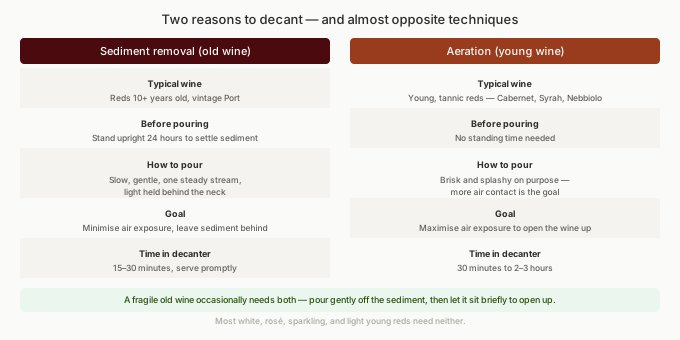
Sediment removal exists because tannin and colour pigments in red wine slowly bind together and fall out of solution as a wine ages, settling as a gritty, harmless but unpleasant layer at the bottom of the bottle. This is standard for any serious red wine roughly ten years or older, and near-universal in vintage Port — for how ageing changes a wine’s structure more broadly, see our guide to tannin in wine. The entire goal here is to separate clear wine from that sediment as cleanly as possible, which means handling the bottle gently, minimising movement, and generally trying to limit the wine’s exposure to air rather than encourage it — a delicate, aged wine can lose its fragile aromatics quickly once poured out.
Aeration is a completely different goal aimed at a completely different wine: a young, full-bodied red with tight, youthful tannin and aromas that have not yet opened up. Here the entire point is maximising the wine’s exposure to oxygen as quickly as possible, since contact with air softens tannin and unlocks aromatic compounds that stay dormant inside a sealed bottle. Rather than a gentle, careful pour, aeration genuinely benefits from a vigorous, splashy pour that deliberately churns the wine and pulls in as much air as possible.
Occasionally a wine needs both at once — a serious, structured red that has also picked up real bottle age, where you want the sediment gone but the tannin still needs softening. In that case, decant gently to remove the sediment first, then let the now-clear wine sit in the decanter briefly to open up, checking on it more often than you would a young wine, since old wine can fade faster than it improves.
Which Wines Actually Need Decanting
Not every bottle benefits from decanting, and treating it as a universal ritual wastes time on wines that gain nothing from it. Young, full-bodied tannic reds — Cabernet Sauvignon, Syrah, Nebbiolo, Malbec, and similarly structured wines, especially anything under about five years old — are the clearest case for aeration-style decanting; our guide to full-bodied red wine covers exactly which styles fall into this category. Older reds, roughly a decade or more in bottle, and essentially all vintage Port, are the clearest case for sediment-removal decanting.
A smaller group of wines sit in a genuine grey area. Some full-bodied, oaked white wines, particularly a rich barrel-fermented Chardonnay, can benefit from brief aeration to soften and open up, though this is far less common practice than with reds. Sparkling wine is best left alone almost entirely — decanting deliberately removes the carbonation that defines the style, and while a rare, stubbornly reductive bottle of Champagne can occasionally benefit from a short aeration, this is the exception, not a general rule. Everyday whites, rosé, and light, fresh young reds like Beaujolais or simple Pinot Noir generally gain nothing from decanting and are best served straight from the bottle.
How to Decant for Sediment Removal, Step by Step
- Stand the bottle upright for at least 24 hours before serving. If the wine has been stored on its side, standing it up gives the sediment time to slide down and settle at the very bottom, rather than being suspended through the whole bottle.
- Gather your equipment in advance. A clean decanter or carafe, a corkscrew, and a light source — a candle, flashlight, or even a phone light works fine — held behind or under the neck of the bottle so you can see through the glass as you pour.
- Open the bottle carefully. Remove the capsule and cork with minimal twisting or jostling, and wipe the inside of the neck with a clean cloth to remove any loose cork fragments or residue.
- Pour in one slow, continuous, steady stream. Tilt the bottle at a gentle angle against the side of the decanter, rather than straight down the middle, which softens the flow and disturbs the wine less.
- Watch the neck of the bottle constantly as you near the bottom. With the light behind it, sediment usually appears as a cloudy plume or fine, dust-like specks moving toward the neck.
- Stop the instant you see any sediment reach the neck. Don’t try to squeeze out the last of the bottle — an ounce or two of sediment-laden wine left behind is the acceptable cost of a clear pour. Wine Spectator’s decanting 101 guide covers this same process with input from a Master Sommelier, worth reading for a second perspective.
- Serve reasonably promptly. Older, more fragile wines can fade within 15 to 30 minutes of being poured out, so this is not the moment to let the decanter sit around for hours.
How to Decant for Aeration, Step by Step
- Skip the standing time. A young wine has no meaningful sediment to worry about, so there is no need to let the bottle rest upright beforehand.
- Choose a wide-bottomed decanter if you have a choice. A broad base exposes more of the wine’s surface area to air, which speeds up aeration considerably compared with a narrow vessel.
- Open the bottle normally — there is no delicate sediment to worry about disturbing here.
- Pour with some genuine energy. Rather than a slow, careful stream, let the wine splash and swirl a little as it hits the decanter; deliberately churning the wine pulls in more oxygen than a gentle pour ever would.
- Give it real time to work. A young, robustly tannic red typically needs anywhere from 30 minutes to 2 to 3 hours to noticeably soften and open up, depending on how firm and youthful it is to begin with.
- Taste as you go. Take a small taste when you first pour, then again every 20 to 30 minutes; this is the only reliable way to learn how a specific wine actually responds to air, since guides can only offer a starting estimate.
- Don’t leave it indefinitely. Aeration helps up to a point, then plateaus and can eventually flatten a wine’s fruit if left far too long, particularly in already-warm room conditions.
How Long Should Wine Actually Breathe?
Timing depends heavily on the specific wine, but a few reasonable starting points make good defaults. Young, full-bodied, highly tannic reds — a serious Cabernet Sauvignon, Syrah, or Nebbiolo built for ageing — generally benefit most from 1 to 3 hours in the decanter. Medium-bodied reds with moderate tannin, such as most Merlot or Sangiovese, tend to do well with something closer to 30 to 60 minutes. Older reds being decanted primarily for sediment should generally be served within 15 to 30 minutes of pouring, since further air exposure risks fading rather than improving an already-fragile wine. Full-bodied oaked whites, on the rare occasion they are decanted at all, usually need only 20 to 30 minutes.
None of these figures are rigid rules — professional opinion genuinely varies on how much aeration actually helps, and the only completely reliable method is to taste the wine periodically as it sits and stop whenever it tastes right to you, rather than by the clock.
Choosing (or Improvising) a Decanter
Decanter shape genuinely affects function, not just aesthetics. A wide-bottomed decanter, with a large surface area exposed to air, is ideal for aerating young, robust reds quickly. A narrower, taller decanter exposes less surface area and is generally preferred for delicate older wines, where the goal is separating sediment while limiting unnecessary air contact. Ornate shapes like swan or duck decanters are largely decorative variations on these same two underlying functions rather than meaningfully different tools.
None of this requires an expensive purchase. A clean glass water pitcher, a kitchen carafe, or even a large, clean glass measuring jug works exactly as well functionally as a formal crystal decanter — what matters is a clear glass vessel wide enough to expose the wine to air (for aeration) or narrow enough to control the pour precisely (for sediment). A large wine glass itself, swirled a few times, can even provide a rough approximation of aeration for a single glass when a full decanter is not practical.
Common Decanting Mistakes
- Shaking or jostling the bottle beforehand. This re-suspends sediment that had settled, undoing the entire point of standing the bottle upright first.
- Decanting a fragile, very old wine for too long. Wines several decades old can fade within minutes of exposure to air rather than opening up — taste immediately and repeatedly rather than assuming more time is always better.
- Skipping a taste test before committing to a full decant. If a wine is corked or otherwise faulty, decanting will not fix it, and you will have wasted the time and dirtied a decanter for nothing.
- Treating every red the same way. A gentle sediment-removal pour wastes a young wine’s opportunity to aerate properly, while a vigorous aeration-style pour needlessly disturbs sediment in an old one.
- Assuming sparkling wine needs the same treatment. Decanting Champagne or Prosecco strips out the carbonation that defines the wine; leave sparkling wine in the bottle or glass.
Double Decanting and Other Shortcuts
If you like the ritual of pouring from the original bottle but still want the benefits of decanting, double decanting is a simple workaround: pour the wine into a decanter to remove sediment or aerate it, rinse out the original bottle, and pour the wine back into it before serving. It is more effort for no functional benefit over simply serving from the decanter itself, but it is a genuine technique used for presentation, particularly in restaurant settings where guests expect to see the original label.
For a single glass rather than a full bottle, a handheld wine aerator, a small device the wine passes through as it is poured, achieves a rough approximation of aeration almost instantly rather than over 30 minutes to a few hours, trading some effectiveness for real convenience. Neither shortcut replaces proper decanting for a wine that genuinely needs sediment removed, where there is no substitute for gently separating the clear wine from what has settled at the bottom.
Decanting Vintage Port
Vintage Port deserves its own mention, since it is one of the few wines where decanting is treated as close to mandatory rather than optional. Vintage Port throws heavy, chunky sediment as a matter of course, far more than most red wine, and is traditionally decanted with extra care: some producers recommend standing the bottle upright for two to three days beforehand rather than the usual 24 hours, given how much sediment a serious vintage Port accumulates over decades in bottle. There is a well-known table tradition attached to Port specifically — the decanter is passed to the left around the table, and if it stops before reaching everyone, the host is expected to ask whether the recipient “knows the Bishop of Norwich,” a formal, slightly tongue-in-cheek prompt to pass it along. Beyond the ritual, the practical logic is identical to any other sediment-removal decant: gentle handling, a light behind the neck, and stopping the instant sediment appears.
Does Decanting Actually Work? A Note of Honest Skepticism
It is worth being honest that not every wine professional agrees decanting for aeration actually does much. The late Bordeaux professor Émile Peynaud, one of the most influential wine scientists of the twentieth century, argued that aeration mostly just diminishes a wine’s aroma and flavour intensity rather than improving it, and that the apparent benefits drinkers report may owe more to a wine simply warming slightly and settling after travel or storage than to oxygen exposure itself. Other professionals disagree just as firmly, pointing to consistent, repeatable differences in blind tastings of the same wine decanted versus straight from the bottle. The honest, practical position sits between the two: aeration clearly changes a wine, softening some elements and dissipating others, but whether that change constitutes an improvement is genuinely a matter of taste rather than settled science, and it is worth trusting your own glass over any single expert’s opinion, including the ones in this guide.
Caring for Your Decanter
A decanter is simple to look after but easy to damage through the wrong kind of care. Rinse it with warm water immediately after use rather than letting wine residue dry and stain the glass, and avoid dish soap where possible, since fragrance and residue can linger inside a decanter’s narrow neck and taint the next bottle poured into it; plain hot water is usually enough. For stubborn wine staining or a cloudy film that builds up over repeated use, a mix of coarse salt and crushed ice, swirled vigorously inside the decanter, acts as a gentle abrasive that reaches into narrow necks a bottle brush cannot, or dedicated decanter cleaning beads sold for exactly this purpose. Dry a decanter upside down on a rack rather than sealing it away damp, since trapped moisture is what actually causes the musty smell people sometimes associate with old decanters, not the glass itself.
Frequently Asked Questions About Decanting Wine
How do you decant wine step by step?
The steps depend on why you are decanting. For sediment removal, stand the bottle upright for 24 hours, then pour slowly and gently in one continuous stream with a light behind the neck, stopping the moment sediment appears. For aeration, skip the standing time and pour briskly to maximise contact with air, then let the wine sit anywhere from 30 minutes to a few hours depending on how tannic and youthful it is.
Which wines actually need decanting?
Young, full-bodied tannic reds like Cabernet Sauvignon, Syrah, and Nebbiolo benefit from aeration-style decanting, while reds roughly ten years old or more, along with vintage Port, typically need sediment-removal decanting. Most white wine, rosé, sparkling wine, and light young reds meant for immediate drinking generally need neither.
How long should wine sit in a decanter?
It varies by wine. Young, full-bodied reds generally benefit from 1 to 3 hours, medium-bodied reds from 30 to 60 minutes, and older wines being decanted mainly for sediment should usually be served within 15 to 30 minutes to avoid fading. Tasting periodically as the wine sits is the most reliable way to judge the right moment for any specific bottle.
Can you decant wine without a decanter?
Yes. Any clean glass vessel works, including a water pitcher, kitchen carafe, or large glass measuring jug. What matters functionally is the shape: a wide-bottomed vessel exposes more surface area to air and suits aeration, while a narrower vessel gives more control for separating out sediment.
Should you decant Champagne or other sparkling wine?
Generally no. Decanting releases the carbon dioxide that gives sparkling wine its bubbles, and most sparkling wine is built to be enjoyed for exactly that effervescence. A very small number of stubbornly reductive Champagnes can occasionally benefit from a brief aeration, but this is a rare exception rather than a general recommendation.
Is wine sediment safe to drink?
Yes, wine sediment is completely harmless to drink, formed from tannin and colour pigments that have bound together and fallen out of solution as the wine aged. It is removed through decanting purely for taste and texture reasons, since it can taste bitter and feel gritty in the mouth, not because it poses any health risk. Coravin’s full decanting guide is a useful second reference, including a breakdown of aeration times by wine age.