Bite into an underripe banana, oversteep a cup of black tea, or take a big mouthful of a young Nebbiolo, and you will notice the same basic sensation: a dry, slightly rough, mouth-puckering feeling that coats your tongue and gums. That sensation is tannin at work, and despite how central it is to how red wine actually feels in the mouth, it is one of the least explained concepts in everyday wine writing. This guide covers what tannin in wine actually is, chemically and biologically, where it comes from, why it produces the specific sensation it does, how it changes as wine ages, which grapes carry the most and least of it, and how to actually talk about it once you notice it in your own glass.
In this article
- 1 Tannin, at a Glance
- 2 What Tannin Actually Is
- 3 Where Tannin Comes From
- 4 Why Tannin Feels the Way It Does: Astringency Explained
- 5 High-Tannin vs Low-Tannin Grapes
- 6 Tannin and Ageing: How It Changes Over Time
- 7 Tannin and Food: Why It Loves Protein and Fat
- 8 Does White Wine Have Tannin?
- 9 How to Taste and Describe Tannin
- 10 How Winemakers Manage Tannin
- 11 Tannin as Structure, Not a Flaw
- 12 Frequently Asked Questions About Tannin in Wine
Tannin, at a Glance
- What it is: a family of naturally occurring plant compounds called polyphenols, found in grape skins, seeds, stems, and oak barrels.
- What it feels like: a dry, puckering, slightly rough sensation on the tongue and gums, known as astringency.
- Where it comes from: mostly grape seeds and stems by weight, though skins matter most for wine because red winemaking maximises skin contact.
- Which wines have the most: full-bodied reds made from thick-skinned grapes — Nebbiolo, Cabernet Sauvignon, Tannat, Sagrantino.
- Which wines have the least: most white wines, most rosé, and lighter-bodied reds like Gamay and Pinot Noir.
- What it does over time: softens and “resolves” with age, as small tannin molecules bind together into larger ones and eventually fall out as sediment.
- Why it matters for pairing: tannin binds with protein and fat, which is why tannic reds suit fatty meat so well.
What Tannin Actually Is
Chemically, tannins belong to a large family of plant compounds called polyphenols. They are not unique to grapes or wine at all: the same broad family of molecules is responsible for the dry, bracing quality of a strong cup of black tea, the puckering hit of an unripe persimmon, and the bitterness in dark chocolate and walnuts. In every case, the underlying biological purpose is thought to be similar — plants produce tannin in their bark, leaves, seeds, and unripe fruit largely as a defence mechanism, making themselves unpalatable to animals until their seeds are ready to be spread. Decanter has a good explainer on what tannins are and do for anyone who wants the fuller chemistry.
Within wine specifically, tannins split into two broad categories that behave quite differently. Condensed tannins (also called flavonoid tannins) come from the grape itself and are built from a compound called catechin, which links together into progressively larger chains through a process called polymerisation — this is the category responsible for most of what people mean when they talk about a wine’s tannic structure. Hydrolyzable tannins (also called non-flavonoid or oak tannins) come from an entirely different source: the wood of oak barrels used during ageing. Wines aged in new oak pick up a noticeable amount of this second tannin type on top of whatever condensed tannin the grape itself contributed, which is part of why a heavily oaked wine can feel more structured or grippy than the same wine aged only in steel or older, more neutral barrels.
Where Tannin Comes From
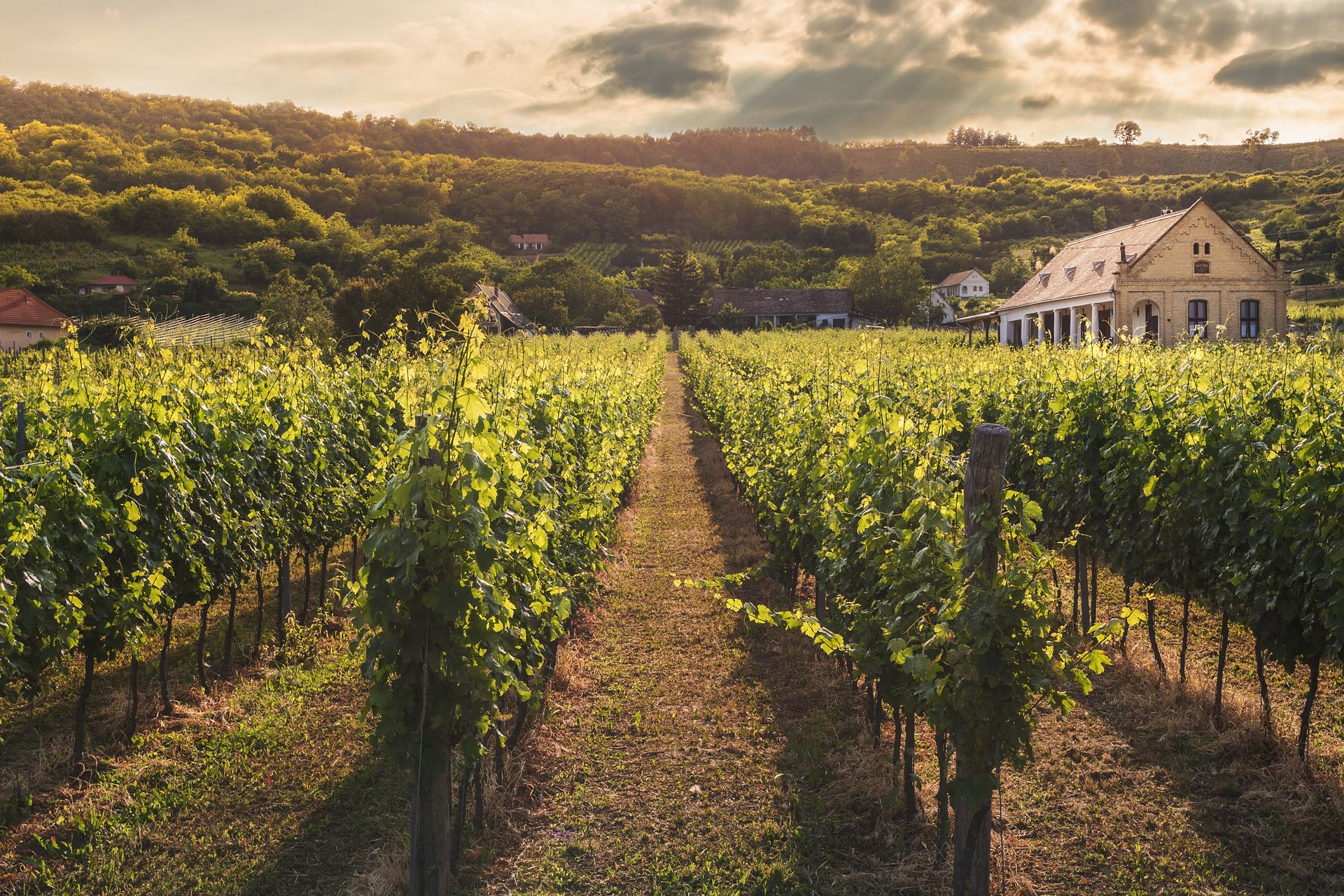
Inside the grape itself, tannin is distributed unevenly: research on grapevine tissue puts roughly 58% of a grape’s total tannin in the seeds, around 21% in the stems, and only about 4 to 5% in the skins, with the remainder in the leaves. That distribution can seem to contradict everything wine writing says about skins being the source of red wine’s tannin — but the resolution is simple. Winemaking, not raw tannin content, decides what actually ends up in the glass. Red wine is fermented with the skins in constant contact with the juice, which extracts a steady, moderate, generally well-integrated tannin alongside the wine’s colour. Seed tannin, by contrast, is far more bitter and harsh, and careful winemakers deliberately try to limit how much seed tannin gets extracted — pressing gently, avoiding crushing the seeds themselves — because it tends to produce a coarser, less pleasant character than skin tannin does.
This is also why grape variety matters so much: thicker-skinned grapes like Cabernet Sauvignon, Nebbiolo, and Tannat simply have more surface area of tannin-rich skin available to extract during fermentation than thinner-skinned grapes like Pinot Noir or Gamay do, quite apart from any winemaking choices. Climate plays a role too — cooler growing conditions and a longer, slower ripening period tend to produce grapes with firmer, more pronounced tannin than the same variety grown somewhere hot and fast-ripening, which is one reason two bottles of the same grape from different regions can feel structurally quite different. A cool-climate Cabernet Sauvignon from somewhere like the Loire or Bordeaux in a marginal vintage, for instance, can show noticeably firmer, more angular tannin than a riper, sun-drenched Cabernet from Napa or Mendoza, even before a winemaker makes a single decision.
Why Tannin Feels the Way It Does: Astringency Explained
The dry, rough, cotton-mouth sensation tannin produces has a specific name: astringency, and it is worth separating carefully from bitterness, since the two get confused constantly even though they are genuinely different phenomena. Bitterness is one of the five basic tastes, detected by taste buds on the tongue in the same category as sweet, sour, salty, and umami. Astringency is not a taste at all — it is a tactile sensation, picked up by touch-sensitive nerve endings across the whole mouth, not just the tongue, which is why a tannic wine can make your gums and the inside of your cheeks feel dry, not just your tastebuds.
The mechanism behind astringency is a genuinely elegant piece of chemistry. Saliva is normally rich in proteins that keep the inside of your mouth lubricated and slippery. Tannin molecules bind directly to those saliva proteins, and once enough tannin attaches to a protein molecule, the two precipitate out of solution together — essentially clumping up and losing their ability to lubricate anything. With less functioning lubricant left in your saliva, the surfaces inside your mouth suddenly have more friction against each other, which registers as that dry, rough, puckering feeling. The degree of polymerisation — how large the tannin molecules have grown — changes which sensation dominates: smaller tannin molecules tend to read as straightforwardly bitter, while larger, more polymerised molecules are what produce genuine astringency.
High-Tannin vs Low-Tannin Grapes
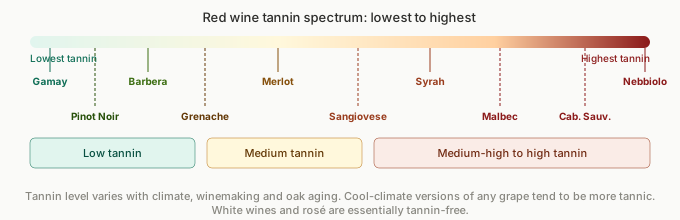
Tannin level varies enormously by grape variety, and while winemaking and climate both shift the final result, some grapes are reliably firmer than others almost regardless of where they are grown. At the high end, Nebbiolo (the grape behind Barolo and Barbaresco) is famous among wine drinkers specifically for pairing surprisingly pale colour with remarkably high tannin, a combination many beginners find counterintuitive since they associate deep colour with structure. Cabernet Sauvignon, Tannat (the backbone of Uruguay’s signature reds and much of Madiran in south-west France), and Sagrantino from Umbria round out the firmest end of the spectrum, all built from thick-skinned grapes that reward, and often require, real bottle age before they soften into balance.
At the gentler end, Gamay (Beaujolais) and Pinot Noir both carry noticeably less tannin, thanks to naturally thin skins and, in Gamay’s case, a winemaking tradition (carbonic maceration) specifically built to minimise extraction even further. Grenache and Barbera sit further along toward medium tannin, offering real structure without Nebbiolo or Cabernet’s intensity, while Merlot, Sangiovese, Syrah, and Malbec occupy the broad middle of the spectrum, each capable of leaning firmer or softer depending on where and how they are made. For a full buying guide built specifically around the gentler end of this spectrum, see our guide to low tannin wines; for how tannin interacts with a wine’s overall weight and structure, our guide to full-bodied red wine covers the related concept of body in more depth.
Tannin and Ageing: How It Changes Over Time
One of the most useful things to understand about tannin is that it is not a fixed, permanent feature of a wine — it actively changes shape inside the bottle as a wine ages. Through polymerisation, individual tannin molecules continue linking together into progressively longer chains over months and years in the bottle. Once these chains grow large enough, two things happen: they become less reactive with the proteins in saliva, which is part of why an aged wine’s tannin can feel noticeably softer and smoother than the same wine tasted young, and eventually some chains grow so large and heavy that they fall out of solution entirely, forming the sediment found in older bottles of serious red wine.
Wine professionals often describe this softened, mellowed state as “resolved” tannin — smooth, integrated, and no longer aggressively drying, in contrast to the harsher, sometimes “green” or unripe-tasting grip of a very young, tightly wound red. It is worth being clear about the limits of this process, though: ageing smooths tannin that was well-made to begin with, built from ripe fruit with careful extraction. It does not rescue a wine with genuinely harsh, poorly managed, or under-ripe tannin in the first place — no amount of cellar time turns bad structure into good structure, it can only soften structure that was sound from the start. Wine Enthusiast’s deeper look at what tannins really are covers this ageing process in more technical detail.
Tannin and Food: Why It Loves Protein and Fat
Tannin’s habit of binding with protein is not limited to the proteins in saliva — it works the same way with the protein and fat in food, which is the entire chemical reason tannic red wine and a well-marbled steak are such a celebrated pairing. The tannin binds with protein and fat on the plate instead of in your mouth, which softens the wine’s own astringency while the fat, in turn, coats the palate less heavily than it would without the wine cutting through it — both sides of the pairing genuinely improve the other. This mechanism, along with the handful of foods that clash badly with tannin instead (very spicy dishes, genuinely bitter greens), is covered in full in our guide to wine pairing principles, which is worth reading in full if tannin’s food-pairing behaviour is what brought you here.
Does White Wine Have Tannin?
Mostly not, but the real answer has more nuance than the common shorthand suggests. Conventional white winemaking presses grapes immediately and ferments only the juice, without the skin contact that gives red wine most of its tannin, which is why the vast majority of white wine carries little to none. There are two genuine exceptions worth knowing. Oak-aged white wines, particularly heavily-oaked styles like a classic barrel-fermented Chardonnay, pick up a real, if usually gentle, dose of hydrolyzable tannin from the wood itself, contributing to the fuller, sometimes slightly grippy texture such wines are known for. Orange wine is the more dramatic exception: made by fermenting white grapes with their skins left in, exactly as red wine is made, it can carry genuine, sometimes quite noticeable tannin — a large part of what gives orange wine its distinctive texture compared with a conventional white. For the full picture on that style, see our guide to orange wine.
How to Taste and Describe Tannin
Once you know to look for it, tannin is one of the easier structural elements to actually locate in a glass: take a sip, let the wine sit across your whole mouth for a moment rather than swallowing immediately, and pay attention to your gums and the inside of your cheeks rather than just your tongue — that is where astringency tends to register most clearly. A useful, quick self-test is whether your mouth feels noticeably drier after swallowing than it did before the sip; the more pronounced that dryness, the higher the tannin.
Beyond simply high or low, tannin has its own descriptive vocabulary worth learning. Grippy or firm describes a noticeable, present tannin that has not yet fully softened. Silky or velvety describes well-resolved, integrated tannin that adds texture without harshness — the goal most winemakers are aiming for in a finished wine. Chalky or dusty describes a fine, powdery-feeling tannin, common in Nebbiolo and some Cabernet Sauvignon. Green or unripe describes harsh, bitter tannin extracted from grapes or seeds that had not fully ripened, generally considered a winemaking flaw rather than a stylistic choice. For the fuller vocabulary of wine tasting beyond tannin specifically, our guide to describing wine taste covers the rest of a wine’s structure — acidity, body, and finish — in the same detail this guide has given tannin.
How Winemakers Manage Tannin
Winemakers have real influence over how much tannin ends up in a finished wine, and how it feels once it does. During fermentation, techniques like punch-downs and pump-overs, physically pushing the floating cap of skins back down into the fermenting juice, or pumping juice up and over that cap, control how much skin contact and extraction happens; more frequent or vigorous punch-downs generally mean more colour and more tannin. Extended maceration, leaving the finished wine in contact with skins for days or weeks after fermentation itself has finished, is a deliberate choice to build more structure into age-worthy reds, common in serious Cabernet Sauvignon and Nebbiolo production.
Micro-oxygenation, a technique that introduces tiny, carefully controlled amounts of oxygen into a wine during or after fermentation, deliberately encourages the same tannin polymerisation that would otherwise take years in the bottle, softening a young wine’s structure faster without waiting for natural ageing. At the other end of the process, winemakers with a wine that has turned out harsher or more astringent than intended can use fining agents, traditionally egg whites, or more commonly today bentonite clay or specific plant-based proteins, which bind with excess tannin and can be filtered out, gently softening a wine’s structure before bottling.
One persistent myth worth addressing directly: tannin is very often blamed for the specific headaches some people get after red wine, but the actual evidence for tannin as the direct cause is weak. Most researchers point instead to histamines, sulfites, or simply the alcohol itself as more likely culprits, and tannin-rich foods like tea and dark chocolate, consumed regularly by people with no history of wine headaches, would be expected to cause the same reaction if tannin itself were really the trigger. If red wine reliably gives you a headache, tannin is a plausible-sounding but largely unproven explanation, not an established one.
Tannin as Structure, Not a Flaw
It is worth ending on the same idea this guide opened with: tannin is not a flaw to tolerate or a technical detail to memorise, it is one of the load-bearing structures of red wine, doing for a wine’s texture what acidity does for its freshness and alcohol does for its weight. A red wine with too little tannin for its fruit and body can taste flabby and shapeless; a wine with tannin genuinely out of balance can taste harsh and closed no matter how good the underlying fruit is. The wines that get real praise for structure, from Barolo to a serious Bordeaux blend, are not simply the most tannic wines available — they are the ones where tannin, acid, fruit, and alcohol all pull their own weight without any single element dominating the rest.
Frequently Asked Questions About Tannin in Wine
What is tannin in wine, in simple terms?
Tannin is a natural plant compound found in grape skins, seeds, stems, and oak barrels that gives red wine its dry, mouth-puckering texture. It works by binding to proteins in your saliva, which reduces how lubricated your mouth feels and creates a rough, drying sensation known as astringency. It is most noticeable in full-bodied red wines and largely absent from most white wine.
Is tannin the same thing as bitterness?
No, though the two are often confused. Bitterness is a basic taste, detected by taste buds on the tongue. Astringency, the sensation tannin actually produces, is a tactile feeling of dryness and roughness detected across the whole mouth, not a taste at all. Smaller tannin molecules tend to register as bitter, while larger, more polymerised tannin molecules produce the drying astringency most people associate with a tannic red wine.
Which wines have the most tannin?
Full-bodied reds made from thick-skinned grapes carry the most tannin, particularly Nebbiolo (Barolo and Barbaresco), Cabernet Sauvignon, Tannat, and Sagrantino. Climate and winemaking both influence the final result, but these grape varieties are reliably firm and structured almost regardless of where they are grown, and often benefit from bottle age to soften fully.
Does tannin go away as wine ages?
It softens rather than disappearing entirely. As a wine ages, individual tannin molecules link together into progressively larger chains through a process called polymerisation, which makes them less reactive with saliva proteins and produces a smoother, more “resolved” mouthfeel. Eventually some of these larger chains become heavy enough to fall out of solution as sediment, which is why older red wines often need decanting.
Does white wine ever have tannin?
Most white wine has very little tannin, since it is pressed and fermented without skin contact. Two exceptions exist: oak-aged white wines pick up a gentle dose of tannin from the wood itself during barrel ageing, and orange wine, made by fermenting white grapes with their skins left in like a red wine, can carry genuinely noticeable tannin as a result.
Why does tannin pair so well with steak and other fatty meat?
Tannin binds with protein and fat wherever it finds them, not only in saliva. When a tannic red wine is paired with a fatty, protein-rich dish like steak, the tannin binds with the fat and protein on the plate instead of in your mouth, which softens the wine’s own astringency, while the fat coats the palate less heavily than it would on its own. Both the wine and the food genuinely improve as a result.