Pet-nat, short for pétillant naturel, is sparkling wine’s wild cousin: cloudy, gently fizzy, often a little funky, and different from bottle to bottle in a way Champagne is specifically engineered never to be. Despite showing up on wine lists as though it were the newest thing in natural wine, pet-nat is actually the oldest method of making a sparkling wine in existence, predating Champagne’s own technique by roughly two centuries. This guide explains what pet-nat actually is, how the ancestral method that makes it works, where it comes from, what it tastes like, and how it fits into the wider natural wine world.
In this article
- 1 Pet-Nat Wine, at a Glance
- 2 The Ancestral Method: How Pet-Nat Is Actually Made
- 3 Older Than Champagne: A Brief History
- 4 What Pet-Nat Actually Tastes Like
- 5 How to Open and Serve Pet-Nat
- 6 Food Pairing
- 7 Is Pet-Nat the Same Thing as Natural Wine?
- 8 Where to Find Pet-Nat Today
- 9 Frequently Asked Questions About Pet-Nat Wine
Pet-Nat Wine, at a Glance
- Full name: pétillant naturel, French for “naturally sparkling.”
- Method: the ancestral method — one single fermentation, finished inside the sealed bottle.
- Typical ABV: 11–12%, lower than most conventional sparkling wine.
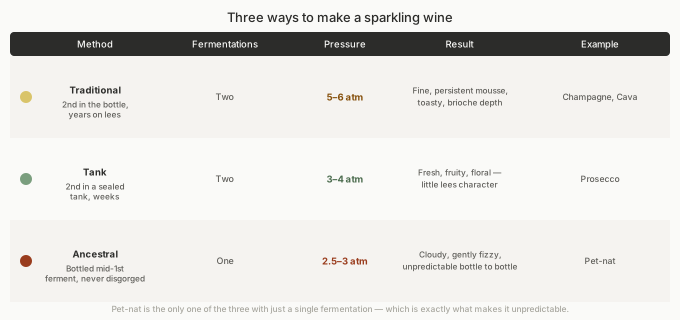
- Pressure: around 2.5–3 atmospheres, gentler than Champagne’s 5–6.
- Appearance: often cloudy, with visible sediment — this is normal, not a fault.
- Closure: usually a crown cap, like a beer bottle, rather than a cork and cage.
- Colours: made in white, rosé, red, and even orange (skin-contact) styles.
- Serve: well chilled, opened slowly and carefully over a sink.
The Ancestral Method: How Pet-Nat Is Actually Made
Every sparkling wine needs a way to trap carbon dioxide, the natural by-product of fermentation, inside the bottle instead of letting it escape into the air. Champagne and other traditional-method sparkling wines do this by deliberately triggering a second fermentation: a finished, still base wine gets a dose of sugar and yeast, is sealed in a bottle, and ferments again from scratch. Pet-nat skips that second fermentation step entirely. Instead, the winemaker bottles the wine while its first and only fermentation is still actively happening. The remaining sugar keeps converting to alcohol and CO₂ inside the sealed bottle, and because the gas has nowhere to go, it dissolves into the wine as bubbles.
This has several knock-on effects that define the whole category. Because there is only one fermentation instead of two, pet-nat usually finishes at a lower alcohol level than Champagne or Prosecco. Because no sugar and yeast (liqueur de tirage) is added to trigger a second fermentation, and no dosage is added afterward to adjust sweetness, pet-nat is often described as the most minimally-intervened style of sparkling wine there is. And because most producers choose not to disgorge (remove the spent yeast sediment from) the bottle afterward, pet-nat is typically left cloudy, with a fine layer of natural sediment at the bottom — exactly how all sparkling wine looks before Champagne-style producers filter and polish it.
The trade-off for all that simplicity is control. A traditional-method producer can calculate exactly how sweet, how fizzy, and how consistent each vintage will be. A pet-nat producer is essentially betting on when to cap the bottle — too early and the fermentation stalls, leaving a flat wine; too late, and pressure can build enough to push out the cap or, in rare cases, shatter the glass. That unpredictability is not a flaw pet-nat lovers tolerate despite themselves; for many, it is the entire point. MasterClass has a good breakdown of the ancestral method for anyone who wants the fuller production detail.
Older Than Champagne: A Brief History
Pet-nat has the branding of a hip new arrival on wine lists, but the ancestral method is, by most accounts, the oldest known way of making a sparkling wine, predating the technique behind Champagne by roughly 150 years. Local legend places the first documented sparkling wine at the Abbey of Saint-Hilaire near Limoux, in southern France, as early as 1531. Before winemakers fully understood fermentation, wines made in cold regions would simply stop fermenting when winter arrived, get bottled for the season, and then resume fermenting once temperatures rose again in spring — producing an accidental, mildly sparkling wine. What looked for centuries like an unpredictable quirk of cold-climate winemaking is precisely the mechanism pet-nat producers now trigger deliberately.
Gaillac, in south-west France, has its own version of the tradition, known locally as méthode gaillacoise, built around the local Mauzac grape. In the Loire Valley, the ancestral method eventually earned its own formal recognition: the Montlouis-sur-Loire appellation created the “Pétillant Originel” designation in 2007, giving Chenin Blanc-based ancestral-method wines an official name distinct from the traditional-method sparklers already made nearby. The modern pet-nat boom, though, is really a natural wine story: as interest in minimally-intervened, low-additive winemaking grew through the 2000s and 2010s, producers across France and eventually the wider world rediscovered the ancestral method as a natural fit for that philosophy, and pet-nat’s current popularity followed.
What Pet-Nat Actually Tastes Like
Because pet-nat can be made from almost any grape variety, in almost any colour, there is no single “pet-nat flavour” the way there is a recognisable Champagne or Prosecco house style. What does carry across nearly every bottle is a gentler, softer fizz than Champagne (a product of that lower pressure), lively acidity, and a layer of yeasty, bready, or slightly funky character from the extended contact with lees that most other sparkling wines are specifically designed to avoid. White pet-nat, often made from Chenin Blanc or other high-acid grapes, tends toward green apple, pear, and citrus; rosé and red versions lean into strawberry, red currant, and cherry; and because skin-contact orange pet-nat exists too, some bottles bring tannin and texture that would be unusual in any other sparkling wine. For more on how sweetness, dosage, and production method shape sparkling wine generally, see our guide to non-vintage Champagne.
Because each bottle ferments and stops at a slightly different point, no two vintages — and sometimes no two individual bottles — taste quite the same. That is a genuinely different experience from most wine, where consistency between bottles is treated as a basic mark of quality, and it is worth going in expecting variation rather than treating it as a flaw. Wine Enthusiast’s pet-nat primer has more on the specific producers and regions worth seeking out.
How to Open and Serve Pet-Nat
Chill pet-nat well, around 6–8°C (43–46°F), and let the bottle stand upright for a day or two beforehand if you want the natural sediment to settle toward the bottom rather than through the whole bottle. Open it slowly and carefully over a sink: because the crown cap has been holding back active carbonation with no dosage to soften it, some bottles foam more than a cork ever would. There is no formal requirement for a flute — a regular wine glass, or even a wide-topped tumbler, is common practice and arguably better suited to a wine this unpretentious, since a wider bowl shows off its aromatics better than a narrow flute does.
Food Pairing
Pet-nat’s casual reputation carries through to the table: its acidity and gentle fizz make it genuinely flexible, closer in spirit to a good dry cider than to a special-occasion Champagne. Fried chicken, pizza, and other salty, fried, or fatty foods are classic matches — the acidity and bubbles cut through richness in exactly the way our guide to wine pairing principles describes for any sparkling wine. Charcuterie, soft cheese, and simple picnic food all work well too, which is a large part of why pet-nat has become the go-to bottle for casual outdoor drinking rather than a formal dinner.
Is Pet-Nat the Same Thing as Natural Wine?
Not exactly, though the two are closely linked in practice. Pet-nat describes a production method — one fermentation, finished in the bottle. Natural wine describes a broader philosophy: organically or biodynamically farmed grapes, native yeast fermentation, and minimal additions or intervention generally. In practice, the overwhelming majority of pet-nat is made by natural winemakers, because the ancestral method’s hands-off character fits that philosophy so naturally. But the two are not strictly identical: it is possible, if unusual, to make a pet-nat under fully conventional viticulture, and plenty of natural wine is still, not sparkling, at all. For the fuller picture of what natural wine does and does not mean, see our guide to natural wine.
If pet-nat’s casual, low-intervention style appeals to you but the fizz does not, our guide to the types of wine and our comparison of Prosecco, Champagne, and Cava are good next stops for placing pet-nat alongside the sparkling wines you already know.
Where to Find Pet-Nat Today
Pet-nat started as a French speciality, concentrated in the Loire Valley and Gaillac, but the last fifteen years have carried it well beyond France. California’s Central Coast, Oregon, and New York’s Long Island all now have established pet-nat producers, often the same small, natural-leaning winemakers already working in still wine. Australia has embraced the style enthusiastically too, particularly among producers already associated with the country’s broader natural wine scene, and the UK, Spain, and Italy all have a growing handful of ancestral-method bottlings of their own.
This spread has also loosened the style’s traditional grape restrictions. Where Loire pet-nat leans on Chenin Blanc and Gaillac on Mauzac, producers elsewhere use whatever they already grow well: Riesling and Grüner Veltliner pet-nats are common in cooler climates, Grenache and Syrah appear in red and rosé versions from warmer regions, and pet-nat made from grapes as far from tradition as Zinfandel or Muscat now shows up on natural wine lists. The one constant is the method itself, not the grape.
Frequently Asked Questions About Pet-Nat Wine
What exactly is pet-nat wine?
Pet-nat, short for pétillant naturel, is a sparkling wine made using the ancestral method: the wine is bottled while its first and only fermentation is still active, trapping carbon dioxide inside the sealed bottle to create natural carbonation. Unlike Champagne or Prosecco, it involves no second fermentation, no added sugar or yeast to trigger one, and typically no disgorgement, leaving the wine cloudy with natural sediment.
Is pet-nat older or newer than Champagne?
Older. The ancestral method behind pet-nat is generally considered the oldest known technique for making sparkling wine, with documented examples in southern France dating back to 1531, roughly 150 years before the traditional method used for Champagne was developed. Pet-nat’s recent popularity is a modern rediscovery of a genuinely old winemaking tradition, not a new invention.
Why is pet-nat cloudy?
Pet-nat is typically left unfiltered and undisgorged, meaning the spent yeast cells (lees) from its single fermentation are never removed from the bottle. This is normal and intentional, not a fault — it is how virtually all sparkling wine looks before producers like Champagne houses filter and polish it. Some drinkers shake the bottle gently to redistribute the sediment; others prefer to pour carefully and leave it behind in the bottle.
Is pet-nat the same as natural wine?
Not exactly, though they are closely linked. Pet-nat refers specifically to a production method, one fermentation finished in the bottle, while natural wine refers to a broader philosophy of minimal intervention, native yeast, and organic or biodynamic farming. Most pet-nat happens to be made by natural winemakers, but the two terms describe different things and are not strictly interchangeable.
Does pet-nat have less alcohol than Champagne?
Usually, yes. Because pet-nat only undergoes a single fermentation rather than the two fermentations used for Champagne, it typically finishes around 11 to 12 percent ABV, somewhat lower than the 12 to 12.5 percent typical of Champagne. The exact figure varies depending on when the winemaker chooses to bottle the wine and stop the fermentation.
How do you open a bottle of pet-nat safely?
Chill the bottle well beforehand and open it slowly over a sink, since pet-nat can foam up more unpredictably than a conventional sparkling wine due to its active carbonation and lack of dosage. Most pet-nat is closed with a crown cap rather than a cork, similar to a beer bottle, so a bottle opener is typically all that is needed rather than the twisting technique used for a Champagne cork.