You’ve seen it in films. A glass is raised, a single sniff taken, and someone quietly announces “2019 Burgundy, Gevrey-Chambertin, Premier Cru” with the confidence of a person who has never once been wrong about anything. Impressive. Also, not the point.
This guide is about how to host a blind wine tasting at home — one of the most genuinely fun evenings you can organise with friends, and one of the fastest ways to actually learn about wine. No sommelier certification required. No pretension needed. Just a few bottles, some paper bags, and the quiet joy of discovering that the €8 supermarket Merlot everyone dismissed was secretly the crowd favourite.
We cover everything: what blind tasting is, why it works, how to set one up step by step, which themes suit different experience levels, how to run the evening, and how to use it to build a better palate over time.
In this article
- 1 What Is Blind Wine Tasting?
- 2 Why It’s Great for Beginners (Not Just Experts)
- 3 How to Host a Blind Wine Tasting at Home: Step by Step
- 4 What to Look For: A Simple Blind Tasting Framework
- 5 Best Blind Tasting Themes by Experience Level
- 6 Blind Tasting ‘Tells’ by Grape: Quick Reference
- 7 How Blind Tasting Builds Your Wine Palate Over Time
- 8 Practical Tips and Common Mistakes
- 9 Frequently Asked Questions About Blind Wine Tasting
- 9.1 How many wines should I serve at a blind wine tasting at home?
- 9.2 Do I need to identify the grape correctly to enjoy a blind tasting?
- 9.3 What is the best theme for a first blind wine tasting party?
- 9.4 How do I reset my nose during a blind wine tasting?
- 9.5 Is blind wine tasting only for wine experts?
- 9.6 What equipment do I need to host a blind wine tasting at home?
What Is Blind Wine Tasting?
A blind wine tasting is simply a tasting where the identity of the wine — label, producer, region, vintage — is hidden from the tasters. The wine is identical to what you’d drink with the label showing; the only thing that changes is what your brain does with it.
And that’s exactly the point. Brains are embarrassingly easy to fool. French researcher Frédéric Brochet once served the same mid-range Bordeaux in two different bottles — one labelled as a cheap table wine, the other as a grand cru. Tasters described the supposed grand cru as “woody, complex, and round” and the same wine in the cheap bottle as “short, light, and faulty.” Same juice. Different words on the label. Completely different perception.
The most famous demonstration of this is the Judgment of Paris — a blind tasting held in 1976 where top French judges compared Californian and French wines without knowing which was which. California won in both red and white categories. The result was so unexpected that the organiser was accused of rigging it. He hadn’t. The wines simply tasted better when nobody knew what to think. Thirty years later, at a re-tasting, a Californian red took the top spot again.
Blind tasting removes the stories attached to bottles. What remains is just your palate and what’s actually in the glass.
Why It’s Great for Beginners (Not Just Experts)
There’s a common assumption that blind tasting is for experts only — that you need to know a lot before it’s any fun. This is exactly backwards.
When you’re a beginner, blind tasting is liberating. Nobody expects you to identify a grape or vintage. The exercise becomes pure sensory exploration: what does this smell like? Fruity, earthy, floral? Does it feel light or heavy in the mouth? Is there a drying sensation on your gums — that’s tannin. Does your mouth water — that’s acidity.
Tasting several wines side by side without labels makes differences obvious in a way they never are with a single bottle at dinner. A light Pinot Noir next to a full-bodied Cabernet Sauvignon is an education in body and tannin that no amount of reading can replicate. The contrast is the learning. Add friends, a bit of friendly competition, and the reveal at the end — and you have an evening that’s both memorable and genuinely educational, regardless of how much wine knowledge anyone brings to the table.
How to Host a Blind Wine Tasting at Home: Step by Step
Step 1: Pick a Theme
A theme transforms a random collection of bottles into a tasting with a point. It doesn’t need to be complicated — the simpler it is, the more everyone learns.
- One grape, different countries — six Pinot Noirs from Burgundy, New Zealand, Oregon, Germany, Alsace, and Chile. You taste how climate and terroir shape a single variety.
- Price showdown — wines at wildly different price points tasted blind. This one always produces the best reactions at the reveal.
- Old World vs New World — European classics against their New World counterparts. Especially revealing with Chardonnay or Cabernet.
- One colour, six bottles — the simplest version: all reds or all whites within a budget, each guest bringing a bottle. Works at any level.
Avoid at first: Rosé and sparkling wines are genuinely hard to distinguish blind. Save those for when the group has a few tastings under its belt.
Step 2: Choose Your Wines
Six bottles is the sweet spot. Fewer than four and there isn’t enough contrast; more than eight and palate fatigue sets in. The easiest way to handle costs: each guest brings a bottle. Set a price floor and ceiling (say, £12–£25) so nobody arrives with something worrying, and nobody feels obligated to overspend. It also means during the tasting, only one person per bottle knows what it is — perfect for the reveal.
Step 3: Hide the Bottles
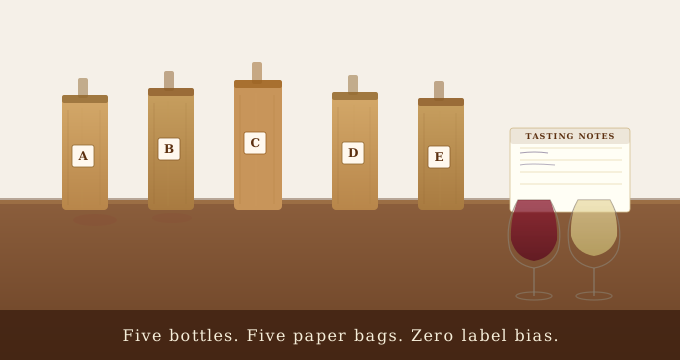
A brown paper bag folded around each bottle with a letter written on the outside is completely sufficient. A few things to catch:
- Remove the foil capsule before bagging — some producers can be identified from capsule colour alone.
- Use letters, not numbers. Scores are given numerically. “I gave Wine B a 7” is far less confusing than “I gave #4 a 4.”
- One person — the host or the biggest wine enthusiast — should be the designated pourer and keeper of secrets.
Step 4: Set the Table
Glasses don’t need to match, but should be the same type and clear. Each taster needs: one glass per wine (or one glass plus a rinsing bucket), a tasting sheet (Wine A through F with space for notes), a pen, a dump bucket, and plain crackers or white bread as palate cleansers. White paper on the table is useful for checking wine colour. Avoid strong food, perfume, or scented candles — one of the few wine rules actually worth following.
Step 5: Run the Tasting
Whites first, then reds, lightest to heaviest. The pourer fills everyone’s glasses (60–75ml per wine), everyone swirls, smells, and tastes in silence for a minute, then the group talks and notes guesses. Move to the next wine before revealing anything — the reveal happens at the end, which keeps suspense intact and stops correct guesses from anchoring everyone else’s thinking.
Nose reset tip: After three or four wines your nose gets overwhelmed. Sniff the inside of your wrist. The neutral scent of your own skin resets your olfactory receptors. Sounds odd; genuinely works.
Step 6: The Reveal
Work through each wine alphabetically. The person who brought it explains what it is and why they chose it, then the group compares their notes against the reality. This is where the learning sticks — when you tasted Wine C, wrote “cherries, earthy, grippy,” and it turns out to be a Sangiovese from Tuscany, that association locks in. Fun scoring categories: Most correct guesses, Best price estimate, Most poetic description, Most confidently wrong (eternal honour).
What to Look For: A Simple Blind Tasting Framework
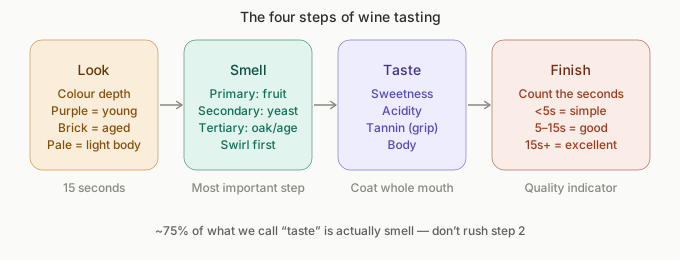
You don’t need the full WSET systematic approach for a fun evening of blind wine tasting at home. Here’s a stripped-down version that gives everyone a useful structure without killing the mood.
1. Look
Hold the glass over white paper. Fifteen seconds is enough. In reds: purple-violet = young; brick or orange at the rim = aged; deep opaque = full-bodied (Malbec, Syrah); pale and transparent = lighter variety (Pinot Noir, Gamay). In whites: pale straw = light, probably unoaked; deep gold = oak, sweetness, or age; greenish tints = youth and high acidity.
2. Smell (the Most Important Step)
Roughly 75–80% of what we call “taste” is actually smell. Swirl the glass first, then bring it to your nose. Start broad — fruity? Floral? Earthy? Spicy? — then go specific. Wine aromas come in three families: primary (from the grape itself: fruit, floral, herbal), secondary (from fermentation: bread, cream, biscuit), and tertiary (from oak aging or bottle age: vanilla, cedar, leather, dried fruit, forest floor). If you’re drawing a blank, sniff your wrist to reset, then ask yourself one question: is this wine fruit-forward or savoury? That single distinction usually opens the door.
3. Taste
Take a proper sip — enough to coat your whole mouth. Note four things: Sweetness (felt on the tip of the tongue; most table wines are dry); Acidity (does your mouth water? High-acid wines make you salivate); Tannin (that drying, grippy sensation on your gums, like strong tea — only in red wines); Body (light like water, or heavy like whole milk?).
4. The Finish
After you swallow, count how long the flavour lingers. Under 5 seconds = simpler wine. 5–15 seconds = good. Fifteen seconds or more is a clear quality indicator. Great wines keep talking to you long after you’ve swallowed.
Best Blind Tasting Themes by Experience Level
For Complete Beginners
- Budget vs Premium — three wines under £10, three over £25. See if the group can tell which is which. Reliably humiliating for everyone, in the best way.
- Red vs White in black glasses — you can’t see the colour at all. Forces you to rely entirely on smell and taste. Surprisingly hard; hilarious results.
- Supermarket own-brand vs named producers — same concept, slightly more pointed. Great for deflating wine snobbery.
For Groups with Some Experience
- Single grape, six countries — six Cabernet Sauvignons from France, California, Chile, Australia, South Africa, and Italy. You learn how climate and winemaking shape the same variety in completely different directions.
- Old World vs New World Chardonnay — Old World restraint and minerality against New World generosity and oak. One of the most instructive comparisons in wine.
- Vertical tasting — the same wine from the same producer across different vintages. You learn how weather and age change a wine.
For Experienced Groups
- Horizontal tasting by appellation — six Burgundy village Pinot Noirs, each from a different village. Specifically tasting terroir differences. The nerdy version, and wonderful for it.
- Grape deduction — six different red grapes, no hints. The group tries to identify each one. Fun for experienced tasters; gently cruel for beginners.
- Natural vs conventional — three natural wines and three conventional from the same grape. Can the group tell which is which? Often can’t.
Blind Tasting ‘Tells’ by Grape: Quick Reference
Identifying a wine at the grape level is the fun intermediate challenge in any blind wine tasting. Here are the most reliable sensory tells for the grapes you’ll encounter most often.
Red Wines
- Pinot Noir — Pale, transparent ruby. Light body. High acidity. Red cherry, cranberry, sometimes dried rose or forest floor. Rarely very tannic. The wine that charms you before you understand why.
- Cabernet Sauvignon — Deep colour. Full body. High tannins. Blackcurrant, cedar, sometimes green pepper. Long finish. Hard to mistake once you know what grip feels like.
- Merlot — Softer and rounder than Cab. Plum, chocolate, sometimes mocha. The rim goes slightly orange earlier — that’s a tell.
- Syrah / Shiraz — Dark, inky. Intensely peppery. Blackberry, olive, smoked meat in Old World styles; jammier and bigger in Australian versions.
- Malbec — Very deep purple with a bright magenta-pink rim — that rim colour is a reliable tell. Blueberry, chocolate, smooth tannins, often vanilla from oak.
- Sangiovese — Medium ruby, often with orange at the rim even when young. Cherry, dried tomato, leather, herbs. High acidity, firm tannins. Tastes unmistakably Italian.
- Nebbiolo — Pale and translucent (looks like Pinot Noir) but with ferocious tannins. Dried roses, tar, cherries. The mismatch between pale colour and savage grip is its biggest tell.
White Wines
- Chardonnay (oaked) — Golden colour. Butter, cream, vanilla, ripe apple. Full and viscous. The oakiest of the mainstream whites.
- Chardonnay (unoaked) — Pale, subtle, apple and citrus. Often mistaken for Pinot Grigio. Chablis is the classic example.
- Sauvignon Blanc — Pale, sometimes greenish. The most immediately recognisable white: grass, gooseberry, grapefruit. Sometimes an arresting cat’s pee note (a compliment).
- Riesling — High acidity, lime, peach, apricot. In older examples, a petrol or kerosene note (also a compliment). Can be dry or sweet.
- Chenin Blanc — Apple, quince, waxy texture. High acidity. Can range from bone dry to lusciously sweet. Loire Valley’s great underrated white grape.
How Blind Tasting Builds Your Wine Palate Over Time
The reason blind wine tasting builds a better palate faster than almost anything else is comparison. When you taste wines side by side, differences that are invisible with a single bottle become obvious. The light-bodied, high-acid wine next to the full-bodied, low-acid one teaches you body and acidity in a way that’s immediate and physical, not intellectual.
What you’re building is sensory memory. The brain stores flavour and aroma associations attached to specific experiences. Once you’ve tasted a pale, tannic, grippy Nebbiolo blind and identified it, your brain files that combination away. Next time you encounter those cues, something clicks.
Things that accelerate the process: take notes even rough ones (the act of writing anchors the memory); smell things in daily life with intention (wine vocabulary is borrowed from the rest of the world); taste regularly with others (other people’s descriptions open your nose in ways your own don’t). And for a quick palate exercise at home, add a squeeze of lemon to one portion of wine and a splash of strong tea to another. You’ve just isolated acidity and tannin in a completely tangible way. Strange; genuinely useful.
The goal is never to become the person who announces vintages at dinner parties. It’s to taste more consciously, enjoy wine more, and stop spending money on bottles you don’t actually like. For more on developing your tasting skills, see our guide to wine tasting fundamentals.
Practical Tips and Common Mistakes
- Keep the group under 12. Six to eight is ideal — enough perspectives for interesting conversation, small enough that everyone can hear each other.
- Don’t reveal wines as you go. Wait until everyone has tasted all of them. One identification anchors everyone else’s thinking.
- Pour small — 60–75ml per wine. With six glasses to get through, generous pours mean someone goes home early.
- Serve the cheese and charcuterie after the reveal, not during. Strong food interferes with tasting.
- Remove all capsules and labels before guests arrive. Even a distinctive bottle shape can tip off an experienced taster.
- Tell the group whether the wines are red or white. Guessing colour blind is a separate exercise; for a first tasting, let people focus on variety and character.
- Have a plan for leftover wine. A funnel lets you pour what’s left back into the bags. Serve everything with dinner afterwards.
Frequently Asked Questions About Blind Wine Tasting
How many wines should I serve at a blind wine tasting at home?
Six is the sweet spot for most groups. Four is the minimum for meaningful comparison; eight is the practical maximum before palate fatigue becomes a problem. If you want to taste more, split into two flights with a break and some food in between.
Do I need to identify the grape correctly to enjoy a blind tasting?
Absolutely not. Correctly identifying grapes is a bonus challenge for experienced tasters. For beginners, the value is in comparing wines side by side, developing descriptive vocabulary, and learning what you actually enjoy. You don't need to name anything correctly to learn a great deal.
What is the best theme for a first blind wine tasting party?
The price showdown works best: mix cheap, mid-range, and premium bottles of the same style and see if the group can rank them by price. This consistently produces surprises, deflates pretension, and generates great conversation. Alternatively, all reds or all whites within a budget, with each guest bringing a bottle, works beautifully as a first event.
How do I reset my nose during a blind wine tasting?
Sniff the inside of your wrist or forearm. The neutral, familiar scent of your own skin resets your olfactory receptors. This works better than sniffing coffee beans, which is a common recommendation but can itself become an intrusive aroma that lingers.
Is blind wine tasting only for wine experts?
Not at all. In many ways it is more valuable for beginners than for experts. It removes the intimidation of labels and price tags, encourages you to trust your own senses, and creates a structure for learning that is hard to replicate when tasting a single wine at dinner. Nobody expects beginners to identify grapes, so the pressure is low and the enjoyment is high.
What equipment do I need to host a blind wine tasting at home?
The essentials are: wine bottles, brown paper bags or numbered wine bags to conceal them, clear wine glasses (matching if possible), tasting sheets, pens, a dump bucket, and plain crackers or bread for palate cleansing. Everything else is optional.