Pour the same wine into a narrow flute, a wide Burgundy bowl, and a plastic tumbler, and it will not just look different in each — it will genuinely smell and taste different too, sometimes dramatically so. That is not an accident of marketing or a story wine glass manufacturers invented to sell more stemware. Bowl width, rim diameter, and glass height each change how much air reaches the wine, how concentrated its aromas become before they hit your nose, and even which part of your tongue the wine lands on first. This guide walks through the major types of wine glasses, what each shape is actually built to do, how to choose a sensible set without overspending, and an honest look at how much of this genuinely matters versus how much is tradition and good marketing.
In this article
- 1 Wine Glass Types, at a Glance
- 2 The Anatomy of a Wine Glass
- 3 Red Wine Glasses: Bordeaux and Burgundy Shapes
- 4 White Wine Glasses
- 5 Rosé Glasses
- 6 Sparkling Wine Glasses: Flute vs Tulip vs Coupe
- 7 Dessert and Fortified Wine Glasses
- 8 Do You Really Need a Universal Glass?
- 9 Does Glass Shape Actually Matter? An Honest Look
- 10 How to Hold a Wine Glass Properly
- 11 Caring for Wine Glasses
- 12 Frequently Asked Questions About Wine Glass Types
- 12.1 What are the main types of wine glasses?
- 12.2 Does the shape of a wine glass really affect how wine tastes?
- 12.3 What is the difference between a Bordeaux and a Burgundy glass?
- 12.4 Should Champagne be served in a flute or a coupe?
- 12.5 What is the proper way to hold a wine glass?
- 12.6 Do I need a different glass for every type of wine?
Wine Glass Types, at a Glance
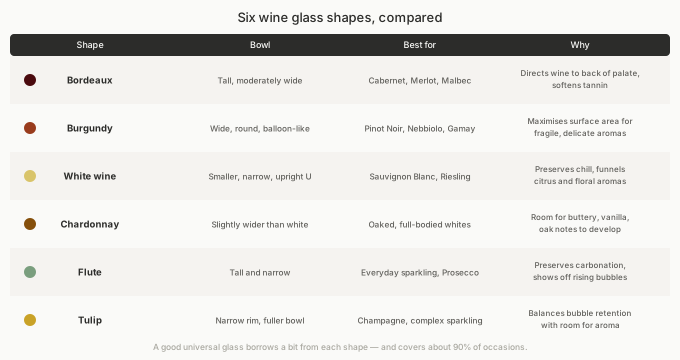
- Bordeaux glass: tall, moderately wide bowl — for full-bodied, tannic reds like Cabernet Sauvignon.
- Burgundy glass: wide, rounded, balloon-shaped bowl — for delicate, aromatic reds like Pinot Noir.
- White wine glass: smaller, narrower, upright — for crisp whites like Sauvignon Blanc.
- Chardonnay glass: a slightly wider white glass — for oaked, full-bodied whites.
- Flute: tall and narrow — for everyday sparkling wine and Prosecco.
- Tulip glass: narrow rim, fuller bowl — for Champagne and complex sparkling wine.
- Universal glass: a compromise shape built to handle most wines reasonably well.
- Copita/small glasses: for Sherry, Port, and other fortified wines.
The Anatomy of a Wine Glass
Every wine glass, whatever its specific shape, is built from the same three functional parts, and each one earns its place. The bowl does most of the actual work: its width determines how much surface area of wine is exposed to air, which controls how quickly aromas evaporate and reach your nose, while its overall shape, and specifically how much it tapers inward toward the rim, determines whether those aromas concentrate for your nose to catch or simply disperse into the room. A wide bowl exposes more wine to air and encourages aeration; a narrower one concentrates aroma more tightly and preserves temperature for longer.
The rim, the diameter of the opening at the very top of the glass, does two jobs at once: it acts as the final funnel that shapes how concentrated the aromas are when they reach your nose, and it also determines where in your mouth the wine actually lands first, which matters more than it sounds like it should, since different areas of the tongue and palate are more or less sensitive to sweetness, acidity, and bitterness. A narrower rim directs wine toward the center or tip of the tongue; a wider one spreads it more broadly across the whole palate, including the back, where bitterness and tannin register most strongly.
The stem exists for a genuinely practical reason beyond elegance: holding a glass by the stem keeps your palm away from the bowl, preventing body heat from warming the wine, which matters especially for whites and sparkling wine served cold. Stemless glasses have become fashionable and are perfectly fine for casual drinking, but they trade away this specific temperature benefit, and a chilled white or Champagne will warm up noticeably faster in a stemless glass held in a warm hand. Our guide to wine serving temperature covers this same effect from the temperature side in more detail.
Red Wine Glasses: Bordeaux and Burgundy Shapes
Most red wine glasses fall into one of two families, both named after the French regions whose signature wines they were originally designed around, though neither is strictly limited to wine from that actual region today.
The Bordeaux glass is the tallest of the common red wine shapes, with a broad but only moderately flared bowl and a relatively narrow opening for its size. That height and shape are deliberate: they direct the wine toward the back of the mouth as you drink, which is thought to soften the perception of tannin and bitterness by getting the wine past the most tannin-sensitive part of the tongue more quickly, while the generous bowl still gives firm, structured wines enough air contact to soften and open up. This shape suits full-bodied, high-tannin reds — Cabernet Sauvignon, Merlot, Malbec, Petit Verdot, Cabernet Franc, and by extension most Bordeaux-style blends, along with other structured reds like Tempranillo and Syrah.
The Burgundy glass looks almost like a fishbowl by comparison: shorter overall, but with a much wider, rounder bowl that flares out dramatically before narrowing back in toward a comparatively small opening. That extra width exists to give fragile, delicate aromas room to develop and concentrate before narrowing sharply at the rim to trap them, which matters because the wines this glass is built for — chiefly Pinot Noir, but also Nebbiolo and Gamay — are typically lighter in tannin and rely much more heavily on complex, easily-lost aromatics than on raw power. The wider opening also directs wine more toward the tip of the tongue rather than the back, emphasising fruit and acidity over tannin and structure. For grape-specific detail on why Pinot Noir in particular is built this way, see our guide to grape flavour profiles and how body and tannin vary by variety.
If you can only own one red wine glass, a moderate Bordeaux shape is generally the safer all-rounder, since a wide Burgundy bowl can feel unnecessarily oversized and unwieldy for a simple, everyday red, while a Bordeaux glass still performs reasonably well across most red styles even if it is not each one’s theoretical ideal. Wine Enthusiast’s deep dive on varietal-specific glassware includes several sommeliers’ takes on exactly this trade-off.
White Wine Glasses
White wine glasses are built around a different priority entirely: rather than maximising aeration, most whites benefit more from preserving chill and concentrating delicate, often more volatile aromatics. This is why a standard white wine glass has a noticeably smaller, narrower, more upright bowl than any red wine glass — less surface area means slower warming and less unwanted oxidation, while the tighter taper toward the rim still funnels citrus, floral, and green aromas efficiently toward the nose. This shape suits crisp, aromatic whites best: Sauvignon Blanc, most Riesling, Pinot Grigio, unoaked Chenin Blanc, and Albariño all show well in a fairly standard, moderately-sized white wine glass.
A dedicated Chardonnay glass exists as a distinct, slightly larger variation on the same white wine template, with a somewhat wider bowl that borrows a little from the red wine playbook. That extra width matters specifically for oaked, full-bodied whites, since a too-narrow glass can trap and exaggerate oak, vanilla, and buttery malolactic notes into something heavier and less balanced than the wine actually is; a bit more room lets those richer notes integrate rather than dominate. As a rough rule, the fuller-bodied and more oak-influenced a white wine is, the more it benefits from a slightly larger glass than a simple, unoaked Sauvignon Blanc would ever need.
Rosé Glasses
Rosé does not have a single, universally recognised dedicated glass the way red and white wine do, but purpose-built rosé glasses that do exist typically feature a gentle outward flare at the rim rather than an inward taper. That flare directs wine specifically toward the tip of the tongue, where sweetness registers most strongly, which flatters rosé’s characteristic fruit-forward, off-dry-leaning character. In practice, a standard white wine glass performs perfectly well for the vast majority of rosé styles, and a dedicated rosé glass is a genuinely optional refinement rather than a meaningful necessity — more a matter of table aesthetics and a subtle flavour emphasis than a dramatic functional difference.
Sparkling Wine Glasses: Flute vs Tulip vs Coupe
The flute is the shape most people picture for Champagne: tall, narrow, and consistent in width from base to rim. Its narrow profile minimises the wine’s surface area, which slows the escape of carbon dioxide and keeps a glass of sparkling wine lively and well-carbonated for considerably longer than a wider glass would, while also creating the visually appealing effect of a steady, continuous stream of bubbles rising in a straight line. This makes the flute an excellent, reliable choice for everyday sparkling wine and Prosecco, where fresh, primary fruit and a lively mousse are the main attraction rather than complex, developed aromatics.
The tulip glass, increasingly the preferred choice among sommeliers even for serious Champagne, strikes a middle ground: it narrows at the rim like a flute, which still helps preserve carbonation reasonably well, but its bowl flares out somewhat more in the middle, giving aromas more room to develop and concentrate before they reach the narrower opening. For a complex, bottle-aged vintage Champagne or a serious grower’s cuvée, where the toasty, brioche-like aromatics developed through extended lees contact are a major part of the appeal, a tulip typically shows the wine’s full character better than a flute does, at only a modest cost in how long the bubbles last.
The coupe, the wide, shallow, saucer-shaped glass associated with old Hollywood glamour, is genuinely the worst of the three for actual sparkling wine, and it is worth being direct about this rather than romanticising it: its wide open bowl maximises surface area, which causes bubbles to dissipate rapidly, often losing most of their fizz within minutes of pouring. Contrary to a persistent piece of wine lore, the coupe’s shape was not modelled on any specific person’s breast — that story, variously attached to Marie Antoinette or Madame de Pompadour, has no credible historical basis and the shape almost certainly derives from older European drinking-glass and champagne-saucer traditions. Coupes remain a legitimate, stylish choice for Champagne cocktails, where a bit of lost fizz matters far less, but a genuinely good bottle of Champagne deserves a flute or tulip instead.
Dessert and Fortified Wine Glasses
Fortified and dessert wines are almost always served in noticeably smaller glasses than table wine, for two very practical reasons: pour sizes for these wines are typically much smaller to begin with, given their higher alcohol and intense sweetness, and a smaller bowl still concentrates their aromatics effectively without needing much volume of wine to do it. The traditional Sherry glass, called a copita, is a small, narrow, tulip-shaped glass that suits both the delicate, saline character of a dry Fino or Manzanilla and the richer, nuttier profile of an aged Oloroso, simply by virtue of its efficient, concentrated aroma delivery. Port is typically served in a similarly small, though slightly rounder, glass, sized to suit the smaller pours a high-alcohol fortified wine calls for while still allowing its dark fruit and spice aromatics room to show. Sweet dessert wines like Sauternes or a late-harvest Riesling are often served in a small white-wine-style glass rather than a dedicated shape, since their existing aromatics tend to be intense enough not to need much specialised help.
Do You Really Need a Universal Glass?
For most people, the honest answer is that a good universal glass covers the large majority of real-world drinking occasions without meaningful compromise. A well-designed universal glass typically features a medium-sized bowl with a moderate taper, larger than a dedicated white wine glass but smaller than a full Bordeaux or Burgundy shape, aiming to perform reasonably well across reds, whites, and rosé without being ideally suited to any single one of them. Well-regarded examples include the Zalto Universal, Riedel’s various “Vinum” or “O” series universal shapes, and Jancis Robinson’s own “One” glass, designed in collaboration with Richard Brendon specifically as a single all-purpose shape for both everyday and serious drinking.
A sensible way to build a glassware collection, rather than buying every shape at once, is in tiers. Start with two shapes: one versatile red wine glass, ideally a moderate Bordeaux-style shape, and one standard white wine glass; together these will comfortably cover roughly 90% of everyday drinking without any real compromise worth worrying about. Add a set of proper flutes or tulip glasses once sparkling wine becomes a regular part of your drinking, since it is the one category where a substitute glass genuinely underperforms in a noticeable way. Spiegelau’s fine wine glass guide is a useful reference for exactly this kind of tiered buying decision. Only expand into more specialised shapes — a dedicated Burgundy glass, a Chardonnay-specific shape, varietal glasses for Sauvignon Blanc or Riesling — once your palate and preferences have sharpened enough that you can reliably notice the difference and actually care about it, since these refinements matter progressively less the earlier you are in developing your own tasting vocabulary. Our guide to tasting wine like a sommelier covers the broader skills that make glass choice worth caring about in the first place.
Does Glass Shape Actually Matter? An Honest Look
It is worth being upfront about a genuine tension in this whole subject: much of the specific, detailed reasoning behind varietal-specific glassware, down to exact rim angles for particular grape varieties, originates from research commissioned or conducted by glassware manufacturers themselves, most prominently Riedel, which first introduced varietal-specific glasses in 1958 and has built much of its marketing around exactly this claim ever since. That does not automatically make the underlying physics wrong — bowl width and rim diameter genuinely do change aroma concentration and where wine lands on the tongue, and those are measurable, physical facts rather than marketing inventions. But the specific degree of difference between, say, a dedicated Cabernet Sauvignon glass and a slightly less specialised Bordeaux-shaped glass is considerably more debatable than the difference between a proper wine glass and a plastic cup or a Champagne coupe used for still red wine.
Repeated blind tastings, run by sommeliers and educators independent of any glassware brand, do consistently confirm the broad strokes of this guide: a big, tannic red genuinely does taste harsher and flatter in a small, narrow glass than in a wide-bowled one, and sparkling wine genuinely does lose its fizz faster in a wide coupe than a narrow flute. Where the evidence gets much thinner is at the fine-grained end — whether a wine truly needs its own uniquely shaped glass as opposed to a good general red or white shape is far less settled, and reasonable, experienced palates disagree. The practical takeaway: trust the broad categories in this guide with confidence, but treat the more granular, grape-specific glass shapes as a genuine refinement for enthusiasts rather than a requirement for anyone to enjoy wine properly.
How to Hold a Wine Glass Properly
Hold a stemmed wine glass by the stem, or, for larger bowls, by the base, rather than cupping your hand around the bowl itself. This is not a matter of etiquette or formality for its own sake — it is a direct, practical extension of everything above about temperature. Body heat transfers into the wine remarkably quickly through the thin glass of a bowl, and a chilled white or a glass of Champagne held in a warm palm for even a few minutes can noticeably warm past its ideal serving temperature, undoing the careful chilling that got it there in the first place. Holding by the stem also keeps fingerprints and smudges off the bowl, which matters if you want a clear view of the wine’s colour and clarity, an important part of tasting it properly.
For a full-bodied red that is meant to warm slightly and aerate as you drink it, this rule relaxes somewhat: a brief hand around the bowl to help gently warm a too-cold glass is a legitimate, deliberate technique rather than a mistake, so long as it is a conscious choice rather than an unconscious habit undermining a wine you actually wanted served cold.
Caring for Wine Glasses
Good wine glasses, particularly thin, delicate crystal, are worth a bit of dedicated care. Hand-washing with warm water and, if needed, a small amount of mild, unscented detergent is generally safer than a dishwasher, since dishwasher heat and detergent can etch fine crystal over time and leave a cloudy film that dulls its clarity, while the harsh spray cycle risks chipping delicate rims and stems against other items. Rinse thoroughly, since any leftover soap residue can affect a wine’s aroma and the appearance of its bubbles in the case of sparkling wine. Dry and store glasses upright rather than resting on their rims, which can chip a thin, delicate edge over time, and use a dedicated glass-polishing cloth rather than an ordinary towel to avoid streaks and lint. A glass drying rack, which lets glasses air-dry upside down without ever touching a surface, is a worthwhile investment for anyone building a serious collection.
Frequently Asked Questions About Wine Glass Types
What are the main types of wine glasses?
The main types of wine glasses are the Bordeaux glass (tall, moderately wide bowl, for full-bodied reds), the Burgundy glass (wide, rounded bowl, for delicate reds like Pinot Noir), the standard white wine glass (smaller and narrower, for crisp whites), the Chardonnay glass (a slightly larger white wine shape, for oaked whites), the flute and tulip (for sparkling wine and Champagne), and the universal glass, a compromise shape built to handle most styles reasonably well.
Does the shape of a wine glass really affect how wine tastes?
Yes, though the effect is more pronounced at the broad category level than at the fine-grained, grape-specific level. Bowl width genuinely changes how much air reaches the wine and how concentrated its aromas become, and rim diameter genuinely changes where wine lands on the tongue. A big red in a small glass, or Champagne in a wide coupe, shows a clear, repeatable difference; whether a wine needs its own uniquely shaped glass beyond a good general red or white shape is far less settled.
What is the difference between a Bordeaux and a Burgundy glass?
A Bordeaux glass is taller with a moderately wide bowl and a narrower opening, designed to direct wine to the back of the palate and soften tannin in full-bodied reds like Cabernet Sauvignon. A Burgundy glass is shorter but much wider and rounder, giving delicate, aromatic reds like Pinot Noir more room to develop their fragile aromas, and directing wine toward the tip of the tongue to emphasise fruit over tannin.
Should Champagne be served in a flute or a coupe?
A flute or tulip glass, not a coupe. The flute’s narrow shape preserves carbonation far longer than a coupe’s wide, open bowl, which causes bubbles to dissipate rapidly. A tulip glass is increasingly preferred for serious Champagne since its slightly fuller bowl allows more complex aromas to develop while still retaining bubbles reasonably well. Coupes are better reserved for Champagne cocktails, where losing some fizz matters less.
What is the proper way to hold a wine glass?
Hold a wine glass by the stem or base rather than cupping the bowl, since body heat transfers into the wine quickly through thin glass and can noticeably warm a chilled white or sparkling wine within minutes. Holding by the stem also keeps fingerprints off the bowl, preserving a clear view of the wine’s colour and clarity.
Do I need a different glass for every type of wine?
No. A good universal glass, along with a set of flutes or tulips for sparkling wine, covers the large majority of everyday drinking without meaningful compromise. Specialised shapes for individual grape varieties are a genuine refinement for enthusiasts with a developed palate and a serious collection, not a requirement for enjoying wine properly.