
“Serve red at room temperature” is one of the most repeated pieces of wine advice there is, and it is also, in any modern centrally-heated home, quietly wrong. The advice dates from an era of unheated European stone houses and cellars, where “room temperature” genuinely meant somewhere around 60°F (15°C) — not the 70°F-plus of a contemporary living room. Get a wine’s serving temperature right and the same bottle can taste completely different: brighter, more balanced, more expressive of whatever the winemaker was actually going for. Get it wrong, and a wine can taste flat, harsh, or hot, regardless of how good it actually is. This guide sets out the correct wine serving temperature for every major style, explains why temperature changes flavour as dramatically as it does, and covers exactly how to get a bottle there — and back — in practice.
In this article
- 1 Wine Serving Temperature, at a Glance
- 2 Why Temperature Changes How Wine Actually Tastes
- 3 The “Room Temperature” Myth
- 4 Red Wine Serving Temperature
- 5 White Wine Serving Temperature
- 6 Rosé Serving Temperature
- 7 Sparkling Wine Serving Temperature
- 8 Fortified and Dessert Wine Serving Temperature
- 9 How to Actually Get There: Chilling and Warming Methods
- 10 Does Glassware Affect Temperature Too?
- 11 Troubleshooting: Signs Your Wine Is at the Wrong Temperature
- 12 Serving Temperature Through a Meal, and Through the Seasons
- 13 Frequently Asked Questions About Wine Serving Temperature
- 13.1 What is the correct serving temperature for red wine?
- 13.2 Should red wine really be served at room temperature?
- 13.3 What temperature should white wine be served at?
- 13.4 What is the fastest way to chill a bottle of wine?
- 13.5 Why does Champagne need to be served so cold?
- 13.6 Can serving wine at the wrong temperature really ruin it?
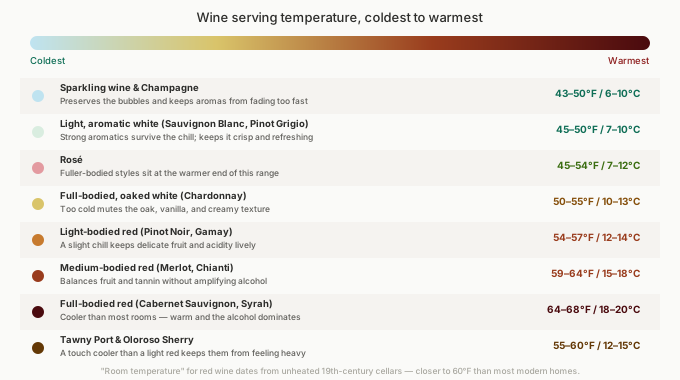
Wine Serving Temperature, at a Glance
- Sparkling wine & Champagne: 43–50°F (6–10°C) — the coldest of all major styles.
- Light, aromatic white (Sauvignon Blanc, Pinot Grigio, Riesling): 45–50°F (7–10°C).
- Rosé: 45–54°F (7–12°C), fuller styles toward the warmer end.
- Full-bodied, oaked white (Chardonnay): 50–55°F (10–13°C).
- Light-bodied red (Pinot Noir, Gamay): 54–57°F (12–14°C).
- Medium-bodied red (Merlot, Chianti): 59–64°F (15–18°C).
- Full-bodied red (Cabernet Sauvignon, Syrah): 64–68°F (18–20°C) — cooler than most people assume.
- Fortified wine (Port, Sherry): 55–64°F (12–18°C), depending on style.
Why Temperature Changes How Wine Actually Tastes
Temperature does not just make wine feel colder or warmer in the mouth — it fundamentally changes which of a wine’s components you perceive most strongly, because heat controls how readily aroma compounds evaporate out of the liquid and reach your nose. Warmer wine releases more volatile aromatic compounds more quickly, which is why a red wine that seems muted straight from the fridge can smell noticeably more expressive after a few minutes warming in the glass. Alcohol is itself highly volatile, so warmth amplifies the perception of alcohol too — serve a 14.5% Cabernet too warm and the alcohol can start to dominate the fruit, tasting hot or sharp rather than rounded.
Cold works in the opposite direction on several fronts at once. It suppresses aroma volatility, which is exactly why serving a delicate, complex white too cold can mute it into tasting like not much at all. But cold also sharpens the perception of acidity and, in reds, tannin — which is why a crisp, high-acid white or sparkling wine benefits from a serious chill, while an already firm, tannic red served too cold can taste even more astringent and closed than it should. Sweetness perception shifts with temperature too: sugar tastes less sweet when very cold, which is one reason dessert wines and off-dry styles are often served chilled rather than at room temperature, to keep them from feeling cloying.
In short, every wine has a temperature window where its acidity, tannin, sweetness, alcohol, and aromatics sit in the balance the winemaker actually intended, and moving far outside that window in either direction throws the whole thing off, no matter how good the wine is in the bottle.
The “Room Temperature” Myth
The advice to serve red wine “at room temperature” is centuries old, dating to a time — largely 18th and 19th century France — when the phrase meant something very different from what it does today. European stone houses and the cellars beneath them, without central heating, sat naturally around 55–60°F (13–16°C) for most of the year. When old wine guides said to serve red “chambré,” brought up to room temperature, they meant that comparatively cool baseline, not the 68–72°F (20–22°C) that a modern, centrally-heated living room typically sits at.
That gap matters more than it sounds like it should. A full-bodied red served at a genuinely modern room temperature of 72°F is a meaningful 4 to 8 degrees warmer than this guide’s recommended range for even the boldest reds, and warm enough to noticeably emphasise alcohol over fruit. The practical takeaway is simple: “room temperature” is not a useful instruction in a modern home, and even bold reds benefit from 15 to 20 minutes in the fridge before serving, particularly in summer or in a well-heated room.
Red Wine Serving Temperature
Red wine temperature scales with body and tannin, not with colour alone. Light-bodied reds like Pinot Noir, Gamay (Beaujolais), and many Loire reds are best at 54–57°F (12–14°C) — genuinely cool to the touch, closer to a cellar than a living room, since a slight chill keeps their delicate fruit and acidity lively rather than letting them turn flat and jammy. Medium-bodied reds such as Merlot, Chianti, and most Grenache-based wines do best at 59–64°F (15–18°C), a range that balances ripe fruit against moderate tannin without amplifying alcohol. Full-bodied, high-tannin reds — Cabernet Sauvignon, Syrah, Nebbiolo, Malbec — want 64–68°F (18–20°C), noticeably cooler than most people instinctively serve them, since their higher alcohol and firmer tannin both become more aggressive as temperature climbs past this range. For more on which reds fall into this fuller-bodied category and why, see our guide to full-bodied red wine.
A useful rule of thumb: if a red wine bottle feels genuinely warm to the touch, it is almost certainly above its ideal serving temperature, and 15 to 20 minutes in the refrigerator will improve it more often than not, even for a serious Cabernet or Barolo. Lower-tannin reds are especially sensitive to serving temperature since chilling helps mask any residual harshness; see our guide to low-tannin wines for styles that particularly reward a slight chill.
White Wine Serving Temperature
Light, aromatic whites — Sauvignon Blanc, Pinot Grigio, most Riesling, unoaked Chenin Blanc — are best served genuinely cold, 45–50°F (7–10°C), since their strong aromatics survive a serious chill and the cold keeps them crisp and refreshing rather than flabby. Full-bodied, typically oaked whites like a barrel-fermented Chardonnay do better slightly warmer, 50–55°F (10–13°C), because serving them as cold as a Sauvignon Blanc mutes exactly the oak, vanilla, and creamy texture that define the style; try the same bottle at both ends of that range side by side and the difference is genuinely striking.
A common mistake in the opposite direction from red wine: treating every white the same and serving all of them straight from the back of the fridge, typically around 38–40°F. That works fine for a Sauvignon Blanc but actively hides what a good oaked Chardonnay or Viognier is trying to do; if a full-bodied white tastes strangely muted or simple straight from the fridge, letting it sit for 10 to 15 minutes before pouring often reveals considerably more character.
Rosé Serving Temperature
Rosé sits in a fairly wide band, 45–54°F (7–12°C), because the category covers such a range of styles. Pale, delicate Provence-style rosé wants the colder end of that range, served almost as cold as a light white, to keep its subtle red-fruit and citrus character crisp. Fuller-bodied, more structured rosé styles — a deeper-coloured Tavel, or an Italian Cerasuolo d’Abruzzo with real tannin and body — do better a few degrees warmer, closer to 50–54°F, so their structure and depth aren’t flattened by an overly aggressive chill. For the full range of what “rosé” can mean stylistically, see our guide to wine colours explained.
Sparkling Wine Serving Temperature
Sparkling wine and Champagne want the coldest serve of any major style, 43–50°F (6–10°C), for a very specific reason beyond simple refreshment: carbon dioxide is more soluble in cold liquid, so a properly chilled bottle holds its bubbles and pressure far better than a warm one, both in the bottle and once poured into the glass. Serve sparkling wine too warm and it loses its fizz noticeably faster, going flat in the glass within minutes rather than holding a steady, fine bead. Serious, complex vintage Champagne and other prestige cuvées are sometimes served at the slightly warmer end of this range, or allowed to warm a few degrees in the glass, specifically to let their toasty, developed aromas show through more fully — a deliberate trade-off between preserving the mousse and revealing complexity. For more on what separates those styles, our guide to non-vintage Champagne covers the production side of that complexity in depth.
Fortified and Dessert Wine Serving Temperature
Fortified wines vary by style more than most categories. Tawny Port, already softened by extended barrel ageing, is best at 55–58°F (12–14°C), while Vintage and Ruby Port, generally fuller and more tannic, prefer a slightly warmer 60–64°F (15–18°C), similar to a medium-bodied red. Sherry splits even more sharply by style: delicate, dry Fino and Manzanilla want a genuine chill, 44–48°F (7–9°C), closer to a light white than anything else in the fortified category, while richer, oxidative styles like Oloroso and sweet Pedro Ximenez are better around 57°F (14°C), where their nutty, caramelised character can fully show. Sweet dessert wines such as Sauternes, Tokaji, and late-harvest Riesling are generally served chilled, 45–55°F depending on richness, since cold noticeably tempers sweetness and keeps a rich dessert wine from tasting cloying.
How to Actually Get There: Chilling and Warming Methods
A standard refrigerator, generally set around 37–40°F, cools a bottle by roughly 2°F (about 1°C) every 10 minutes, meaning a bottle starting at room temperature typically needs 2 to 4 hours in the fridge to reach ideal white or sparkling wine temperature, and 30 to 60 minutes for most reds. For a much faster chill, an ice bucket filled with a mix of ice and cold water, rather than ice alone, is dramatically more effective, since water conducts cold against the glass far better than air pockets between ice cubes do — a bottle in ice water typically reaches serving temperature in 15 to 20 minutes, roughly twice as fast as ice alone. Adding a handful of salt to that ice water speeds things up further, since salt lowers the freezing point of the water and allows it to get colder than plain ice water would.
The freezer works for a genuine emergency but carries real risk: 15 to 20 minutes can rapidly bring a bottle down to serving temperature, but leaving it too long risks freezing the wine, which can push the cork out or crack the bottle as the liquid expands. Set a timer rather than trusting memory. In the other direction, a red wine that has been over-chilled, or a bottle brought straight from a cool cellar, warms fastest simply cupped in the hands around the bowl of the glass, or left to sit at room temperature for 10 to 15 minutes. VinePair’s guide to serving temperature has more detail on individual grape varieties beyond what this guide covers — never use a microwave or hot water, both of which heat unevenly and can cook a wine’s delicate aromatic compounds, essentially damaging it rather than warming it gently.
Does Glassware Affect Temperature Too?
Glass shape genuinely affects how fast a wine’s temperature changes once poured, which is part of why different styles are traditionally served in different glass shapes. A wide-bowled red wine glass exposes much more surface area to the surrounding room air, which is deliberate: reds are meant to warm and aerate somewhat in the glass, softening tannin and releasing aroma as they do. A narrow white wine glass or a flute or tulip-shaped sparkling wine glass does the opposite, minimising surface area to help a chilled wine hold its temperature — and its bubbles, in sparkling wine’s case — for longer after pouring. This is also why holding a wine glass by the stem rather than cupping the bowl matters more than it might seem: body heat transferred through your palm can noticeably warm a chilled white or sparkling wine within a few minutes of holding it, undoing some of the careful chilling that got it there. For more on how glass shape and wine interact more broadly, our guide to tasting wine like a sommelier covers proper glass handling in more depth.
Troubleshooting: Signs Your Wine Is at the Wrong Temperature
Signs a wine is too warm: a hot, boozy smell that hits before any fruit or floral notes do; flavours that taste soft, dull, or “flabby” rather than fresh; a red wine that feels heavy and alcoholic rather than balanced. The fix is straightforward — 10 to 20 minutes in the fridge or an ice bucket, checking periodically, is almost always enough to correct it.
Signs a wine is too cold: very little smell at all, even when swirled vigorously; acidity or tannin that tastes sharper and more aggressive than the wine’s reputation would suggest; a general sense that the wine tastes simple or one-dimensional. Wine Folly’s serving temperature chart is a handy quick reference to keep alongside this one. The fix here is patience rather than intervention — let the glass sit for 5 to 10 minutes, or cup the bowl briefly in your hands, and taste again once it has had a chance to warm slightly.
In both cases, small adjustments matter more than they seem to: a 3 to 5 degree shift is often enough to move a wine from feeling wrong to feeling exactly right, which is why professional tastings so often happen with a thermometer close at hand rather than by guesswork alone.
Serving Temperature Through a Meal, and Through the Seasons
A bottle poured at the correct temperature does not stay there for long, which matters more than most drinkers account for. A glass of red wine served at a perfect 65°F in a warm dining room, or left in direct sun on an outdoor table, can climb several degrees within 20 to 30 minutes, drifting out of its ideal range well before the bottle is finished. The reverse happens outdoors in cold weather or air conditioning, where a chilled white or rosé can lose its intended crispness by warming unexpectedly little, or, in genuinely cold outdoor settings, keep chilling past where it tastes its best. An ice bucket at the table for whites, sparkling wine, and even lighter reds in hot weather is standard practice for exactly this reason, not just presentation — it holds the wine near its target temperature throughout service rather than only at the moment of pouring.
Outdoor and summer drinking calls for its own adjustments. Reds generally benefit from serving at the cooler end of their range, or with a very brief chill, when the ambient temperature is warm, since heat compounds on top of a wine’s own alcohol to push it toward feeling hot faster than it would indoors. Whites and rosé, likewise, may need refreshing in an ice bucket partway through an outdoor meal rather than assuming the initial chill will hold. In colder weather, the opposite adjustment applies: a wine chilled to indoor-serving temperature can taste noticeably flatter outdoors in winter than the same bottle would inside, simply because the ambient cold pushes it below its ideal window rather than toward it.
One quality-related myth worth naming directly: serving a wine very cold does not make a cheap or flawed bottle taste better in any meaningful sense — it simply mutes both the flaws and whatever good qualities the wine has, which can create an illusion of drinkability that falls apart the moment the wine warms up even slightly in the glass. This is a legitimate practical trick for a large-format party pour where nuance is not the priority, but it is worth recognising for what it is: masking, not improving. A genuinely good wine, by contrast, is worth the small effort of finding its actual correct temperature, since that is where it is built to show its best.
Frequently Asked Questions About Wine Serving Temperature
What is the correct serving temperature for red wine?
It depends on body: light-bodied reds like Pinot Noir are best at 54 to 57°F (12 to 14°C), medium-bodied reds like Merlot at 59 to 64°F (15 to 18°C), and full-bodied reds like Cabernet Sauvignon at 64 to 68°F (18 to 20°C). This is generally cooler than a modern, centrally-heated room, so even bold reds usually benefit from 15 to 20 minutes in the refrigerator before serving.
Should red wine really be served at room temperature?
Not at a modern room’s actual temperature. The advice originated when European homes and cellars, without central heating, naturally sat around 55 to 60°F, which is close to this guide’s recommended range. A modern room at 70°F or warmer is noticeably hotter than ideal for any red wine, and can make it taste more alcoholic and less balanced than intended.
What temperature should white wine be served at?
Light, aromatic whites such as Sauvignon Blanc or Pinot Grigio are best served quite cold, at 45 to 50°F (7 to 10°C). Full-bodied, oaked whites like Chardonnay do better slightly warmer, at 50 to 55°F (10 to 13°C), since serving them as cold as a lighter white mutes their oak, texture, and aromatic complexity.
What is the fastest way to chill a bottle of wine?
An ice bucket filled with a mix of ice and cold water chills a bottle much faster than a refrigerator, typically in 15 to 20 minutes, because water conducts cold against the glass more efficiently than air. Adding a handful of salt to the ice water speeds this up further. A freezer can work in an emergency but should be timed carefully, since a wine left too long can freeze and push out the cork or crack the bottle.
Why does Champagne need to be served so cold?
Carbon dioxide is more soluble in cold liquid, so a well-chilled bottle of Champagne or other sparkling wine holds its bubbles and pressure noticeably longer than a warm one, both before and after opening. Serving sparkling wine too warm causes it to lose its fizz much faster, going flat in the glass within minutes rather than holding a steady bead.
Can serving wine at the wrong temperature really ruin it?
It will not permanently damage a wine, but it can significantly distort how it tastes in the moment. Too warm, and alcohol and flatness dominate; too cold, and aromas mute while acidity or tannin can taste sharper than intended. The good news is that the effect is temporary and reversible — simply adjusting the temperature, with a few minutes in an ice bucket or a few minutes resting in the glass, usually corrects it.