
Every wine list has a greatest-hits section. Merlot, Chardonnay, Malbec, Prosecco. Safe choices, reliable choices, often very good choices. But for every famous name occupying shelf space at your wine merchant, there are a dozen grapes and regions producing extraordinary wine that nobody’s heard of — partly because they don’t advertise, partly because they’re too small to export widely, and partly because wine culture has always rewarded the familiar.
This is a guide to underrated wines: the eight bottles (and categories) that sommeliers reach for when nobody’s watching, that wine-loving friends recommend in hushed tones, and that consistently deliver far more quality than their price tags suggest. Some are unknown grapes. Some are famous grapes in unknown regions. All of them are genuinely worth your time and money. They’re also, crucially, all still affordable — the moment a hidden gem gets discovered en masse, the prices follow. Consider this a head start.
In this article
- 1 1. Cru Beaujolais: Not What You Think
- 2 2. Assyrtiko from Santorini: Greece’s Great White
- 3 3. Grüner Veltliner: Austria’s Answer to Chardonnay
- 4 4. Nerello Mascalese from Etna: Sicily’s Pinot Noir
- 5 5. Picpoul de Pinet: The Perfect Aperitif White
- 6 6. Blaufränkisch: Austria’s Dark Horse Red
- 7 7. Barbera d’Asti: Piedmont’s Generous Workhorse
- 8 8. Mencía from Galicia: Spain’s Great Unknown
- 9 How to Find Your Own Hidden Gems
- 10 Frequently Asked Questions
1. Cru Beaujolais: Not What You Think
If you’ve ever dismissed Beaujolais as that fizzy fruity stuff that arrives in November, this is the most important correction in wine. That’s Beaujolais Nouveau, a completely different animal. The ten Crus of Beaujolais — Morgon, Moulin-à-Vent, Fleurie, Chiroubles, Julienas, Saint-Amour, Brouilly, Côte de Brouilly, Chénas, Régnié — are serious wines from granite-rich hillside vineyards in the northern part of the region, and some of them age for decades.
The grape is Gamay, historically dismissed as a “very bad and disloyal plant” by the Duke of Burgundy (who banned it to protect Pinot Noir). On Beaujolais’ granitic soils, though, Gamay produces wines of remarkable finesse: red cherry, violet, kirsch, sometimes a stony minerality, always with that characteristic silky lightness. Serve slightly chilled. The tannins are gentle. The fruit is vivid and precise.
Morgon is the gateway to the serious end. It produces fuller-bodied, earthy wines with dark cherry and mineral depth that genuinely resemble light Burgundy — but at a fraction of the price. The verb morgonner exists in French to describe wines that have developed that particular earthy, mushroomy depth. Producers Marcel Lapierre, Jean Foillard, and Guy Breton (three of the famous “Gang of Four” who pioneered the natural wine movement here) make world-class Morgon that costs £20–30 a bottle. Top Burgundy Pinot Noir at the same quality level costs ten times more.
Moulin-à-Vent is the most structured, the most age-worthy — a serious dinner party red that can hold its own against Burgundy. Fleurie is the most elegant and floral — violets, raspberries, silky tannins — and is the easiest place to start.
The rule with Cru Beaujolais: look for village names on the label (Morgon, Fleurie, Moulin-à-Vent), not just “Beaujolais”. If it says only “Beaujolais” or “Beaujolais Nouveau”, it’s the basic stuff.
2. Assyrtiko from Santorini: Greece’s Great White
Greek wine is one of the most reliably underestimated categories in the world. Mention it at a dinner party and watch people mentally picture resinous taverna wine. That association has nothing to do with modern Greek wine, and particularly nothing to do with Assyrtiko from Santorini.
Assyrtiko is a white grape grown on the volcanic island of Santorini, where the vines are trained into distinctive basket shapes (kouloura) close to the ground to protect against fierce Aegean winds. The volcanic, ash-rich soil has never been affected by phylloxera, meaning some of the vines are genuinely ancient — over 200 years old. Yields are tiny. Quality is exceptional.
The wine is extraordinary: a white with the acidity of Chablis, the textured richness of a good Burgundy, and a mineral salinity that seems to come straight from the volcanic rock and the sea air. Lemon, citrus zest, flint, sea spray, bitter herbs. High alcohol but perfectly balanced. Long finish. And significant ageing potential — top examples from producers like Argyros Estate, Domaine Sigalas, and Gaia Wines (their “Wild Ferment” is a benchmark) evolve beautifully over five to ten years.
It has been called “the Chardonnay of Greece”, which undersells it. Assyrtiko has a distinctive personality that no other white grape replicates. Master of Wine Tim Atkin has written that the name on the label alone is a reliable guarantee of quality — rare for any wine region. A bottle costs £15–25 and the quality-to-price ratio is among the best in white wine.
Food pairing: the obvious match is seafood, particularly octopus, grilled fish, and oysters. The salt and acidity handle the briny richness perfectly. Also excellent with creamy goat’s cheese and Greek meze.
3. Grüner Veltliner: Austria’s Answer to Chardonnay
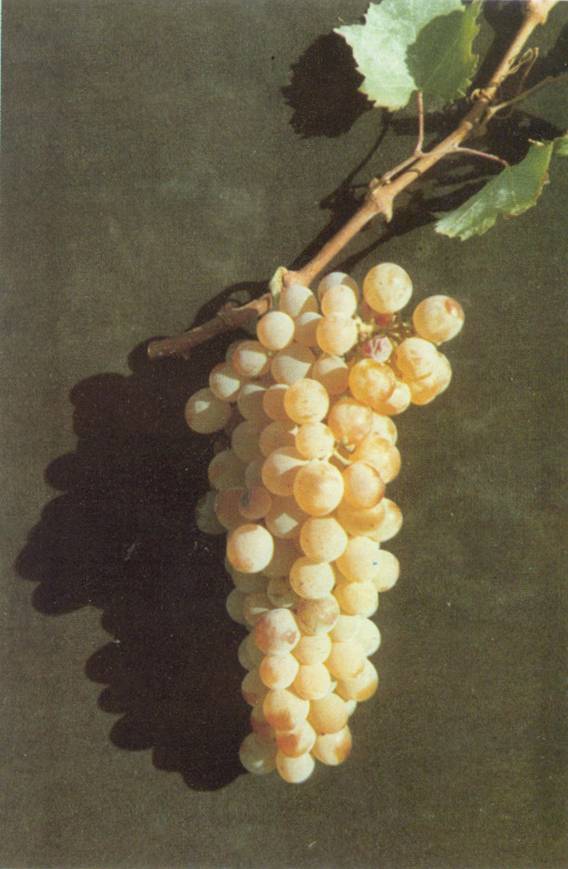
Austria makes some of the best dry white wines in the world, and almost nobody outside Germany, Switzerland, and a few obsessive sommeliers knows about them. Grüner Veltliner is the most planted grape in Austria, and in its best expressions it is a serious candidate for one of the world’s great white wine grapes.
The grape’s calling card is a distinctive white pepper note — not always, but often enough to be a useful identifier. Around that: green herbs, citrus, green apple, sometimes a floral lift. High acidity always. The texture varies from light and crisp (entry-level) to full-bodied and complex (Smaragd, the top classification from the Wachau region, which can age for 20 years).
The key regions: the Wachau, a dramatic stretch of terraced vineyards along the Danube River, produces the most powerful and age-worthy GV. Kamptal and Kremstal produce excellent, mineral examples at more accessible prices. Weinviertel is the everyday category: fresh, light, meant for early drinking, and often excellent value under £15.
Look for producers: Frédéric Loimer (Kamptal), Domaine Wachau (cooperative but seriously good), Weingut Alzinger (Wachau), and Bründlmayer (Kamptal) for wines that demonstrate what the grape can do at its most serious. For an accessible entry: any “Weinviertel DAC” — the designated appellation for the grape in that region — under £15.
Food pairing: Grüner Veltliner’s high acidity and herbal character make it brilliant with food. The classic Austrian pairing is Wiener Schnitzel (the acidity cuts the fat perfectly), but it also shines with asparagus, light pasta dishes, sushi, and anything green and vegetable-heavy. It handles asparagus better than almost any other wine — a useful party trick for a notoriously difficult pairing.
4. Nerello Mascalese from Etna: Sicily’s Pinot Noir
Mount Etna is an active volcano in northeastern Sicily, and its slopes produce some of the most exciting red wines being made anywhere in the world right now. The grape is Nerello Mascalese, a local variety that grows on volcanic basalt soils at altitude, and it produces wines that bear an uncanny resemblance to fine Burgundy: pale ruby, high acidity, perfumed red fruit, earthy minerality, silky tannins, and significant ageing potential.
The comparison isn’t superficial. Some of the vines on Etna are over 100 years old, pre-phylloxera, ungrafted, growing in soil so hostile (volcanic pumice, almost no topsoil) that they produce minuscule yields of concentrated, complex fruit. The altitude — many vineyards are above 600 metres — keeps temperatures cool and preserves acidity. The result is wines with European restraint from a southern Italian island that the wine world assumed could only make big, extracted reds.
The Etna Rosso DOC is the appellation to look for. The north side of the volcano (Etna Nord) is considered the finest — the contrada (neighbourhood) names Crasà, Calderara, Feudo di Mezzo, and Santo Spirito appear on labels from leading producers and function somewhat like Burgundy’s lieux-dits. Producers to know: Cornelissen, Benanti, Passopisciaro, Terre Nere, and Caciorgna.
The catch: Etna Rosso is no longer the secret it was ten years ago, and prices have risen sharply as the international wine press and sommeliers worldwide discovered it. A basic Etna Rosso starts around £20–30; the contrada wines from top producers reach £60–100+. Still excellent value for the quality, but not the bargain it once was. The equivalent wine from Burgundy would cost five times more.
5. Picpoul de Pinet: The Perfect Aperitif White
If you want a white wine that is crisp, refreshing, bone dry, food-friendly, and costs under £12, Picpoul de Pinet is one of the best answers in wine. It comes from the Languedoc in southern France, near the Thau lagoon on the Mediterranean coast — which is relevant, because the local pairing is oysters from the lagoon, and the wine’s bracing salinity and acidity are designed for exactly that.
The Picpoul grape produces lean, pale, high-acid whites with citrus (lime, grapefruit, lemon), a slightly grassy herbal note, and a mineral finish. It is not a complex wine. It is not meant to be. It is meant to be drunk cold, on a warm day, with shellfish or a light salad, and it is extraordinarily good at that. The name means “lips stinger” in Occitan, a reference to the grape’s eye-watering acidity. This is the beach wine of southern France and it deserves wider recognition.
Reliable producers include Domaine Felines Jourdan, Domaine de l’Arjolle, and the Cave de l’Ormarine cooperative. Most Picpoul de Pinet costs £9–15 and the quality is remarkably consistent. Drink it young — this is not an ageing wine. It’s the oyster-bar version of wine: fresh, uncomplicated, perfect.
6. Blaufränkisch: Austria’s Dark Horse Red
Austria’s greatest red grape is almost entirely unknown outside central Europe, and this is a genuine shame. Blaufränkisch (called Lemberger in Germany and Kékfrankos in Hungary) produces wines of genuine distinction: dark fruit — blackberry, plum, bilberry — with a characteristic spicy, peppery quality reminiscent of Syrah, high acidity, firm but not aggressive tannins, and a freshness that prevents it from ever feeling heavy or over-extracted.
The best expressions come from Burgenland, a region in eastern Austria bordered by Hungary, where the soils vary from limestone to slate to iron-rich gravel. The sub-regions of Mittelburgenland (the warmest, producing the most full-bodied and tannic expressions) and Eisenberg (cooler, more elegant, mineral) both merit attention. Producers to seek out: Moric (the producer that arguably put Blaufränkisch on the international map), Wachter-Wiesler, and Heinrich.
Price: £15–35 for village-level wines, up to £50–70 for the flagship single-vineyard expressions. Still significantly cheaper than equivalent-quality Syrah or Nebbiolo. The food pairings are wide: roast duck, venison, beef stew, game birds. The acidity keeps everything lively and the fruit intensity matches rich, savoury dishes well.
7. Barbera d’Asti: Piedmont’s Generous Workhorse
In Piedmont — home of Barolo and Barbaresco, two of Italy’s most expensive and revered wines — Barbera is what the locals actually drink on a Tuesday night. It is the everyday wine of the region: abundant, generous, food-friendly, and made to be enjoyed young without ceremony.
Barbera d’Asti (from the hills around Asti) and Barbera d’Alba (from around the Alba/Barolo area) are the two main appellations. Both produce wines with the grape’s characteristic combination: very high natural acidity (higher than almost any other Italian red), very low tannin, and vibrant dark fruit — cherry, blackberry, plum, sometimes a hint of chocolate or liquorice. The acidity makes it extraordinarily food-friendly; the low tannin makes it immediately approachable without years of cellaring.
At the top end, producers like Giacomo Conterno, Vietti, and Braida di Giacomo Bologna make seriously complex, age-worthy Barbera that — were it from a different region or a less fashionable grape — would cost three times as much. The Braida “Bricco dell’Uccellone” is a benchmark: deep, rich, expressive Barbera from old vines that challenges the assumption that Piedmont’s real business is Nebbiolo alone. Most good Barbera d’Asti costs £12–25.
Food pairing: almost anything. Pasta with tomato-based sauces, pizza, risotto, grilled meats, aged cheese. The acidity works as a palate cleanser across a wide range of dishes. It’s the most versatile Italian red most people have never tried.
8. Mencía from Galicia: Spain’s Great Unknown
Spanish wine has a strong international identity built on Tempranillo-based Rioja and Garnacha-based wines from the south. What most people don’t know about is the extraordinary red wine being made in the green, rainy, mountainous northwest corner of Spain — Galicia — from a grape called Mencía.
Mencía is a revelation for anyone who assumed Spanish reds meant warm, opulent, oak-heavy wines. It is light to medium-bodied, high in acidity, with red cherry, floral notes (violet, rose), herbal character, and a distinctive mineral, sometimes almost smoky quality from the slate soils of the Ribeira Sacra appellation. Ribeira Sacra’s vineyards are carved into vertiginous terraces on the banks of the Sil and Minho rivers — one of the most dramatic and labour-intensive wine landscapes in the world.
The comparison that keeps coming up is Pinot Noir — that same combination of lightness, high acidity, red fruit, and terroir expressiveness. But Mencía has its own character that goes beyond any comparison: a savouriness and herbal edge that is distinctly Galician, reflecting a landscape that looks more like Ireland than southern Spain.
Other key appellation: Bierzo (in neighbouring Castile y León, across the regional border), where Mencía also thrives in ancient slate vineyards. Producers to look for: Descendientes de J. Palacios (Bierzo, the estate that put the region on the global map), Raul Pérez (both Bierzo and Ribeira Sacra), and Ad Gaude in Ribeira Sacra. Most bottles cost £15–30, with the prestige single-vineyard wines reaching £50–60.
Food pairing: roast pork (the regional dish, Galicia is famous for its pork). For a deeper dive into matching these wines with food, our food and wine pairing guide covers the principles., grilled octopus, lamb chops, hard Spanish cheeses. The acidity handles rich meat beautifully, and the lightness means the wine doesn’t overwhelm delicate seafood.
How to Find Your Own Hidden Gems
The eight wines above are a starting point, not a definitive list. The wine world contains thousands of grapes and regions of which the mainstream knows almost nothing. The most reliable methods for finding hidden gems of your own:
- Trust the sommelier’s wine list over the house wines. When a restaurant has a thoughtfully composed list, the section nobody orders is usually the most interesting. Ask what the sommelier would drink. The answer is almost never the Pinot Grigio.
- Shop at independent wine merchants. The supermarket shelf is optimised for familiarity. Independent merchants build their lists around discovery and often have ranges from small, interesting producers that major retailers never stock.
- Follow the value principle. Regions adjacent to famous ones are often excellent and underpriced. Saint-Aubin next to Puligny-Montrachet. Languedoc south of the Rhône. Bierzo north of Galicia. The geography of value follows the geography of fame.
- Use the regional match as a guide. A grape you don’t know from a country whose food you love is a reliable starting point. If you love Spanish food, explore Galician Mencía and Galician Albariño. If you love Greek food, Assyrtiko is not a leap.
- Go to wine fairs and trade tastings. Many are open to the public and the entire point is discovery. You taste fifty wines in an afternoon and walk away with three new producers you’ve never heard of.
- Try a blind tasting with unknown labels. Remove the price tag and the famous name, taste honestly, and you may find your favourites are not what you expected. Our guide to blind tasting at home explains exactly how to set this up.
The common thread in all of these: curiosity as a method. Treat wine less as a destination (I like Malbec) and more as a process (what else might I like?). The bottles that change people’s relationship with wine are almost always the ones they didn’t expect.
Frequently Asked Questions
What are some underrated wines worth trying?
Eight of the most rewarding underrated wines: Cru Beaujolais (especially Morgon, Moulin-à-Vent, and Fleurie from Gamay grapes), Assyrtiko from Santorini (Greece’s great volcanic white), Grüner Veltliner from Austria, Nerello Mascalese from Etna in Sicily, Picpoul de Pinet from southern France, Blaufränkisch from Austria, Barbera d’Asti from Piedmont, and Mencía from Galicia and Bierzo in Spain. All offer exceptional quality at prices well below their equivalent in more famous regions.
What is the best underrated white wine?
Assyrtiko from Santorini is the strongest single recommendation: it has the acidity of Chablis, the texture of white Burgundy, a volcanic minerality found nowhere else, and it consistently over-delivers on its modest price tag (£15–25). Grüner Veltliner from Austria is the second strong recommendation, particularly Wachau or Kamptal examples, for its distinctive white pepper and herb character, high acidity, and outstanding food compatibility. Both remain relatively unknown to general wine buyers despite being highly regarded by professionals.
What is the best underrated red wine?
Cru Beaujolais is the best value underrated red wine category overall, particularly Morgon and Moulin-à-Vent from producers like Marcel Lapierre and Jean Foillard. You get Burgundy-quality Pinot Noir character at a fraction of the price. For a single grape, Nerello Mascalese from Etna in Sicily is arguably the most exciting red discovery of the past decade: pale, elegant, terroir-driven, and resembling fine Burgundy in a way nobody expected from Sicily. Mencía from Bierzo and Ribeira Sacra in Spain is the other strong recommendation — light, aromatic, mineral, and consistently impressive.
Why are some excellent wines so unknown?
Several factors keep excellent wines unknown. Some regions are too small to export widely. Some grapes are difficult to pronounce (Blaufränkisch, Mencía, Assyrtiko), which creates a barrier to casual purchase. Some excellent wines are overshadowed by more famous neighbours — Barbera by Barolo, Picpoul by Provence rosé. And wine marketing has historically favoured famous names over quality discovery. The result is that genuinely exceptional wine often sits unnoticed on shelves next to average wine with a more recognisable label.
Is Cru Beaujolais actually good wine?
Yes, emphatically. Cru Beaujolais from the best producers and villages — particularly Morgon, Moulin-à-Vent, and Fleurie — is serious wine that can rival Burgundy in quality and outlast a decade in the cellar. The association with Beaujolais Nouveau (the cheap, fruity wine released every November) has damaged the category’s reputation, but the Crus have nothing in common with Nouveau except the grape. A Morgon from Marcel Lapierre or Jean Foillard is genuinely world-class wine at £20–30 a bottle.
What wine should I try if I want something different?
Start with Picpoul de Pinet if you want a fresh, easy white: it is inexpensive, reliably delicious, and very different from Sauvignon Blanc or Pinot Grigio. For a red, try a Cru Beaujolais — either Fleurie for something perfumed and silky, or Morgon for something with more depth and structure. Both will surprise you if your reference point is standard supermarket Beaujolais. If you want to go further, Assyrtiko from Santorini (white) or Mencía from Bierzo (red) are the two that most reliably convert sceptics into enthusiasts.