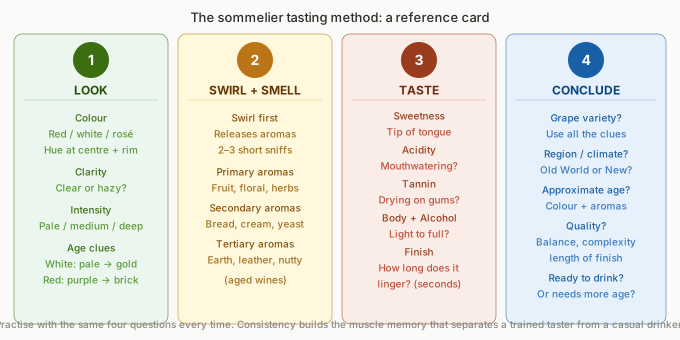
The difference between the way a sommelier tastes wine and the way most people taste it is not natural ability — it is method. A trained taster approaches every glass with the same four questions in the same order, and that structure makes the difference between a vague impression (“I like it” or “I don’t”) and a genuine understanding of what is in the glass. The good news is that the method is completely learnable. The WSET Systematic Approach to Tasting and the Court of Master Sommeliers’ Deductive Tasting Format are both built on the same four stages: look, swirl and smell, taste, conclude. This guide walks you through each stage with the specific questions professionals ask at every step.
In this article
Why Method Matters
Without a framework, tasting is reactive — you respond to whatever impression hits you first, usually the most obvious aroma or flavour, and miss everything underneath it. A structured method forces you to systematically interrogate the wine: to look before you smell, to smell before you taste, to isolate each structural element before forming an overall impression. This sequencing matters because each stage gives you information that informs the next one, and because the brain’s tendency to leap to conclusions is the enemy of accurate tasting.
The other benefit of method is that it produces a consistent record. Two tasters using the same framework produce notes that can be compared; the same taster using the same framework over time produces a body of data that reveals patterns in their palate and in the wines they taste. Tasting notes without a structure are anecdotes; tasting notes with a structure are evidence.
Before You Start: Setting Up for Success
A few practical conditions make accurate tasting possible:
- The right glass — a large, tulip-shaped glass with a stem (ISO tasting glass or similar). Never fill it more than one-third. The empty upper portion concentrates aromas at the rim where you can detect them; a full glass disperses them. The stem matters because holding the bowl warms the wine and leaves fingerprints that obscure the colour.
- A white background — a white sheet of paper, a white napkin, or a white tablecloth behind the glass. Without a neutral background, the wine’s colour is distorted by the environment. Hold the glass at a 45-degree angle over the white surface to see the full colour range from the centre to the rim.
- Good light — natural daylight is best. Incandescent light yellows the wine; fluorescent light flattens it. If natural light isn’t available, a clean white LED light source is acceptable.
- No competing smells — avoid perfume, aftershave, scented candles, or strong food odours before tasting. Your olfactory receptors can only process so much at once, and competing smells suppress your ability to detect the wine’s subtler aromas.
- Tasting earlier in the day — the palate is freshest in the morning and early afternoon. Most professional tasting competitions and trade tastings take place between 9am and 1pm for exactly this reason.
- Water and plain crackers — for resetting the palate between wines. Nothing flavoured — crackers should be unflavoured; water should be still, not sparkling (the carbonation interferes with aroma detection).
Step 1: Look
Hold the glass against a white background, tilted at 45 degrees. Before you smell or taste anything, spend 15–20 seconds looking at the wine. You are gathering three types of information: colour, clarity, and intensity.
Colour
Colour tells you the wine’s approximate age and sometimes its grape variety. Look at the centre of the glass for the primary colour, and at the rim for how the colour evolves toward the edge. The rim is where age shows most clearly.
- White wines range from pale lemon-green (very young, high acidity) through gold (more developed, often oaked) to deep amber (very old or oxidised). A white wine with a deep gold colour is likely at least 5–10 years old; amber suggests significant age or deliberate oxidation (as in Sherry or Jura wines).
- Red wines range from deep purple-ruby (young, tannic) through garnet and ruby-red (mid-age) to brick and tawny at the rim (older wines). The rim is the tell: a purple rim indicates youth; a brick-orange rim indicates 8–15+ years of age. A completely consistent colour from centre to rim indicates a young, probably high-tannin wine.
- Rosé wines range from pale salmon through copper to light ruby. Darker rosé is typically from fuller-bodied production methods; paler rosé from lighter extraction.
Clarity
Most wines should be clear and bright. Haziness can indicate a fault (except in unfiltered or natural wines where it is intentional and harmless). Sediment in an older red wine is normal and expected — stand the bottle upright for several hours before opening and decant carefully.
Colour Intensity
Described as pale, medium, or deep. A pale red (Pinot Noir, Gamay) suggests a thin-skinned grape or cool climate. A deep, almost opaque red (Malbec, Syrah, Barolo in youth) suggests thick skins, extended maceration, or a warm climate. Colour depth in whites correlates with oak ageing, sugar level, and age.
Step 2: Swirl, then Smell
Swirling is not an affectation — it has a precise function. The aromas in wine exist as volatile compounds dissolved in the liquid. Swirling agitates the surface, accelerates the evaporation of these compounds, and drives them into the air space above the wine where your nose can detect them. A glass that hasn’t been swirled gives you a fraction of the aromatic information available.
How to swirl properly: Keep the base of the glass on a flat surface and move the glass in small, firm circles. This is more controlled and less likely to spill than swirling in mid-air. Once you’re comfortable, you can lift the glass and swirl, but the table method is more reliable and produces better results.
After swirling, take two or three short, focused sniffs rather than one long deep inhale. Short sniffs capture more information; a long deep sniff overwhelms the olfactory receptors. Place your nose just inside the rim of the glass, not fully inside it. Between sniffs, pull back and breathe normally to reset.
You are looking for three layers of aroma:
Primary Aromas
Fruit, floral, and herbal notes that come directly from the grape variety. These are the most obvious aromas in young wines: the blackcurrant in Cabernet Sauvignon, the cherry in Pinot Noir, the grapefruit and grass in Sauvignon Blanc, the peach and violet in Viognier. Identifying primary aromas is the first step in working out what the grape variety might be.
Try to be specific: not just “fruity” but which fruit? Red or dark? Fresh or cooked? Citrus or stone fruit or tropical? The more specific you can be, the more diagnostic information you are recording.
Secondary Aromas
Notes that come from fermentation and winemaking rather than the grape itself. These include: bread dough, yeast, cream, and butter (from lactic fermentation and yeast activity); vanilla, toast, cedar, and smoke (from oak barrel ageing); and the slightly reductive, struck-match note that can appear in wines bottled without oxygen exposure. Detecting secondary aromas tells you something about how the wine was made.
Tertiary Aromas
Complex notes that develop through extended ageing in oak and bottle. Earth, mushroom, forest floor, leather, tobacco, dried fruit, truffle, beeswax, petrol (in aged Riesling), and honey are all tertiary aromas. Their presence indicates a wine with genuine age and development. If you detect tertiary aromas in a young wine (three years or less), it may signal either premature ageing or a wine from a very hot vintage.
Also assess aroma intensity: low (you have to put your nose inside the glass to smell it), medium, or high (detectable from several centimetres away). A wine with low aroma intensity might be closed (young and tannic, not yet showing its potential), or simply a light variety. High intensity aromas suggest a very aromatic variety (Riesling, Gewurztraminer, Viognier) or a particularly expressive example of any grape.
Step 3: Taste
Take a small sip — enough to coat the entire palate, not so much that it’s difficult to keep in your mouth. Then do what sommeliers call “chewing” the wine: draw a small amount of air through your lips (with a slight slurp) to volatilise the aromas retronasally — the aromas travel from the back of your mouth up into your nasal cavity, where your olfactory receptors detect them. This is retronasal olfaction, and it is responsible for around 75–80% of what we experience as flavour. The flavours you “taste” in wine are mostly smelled from the inside.
While the wine is in your mouth, assess the following structural elements in order:
Sweetness
Detected at the very tip of the tongue, in the first fraction of a second of contact. If you notice a sugary sensation immediately upon the wine touching your tongue, there is residual sugar. If the first sensation is acidic or neutral, the wine is dry. This is the first and most immediately obvious structural element to identify. Rate it: bone dry, dry, off-dry, medium sweet, sweet, or lusciously sweet.
Acidity
Felt along the sides of the tongue and inside the cheeks, and as a mouthwatering sensation that causes saliva to flow. High acidity makes your mouth water vigorously; low acidity produces a flat, heavy impression. After swallowing, run your tongue along the inside of your cheeks — if you find yourself salivating, the acidity is at least medium. Rate it: low, medium minus, medium, medium plus, or high.
Tannin (red wines)
The drying, astringent sensation on your gums, the insides of your cheeks, and the roof of your mouth. Note both the level (low, medium, high) and the texture (soft and velvety? grippy and drying? harsh and bitter?). Harsh tannins indicate a young, unintegrated wine or one made from very thick-skinned grapes without enough age. Velvety tannins indicate age, careful winemaking, or a naturally thin-skinned grape. The texture of the tannins tells you more about quality than the level alone.
Body and Alcohol
Body — the weight and fullness of the wine in your mouth — is primarily determined by alcohol. High-alcohol wines feel heavier and more warming; low-alcohol wines feel lighter and more delicate. A hot or burning sensation on the back of the throat and in the finish indicates alcohol that is out of balance with the wine’s fruit and acidity. A wine where you barely notice the alcohol has it in balance. Rate body as: light, medium minus, medium, medium plus, or full.
Palate Flavour Intensity
How intense are the flavours on the palate? Do they match the intensity of the aromas, or is the palate more or less expressive than the nose? A wine where the palate is less expressive than the nose may be closing up with age; one where the palate is more expressive may be opening up in the glass. Note whether the same flavour descriptors apply on the palate as on the nose, or whether new flavours emerge.
Finish
The flavour and sensation that remains after you swallow. This is one of the most reliable indicators of wine quality: a short finish (the flavour disappears in less than five seconds) indicates a simpler wine; a long finish (30, 60 seconds or more of persistent flavour) indicates complexity and quality. Count the seconds from swallowing to the moment the flavour fades. Note also whether the finish is clean and pleasant or bitter and unpleasant. A great wine leaves a long, evolving finish that changes over minutes rather than seconds.
Step 4: Conclude
This is where you synthesise everything observed in the first three steps into an overall assessment. Professionals draw two types of conclusions: a quality assessment and a blind identification (in formal tasting contexts).
Quality Assessment
The WSET framework assesses quality on a four-point scale: faulty, poor, acceptable, good, very good, or outstanding. The key markers of quality are:
- Balance: acidity, tannin, alcohol, and fruit all in proportion, with no single element dominating or feeling out of place.
- Length: a long, clean finish that persists and evolves.
- Complexity: multiple layers of flavour and aroma that reveal themselves over time in the glass and on the palate.
- Typicity: does the wine accurately represent the character of its grape variety and region? A great Barolo should taste like Barolo; a great Sancerre should taste like Sancerre.
- Intensity: both on the nose and the palate.
Blind Identification
In professional tasting, you work deductively: using the clues from all three earlier stages to reason toward the wine’s identity. The Court of Master Sommeliers’ deductive method trains tasters to move from observation to a specific conclusion about grape variety, region, and vintage. This is the hardest skill in wine — it requires both a trained palate and a large library of reference tastings — but the framework is the same even for beginners: use the clues systematically.
The key deductive questions:
- Colour — what can the depth and hue tell me about the grape and its age?
- Climate — are the aromas and structure pointing toward a cool climate (high acidity, restrained fruit, more earthy) or a warm climate (lower acidity, riper fruit, higher alcohol)?
- Old World or New World? — Old World wines typically show more restraint, earthiness, and acidity; New World wines more ripe fruit, body, and alcohol.
- Oak? — vanilla, toast, and cedar indicate oak aging. How much? New or old oak?
- Age? — tertiary aromas, softened tannins, evolved colour at the rim, and a more developed palate all point toward an older wine.
Building the Habit: How to Practise
The four-step method only becomes genuinely useful when it becomes automatic — when you no longer need to consciously think about each stage because the questions have become ingrained. That automaticity comes from repetition, but repetition needs to be structured to be effective.
- Taste two wines side by side rather than one at a time. Comparison is the most powerful teaching tool in wine: the differences become obvious when you can taste them simultaneously. See our guide on how to develop your wine palate for the specific exercises that build this skill fastest.
- Write your notes in the order of the four steps, every time. Structure the note as: appearance — nose — palate — conclusion. This forces you to observe each stage rather than jumping straight to impressions.
- Taste blind as often as possible. Knowing the wine in advance creates confirmation bias: you find what you expect to find. Tasting blind — even just covering the label — forces genuine sensory engagement. Our blind tasting guide covers how to set this up at home.
- Train your nose outside of wine. Stop and consciously notice what you are smelling in everyday life: citrus at the market, herbs while cooking, wet earth after rain. Every consciously-registered aroma adds to the reference library your brain draws on when you encounter it in a glass. Our wine tasting terms guide explains the aroma vocabulary professionals use to describe what they find.
- Keep a tasting notebook. The act of writing the notes cements the observations in memory and produces a record you can return to. The most useful format: wine name, date, the four-step note, a score out of 20, and what you would pair it with.
Frequently Asked Questions
How do sommeliers taste wine?
Sommeliers use a systematic four-step method to evaluate every wine: Look (assess colour, clarity, and intensity against a white background), Swirl and Smell (swirl to release aromas, then take two to three short sniffs to identify primary, secondary, and tertiary aroma layers and their intensity), Taste (take a small sip, draw air through the wine to activate retronasal olfaction, and assess sweetness, acidity, tannin, body, palate intensity, and finish length), and Conclude (synthesise all observations into an assessment of quality and, in blind tasting, an identification of grape variety, region, and approximate age). This framework — used by the WSET and the Court of Master Sommeliers — transforms a subjective experience into a structured, reproducible evaluation.
Why do sommeliers swirl wine?
Swirling wine accelerates the evaporation of volatile aromatic compounds from the surface of the wine, driving them into the air space above the liquid where your nose can detect them. Without swirling, a significant proportion of the wine’s aromatic complexity stays dissolved in the liquid and is inaccessible. The technique is not performative — it directly increases the amount of aromatic information available to the taster. The best way to swirl is to keep the base of the glass on a flat surface and move it in small, firm circles, which is more controlled and less likely to spill than swirling in mid-air.
What is the WSET systematic approach to tasting?
The WSET (Wine and Spirit Education Trust) Systematic Approach to Tasting (SAT) is a structured framework for evaluating wines objectively and consistently. It guides tasters through appearance (colour, clarity, intensity), nose (aroma characteristics and intensity), palate (sweetness, acidity, tannin, alcohol, body, flavour intensity, flavour characteristics, finish), and conclusions (quality assessment and readiness to drink). The WSET SAT is used across all levels of WSET wine qualifications and is designed to build progressively from basic identification at Level 2 to comprehensive evaluation at Diploma level. It is the most widely used formal tasting framework in wine education globally.
Why do wine tasters “chew” the wine?
The “chewing” motion — moving the wine around the mouth and drawing a small amount of air through the lips — serves two purposes. First, it ensures the wine contacts all areas of the palate, including the parts most sensitive to acidity, tannin, and sweetness. Second, drawing air through the wine volatilises the aromatic compounds in the mouth, driving them retronasally into the nasal cavity where your olfactory receptors can detect them. This retronasal olfaction is responsible for around 75–80% of what we experience as flavour. The “chewing” technique is simply a way to maximise the retronasal aromatic information available from each sip.
How long should a wine finish last?
A short finish (flavour disappears within three to five seconds of swallowing) indicates a simple wine. A medium finish (five to ten seconds) is typical of a good everyday wine. A long finish (30 seconds or more of persistent, evolving flavour) is a reliable indicator of quality and complexity. The very greatest wines — a Grand Cru Burgundy, a mature Barolo, a great Sauternes — can have finishes lasting several minutes. Professionals measure finish in seconds by counting after swallowing. The finish should be pleasant: bitterness, harshness, or heat that persists are negative qualities even in a long finish.