If you have ever found a red wine uncomfortably bitter, with a drying, puckering sensation that grips your gums and lingers on your cheeks, what you experienced was tannins. Tannins are naturally occurring compounds in grape skins, seeds, and stems that give red wine its structure and its sometimes challenging texture. They are not a flaw — in a well-made wine they provide backbone, complexity, and ageing potential. But sensitivity to tannins varies significantly between people, and for those who find grippy, high-tannin reds unpleasant, there is a whole world of soft, smooth, fruit-forward red wines that are just as interesting and far more immediately enjoyable.
In this article
What Are Tannins and Why Do They Vary?
Tannins are polyphenolic compounds derived from grape skins, seeds, and stems. In winemaking, red wine is fermented in contact with the grape skins (this is what gives it its colour and tannin). The longer and more intensive that contact, and the thicker the grape’s skins, the more tannin ends up in the finished wine.
Four things determine how tannic a wine is:
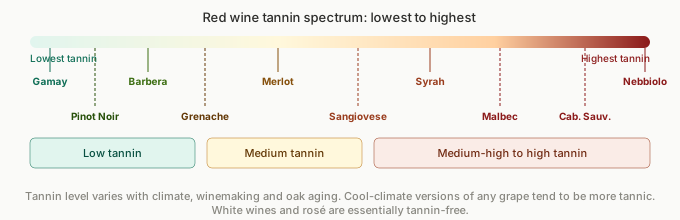
- Grape variety — the most important factor. Thin-skinned grapes (Pinot Noir, Gamay) naturally produce less tannin than thick-skinned grapes (Cabernet Sauvignon, Nebbiolo). This is the primary reason variety is the first thing to look at when seeking low-tannin wines.
- Climate — warmer climates produce riper tannins that feel rounder and softer in the mouth, even in the same grape. A warm-climate Cabernet from Napa will have softer tannins than a cool-climate Cabernet from Bordeaux, even though both are high-tannin grapes.
- Winemaking — shorter maceration (skin-contact time) produces less tannin. Carbonic maceration, used in Beaujolais, extracts very little tannin by fermenting whole grapes from the inside out. Filtration and fining agents can also reduce tannin levels.
- Oak ageing — new oak barrels add tannins to wine. Wines aged in stainless steel or old oak have lower oak-derived tannin. However, oxygen exposure during barrel ageing also softens tannins over time.
The practical shortcut: choose thin-skinned grapes, warmer-climate origins, or wines made with minimal skin contact. White wines and rosé are essentially tannin-free because they are not fermented with the grape skins.
The Best Low-Tannin Red Wines
Gamay (Beaujolais): The Lowest Tannin Red
Gamay is the lowest-tannin major red wine grape in the world. The grape has thin skins, and in Beaujolais it is typically made using carbonic maceration — a technique that ferments whole grape clusters in a carbon dioxide environment, producing wine with vivid fruit, very high acidity, and virtually no tannin. The result is a red wine that drinks almost like a fruit-forward white: refreshing, juicy, and light enough to serve slightly chilled.
There are three tiers to explore. Beaujolais-Villages is the reliable everyday option: brighter and more structured than basic Beaujolais, typically £10–15. The Cru Beaujolais — ten named villages including Fleurie, Morgon, Moulin-à-Vent, and Chénas — are the serious tier. Despite their low tannins, the best Cru Beaujolais develop real complexity and are often compared favourably to light Burgundy. Morgon in particular can age for 5–10 years. We discuss Cru Beaujolais further in our hidden gems guide.
Pinot Noir: The Elegant Gateway
Pinot Noir is the world’s most popular low-tannin red wine — widely available, well understood, and the grape most consistently recommended to beginners and tannin-sensitive drinkers. Its thin skins produce delicate, silky tannins that feel smooth rather than grippy, and its flavour profile of red cherry, raspberry, and dried flowers is immediately appealing. Body is light to medium; alcohol moderate.
The regional range is wide. Burgundy Pinot is the benchmark: earthy, complex, often expensive. Oregon (Willamette Valley) produces Pinot that is fruit-forward and approachable with good structure. New Zealand (Central Otago, Marlborough) tends toward riper, more generous fruit with a crystalline freshness. Chile (Bio Bio, Casablanca) offers the most accessible price point. For a complete overview of Pinot Noir as a beginner red, see our guide to the best red wines for beginners.
Grenache / Garnacha: Warm, Round, Generous
Grenache is naturally low in tannin and high in ripe, generous fruit — strawberry, raspberry, red cherry — with white pepper and dried herb notes that add interest. It thrives in warm climates (southern France, Spain, Australia), which further softens the tannins and produces wines that feel round and welcoming rather than demanding. Medium-bodied, sometimes with a slightly warm alcohol level.
Best options: Spanish Garnacha from Campo de Borja or Calatayud at £9–15 is outstanding value. Côtes du Rhône Grenache blends (often with Syrah and Mourvèdre) offer more complexity at similar prices. Châteauneuf-du-Pape is the prestige Grenache expression — still soft in tannin but extraordinary in depth. Grenache is also particularly forgiving with food: its round fruit handles spice and varied preparations better than most reds.
Barbera: The High-Acid, Low-Tannin Italian
Barbera is one of the great underrated wines for tannin-sensitive drinkers. It is Piedmont’s everyday wine — what the locals drink while the Barolo ages in the cellar — and it has a distinctive combination of very low tannin, very high acidity, and vivid dark cherry and red fruit character. The acidity makes it feel lively and fresh rather than heavy; the low tannin means no drying sensation.
Barbera d’Asti is the most approachable and fruit-forward version; Barbera d’Alba is slightly fuller. Both are excellent with Italian food — pizza, pasta, salumi — where the high acidity cuts through cheese and tomato sauce brilliantly. Usually £12–20 for quality bottles. An exceptional and still under-appreciated category.
Merlot: The Approachable Mainstream Choice
Merlot sits in the medium-tannin category but is often listed here because its tannins are characteristically soft, round, and velvety — less grippy than most medium-tannin grapes. The plush, plummy fruit and smooth texture make it one of the most immediately approachable reds for beginners. Warmer-climate Merlot (Chile, California, Washington) is softer still. For a full profile, see our guide to what Merlot tastes like.
Valpolicella Classico
Valpolicella at the basic Classico level is one of Italy’s most approachable reds: light, cherry-fruited, with gentle tannins and lively acidity. Made primarily from Corvina, a thin-skinned grape, it is designed to be drunk young and lightly chilled. The “Classico” designation ensures the grapes come from the historic hillside zone and the quality is significantly better than basic Valpolicella. At £12–20, it is excellent value and pairs effortlessly with pizza, light pasta, and antipasto.
Dolcetto
Another Piedmontese grape, Dolcetto (“little sweet one” — though the wine is dry) produces wines with plummy, cherry-dark fruit, a characteristic slightly bitter almond note on the finish, and soft, gentle tannins. It is firmer than Barbera but still comfortably low-tannin. Dolcetto d’Alba is the most available example. It pairs very well with pizza, pasta, and charcuterie, and is often overlooked in favour of its more famous Piedmontese neighbours.
Lambrusco Secco
Dry Lambrusco — the sparkling red from Emilia-Romagna in Italy — is one of the lowest-tannin red wine experiences available. Its combination of light tannin, high acidity, and gentle effervescence makes it very easy to drink and exceptionally food-friendly (it is the traditional pairing for the rich, fatty food of Bologna: salumi, parmigiano, mortadella). Always look for secco (dry) rather than the sweet versions. Under £15, reliably good, and highly underrated.
Cabernet Franc
Often overlooked but worth seeking out for tannin-sensitive drinkers who like the general character of Cabernet wines. Cabernet Franc has thinner skins than Cabernet Sauvignon and produces wines with noticeably softer tannins. Loire Valley versions (Chinon, Bourgueil, Saumur-Champigny) are elegant and medium-bodied, with red fruit, pencil-lead, and herb notes. Italian Cabernet Franc from Friuli or South Tyrol is similarly approachable. A genuinely interesting grape that rewards exploration.
High-Tannin Wines to Approach Carefully
If you are sensitive to tannins, these wines are likely to be uncomfortable when young and without food:
- Nebbiolo (Barolo, Barbaresco) — the most tannic major red grape. Young Barolo can be extremely austere. Worth returning to with 8+ years of age and a rich, fatty meal.
- Cabernet Sauvignon (young, especially from Bordeaux or cool climates) — firm, grippy, demanding. Much softer from warm-climate New World producers.
- Tannat (Madiran, Uruguay) — extraordinarily high tannin, even for red wine enthusiasts.
- Sagrantino (Umbria, Italy) — one of the highest-tannin grapes in the world. Requires significant age.
- Mourvèdre / Monastrell — deep, tannic, and earthy. Needs food and age.
Practical Tips for Finding Softer Wines
- Look for thin-skinned grapes: Pinot Noir, Gamay, Grenache, Barbera, Corvina. Thin skins = less tannin extraction.
- Choose warmer-climate origins: Chilean Pinot Noir is softer than Burgundy Pinot Noir. Warm-climate Cabernet is softer than Bordeaux Cabernet. Same variety, different feel.
- Avoid “heating” styles: “Reserva”, “Gran Reserva”, and “Riserva” wines typically have more tannin from extended oak ageing. Entry-level and basic labels are usually softer.
- Serve slightly chilled: Serving light, low-tannin reds at 14–16°C rather than room temperature makes the tannins feel even softer and the wine more refreshing. 15–20 minutes in the fridge before opening is all it takes.
- Eat with the wine: Food — particularly protein and fat — binds with tannins and softens their perception significantly. The same tannic wine that feels harsh alone can feel smooth alongside a meal.
- Try rosé or white: If all red wines feel too tannic, rosé and white wine are essentially tannin-free. A dry rosé from Provence gives the visual and aromatic experience of red wine with virtually none of the tannin.
Frequently Asked Questions
What red wine has the lowest tannins?
Gamay (Beaujolais) has the lowest tannins of any major red wine grape. Made using carbonic maceration in Beaujolais, it produces wines with vivid red fruit, high acidity, and virtually no tannin — often served slightly chilled like a full-flavoured white. Pinot Noir is the next lowest and the most widely available low-tannin red. Barbera, Grenache, Corvina (Valpolicella), and Dolcetto are also reliably low in tannin. White wines and rosé are essentially tannin-free, as they are not fermented with grape skins.
What causes tannins in red wine?
Tannins in red wine come primarily from the grape skins, seeds, and stems, which are left in contact with the juice during fermentation. The longer that contact (maceration), and the thicker the grape’s skins, the more tannin ends up in the finished wine. Oak barrels also contribute tannins — new oak more than old. Thin-skinned grapes (Pinot Noir, Gamay, Grenache) naturally produce less tannin; thick-skinned grapes (Cabernet Sauvignon, Nebbiolo) produce more. Warmer climates produce riper, rounder tannins that feel softer in the mouth even at the same technical level.
Is Merlot low in tannins?
Merlot is medium in tannins, but its tannins are characteristically soft, round, and velvety — considerably less grippy than Cabernet Sauvignon or Nebbiolo. This soft texture is the result of Merlot’s thinner skins and smaller seeds, which extract less and smoother tannin during winemaking. Warm-climate Merlot from Chile, California, or Washington State is softer still. Merlot is often recommended to beginners and tannin-sensitive drinkers precisely because its tannins rarely feel harsh or drying, even without food.
Do white wines have tannins?
White wines have negligible to no tannins in most cases, because they are not fermented in contact with the grape skins — the primary source of tannins. The juice is pressed and separated from the skins before fermentation begins. Some white wines aged in new oak have very low levels of oak-derived tannin, but nothing approaching the levels in red wine. Orange wines (white wines made with skin contact) are an exception: they can have noticeable but typically soft tannins. Rosé is also essentially tannin-free for the same reason.
Does aging wine reduce tannins?
Yes. As wine ages in bottle, tannin molecules polymerise — they bond together into larger chains that precipitate out of the wine as sediment. This process progressively reduces the concentration of free tannins in the wine, making it taste softer and more integrated over time. A 20-year-old Barolo will have noticeably softer tannins than the same wine at 3 years, even though the starting tannin level was very high. This is the main reason high-tannin wines like Barolo and classified Bordeaux reward extended cellaring: they become more approachable as the tannins integrate and soften.
What is a good low-tannin red wine for someone who doesn’t like red wine?
Gamay (Beaujolais-Villages or a Cru Beaujolais like Fleurie) is the most frequently recommended red for people who think they don’t like red wine. It is so light in tannin, so vivid in fruit, and so refreshing (especially served slightly chilled) that it often converts white wine drinkers who have been put off red wine by tannic experiences. Pinot Noir is the next step: a little more structure and complexity but still silky and approachable. Both are widely available, affordable, and excellent gateways into the broader world of red wine.