
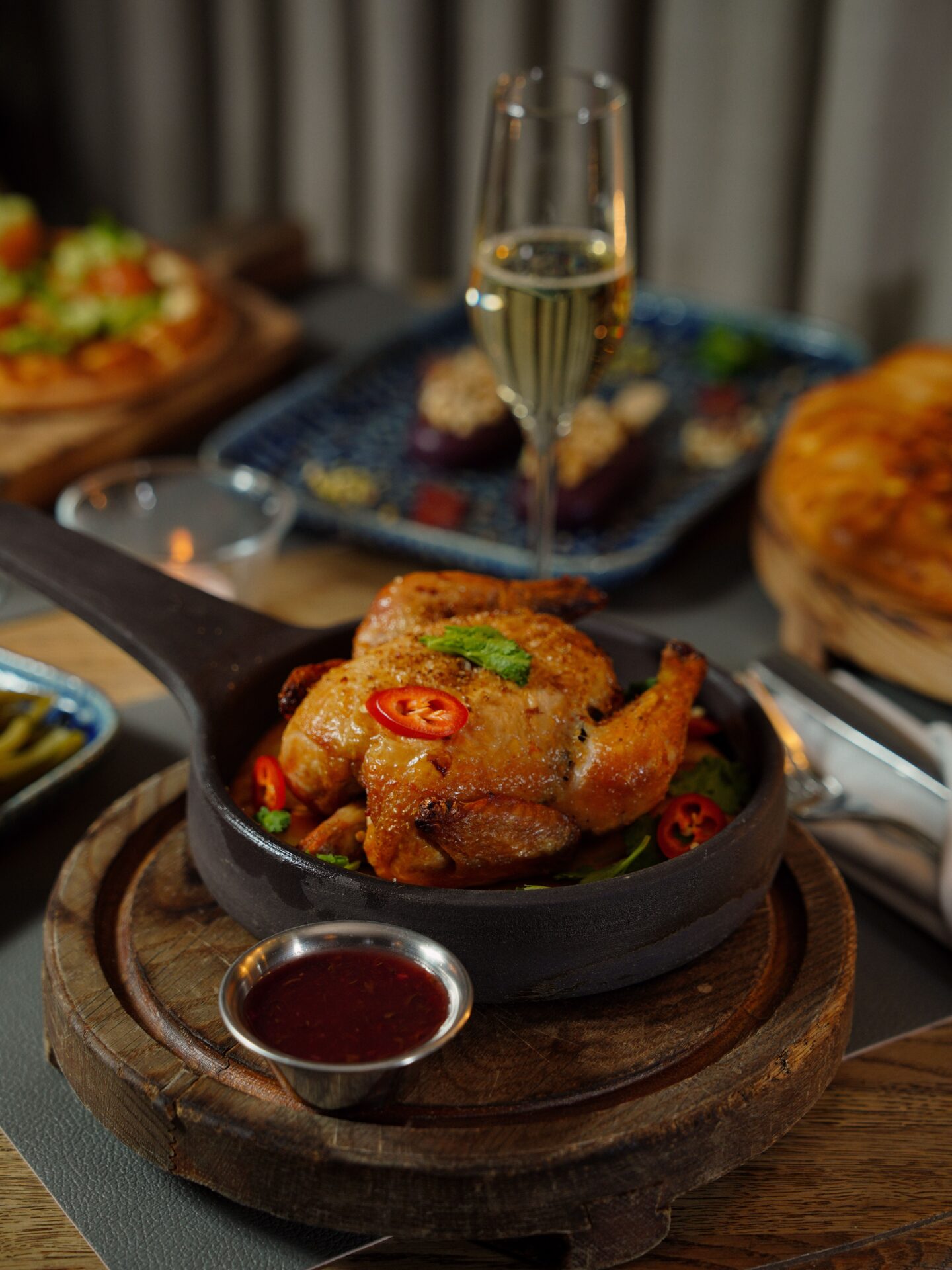
Chicken is the most food-friendly protein on the plate for a simple reason: on its own, it barely has a flavour opinion. That mildness makes it a genuine blank canvas, which is good news and a trap in equal measure — good news because chicken pairs with an unusually wide range of wine styles, a trap because “chicken” alone tells you almost nothing about which wine to actually pour. The sauce, the cooking method, and the seasoning do nearly all of the real work. This guide walks through the best wine pairing for chicken by preparation — roasted, grilled, fried, creamy, spicy, and tomato-based — so you can match the dish that is actually in front of you rather than the protein alone.
In this article
- 1 Wine and Chicken, at a Glance
- 2 Why Chicken Pairs with Almost Everything
- 3 Roast Chicken
- 4 Grilled Chicken
- 5 Fried Chicken
- 6 Creamy Chicken Dishes
- 7 Spicy Chicken
- 8 Chicken in Tomato Sauce, or with Mushrooms and Dark Sauces
- 9 Quick Reference: Wine for Every Chicken Dish
- 10 Rosé with Chicken: The Versatile Middle Ground
- 11 Chicken Salad and Cold Chicken Dishes
- 12 What to Generally Avoid
- 13 The Weeknight Reality: Rotisserie Chicken
- 14 Frequently Asked Questions About Wine and Chicken
- 14.1 What is the best wine to pair with chicken?
- 14.2 Should you drink red or white wine with chicken?
- 14.3 What wine goes with fried chicken?
- 14.4 What wine pairs with creamy chicken dishes like Alfredo?
- 14.5 What wine should you drink with spicy chicken?
- 14.6 Does dark meat chicken need a different wine than white meat?
Wine and Chicken, at a Glance
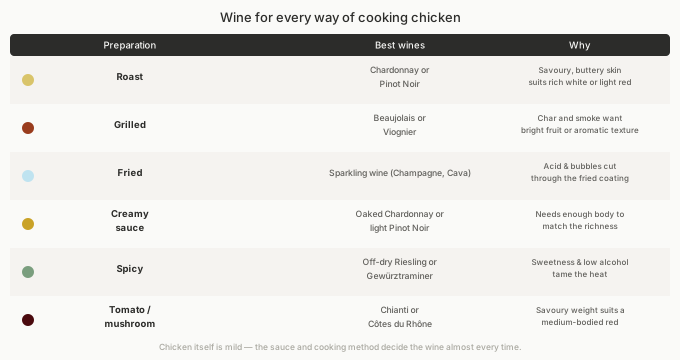
- Roast chicken: Chardonnay or Pinot Noir.
- Grilled chicken: Beaujolais or Viognier, depending on the sauce.
- Fried chicken: sparkling wine, especially Champagne or Cava.
- Creamy sauces (Alfredo, Marsala): oaked Chardonnay or a light Pinot Noir.
- Spicy chicken: off-dry Riesling or Gewürztraminer.
- Tomato sauce or mushrooms: Chianti or Côtes du Rhône.
- Safest all-round choice: a lightly chilled Beaujolais or a Bourgogne Blanc, both flexible enough to handle most preparations.
Why Chicken Pairs with Almost Everything
Chicken’s mild flavour means it absorbs the character of whatever surrounds it — butter, herbs, smoke, citrus, cream, tomato, or chilli — far more readily than a naturally assertive protein like lamb or oily fish does. That is precisely why the same roast chicken can happily sit next to a rich, buttery Chardonnay or a light, earthy Pinot Noir: neither wine has to fight against a strong, fixed flavour from the meat itself. This is the clearest possible illustration of a principle covered in our guide to wine pairing principles: match the sauce and cooking method, not just the protein sitting underneath it. Chicken breast, lean and especially mild, tends to want lighter, brighter wines; chicken thighs and dark meat, with more fat and a deeper flavour, can carry a slightly fuller wine without being overwhelmed.
Roast Chicken
A simple roast chicken, with crisp, savoury skin and herb-infused juices, is the dish where Chardonnay’s reputation as a chicken wine is best earned. A rich, oaked Chardonnay from California or Australia mirrors the caramelised, buttery quality of roasted skin, while its acidity keeps the pairing from feeling heavy. If you prefer something leaner, a white Burgundy — unoaked or lightly oaked Chardonnay from France — brings the same savoury weight with a more mineral, restrained profile. Pinot Noir is the classic red alternative: light-bodied, food-friendly, and just fruity enough to complement roast chicken and its herb seasoning without overpowering it, particularly when the bird is roasted with garlic, rosemary, or thyme.
Grilled Chicken
Grilling adds char and smoke that a simple roast never develops, and the right wine depends heavily on what else is on the chicken. Plain grilled chicken, or chicken finished with herbs and lemon, pairs beautifully with Beaujolais or another light, juicy Gamay-based red, whose bright red fruit and low tannin echo the char without clashing with it; a crisp Sauvignon Blanc works just as well if you would rather stay with white. Grilled chicken glazed in a sweet, sticky barbecue sauce shifts the calculus toward the sauce’s sugar: a fruit-forward, low-tannin red like Pinot Noir or Zinfandel handles that sweetness far better than a drier, more structured red would. A creamy, tangy barbecue sauce — the mayonnaise-and-vinegar white barbecue style common in the American South — calls for something with real body and a touch of richness instead, such as Viognier or a fuller Napa Chardonnay.
Fried Chicken
Fried chicken’s crispy, fatty coating wants exactly what it usually gets at a truly good restaurant: bubbles and acid. Sparkling wine, whether a proper Champagne, an everyday Cava, or a crisp Crémant, cuts cleanly through the oil and salt while its carbonation actively refreshes the palate between bites in a way still wine cannot quite match — the same acid-plus-fizz logic that makes sparkling wine such a reliable match for anything fried. A rich, oaked Chardonnay is the classic still-wine alternative, its buttery, slightly toasty character mirroring the crunchy, golden coating rather than fighting it. Beaujolais, again, is the go-to red option here: soft tannin and bright acidity make it one of the few reds that genuinely improves a fried chicken dinner rather than just tolerating it.
Creamy Chicken Dishes
Chicken Alfredo, chicken Marsala, and other rich, cream-based preparations need a wine with enough body and acidity to stand up to the sauce rather than disappearing underneath it. An oaked Chardonnay‘s own buttery, creamy texture creates a genuine matching pairing here, its notes of vanilla and baked apple reinforcing rather than contrasting with the sauce. If the dish leans savoury and mushroom-forward, as Marsala typically does, a white Burgundy or unoaked Chardonnay brings a more restrained, earthy alternative. For red wine drinkers, a light, high-acid red like Beaujolais or Pinot Noir works as a genuine palate-cleansing contrast, its acidity cutting through the cream in a way a heavier red never quite manages.
Spicy Chicken
Chicken tikka masala, Nashville hot chicken, and other genuinely spicy preparations need a wine built to tame heat rather than amplify it. An off-dry Riesling is the most dependable choice across nearly every cuisine this covers: its touch of sweetness and low-to-moderate alcohol both work directly against capsaicin’s burn, while its acidity keeps the pairing lively rather than heavy. Gewürztraminer, with its aromatic lychee and floral character, is a similarly strong option, particularly with Southeast Asian or Indian spice profiles. Whatever you choose, avoid big, high-alcohol, heavily tannic reds here specifically — both alcohol and tannin intensify the sensation of heat rather than calming it, the same principle covered in more depth in our guide to wine pairing principles.
Chicken in Tomato Sauce, or with Mushrooms and Dark Sauces
This is the one category where chicken genuinely calls for a fuller, more savoury red, because the sauce itself is doing the heavy lifting rather than the meat. Chicken cacciatore, chicken in a rich tomato-based sauce, or chicken braised with mushrooms and red wine all bring enough earthy, acidic weight to suit a proper medium-bodied red. Chianti, with its high acidity built for exactly this kind of tomato-forward Italian cooking, is a natural match; a Côtes du Rhône or Grenache-based blend works equally well for a chicken dish built around garlic, olives, and Mediterranean herbs. This is also where dark meat — thighs and legs, richer and more forgiving than lean breast — genuinely earns a slightly bigger wine than the rest of this guide generally recommends. Sommo’s chicken pairing guide covers several more of these preparation-specific matches in detail.
Quick Reference: Wine for Every Chicken Dish
- Simple roast chicken: Chardonnay, white Burgundy, or Pinot Noir.
- Grilled, plain or lemon-herb: Beaujolais or Sauvignon Blanc.
- Grilled with sweet BBQ sauce: Pinot Noir or Zinfandel.
- Fried chicken: Champagne, Cava, or oaked Chardonnay.
- Creamy sauce (Alfredo, Marsala): oaked Chardonnay or light Pinot Noir.
- Spicy (tikka masala, hot chicken): off-dry Riesling or Gewürztraminer.
- Tomato sauce, mushrooms, or dark meat: Chianti or Côtes du Rhône.
For other specific pairings, see our guides to wine and ham, wine with lamb, and wine with salmon.
Rosé with Chicken: The Versatile Middle Ground
Rosé deserves its own mention, since it sits comfortably across more chicken preparations than almost any single wine style. A dry Provençal rosé works beautifully with grilled or Mediterranean-style chicken, especially dishes built around olives, lemon, and fresh herbs, echoing those flavours with its own bright red-fruit and citrus character. It is equally at home with a simple summer roast chicken salad, and its chilled serving temperature makes it a natural fit for warm-weather grilling, picnics, and outdoor entertaining where a full-bodied red would feel out of place. When a chicken dish genuinely could go either red or white, and the occasion calls for something a little more festive than a default choice, rosé is very often the answer that pleases the widest range of guests at once.
Chicken Salad and Cold Chicken Dishes
Cold chicken dishes, including chicken salad, poached chicken, and cold sliced chicken breast served over greens, call for a lighter touch than any hot preparation in this guide. A crisp, unoaked white such as Sauvignon Blanc, Pinot Grigio, or a dry Vermentino suits these dishes well, since their bright acidity matches the freshness of a salad without introducing any of the weight or oak character that a warm, richer chicken dish might call for. If the salad includes creamy dressing, mayonnaise, or avocado, a slightly fuller white like unoaked Chardonnay or a dry rosé handles that added richness more gracefully than a very lean, high-acid white would.
What to Generally Avoid
One general rule worth stating plainly: because chicken itself rarely brings enough natural fat or intensity to soften a wine’s tannin the way a fatty steak or lamb chop does, big, structured, high-tannin reds — a young Cabernet Sauvignon or a serious Bordeaux blend, for instance — tend to overwhelm most chicken dishes rather than complement them, tasting disproportionately heavy and astringent next to the meat’s mild character. The exception, as covered above, is chicken served in a genuinely rich, savoury sauce or paired with dark meat, where the dish itself brings enough weight to stand up to a fuller-bodied red. Absent that kind of sauce, lighter reds and whites are simply a safer default across nearly every chicken preparation in this guide. Vivino’s guide to chicken and wine is a useful second reference for popular chicken recipes not covered here.
The Weeknight Reality: Rotisserie Chicken
Most chicken pairing advice assumes a home-cooked centerpiece, but the far more common weeknight reality is a grocery store rotisserie chicken eaten straight out of the container, and it deserves the same thought as anything else in this guide. A rotisserie bird’s seasoning, usually a blend of salt, garlic, and paprika or similar dried herbs, plus a layer of rendered fat under crisp skin, sits closest in character to a simple roast chicken, which means the same Chardonnay or Pinot Noir recommendations apply directly. A lightly chilled Beaujolais is a particularly good weeknight answer here: it needs no real thought, costs little, and handles a rotisserie chicken’s smoky, savoury seasoning better than most bottles at a similar price point. If the chicken comes with a specific glaze, such as a lemon-pepper or barbecue variety sold at many supermarkets, treat it the same as the corresponding glazed or barbecue preparation covered above.
Frequently Asked Questions About Wine and Chicken
What is the best wine to pair with chicken?
It depends heavily on how the chicken is prepared, but Chardonnay and Pinot Noir are the two most broadly reliable choices, since chicken’s mild flavour lets both a rich white and a light red work well. The sauce, seasoning, and cooking method matter far more than the chicken itself when choosing a specific bottle.
Should you drink red or white wine with chicken?
Either works well, since chicken’s mild flavour rarely clashes with either style. White wine tends to suit lighter preparations like grilled or citrus-seasoned chicken, while a light, low-tannin red like Pinot Noir or Beaujolais suits roasted, tomato-based, or mushroom dishes. The deciding factor is almost always the sauce, not the chicken.
What wine goes with fried chicken?
Sparkling wine is the classic pairing, since its acidity and carbonation cut through fried chicken’s fat and salt while refreshing the palate between bites. Champagne and Cava both work well, and a rich, oaked Chardonnay is a strong still-wine alternative if you prefer not to open something sparkling.
What wine pairs with creamy chicken dishes like Alfredo?
An oaked Chardonnay is the classic match, its own buttery, creamy texture reinforcing the sauce rather than contrasting with it. If you would prefer something lighter or want more contrast against the richness, a light, high-acid red like Pinot Noir or Beaujolais also works well, cutting through the cream with its acidity.
What wine should you drink with spicy chicken?
An off-dry Riesling is the most reliable choice, since its touch of sweetness and moderate alcohol both help tame spicy heat rather than amplifying it. Gewürztraminer is a similarly good option, especially alongside Southeast Asian or Indian spice profiles. Avoid big, high-alcohol, tannic reds, since both alcohol and tannin intensify the sensation of heat.
Does dark meat chicken need a different wine than white meat?
Dark meat, such as thighs and legs, is richer and more flavourful than lean chicken breast, and can generally carry a slightly fuller-bodied wine without being overwhelmed. This matters most in dishes like chicken cacciatore or braises with mushrooms and tomato, where dark meat and a medium-bodied red like Chianti make a naturally good match.