
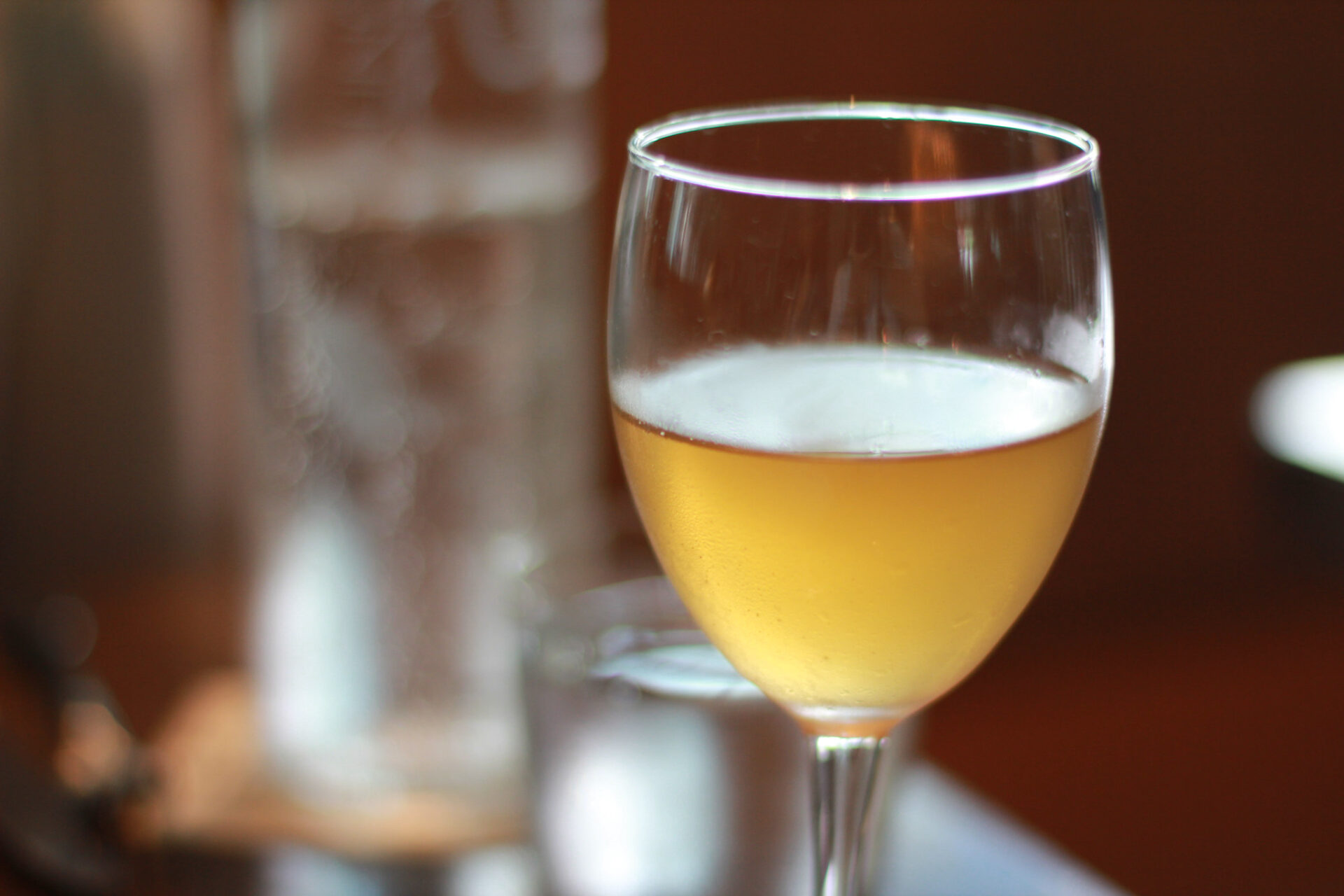
Orange wine is one of wine’s most frequently misunderstood terms. It does not contain oranges. It is not a mixture of white and red wine. It is not a new category invented by trendy wine bars. Orange wine is, simply, white wine made using the same technique as red wine: the grape skins are left in contact with the juice during fermentation. That one change — keeping the skins — extracts colour (ranging from pale gold to deep amber), tannins, and flavour compounds that normal white winemaking removes, producing a wine that occupies a genuinely distinct position between white and red.
In this article
What Orange Wine Actually Is
Orange wine is white wine made with extended skin contact. The grape skins of white varieties are left in contact with the juice for anywhere from a few days to several months during and after fermentation. The WSET provides a detailed technical overview of the technique for those wanting to go deeper. This is the same basic technique used to make red wine, where the skins provide colour and tannin. Applied to white grapes, it produces a wine with an amber, copper, or orange hue (hence the name) and a structural complexity that standard white wine production deliberately avoids.
Orange wine is also known as:
- Skin-contact wine or skin-fermented wine — the technically accurate term, preferred by many producers and sommeliers
- Amber wine — the preferred term in Georgia and some other traditional regions
- Ramato — the Italian term for Pinot Grigio made with skin contact in the traditional Friulian style (from rame, meaning copper)
All refer to the same basic concept: white grapes, skins left in. The colour range — from pale gold through apricot-orange to deep amber-brown — corresponds to the length of skin contact and the grape variety used.
How Orange Wine Is Made
Standard white wine production follows this sequence: harvest → crush → press (remove skins) → ferment juice alone → bottle. The skins are discarded almost immediately, taking most of their colour, tannin, and phenolic compounds with them.
Orange wine reverses that second step. After crushing, the skins stay in contact with the juice during fermentation. The duration varies enormously:
- A few days: a gentle amber tint, some added texture, barely perceptible tannin. These are the most approachable orange wines, often barely distinguishable from a full-bodied white.
- One to four weeks: noticeable orange-amber colour, genuine tannin structure, complex dried fruit and herbal character. The wines most people encounter in wine bars fall here.
- Several months: deep amber to brown, pronounced tannin, very complex savoury, oxidative, nutty character. This is the Georgian traditional style and the approach of Friulian pioneers like Joško Gravner.
Many orange wine producers also follow minimal intervention principles in the cellar: native yeast fermentation (rather than inoculated commercial yeasts), no fining or filtration (resulting in the hazy appearance common in natural wines), low or zero added sulphites. However, these are stylistic choices separate from the skin-contact technique itself. Conventional winemakers also make skin-contact whites. The two categories overlap but are not identical.
Where Orange Wine Comes From
Orange wine is simultaneously the world’s oldest winemaking technique and one of its most fashionable new categories. Georgian winemakers in the Caucasus have been fermenting white grapes with their skins in clay qvevri vessels buried underground for over 8,000 years — it was simply how wine was made before the modern separation of juice and skins became standard. The Georgian tradition has never stopped; amber wines made in qvevri from varieties like Rkatsiteli, Mtsvane, and Tsolikouri are a living continuation of this ancient practice.
The modern revival in Europe began in the early 1990s in the Friuli-Venezia Giulia region of northeast Italy, specifically in the Collio appellation on the Slovenian border. Two winemakers — Joško Gravner and Stanko Radikon — independently began experimenting with extended skin contact for their white wines, inspired partly by Georgia and partly by dissatisfaction with the prevailing fashion for technically clean, neutral white wine. Their wines were controversial, then gradually revered. The style spread to neighbouring Slovenia (the Brda region), then to producers across Italy and beyond.
The term “orange wine” was coined in the early 2000s by British wine importer Simon Woolf and adopted broadly by the international wine trade. It is now a widely recognised category on restaurant wine lists globally, though debate continues over whether the name is ideal — many producers prefer “skin-contact” as more technically precise.
What Does Orange Wine Taste Like?
Orange wine sits between white and red wine in its structural character, and the flavour experience reflects that position. Generalising across the full range is difficult because the style variation is enormous — a three-day skin-contact Pinot Grigio and a six-month qvevri-fermented Rkatsiteli are both technically orange wines but taste almost nothing alike. That said, common threads run through most examples:
Aroma and Flavour
- Dried and oxidative fruit: apricot, dried peach, quince, marmalade, dried fig. Unlike the fresh citrus and orchard fruit of standard whites, orange wine tends toward dried, preserved, or cooked fruit character.
- Nutty and oxidative notes: walnut, hazelnut, almond, marzipan. From the extended skin contact and often intentional oxygen exposure during fermentation.
- Herbal and savoury: chamomile, dried herbs, tea, beeswax, honey, mushroom. These are the notes that most clearly distinguish orange wine from both white and red wine.
- Spice: ginger, cinnamon, clove — particularly in aromatic grape varieties like Gewurztraminer and Pinot Gris.
- Funk (in minimal-intervention examples): cider, kombucha, farmyard, or slightly oxidative notes. Polarising but characteristic of the natural end of the orange wine spectrum.
Texture and Structure
This is the defining difference from standard white wine. Orange wine has tannins — the drying, gripping sensation usually associated with red wine — from the grape skins and seeds. These tannins vary from barely perceptible (short maceration) to quite firm and grippy (extended maceration). The body is generally medium to full, with a slightly oily or waxy texture that feels richer and more coating than most white wines. The finish is typically long and often savoury rather than fruity.
High acidity is common — orange wine’s combination of tannin, acidity, and extract makes it unusually food-friendly, capable of handling dishes that challenge both conventional white and red wine.
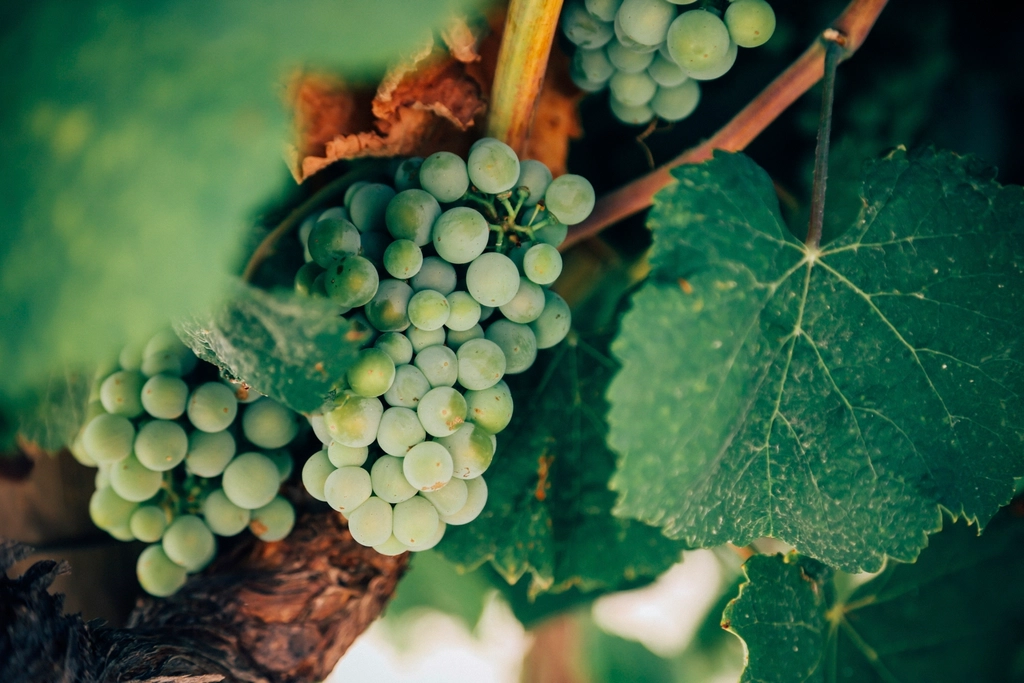
Which Grapes Are Used
Any white grape can be used for skin-contact winemaking, but certain varieties have become particularly associated with the style:
- Ribolla Gialla (Friuli, Italy / Brda, Slovenia) — the signature grape of the Friulian tradition. Produces orange wines with high acidity, firm tannin, and a distinctive chamomile and dried apricot character. Gravner and Radikon’s most celebrated wines use this variety.
- Pinot Grigio / Pinot Gris — Pinot Grigio has pink-copper skins that give particularly vivid amber colour even with short maceration. Traditional Friulian ramato was made this way before the crisp commercial style took over. Pinot Gris from Alsace also makes excellent skin-contact wine.
- Gewurztraminer — its intensely aromatic character (rose, lychee, ginger) makes it a compelling orange wine grape; the spice is amplified by skin contact.
- Rkatsiteli and Mtsvane (Georgia) — the principal Georgian varieties for amber wine. Rkatsiteli produces structured, tannic amber wines with quince and walnut character; Mtsvane is more floral and aromatic.
- Vermentino (Sardinia / Liguria) — produces orange wines with herbal, citrus, and slightly bitter character. The grape’s natural phenolic structure responds well to skin contact.
- Trebbiano / Grenache Blanc / Sauvignon Blanc — widely used in the natural wine world for more experimental skin-contact styles.
Key Orange Wine Regions
- Georgia — the origin of the technique. The traditional amber wine style, fermented in clay qvevri, is produced across the Kakheti, Kartli, and Imeretian wine regions. Winemakers include Pheasant’s Tears, Iago’s Wine, and many small family producers.
- Friuli-Venezia Giulia, Italy — the epicentre of the modern orange wine revival. Collio and Colli Orientali del Friuli are the key appellations. Gravner and Radikon remain the most celebrated names; Dario Prinčič, Stanislava Radikon, and others continue the tradition.
- Brda / Vipavska Dolina, Slovenia — immediately across the border from Friuli, this region has an equally strong skin-contact tradition with producers like Movia and Klinec.
- Languedoc / Loire / Jura, France — natural wine-oriented producers have adopted skin-contact whites extensively in recent years. Lighter styles with shorter maceration are typical.
- Austria, Germany, Greece — growing experimentation with skin-contact Grüner Veltliner, Riesling, and Assyrtiko.
- California, Australia, New Zealand — New World producers have embraced the style enthusiastically. Frank Cornelissen in Sicily (using Mount Etna’s Carricante and Grecanico) is one of the most internationally celebrated orange wine producers outside Georgia and Friuli.
Food Pairing: Where Orange Wine Excels
Orange wine’s combination of tannin, acidity, and body gives it an unusual food-pairing versatility. Its tannins allow it to handle dishes that would flatten conventional white wine; its acidity keeps it from becoming heavy alongside food; and its savoury, dried-fruit character resonates with a wide range of flavour profiles.
- Fermented and aged foods: aged cheese (particularly hard, nutty cheeses like Parmigiano, Comté, aged Manchego), charcuterie, cured fish (smoked salmon, gravlax), miso, tempeh. The wine’s own oxidative character harmonises with fermentation notes in the food.
- Spiced and aromatic dishes: Moroccan tagine, Indian dal, Thai green curry, Middle Eastern meze. Orange wine’s structure handles spice better than most whites without the tannin excess of a full red wine.
- Earthy vegetarian dishes: roasted root vegetables, mushroom risotto, spanakopita, lentil stew. The wine’s earthiness and body complement rather than overwhelm plant-based ingredients.
- Rich poultry and pork: roast chicken, duck confit, pork belly. The tannins handle fat; the acidity refreshes the palate.
- Difficult pairings: orange wine handles dishes that challenge most wines — egg-based dishes, artichokes, asparagus, bitter greens — because its tannin-acid-body balance creates a stable bridge to complex, sometimes wine-hostile flavours.
How to Serve Orange Wine
Temperature: slightly warmer than conventional white wine — 10–13°C rather than the 8–10°C for crisp whites. Orange wine’s tannins and aromatic complexity shut down in an over-chilled glass; served too cold, it can feel harsh and austere. A brief 10 minutes out of the fridge before opening is usually sufficient.
Glassware: use a white wine glass rather than a flute or narrow glass. Wider-bowled glasses allow the wine’s complex aromas to open up. Red wine glasses are also perfectly appropriate for full-bodied, tannic orange wines with extended maceration.
Decanting: fuller-bodied, tannic orange wines with significant maceration time benefit from 20–30 minutes of decanting to open up. Lighter styles can be poured straight from the bottle. If the wine is unfiltered and hazy, this is normal and not a fault — do not try to filter or clarify it.
For a complete map of the colour spectrum across all wine types, see our guide to wine colours. For wines that share some of orange wine’s skin-contact character in a different context, our hidden gems guide covers other exploratory categories worth discovering.
Frequently Asked Questions
What is orange wine?
Orange wine is white wine made using the same technique as red wine: the white grape skins are left in contact with the juice during fermentation. This extended skin contact extracts colour (ranging from pale gold to deep amber), tannins, and complex flavour compounds that are removed in standard white winemaking. The result is a wine that occupies a distinct middle ground between white and red — more textured, structured, and savoury than a conventional white, but lighter in body than most reds. Orange wine does not contain oranges; the name refers only to the wine’s colour.
What does orange wine taste like?
Orange wine tastes of dried and oxidative fruit (apricot, quince, dried peach), nutty notes (walnut, hazelnut, almond), herbal and savoury character (chamomile, dried herbs, beeswax, honey), and sometimes spice (ginger, cinnamon). It has a distinctive texture — more body and grip than conventional white wine because of the tannins extracted from the grape skins. The flavour varies significantly depending on the grape variety and the length of skin contact: a short-maceration orange wine is barely distinguishable from a full-bodied white; an extended-maceration Georgian amber wine is more tannic and complex than many light red wines.
Is orange wine the same as natural wine?
Not necessarily, though there is significant overlap. Orange wine describes a winemaking technique (skin contact for white grapes); natural wine describes a philosophy (minimal intervention in the vineyard and cellar, no added yeasts or additives, little or no sulphur). Many orange wine producers are natural winemakers, which is why the two categories are strongly associated. But some orange wines are made conventionally — with commercial yeasts, filtration, and sulphur additions — and not all natural wines are orange wines. The hazy appearance common in many orange wines comes from not filtering the wine, which is a natural winemaking practice, not from the skin contact itself.
Where does orange wine come from?
Orange wine’s origins are in Georgia (the country), where skin-contact white winemaking in buried clay qvevri vessels has been practiced for over 8,000 years. The modern revival began in the early 1990s in Friuli-Venezia Giulia in northeast Italy, led by winemakers Joško Gravner and Stanko Radikon, who were inspired by the Georgian tradition. The style then spread to neighbouring Slovenia and progressively across Europe and the New World. Today orange wine is produced in virtually every major wine region, though Georgia and Friuli remain the heartlands of the most serious, traditional examples.
Is orange wine good for beginners?
How should orange wine be served?
Orange wine should be served slightly warmer than conventional white wine — around 10 to 13°C rather than the 8 to 10°C used for crisp whites. Its tannins and aromatic complexity shut down when served too cold. Use a wide-bowled white wine glass or a red wine glass; avoid tall, narrow flutes. Unfiltered orange wines may appear hazy or contain harmless sediment — this is normal and not a fault. Fuller-bodied, tannic examples benefit from 20 to 30 minutes of decanting; lighter examples can be served straight from the bottle.