Wine’s alcohol content spans an unusually wide range for a single category of drink: a delicate Moscato d’Asti can sit as low as 5.5% ABV, barely stronger than some beers, while a vintage Port can reach 20% or more, edging toward the strength of a fortified spirit. Between those extremes sits nearly every style most people drink regularly, and the differences are not random — they follow directly from grape ripeness, climate, winemaking choices, and, in some cases, a deliberate splash of added spirit. This guide walks through wine alcohol content by type, what actually drives those numbers, why the average bottle has been getting stronger for decades, and what a wine’s ABV actually does to how it tastes, feels, and pairs with food.
In this article
- 1 Wine Alcohol Content by Type, at a Glance
- 2 How Alcohol Actually Gets Into Wine
- 3 Sparkling Wine and Champagne
- 4 White Wine Alcohol Content
- 5 Rosé Alcohol Content
- 6 Red Wine Alcohol Content
- 7 Dessert Wine Alcohol Content
- 8 Fortified Wine: The Highest Alcohol Content in Wine
- 9 Why Wine Alcohol Content Has Been Rising
- 10 How Alcohol Content Changes the Way Wine Tastes and Feels
- 11 Wine Alcohol Content and Standard Drinks
- 12 What Wine Alcohol Labels Actually Guarantee
- 13 Low-Alcohol and Alcohol-Free Wine
- 14 Old World vs New World: A Rough Alcohol Guide
- 15 Frequently Asked Questions About Wine Alcohol Content
- 15.1 What is the typical alcohol content range for wine?
- 15.2 What wine has the highest alcohol content?
- 15.3 Why do red wines have more alcohol than white wines?
- 15.4 Why has wine alcohol content increased over the decades?
- 15.5 Can fermentation alone produce a high-alcohol wine without fortification?
- 15.6 Does higher alcohol content mean a wine tastes sweeter?
Wine Alcohol Content by Type, at a Glance
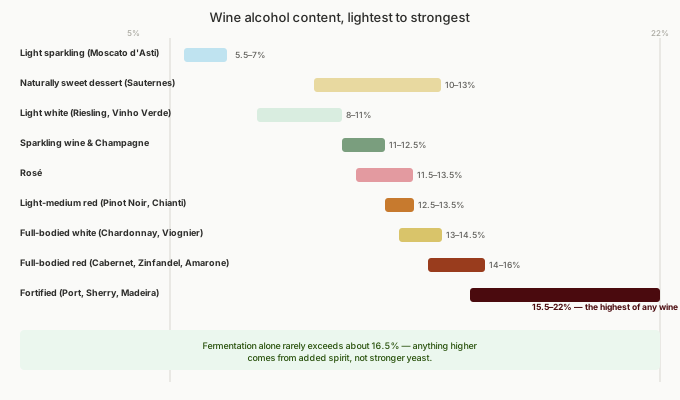
- Light sparkling wine (Moscato d’Asti): 5.5–7% — the lightest wine most people will ever drink.
- Light white wine (German Riesling, Vinho Verde): 8–11%.
- Standard sparkling wine & Champagne: 11–12.5%.
- Naturally sweet dessert wine (Sauternes, Eiswein): 10–13%.
- Rosé: 11.5–13.5%.
- Light to medium-bodied red (Pinot Noir, Chianti): 12.5–13.5%.
- Full-bodied white (Chardonnay, Viognier): 13–14.5%.
- Full-bodied red (Cabernet Sauvignon, Zinfandel, Amarone): 14–16%.
- Fortified wine (Port, Sherry, Madeira): 15.5–22% — the highest of any wine.
How Alcohol Actually Gets Into Wine
Alcohol in wine comes from fermentation: yeast consumes the natural sugar in grape juice and converts it into roughly equal parts ethanol and carbon dioxide. The riper a grape is at harvest, the more sugar it contains, and the more alcohol that sugar can potentially become once fermentation runs its course — which is why climate and ripeness sit right at the center of almost every difference in this guide. Grapes grown in warm, sunny regions accumulate sugar quickly and are often picked riper, producing wines with naturally higher potential alcohol; grapes from cooler regions, or picked earlier to preserve acidity, simply have less sugar available to convert in the first place.
Winemakers also have real, deliberate influence over the final number. Chaptalization, adding sugar to under-ripe grape must before fermentation, is legal in several cooler wine regions specifically to raise a wine’s final alcohol when a vintage’s natural ripeness falls short. In the opposite direction, halting fermentation early, before all the available sugar converts, is a standard technique for keeping many dessert wines both sweet and comparatively low in alcohol at once. And fortification, covered in detail further down, involves adding a distilled spirit directly to the wine, which is the only method capable of pushing a wine’s ABV meaningfully above what fermentation alone can achieve.
Sparkling Wine and Champagne
Standard sparkling wine and Champagne typically sit at 11–12.5% ABV, on the lower end of the overall wine spectrum. Grapes destined for sparkling wine are usually picked earlier in the season than still wine grapes from the same region, specifically to preserve the bright, cutting acidity a good sparkling wine needs — and earlier picking means less time to accumulate sugar, which caps the resulting alcohol on the lower side almost automatically. At the very lightest end of this category sits Moscato d’Asti, an Italian semi-sparkling wine deliberately fermented only partway before bottling, which leaves it both noticeably sweet and remarkably low in alcohol, often just 5.5–7% ABV — among the lightest wine most people will ever encounter. For more on how sparkling wine’s production method affects both bubbles and body, see our guide to non-vintage Champagne.
White Wine Alcohol Content
White wine covers one of the widest alcohol ranges of any single colour category, largely because it spans such different climates and styles. Light, cool-climate whites — German Riesling is the clearest example, along with Portuguese Vinho Verde — often land as low as 8–11% ABV, since both are typically made in cool regions from grapes picked with racing acidity rather than maximum ripeness in mind, and both frequently retain a little residual sugar that would otherwise have become more alcohol. Full-bodied, typically oaked whites, above all Chardonnay and Viognier, run considerably higher, generally 13–14.5%, reflecting both riper picking and, often, warmer growing regions than the leaner whites at the other end of the scale.
Sauvignon Blanc and Pinot Grigio generally sit in the middle of this range, typically 12–13.5%, varying meaningfully by growing region — a cool-climate Marlborough Sauvignon Blanc from New Zealand will usually run lower than a riper, warmer-climate example from California or southern France.
Rosé Alcohol Content
Rosé typically runs 11.5–13.5% ABV, sitting in the middle of the overall spectrum, which makes sense given it is made from red-skinned grapes handled more like white wine, with limited skin contact rather than full fermentation on the skins. Provence-style dry rosé, the most widely exported style globally, tends toward the lower-middle of that range; fuller, more structured rosé styles with more skin contact and body can run a degree or so higher.
Red Wine Alcohol Content
Red wine generally runs higher in alcohol than white or rosé, for two compounding reasons: red wine grapes are typically picked riper to begin with, and red winemaking ferments the juice in contact with the skins, which does not add alcohol directly but does tend to accompany fuller, riper picking decisions overall. Light to medium-bodied reds like Pinot Noir, Gamay, and many Chianti sit at 12.5–13.5%, while full-bodied reds — Cabernet Sauvignon, Syrah, Malbec, and especially warm-climate Zinfandel — commonly reach 14–15.5%, and a handful of styles push further still: Amarone, made from grapes partially dried before fermentation to concentrate their sugar, regularly reaches 15–16% through fermentation alone, no fortification required. Our dedicated guide to red wine alcohol by volume covers this range grape by grape in considerably more depth.
Dessert Wine Alcohol Content
Dessert wine splits cleanly into two very different groups with two very different alcohol profiles. Naturally sweet dessert wines — Sauternes, made from botrytis-affected grapes, and Eiswein or ice wine, made from grapes frozen on the vine — typically land at 10–13% ABV. In both cases, fermentation simply stops naturally once the yeast can no longer cope with the extremely high, concentrated sugar levels in the juice, leaving a wine that is intensely sweet without necessarily being especially strong. Fortified dessert wines, covered in full below, take an entirely different path to sweetness and end up considerably stronger as a direct result.
Fortified Wine: The Highest Alcohol Content in Wine
Fortified wine carries the highest alcohol content of any wine category by a clear margin, generally 15.5–22% ABV, and the mechanism is different from everything above: rather than relying on fermentation and ripeness alone, fortified wine has a distilled grape spirit, usually a neutral brandy, added directly to it during or after fermentation. Port typically runs 18–20%, fortified partway through fermentation so the added alcohol stops the yeast before all the grape sugar converts, preserving natural sweetness alongside the higher strength. Sherry covers the widest range of any single fortified style, from around 15% for a delicate, unfortified-feeling Fino up to 22% for a rich, intensely sweet Pedro Ximenez, fortified after fermentation completes naturally. Madeira generally sits around 17–19%, similarly fortified and additionally heated during ageing for its signature stability and flavour.
It is worth being precise about why fortification is necessary to reach these levels at all: ordinary fermentation has a hard ceiling, since the alcohol yeast itself produces eventually becomes toxic to the yeast, halting fermentation well before reaching fortified-wine strength. Even with modern, more alcohol-tolerant yeast strains, unfortified wine rarely exceeds about 16.5% ABV under any circumstances; anything higher than that on a label is a reliable sign that a spirit was added rather than a naturally powerful fermentation. Wine Folly’s breakdown of wine from lightest to strongest covers this yeast-tolerance history in more detail.
Why Wine Alcohol Content Has Been Rising
The average bottle of table wine sold today is meaningfully stronger than its equivalent a few generations ago, and the reasons are both biological and cultural. Through the mid-20th century, ordinary wine yeast struggled to survive much past about 13.5% ABV, and “stuck fermentations,” where yeast died before converting all the available sugar, were common; California’s famous White Zinfandel style was reportedly born from exactly this kind of accidental stuck fermentation. Modern yeast strains, selectively bred and increasingly engineered for alcohol tolerance, now comfortably survive up to around 16.5% ABV, removing a ceiling that used to cap most wine’s strength almost by biological accident rather than deliberate choice.
Climate change compounds this shift on the growing side: warmer average growing-season temperatures across most wine regions push grapes toward higher natural sugar levels at harvest, which, all else equal, produces higher potential alcohol even without any change in winemaking philosophy at all. Consumer taste has moved in the same direction for decades too, with critics and drinkers alike often favouring riper, more powerful, more fruit-forward styles through the 1990s and 2000s specifically, which encouraged growers to pick later and riper than earlier generations typically did. The result of all three trends pulling the same way is a wine landscape where a 14.5% red barely raises an eyebrow today, in a market where 12.5% was closer to the norm only a few decades ago.
How Alcohol Content Changes the Way Wine Tastes and Feels
Alcohol is not simply a strength number sitting quietly in the background — it directly shapes body, texture, and even how sweet a wine seems. Higher alcohol adds real weight and viscosity to a wine’s mouthfeel, which is a large part of why full-bodied wines and high alcohol content go hand in hand so consistently across every category in this guide. Alcohol is also itself highly volatile, meaning it evaporates and releases aroma readily, which is why warming a wine slightly — covered in more depth in our guide to wine serving temperature — tends to make its alcohol more noticeable, sometimes tipping into an unpleasant hot or sharp sensation if a wine is poured too warm relative to its strength.
Alcohol also measurably enhances the perception of sweetness and fruit ripeness, even in a technically dry wine with no residual sugar at all, which is one reason a high-alcohol red can taste rounder and more generous than its actual sugar content alone would suggest. This works in the other direction too: a wine that tastes unexpectedly “hot,” with a burning or peppery sensation on the finish, is usually simply carrying more alcohol than its body and fruit can comfortably balance, a genuine winemaking flaw rather than a stylistic choice. Coravin’s guide to wine alcohol content has more on how ABV interacts with body and food pairing specifically.
Wine Alcohol Content and Standard Drinks
Because wine’s alcohol range is so wide, a standard 5 oz (150 ml) pour does not always represent the same amount of actual alcohol. Most standard-drink guidelines are built around roughly 12% ABV wine; at that strength, a typical 5 oz glass contains about 14 grams of pure alcohol, comparable to a 12 oz beer at 5% or a 1.5 oz shot of 40% spirits. Pour that same 5 oz glass with a 20% fortified Port instead, and it contains close to 70% more alcohol than the 12% baseline assumes — which is exactly why fortified wine is conventionally served in much smaller 2 to 3 oz measures rather than a full wine glass. Being aware of a wine’s actual ABV, not just its glass size, is a genuinely useful habit for anyone pacing themselves through an evening, especially when moving between lighter and stronger styles across the course of a meal.
What Wine Alcohol Labels Actually Guarantee
The ABV printed on a wine label is not always exact, and regulators openly allow for this. In the United States, wines above 14% ABV must be accurate within 1 percentage point, while wines at or below 14% are permitted a wider legal tolerance of up to 1.5 percentage points in either direction — meaning a bottle labelled 13% could legally contain anywhere from about 11.5% to 14.5% and still comply. The EU applies a similar, though not identical, tolerance system. This exists partly because alcohol content can genuinely vary slightly batch to batch even within the same vintage, and testing every single bottle to a precise decimal would be impractical; it also means two bottles of the “same” wine from different production runs are not guaranteed to be identically strong.
Winemakers who want a specific final ABV, whether for consistency, tax reasons, or house style, sometimes blend wines of slightly different natural strengths to land precisely where they want, or add a small amount of water in jurisdictions where this is legally permitted for exactly this purpose. None of this is deceptive in the way it might sound — it is standard, disclosed practice within a legal tolerance band that exists specifically because grape-derived alcohol is not a perfectly controllable number to begin with.
Low-Alcohol and Alcohol-Free Wine
Low-alcohol and alcohol-free wine has grown from a niche curiosity into a genuine category over the last decade, driven by “sober curious” consumer trends and steadily improving production technology. Most alcohol-removed wine starts as fully fermented, normal-strength wine, then has its alcohol stripped out afterward, typically through reverse osmosis or vacuum distillation at low temperature, both designed to remove ethanol while preserving as much of the wine’s original aroma and flavour compounds as possible. Fully dealcoholized wine is generally labelled below 0.5% ABV, while “low-alcohol” wine, a looser and less regulated term, typically covers anything from about 5.5% down to roughly 9% ABV, overlapping with some of the naturally lighter styles already covered in this guide, such as Moscato d’Asti and German Kabinett Riesling.
The quality gap between alcohol-removed wine and full-strength wine has narrowed considerably as the technology has matured, though most wine professionals still consider a well-made low-alcohol wine, built to be naturally light rather than stripped of alcohol afterward, a more reliably satisfying option than a fully dealcoholized bottle, since removing alcohol after the fact inevitably strips out some genuine texture and aromatic complexity along with the ethanol.
Old World vs New World: A Rough Alcohol Guide
Region is a genuinely useful shortcut for guessing a wine’s likely strength before ever checking the label. Old World regions — France, Italy, Germany, and much of Central Europe — tend to sit toward the lower end of this guide’s ranges for any given grape, a product of generally cooler average climates and winemaking traditions that historically prized restraint and food-friendliness over sheer power. New World regions — California, Australia, Argentina, and similarly warm, sun-drenched growing areas — tend to sit toward the higher end of the same ranges, since warmer growing seasons ripen grapes further and push natural sugar, and therefore potential alcohol, higher before harvest.
This is a tendency rather than a rule, and plenty of exceptions run in both directions: a warm-vintage Burgundy can outstrip a cool-climate Oregon Pinot Noir grown deliberately to preserve restraint, and high-altitude New World regions like Argentina’s Uco Valley or Chile’s coastal vineyards can produce comparatively elegant, moderate-alcohol wine despite their broadly warm classification. Still, when comparing two bottles of the same grape variety with no other information available, guessing that the New World example runs a point or so higher in alcohol than its Old World counterpart is a reasonably safe bet more often than not.
Frequently Asked Questions About Wine Alcohol Content
What is the typical alcohol content range for wine?
Wine ranges from about 5.5% ABV for light sparkling wines like Moscato d’Asti up to 22% ABV for the strongest fortified wines like Pedro Ximenez Sherry. Most everyday table wine, whether red, white, or rosé, falls between 11.5% and 14.5%, with fortified wine sitting well above that range due to added spirit rather than fermentation alone.
What wine has the highest alcohol content?
Fortified wines have the highest alcohol content of any wine category, typically 15.5% to 22% ABV. Sherry covers the widest range within this group, from around 15% for a delicate Fino up to 22% for a rich, sweet Pedro Ximenez. Port and Madeira generally run 17% to 20%. These high levels come from adding distilled grape spirit directly to the wine, not from fermentation alone.
Why do red wines have more alcohol than white wines?
Red wine grapes are typically picked riper than white wine grapes, meaning they contain more sugar for yeast to convert into alcohol during fermentation. Red winemaking styles are also more often associated with warmer growing regions and fuller-bodied styles generally, both of which push alcohol content higher, though there is considerable overlap, and a light Pinot Noir can have less alcohol than a full-bodied oaked Chardonnay.
Why has wine alcohol content increased over the decades?
Several factors have pushed average wine alcohol content up since the mid-20th century: modern yeast strains tolerate much higher alcohol levels than older strains did, warmer growing seasons linked to climate change produce riper, higher-sugar grapes, and consumer and critical taste shifted toward riper, more powerful styles for several decades, encouraging growers to pick later and riper than before.
Can fermentation alone produce a high-alcohol wine without fortification?
Yes, but only up to a point. Modern alcohol-tolerant yeast strains can ferment wine up to roughly 16.5% ABV, and styles like Amarone, made from partially dried grapes with highly concentrated sugar, can reach 15% to 16% through fermentation alone. Anything meaningfully above that, however, requires fortification with added spirit, since ordinary yeast dies once alcohol levels get high enough, regardless of how much sugar remains unconverted.
Does higher alcohol content mean a wine tastes sweeter?
Not directly, since alcohol content and residual sugar are separate measurements, but alcohol does measurably enhance the perception of sweetness and ripe fruit, even in a completely dry wine with no sugar left at all. This is why a high-alcohol red can taste rounder and more generous than a lower-alcohol wine with similar actual sugar content.