Burgundy is the wine region that confuses beginners the most and rewards the curious the most. It has its own vocabulary, its own classification logic, and its own way of organising wines that is unlike anywhere else in the world. Once you understand the structure, though, everything clicks — and you gain access to one of wine’s greatest landscapes, at every price point from £15 to £15,000.
This guide to the Burgundy wine region covers everything a beginner needs: the five sub-regions from Chablis to the Mâconnais, the classification system that determines what ends up on the label, the two grapes that define the region, what the wines actually taste like, and — crucially — where to find bottles worth drinking without remortgaging.
In this article
- 1 Why Burgundy Is the Most Important Wine Region in the World
- 2 Just Two Grapes
- 3 The Classification System: How Burgundy Labels Work
- 4 The Five Sub-Regions: Burgundy from North to South
- 5 What Does Burgundy Actually Taste Like?
- 6 How to Read a Burgundy Label
- 7 Where to Start: A Practical Guide to Buying Burgundy
- 8 Frequently Asked Questions About Burgundy Wine
Why Burgundy Is the Most Important Wine Region in the World
That’s a bold claim, and Bordeaux, Champagne, and Barolo fans will have thoughts. But here is the case for Burgundy: it is the region that invented the idea that where wine comes from — the specific plot of land, its soil, its slope, its exposure to morning sun — matters more than who made it or what grape it is. That idea, codified by Cistercian monks who spent centuries mapping their vineyard plots and recording which parcels consistently produced superior wine, became the foundation of how the entire wine world now thinks about quality.
Burgundy’s classification is entirely geographical. Unlike Bordeaux, where a single château holds its classification regardless of who makes the wine, in Burgundy the classification belongs to the vineyard. A Grand Cru plot is Grand Cru whoever farms it. This means the same famous vineyard might be split between thirty different producers, each making a slightly different wine from adjacent rows of vines. It also means the classification has been tested and refined over roughly 800 years of observation. That’s a long peer-review process.
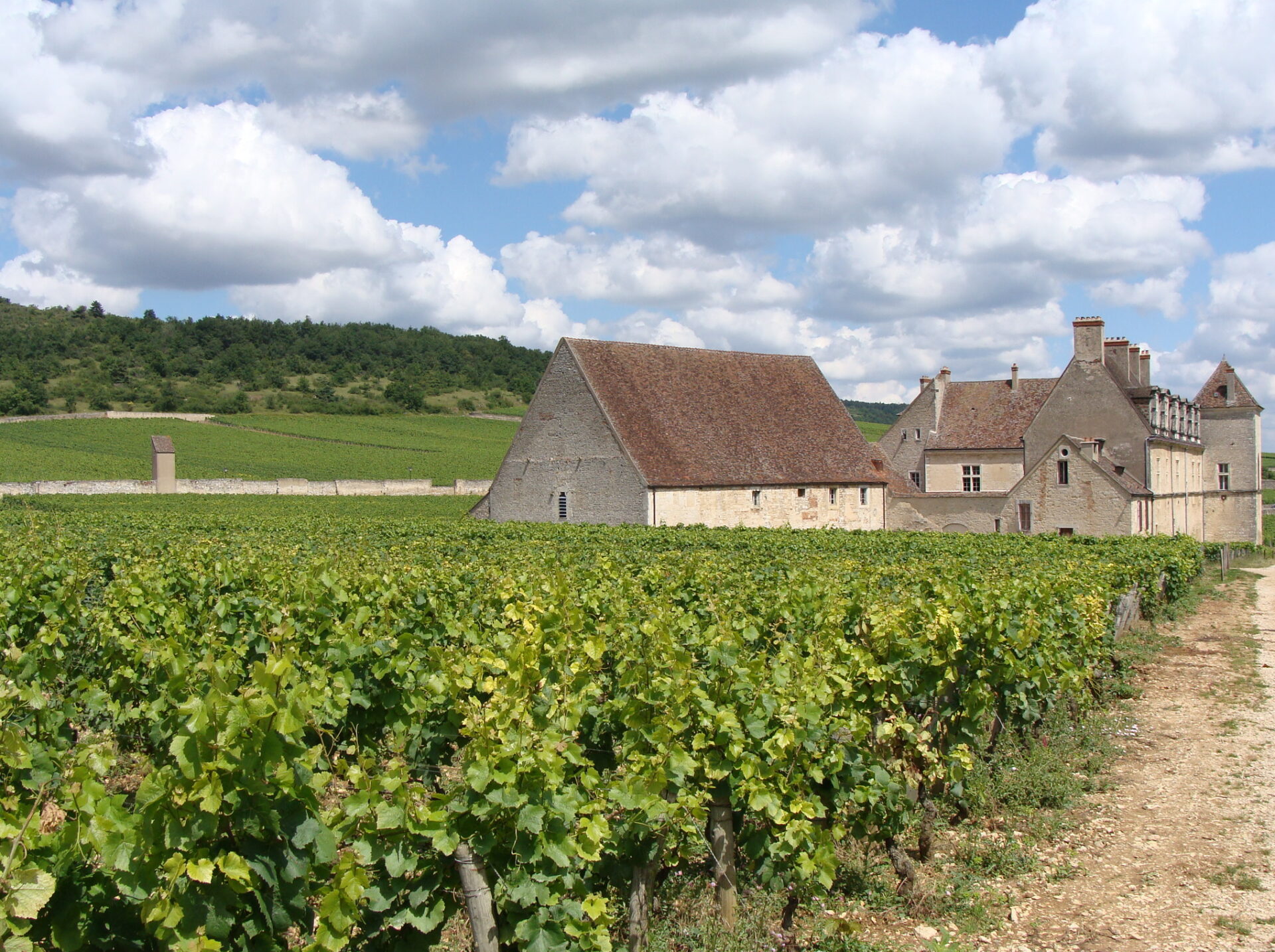
In 2015, the Burgundy vineyard system — the network of clos (walled vineyards) and climats (named plots) that covers the Côte d’Or — was listed as a UNESCO World Heritage Site. Not the buildings, not the architecture: the vineyard organisation itself, as a living cultural and agricultural system.
Just Two Grapes
One of Burgundy’s most clarifying features for beginners: almost the entire region runs on just two grape varieties. Pinot Noir makes the reds. Chardonnay makes the whites. That’s essentially it. (There is a small amount of Aligoté for whites, Gamay in Beaujolais, and Ceasar in Irancy, but you can safely ignore these until you have the main picture.)
This austerity is intentional and philosophically important. When only one grape is allowed in a region, every difference between wines must be attributable to the place where the grapes grow — the soil, the slope, the altitude, the microclimate. Burgundy’s classification is therefore a map of terroir, the most refined and debated example in existence.
- Pinot Noir in Burgundy — Red cherry, strawberry, dried rose, sometimes earthiness and forest floor. Elegant, medium-bodied, high acidity, silky tannins. The antithesis of the big, extracted New World red. Village-level wines are approachable young; Grand Crus often need a decade.
- Chardonnay in Burgundy — From the steely, oyster-shell minerality of Chablis to the rich, creamy, hazelnut-and-butter of a Meursault Premier Cru. The full range of what the grape can do. Almost never the tropical, heavily oaked style associated with cheap New World Chardonnay.
The Classification System: How Burgundy Labels Work
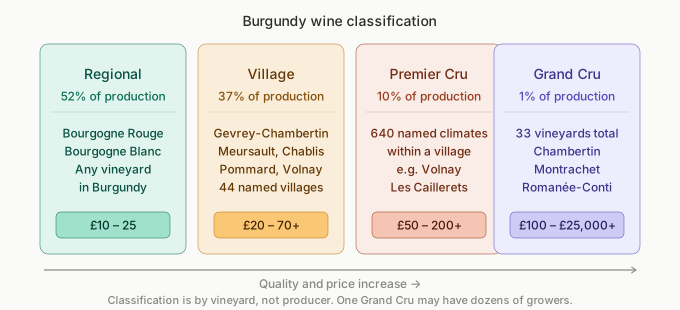
This is the part that trips up beginners, and understanding it is the key that unlocks the entire region. Burgundy classifies its wines on a four-tier hierarchy based entirely on where the grapes grow. Moving up the pyramid means progressively smaller, more precisely defined, more consistently excellent vineyard sites. Here is each tier, from widest to most exclusive.
Tier 1: Regional Wines (52% of production)
Labelled Bourgogne Rouge (red) or Bourgogne Blanc (white). Grapes can come from anywhere in Burgundy. These are your entry point: light, fresh, food-friendly, typically around £15–25. The quality varies enormously depending on the producer — a Bourgogne Rouge from a top domaine in Gevrey-Chambertin, made from their younger vines or declassified lots, can be spectacular. A Bourgogne from a large négociant may be very ordinary. Producer matters at this level more than anywhere else in the hierarchy.
Look for: Bourgogne Rouge from producers like Rossignol-Trapet, Drouhin, or Louis Jadot as an accessible starting point. Crémant de Bourgogne (sparkling, made by the traditional Champagne method) also sits in this tier and is excellent value.
Tier 2: Village Wines (37% of production)
Named after one of 44 villages, and labelled with the village name prominently displayed: Gevrey-Chambertin, Meursault, Chablis, Pommard, Nuits-Saint-Georges, Macon-Villages. Grapes come from plots within that village’s boundaries that aren’t classified as Premier or Grand Cru.
Village wines are where Burgundy becomes genuinely exciting for the price. A village-level Chablis at £20–30 gives you the region’s characteristic oyster-shell minerality in a way that no other wine in the world replicates. A village Chambolle-Musigny in the £35–50 range delivers one of Pinot Noir’s most ethereal expressions. This is where most serious wine lovers spend most of their Burgundy budget.
Tier 3: Premier Cru (10% of production)
From specific, named vineyard plots (climats) within a village, with a consistent track record of producing superior wine. There are 640 Premier Cru climates across Burgundy. The label shows both the village and the vineyard name: “Volnay 1er Cru Les Caillerets”, or “Chablis Premier Cru Fourchaume”.
Premier Crus offer more complexity, concentration, and ageing potential than village wines. They cost more — typically £50–200+ — but the best ones are worth it. The Côte Chalonnaise villages of Mercurey, Givry, and Rully have excellent Premier Cru wines at significantly lower prices than the Côte d’Or, making them an excellent entry point into this tier.
Tier 4: Grand Cru (1% of production)
The pinnacle. There are 33 Grand Cru vineyards in Burgundy’s Côte d’Or (plus Chablis Grand Cru, divided into seven named plots). Grand Crus are their own appellations: the label shows only the vineyard name, not the village. Chambertin. Montrachet. Romanee-Conti. Corton-Charlemagne. Names that wine collectors have memorised and obsessed over for generations.
These wines are expensive — £100 to £25,000 per bottle, with Romanee-Conti (DRC) in a category entirely of its own. They are also often not ready to drink for a decade after release. For most wine drinkers, they are a destination rather than an everyday reality. But knowing what they are and why they exist is essential for understanding how the whole system works.
The key insight: Burgundy’s classification is a map of consistently superior terroir, assembled by centuries of observation. A Grand Cru vineyard sitting next to a Village vineyard may be separated by just a few metres — but those metres cross a geological boundary that changes everything about the wine. This is why Burgundy rewards study.
The Five Sub-Regions: Burgundy from North to South
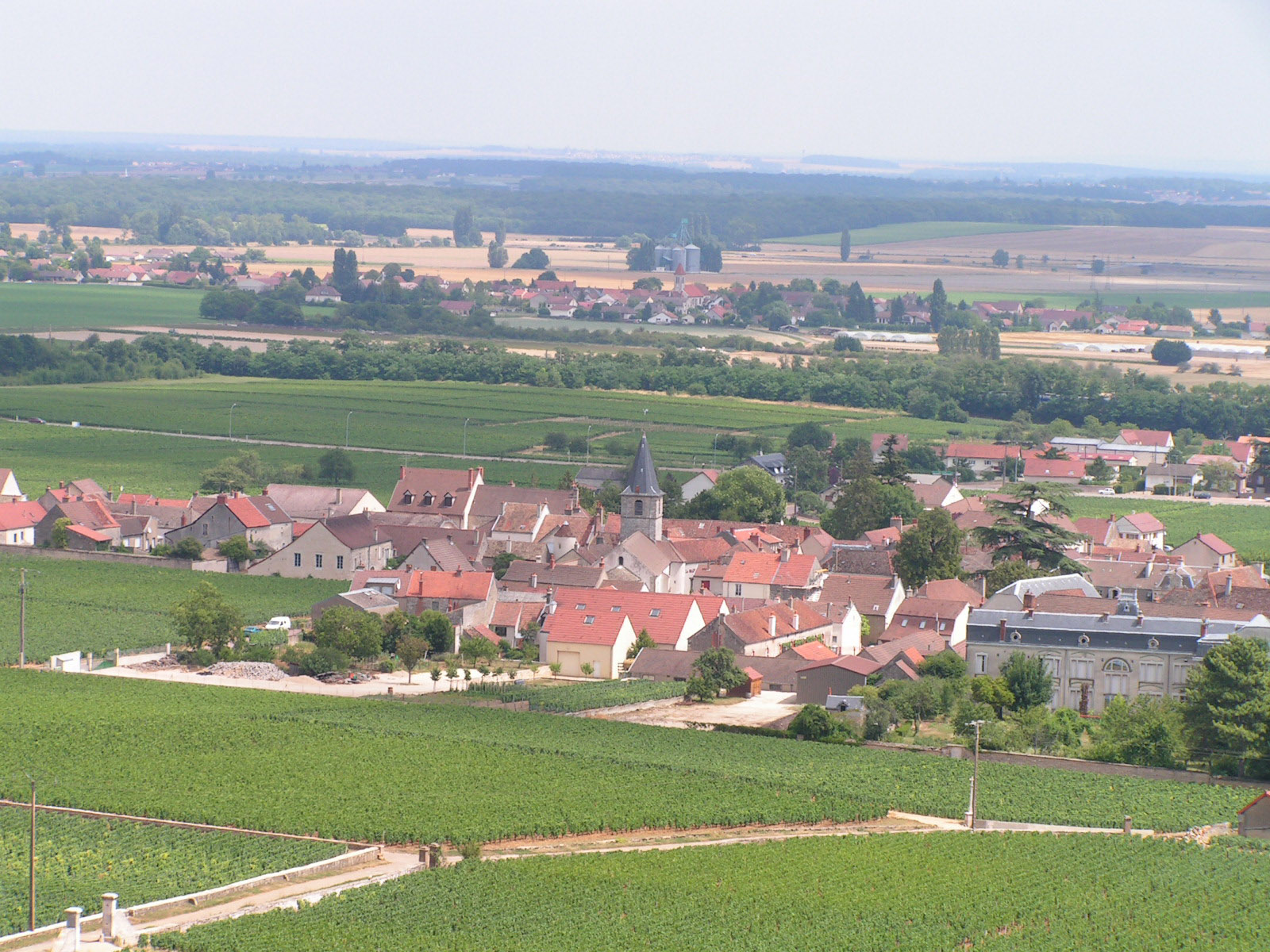
Burgundy stretches roughly 350 kilometres from north to south, from the outskirts of Paris to the gates of Lyon. Its five sub-regions each have distinct characters and are best understood as a journey from lean, mineral austerity in the north to generous, sun-soaked richness in the south.
1. Chablis
The most northerly part of Burgundy, geographically isolated from the rest of the region, lying about 150 kilometres northwest of Dijon. One grape only: Chardonnay. One soil type that makes it unique: Kimmeridgian limestone — ancient marine deposits from the Jurassic period, full of tiny fossilised oyster shells that give Chablis its famous saline, almost oceanic mineral character.
The wines are pale, tightly wound, high in acidity, and taste like no Chardonnay from anywhere else. Unoaked (typically) or lightly oaked, they are the wine world’s great reference point for mineral, bone-dry white wine. The classic pairing is oysters — not because someone decided they went well together, but because both literally grow in the same ancient limestone seafloor.
Chablis has its own four-tier hierarchy: Petit Chablis (lightest, most affordable), Chablis, Chablis Premier Cru (the best entry point into serious Chablis), and Chablis Grand Cru (one appellation, seven named plots on a single hillside north of the town). A Chablis Premier Cru from a producer like Louis Michel & Fils, Vincent Dauvissat, or La Chablisienne cooperative offers extraordinary value.
2. Côte de Nuits
The northern half of the famous Côte d’Or — the “golden slope” that runs south from Dijon for about 65 kilometres. Here lies the heartland of red Burgundy: almost exclusively Pinot Noir, almost entirely Grand Cru and Premier Cru territory. The Côte de Nuits is only about 1.5 kilometres wide at its best points. Every metre of slope counts.
The key villages, running south from Dijon: Marsannay (value, the only Burgundy village making rosé), Gevrey-Chambertin (the most powerful, structured reds, home to nine Grand Crus including Chambertin itself), Morey-Saint-Denis, Chambolle-Musigny (the most perfumed, ethereal Pinot Noir), Vougeot (home to Clos de Vougeot, a single 50-hectare Grand Cru walled vineyard shared by some 80 producers), Vosne-Romanée (the most prestigious village, containing Romanee-Conti, La Tâche, Richebourg and more), and Nuits-Saint-Georges (robust, earthy reds, no Grand Crus but excellent Premier Crus).
These are the most coveted and expensive red wines in the world. But the value entry point is real: a Bourgogne Rouge from a domaine based in Gevrey-Chambertin or Chambolle-Musigny — made from the producer’s younger vines or declassified lots — can give you the regional character at £20–30.
3. Côte de Beaune
The southern half of the Côte d’Or. While it produces serious red wine — Pommard and Volnay in particular are excellent — the Côte de Beaune is primarily famous for its white wines. All but one of Burgundy’s white Grand Crus are here.
The key white wine villages: Meursault (the most generous, buttery, hazelnut-rich Chardonnay; no Grand Crus but exceptional Premier Crus including Les Perrières), Puligny-Montrachet (arguably the greatest white wine village in the world; home to Montrachet and Chevalier-Montrachet Grand Crus), Chassagne-Montrachet (slightly richer and nuttier than Puligny), and Saint-Aubin (the value secret: next door to Puligny and Chassagne, excellent Premier Crus at a fraction of the price).
The key red wine villages: Beaune (the commercial heart of Burgundy, the town where most négociants are based, good Premier Crus), Pommard (structured, earthy, age-worthy reds), Volnay (perfumed, silky, the Côte de Beaune equivalent of Chambolle-Musigny).
4. Côte Chalonnaise
South of the Côte d’Or, less prestigious, less known, and significantly less expensive — which makes it the single best region for finding quality Burgundy at an accessible price. The key villages are Mercurey (the red wine capital of the Chalonnaise, producing robust, cherried Pinot Noir with genuine ageing potential), Givry (lighter and more elegant reds), Rully (both red and white, plus excellent Crémant de Bourgogne), and Montagny (white only, from Chardonnay).
No Grand Crus here, which is precisely why prices are reasonable. A Mercurey Premier Cru from Domaine Faiveley or Domaine Michel Juillot at £25–40 is often better value than a village-level Côte de Nuits at twice the price. This is Jancis Robinson’s recommended hunting ground for smart buyers.
5. Mâconnais
The southernmost sub-region, warmer and sunnier than the north, dominated by Chardonnay. The wines are fuller, more generously fruited than Chablis or Côte de Beaune whites — riper stone fruit, softer acidity, sometimes a slight roundness that makes them immediately appealing.
The star appellation is Pouilly-Fuissé, which received its first Premier Cru classifications in 2020 and produces the region’s most ambitious and age-worthy whites. Saint-Véran and Macon-Villages are the everyday entry points: fresh, bright, food-friendly, typically under £20, and excellent with fish, chicken, and soft cheeses. Viré-Clesse is an underrated appellation producing richer, textured Chardonnay that punches above its price.
What Does Burgundy Actually Taste Like?
Ask a Burgundy enthusiast what their wine tastes like and they’ll tell you it tastes of where it comes from. That’s true, and genuinely useful once you’ve tasted a few. But for a beginner, here are the concrete sensory markers to look for.
Red Burgundy (Pinot Noir)
- Colour: Pale to medium ruby, often translucent. Never the deep opaque purple of a Malbec or Syrah. The colour alone is a tell.
- Aromas: Red fruits dominate young Burgundy — cherry, strawberry, raspberry, dried cranberry. With age, secondary notes emerge: dried rose petal, damp earth, leather, game, forest floor, mushroom, sometimes truffle. The transition from fresh fruit to earthy complexity is Burgundy’s most compelling journey.
- Structure: High acidity (the region’s cool continental climate), medium tannin (silky rather than grippy), medium body. The exact opposite of a big, extracted New World red. Finesse is the word. Burgundy Pinot Noir is designed to be enjoyed with food, not drunk on its own.
- Finish: Long in the best examples, with that earthy, mineral character persisting well after the wine has left the glass.
White Burgundy (Chardonnay)
- Chablis style: Pale gold, almost greenish. Lean, precise, high-acid. Oyster shell, flint, lemon, green apple. Intense minerality that seems to come from the rock rather than the grape. Dry, austere when young, developing complexity over 5–10 years.
- Côte de Beaune style: Deeper gold. More body and texture. Apple, pear, hazelnut, butter, sometimes cream. In Meursault and above, a distinct savoury, almost nutty richness. Oak is integrated rather than dominant. Long, complex finish.
- Mâconnais style: Rounder, more immediately approachable. Stone fruit (peach, nectarine), softer acidity, moderate complexity. Best drunk within 3–5 years in most cases.
How to Read a Burgundy Label
Burgundy labels are notoriously minimal by New World standards — they rarely tell you the grape variety (everyone in Burgundy assumes you know it’s Pinot Noir or Chardonnay) and the most important information requires knowing the classification system. Here’s how to decode a Burgundy label in 30 seconds.
- One name only on the label (no village) = Grand Cru. E.g. Chambertin, Montrachet, Romanee-Conti. The vineyard name is the entire address.
- Village name + “Premier Cru” or “1er Cru” + vineyard name = Premier Cru. E.g. Meursault 1er Cru Les Perrières.
- Village name only = Village wine. E.g. Gevrey-Chambertin, Chablis, Volnay.
- “Bourgogne” + colour (Rouge or Blanc) = Regional wine.
- Domaine vs Négociant: Domaine means the producer grew the grapes themselves. Négociant means they bought grapes or wine from growers. Both can make excellent wine, but domaine wines from small producers tend to show more site specificity.
- Vintage matters more in Burgundy than almost anywhere: The cool continental climate means quality varies significantly from year to year. 2019, 2020, and 2023 are recent excellent vintages. 2021 was small but produced some exceptional wines from careful producers.
Where to Start: A Practical Guide to Buying Burgundy
Given that Grand Cru prices are stratospheric and village wines vary in quality, here is the most reliable entry path into Burgundy at each budget level.
- Under £20: Start with Chablis AOC from La Chablisienne or Moreau-Naudet, or a Mâcon-Villages from a reputable co-operative. This buys you the Burgundy character without the premium.
- £20–35: The sweet spot. A Chablis Premier Cru from Louis Michel (try Montmains or Vaillons). A Bourgogne Rouge from a top Côte de Nuits producer. A Mercurey village from Domaine Faiveley. Genuine Burgundy quality at accessible prices.
- £35–60: Village-level wines from the Côte de Nuits or Côte de Beaune. A village Chambolle-Musigny or Nuits-Saint-Georges will change your understanding of what Pinot Noir can be. For whites, a village Meursault or Saint-Aubin Premier Cru.
- £60–150: Premier Cru territory. At this level you can taste what the classification means. A Volnay 1er Cru or a Chablis Grand Cru will demonstrate why the hierarchy exists.
- Special occasion and beyond: Grand Crus from the Côte d’Or. Approach with reverence and patience — most need years of cellaring.
For a wider perspective on the world’s great wine regions, see our wine regions guide. The single best piece of advice for Burgundy beginners: find a good producer and follow them down the hierarchy. A domaine that makes brilliant Gevrey-Chambertin Premier Cru will usually also make an excellent Bourgogne Rouge from their declassified fruit. You get the producer’s quality and philosophy at a fraction of the flagship price. For more on developing the tasting skills to truly appreciate these wines, see our guide to blind wine tasting at home — Burgundy is ideal for a single-village horizontal tasting.
Frequently Asked Questions About Burgundy Wine
What grape variety is used in Burgundy wine?
Burgundy uses primarily two grape varieties: Pinot Noir for red wines and Chardonnay for white wines. Almost all of the region's classified wines (Premier Cru and Grand Cru) are made from one of these two varieties. Small amounts of Aligoté (white) and Gamay (red, mainly in Beaujolais) are also grown, but Pinot Noir and Chardonnay define Burgundy's character and reputation.
What is the difference between Burgundy and Bordeaux?
Burgundy and Bordeaux are France's two greatest wine regions but they are very different. Burgundy makes single-variety wines from Pinot Noir (red) and Chardonnay (white), and classifies wines by vineyard rather than producer. Bordeaux makes blended wines, primarily from Cabernet Sauvignon, Merlot, and Cabernet Franc, and classifies wines by chateau (producer). Burgundy wines tend to be lighter, more elegant, and more terroir-expressive. Bordeaux reds tend to be fuller-bodied, more tannic, and more structured. The classification systems work very differently: in Burgundy the vineyard holds the classification; in Bordeaux the chateau does.
Why is Burgundy wine so expensive?
Three main reasons. First, Burgundy's most famous vineyards are very small — the entire Romanee-Conti Grand Cru is just 1.8 hectares. With global demand far outstripping supply, prices have risen dramatically. Second, Burgundy is divided among thousands of small producers, many farming just a few rows in a famous vineyard, making economies of scale impossible. Third, production is limited by strict yield regulations that ensure quality but cap volume. That said, excellent Burgundy at accessible prices does exist: village wines from less famous appellations, Chablis, Côte Chalonnaise, and Mâconnais all offer genuine quality without Grand Cru prices.
What is a climat in Burgundy?
A climat (pronounced clee-mah) is a named vineyard plot in Burgundy, defined by its specific soil composition, slope, aspect, and microclimate. Burgundy has thousands of named climates, each with legally defined boundaries. The idea is that each climat consistently produces wine with a distinctive character that no other plot — even an adjacent one — exactly replicates. Cistercian monks began mapping these differences in the 12th century. The entire climat system of Burgundy was inscribed as a UNESCO World Heritage Site in 2015.
Where should a beginner start with Burgundy wine?
Start with Chablis. It is the most approachable, most distinctive, and most affordable entry point into genuine Burgundy character. A basic Chablis at £15–20 from a good producer like La Chablisienne or Moreau-Naudet gives you the Kimmeridgian limestone minerality that defines the region in a bottle that doesn't require a mortgage. Once you know Chablis, try a village-level Macon-Villages for the Mâconnais style, then move to a village Chambolle-Musigny or Nuits-Saint-Georges for your first serious red Burgundy experience.
What does terroir mean in Burgundy?
Terroir in Burgundy refers to the complete natural environment of a vineyard: its soil composition, subsoil geology, altitude, slope, aspect (direction it faces), microclimate, and drainage. Burgundy is the world's most studied example of how terroir shapes wine. The entire classification system — from Regional wines to Grand Crus — is essentially a ranking of terroir quality, based on centuries of observation. The Kimmeridgian limestone of Chablis, the iron-rich limestone of the Côte de Nuits, and the clay-limestone mix of the Côte de Beaune all produce distinctly different wines from the same grape varieties because of their terroir.