Terroir (pronounced tare-WAHR) is the idea that where a wine comes from shapes what it tastes like — that the combination of soil, climate, landscape, and even human tradition leaves a fingerprint on every bottle. It is the reason a Chardonnay from Chablis tastes almost nothing like a Chardonnay from Napa Valley, despite being made from exactly the same grape. It is the reason Champagne made outside the Champagne region would not taste like Champagne, even if you used the same grapes and the same method. And it is the foundation on which the entire European appellation system is built.
Terroir is one of those wine concepts that sounds mystical at first and becomes completely logical once you think about it. This article explains what terroir actually means, what the four components are, how they interact, and — most usefully — how to taste it for yourself without needing to go anywhere near a vineyard.
In this article
- 1 What Terroir Actually Means
- 2 The Four Elements of Terroir
- 3 Terroir in Practice: The Same Grape, Different Places
- 4 Terroir vs Winemaking: The Great Debate
- 5 How to Taste Terroir for Yourself
- 6 Frequently Asked Questions
- 6.1 What does terroir mean in wine?
- 6.2 What are the four elements of terroir?
- 6.3 How do you pronounce terroir?
- 6.4 Why does the same grape taste different in different countries?
- 6.5 Does terroir actually affect wine taste, or is it just marketing?
- 6.6 What is the difference between terroir and appellation?
What Terroir Actually Means
The word comes from the French terre, meaning land or earth. Its Latin root is territorium. But terroir in the wine sense means something considerably broader than just soil: it encompasses the complete natural environment of a vineyard — everything about the place that cannot be replicated elsewhere.
The most useful translation is “sense of place”. The idea is that a wine made from a particular vineyard carries something of that place in the glass — that you can taste the Kimmeridgian limestone of Chablis in the wine’s mineral, oyster-shell quality, or the black slate of the Mosel riverbank in the knife-edge acidity of a Mosel Riesling. Whether this is literally true — whether minerals actually travel from rock to grape juice — is scientifically contested. What is not contested is that wines from different places, made from the same grape, taste different, and that those differences are systematic and consistent from year to year.
The concept was developed by Cistercian and Benedictine monks in medieval Burgundy, who spent centuries mapping their vineyard plots and observing which parcels consistently produced superior wine. This patient, empirical process gave rise to Burgundy’s classification system — the climat system, in which specific plots are ranked by quality based on centuries of observed terroir differences. When the entire Burgundy climat system was inscribed as a UNESCO World Heritage Site in 2015, it was the first time a vineyard organisation — rather than architecture or a monument — received that recognition. That is how seriously the world takes terroir.
The Four Elements of Terroir
1. Soil: The Foundation
Soil is the most discussed element of terroir, and the one most associated with the concept. Different soil types affect the vine in measurable ways: how easily they drain, how much moisture they retain, how warm or cool they stay, how deeply a vine’s roots must grow to find water and nutrients.
Limestone and chalk drain well, warm up quickly, and are associated with wines of high acidity, finesse, and mineral character. Chablis’ Kimmeridgian limestone — a specific type of marine limestone formed 150 million years ago from tiny fossilised oysters — is directly connected to the wine’s famous saline, almost oceanic minerality. Champagne’s chalk subsoil does something similar for sparkling wine. The same Kimmeridgian limestone appears in parts of England, which is one reason English sparkling wine has become credible.
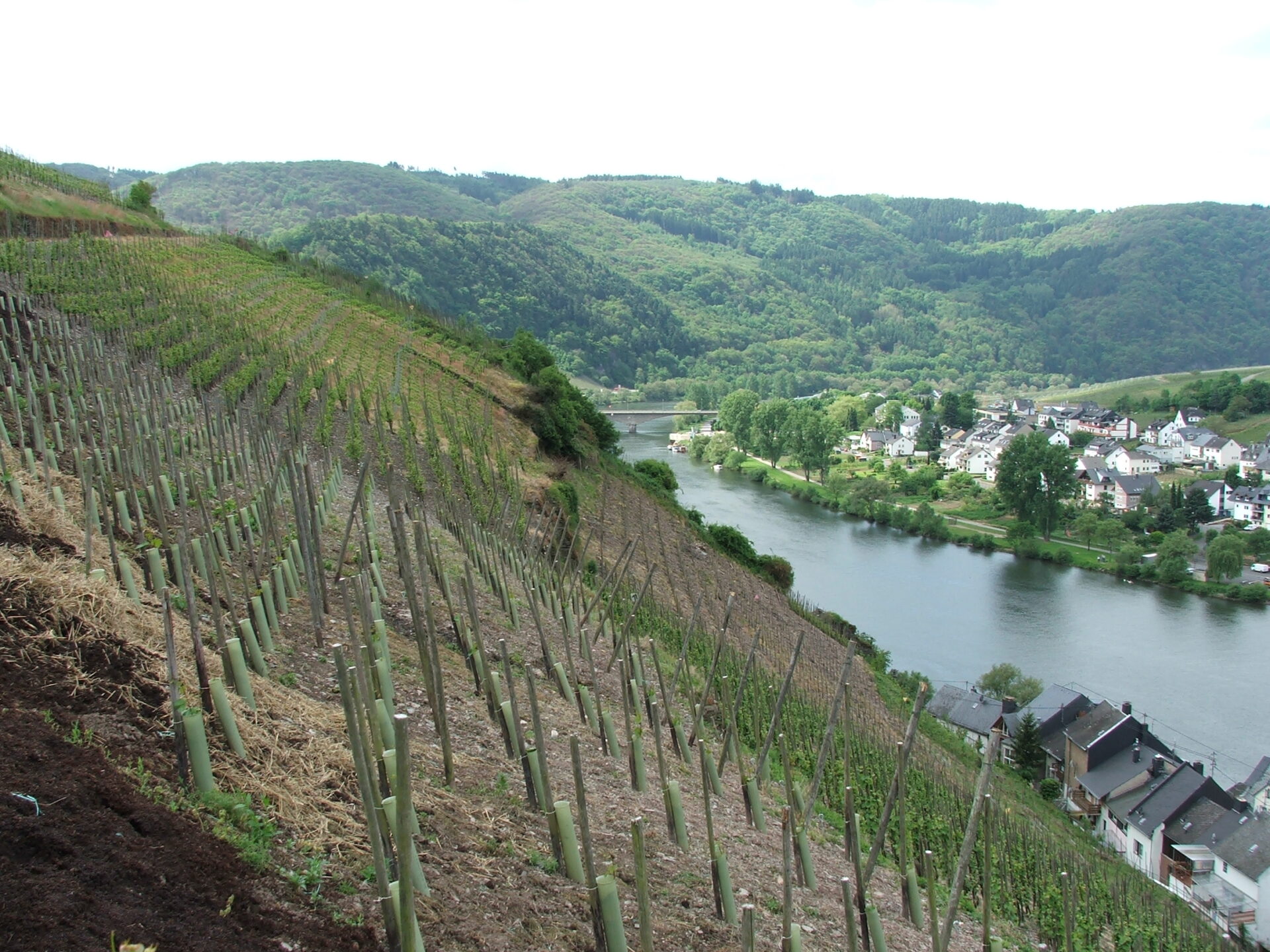
Slate and schist warm up quickly during the day (slate absorbs heat), cool down slowly at night, and drain rapidly. The steep slate slopes of the Mosel Valley in Germany hold heat from the sun and reflect it back onto the vines — essential in one of the world’s coldest major wine regions. The result is Riesling of extraordinary delicacy and acidity. The same grape grown in the sandstone-based soils of Alsace, just across the Rhine, produces a fuller, more aromatic, lower-acid wine. Same grape, different soil, completely different character.
Gravel, famously associated with the left bank of Bordeaux (the Médoc and Graves), drains almost perfectly and forces the vine into deep root growth to find moisture. This vine stress is generally considered beneficial for quality — a vine working hard produces less fruit, but more concentrated and complex fruit. Clay retains moisture, producing fuller-bodied, richer wines with rounder acidity. Volcanic soil gives wines a distinctive mineral, sometimes smoky or ashy quality — Santorini’s Assyrtiko being the classic example.
2. Climate: The Most Powerful Variable
If terroir has a single most important component, most wine scientists would say it is climate. Temperature determines how fast grapes ripen, which controls everything from sugar levels (and therefore alcohol) to acidity (which drops as the grape ripens) to the development of aromatic compounds. Sunshine hours, rainfall patterns, humidity, and wind all play roles too.
The practical consequence is the fundamental difference between cool-climate and warm-climate wines:
- Cool-climate wines — the grape ripens slowly over a long growing season, retaining higher acidity and producing wines with more delicate, precise fruit, lighter body, and lower alcohol. Think Mosel Riesling, Chablis, Champagne, Burgundy Pinot Noir. These wines often feel tighter and more mineral, with less immediately obvious fruit.
- Warm-climate wines — the grape ripens more quickly and fully, producing wines with riper, more generous fruit, fuller body, lower acidity, and higher alcohol. Think Barossa Valley Shiraz, Napa Valley Cabernet, Priorat Garnacha. These wines hit you with immediate, opulent fruit.
Wine producers also distinguish between macro-climate (the broad regional conditions), meso-climate (conditions within a specific vineyard or hillside), and micro-climate (conditions in a very small area, sometimes even a few rows of vines). A vineyard facing south on a hillside in northern France will have a meso-climate several degrees warmer than a north-facing vineyard 200 metres away — which is why the classification of specific vineyard plots matters so much in cool regions like Burgundy and the Mosel.
3. Topography: Where the Vineyard Sits
Topography — the physical landscape of the vineyard — is terroir made visible. You can see it: the steep slate terraces of the Mosel, the gentle slopes of the Côte d’Or, the flat gravel plains of Bordeaux’s left bank. Each configuration creates a different growing environment.
Altitude lowers temperature (roughly 0.6°C per 100 metres) and increases ultraviolet exposure, which thickens grape skins and concentrates flavour compounds. High-altitude vineyards in Argentina’s Mendoza (some above 1,500 metres), northern Spain’s Ribera del Duero, and the Douro Valley in Portugal can produce complex, characterful wines despite warm ambient temperatures because the altitude provides cooling.
Slope affects both drainage and sun exposure. Steep slopes drain rapidly after rain, preventing waterlogging, and expose the vine to more direct sunlight. In the Mosel, slopes of 60–70 degrees are not uncommon — harvesting on them requires ropes. The south-facing slopes of the Côte d’Or in Burgundy receive maximum afternoon sunlight, which is why the most prestigious vineyards occupy specific bands of mid-slope exposure rather than the flatter land below or the exposed hilltops above.
Proximity to water moderates temperatures: the Mosel, Rhine, Loire, Rhône, and Douro rivers all act as heat reservoirs, storing warmth during the day and releasing it at night, protecting vines from frost in marginal climates and extending the growing season. This is not coincidence — the world’s greatest wine regions are almost all found near significant rivers or bodies of water.
4. The Human Factor: Tradition and Skill
This is the most contested element, and its inclusion varies depending on whom you ask. The traditional French view of terroir is purely natural — the land speaks for itself and the winemaker’s job is to get out of the way and let it. The more modern view, held by many New World producers and wine scientists, includes the human choices that shape how terroir expresses itself: which grape variety to plant, how densely to plant, when to harvest, whether to use oak, how much to intervene in the cellar.
The most important human decision is grape variety. A terroir can only express itself through a grape that is suited to it. The Kimmeridgian limestone of Chablis makes extraordinary wine with Chardonnay; it would not produce the same magic with Grenache. The Mosel’s steep slate slopes are ideal for Riesling, which can ripen slowly at cool temperatures and retain acidity; Cabernet Sauvignon would never ripen there. Part of what the appellation system encodes is centuries of human trial and error in matching variety to terroir.
Vine age also matters. Older vines have deeper root systems, drawing from a wider range of the soil profile. They naturally produce fewer grapes, but those grapes are more concentrated. Many producers specify “vieilles vignes” (old vines) on their labels — typically meaning 30 years or older, sometimes much more. The difference is real: old vine wine often has a depth and complexity that is difficult to replicate from young vines in the same soil.
Terroir in Practice: The Same Grape, Different Places
The easiest way to understand terroir is to taste the same grape variety from two different places side by side. Here are three of the most instructive comparisons.
Chardonnay: Chablis vs Napa Valley
Genetically identical grape. Radically different wines. Chablis is pale, almost green-tinged, with high acidity, lean body, and a striking minerality — chalk, oyster shell, green apple. Napa Valley Chardonnay is deep gold, often heavily oaked, with butter, vanilla, ripe tropical fruit, and low acidity. Both are 100% Chardonnay. The difference is Chablis’ cool continental climate and Kimmeridgian limestone versus Napa’s warm Mediterranean climate and loam-over-gravel soils. The grape is the same instrument; the terroir is a completely different score.
Sauvignon Blanc: Sancerre vs Marlborough
Sancerre — on the limestone and flint soils of the upper Loire Valley — produces Sauvignon Blanc that is restrained, mineral, flinty, with more texture and less obvious fruit. Marlborough in New Zealand, with its alluvial gravels and intense sunshine, produces Sauvignon Blanc that is explosively aromatic: passionfruit, grapefruit, cut grass, sometimes intensely pungent. Both are dry white wines. Both come from Sauvignon Blanc. The terroir difference — soil, climate, topography, winemaking tradition — produces wines that taste like they could come from different planets.
Pinot Noir: Burgundy vs Oregon vs New Zealand
Pinot Noir is the world’s most terroir-sensitive red grape — it responds to its environment more dramatically than almost any other variety. Burgundy Pinot (cool continental climate, limestone, structured winemaking tradition) produces elegant, earthy, complex wines with red fruit, forest floor, and a characteristic transparency. Oregon Pinot (similar climate to Burgundy, volcanic basalt soils, more modern winemaking) produces wines with fuller fruit, more texture, but less of the classic earthiness. Central Otago Pinot Noir (extreme continental climate, schist soils, high altitude) produces wines of concentrated dark fruit, firmer tannins, and an almost crystalline intensity. Three terroirs, three expressions of one grape.
Terroir vs Winemaking: The Great Debate
Not everyone believes terroir is the dominant force in wine. The counter-argument, more common in the New World, is that winemaking decisions — grape variety selection, yield management, fermentation temperature, oak regime, blending — shape wine more powerfully than any combination of soil and climate. The “technological winemaker” school holds that great wine is made in the cellar, not the vineyard.
The terroir school responds that technology can eliminate flaws and improve consistency, but it cannot create the distinctive character that comes from a specific place. A winemaker can make any plot of land produce competent wine; only the right terroir produces something irreplaceable. The 1976 Judgment of Paris — when California wines beat French wines in a blind tasting — was used as evidence for the winemaking argument. But French enthusiasts noted that French wines from great terroirs tend to develop more complexity with age, which the California wines generally didn’t.
The practical resolution is that both matter. Great wine requires both terroir potential and skilled winemaking to realise it. A brilliant site managed by an incompetent winemaker will underperform. A talented winemaker on a mediocre site will produce something correct but not distinctive. The greatest wines come from the intersection of both.
How to Taste Terroir for Yourself
The fastest way to experience terroir is a horizontal tasting — the same grape variety from multiple regions, tasted side by side. You don’t need to go anywhere. Just buy two or three bottles:
- Chardonnay terroir exercise: Chablis AOC (£18–25) alongside an oaked California Chardonnay (£15–25). The differences are immediate and unmistakable: one is lean, mineral, and almost savoury; the other is round, buttery, and fruit-forward.
- Sauvignon Blanc terroir exercise: Sancerre (£20–30) alongside Marlborough Sauvignon Blanc (£10–18). One is restrained and mineral; the other is explosively tropical. Same grape, completely different personality.
- Riesling terroir exercise: Mosel Riesling (£15–22) alongside Alsatian Riesling (£15–22). One is electric and razor-sharp; the other is fuller and more aromatic. The German slate versus the French granite and sandstone.
You can also incorporate terroir into a blind tasting at home by building a flight around one grape from multiple regions. The differences will teach you more in an evening than a week of reading. For more on how Burgundy — terroir’s spiritual home — organises its vineyards around this principle, see our Burgundy wine guide.
Frequently Asked Questions
What does terroir mean in wine?
Terroir (pronounced tare-WAHR) is a French term meaning the complete natural environment of a vineyard — soil, climate, topography, and human tradition — and the effect this environment has on a wine’s character. The most useful translation is “sense of place.” It describes why wines from the same grape variety taste completely different depending on where the grapes are grown. A Chardonnay from Chablis and a Chardonnay from Napa Valley are made from genetically identical grapes, but their terroirs — the cool limestone soils of northern Burgundy versus the warm Mediterranean climate of California — produce wines that taste almost nothing alike.
What are the four elements of terroir?
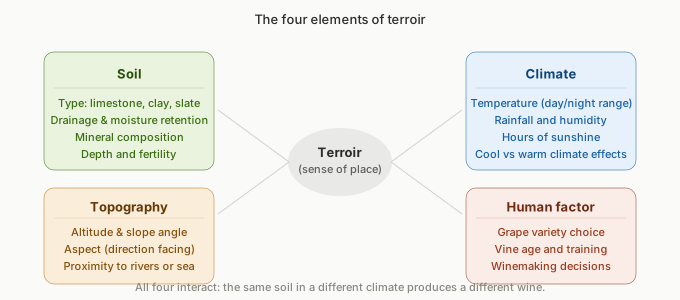
The four elements of terroir are: Soil (type, drainage, mineral composition and depth); Climate (temperature, rainfall, sunshine hours, and whether the region is cool or warm); Topography (altitude, slope angle, aspect and proximity to water); and the Human factor (grape variety selection, vine age, and winemaking tradition). All four interact — the same soil in a different climate produces a different wine, and the same terroir planted with a different grape variety expresses itself differently.
How do you pronounce terroir?
Terroir is pronounced tare-WAHR (two syllables, with the stress on the second). The “r” at the end is the soft French guttural r, but most English speakers approximate it as “tare-WAHR” and are perfectly understood. The word comes from the French “terre” (earth or land), from the Latin “territorium.”
Why does the same grape taste different in different countries?
Because terroir — the complete growing environment — shapes the grape’s character as it ripens. A cool climate slows ripening and preserves acidity, producing wines with higher acidity, lighter body and more delicate fruit. A warm climate ripens grapes faster and more fully, producing richer, bolder wines with lower acidity. Soil type affects drainage and nutrient availability, which affects vine stress and concentration. Slope and altitude affect temperature and sun exposure. All of these variables are different in every region, which is why Sauvignon Blanc from Sancerre, Marlborough, Chile and South Africa all taste different despite being the same grape.
Does terroir actually affect wine taste, or is it just marketing?
The systematic differences between wines from different places are real and measurable, even in blind tastings. Whether specific minerals travel from rock to grape to wine glass is scientifically contested, but the effects of climate, soil type and topography on grape composition are well-documented. Climate is the most clearly understood component — its effect on acidity, sugar levels and flavour compound development is quantifiable. Soil’s role in drainage, root stress and vine health is also well-established. The mineral “taste” of terroir is where some debate remains, but the broader concept — that where grapes grow shapes how wine tastes — is not seriously questioned.
What is the difference between terroir and appellation?
Terroir is the natural concept: the actual environmental characteristics of a specific place. Appellation is the legal system built around it: a defined geographic area with rules about which grapes can be grown and how the wine must be made. Appellations exist to protect and codify terroir — France’s AOC system, Italy’s DOC/DOCG, and Spain’s DO system all use appellation boundaries to map out where specific terroirs exist. When you buy a wine with an appellation label (Chablis, Chianti Classico, Barolo), you’re buying into a legal guarantee that the wine comes from a specific terroir and follows certain production rules.