Chenin Blanc is probably the most underestimated grape in the world. While Chardonnay and Sauvignon Blanc take the headlines, Chenin quietly produces everything from bracing bone-dry whites with a decade of ageing potential, to off-dry crowd-pleasers, to sparkling wines that compete with Champagne for a fraction of the price, to some of the most extraordinary sweet wines ever made — wines that can age for fifty years or more. One grape. Five completely different wine styles. And until you’ve tasted it properly, you haven’t really met it.
This guide covers everything you need to know about Chenin Blanc: its character, its styles, where it grows, how to recognise it blind, and how to pair it with food. Think of it as an introduction to one of wine’s best-kept secrets.
In this article
- 1 What Is Chenin Blanc?
- 2 What Does Chenin Blanc Taste Like?
- 3 The Four Styles of Chenin Blanc
- 4 Where Chenin Blanc Grows: The Key Regions
- 5 How to Recognise Chenin Blanc Blind
- 6 Chenin Blanc Food Pairing: More Versatile Than You Think
- 7 Does Chenin Blanc Age Well?
- 8 Bottles Worth Trying: From Entry-Level to Special Occasion
- 9 Frequently Asked Questions About Chenin Blanc
What Is Chenin Blanc?
Chenin Blanc is a white wine grape variety that originated in France’s Loire Valley, where it has been cultivated since at least the 9th century. It’s now grown across the world — most notably in South Africa, where it is actually the most widely planted variety and known locally as Steen. Despite its relative anonymity compared to Chardonnay or Riesling, Chenin Blanc covers over 87,000 acres worldwide.
What makes Chenin genuinely special — and what separates it from most white grapes — is its combination of naturally very high acidity and almost extreme stylistic flexibility. Most grapes can do two or three things well. Chenin does all of this well: bone-dry still wines with steely minerality; off-dry wines with honeyed richness; full sparkling wines made by the traditional method; medium-sweet and late-harvest wines; and botrytised dessert wines of rare complexity that age like great Sauternes. Wine writer Jancis Robinson placed it in her list of “Classic” grape varieties in 1986, ahead of most people’s understanding of the grape — a judgement that has since been vindicated many times over.
The key to understanding Chenin is that acidity. Even in warm climates and at high ripeness levels, Chenin Blanc holds onto its acidity in a way that almost no other white grape can manage. That acidity is what lets it support high sugar levels in sweet wines without becoming cloying, what allows its sparkling wines to stay lively through second fermentation, and what gives even an affordable entry-level Vouvray the structural backbone to age for five years rather than needing to be drunk immediately.
What Does Chenin Blanc Taste Like?
More than almost any other grape, the answer to this depends entirely on the style. But there are sensory signatures that run through virtually every Chenin Blanc regardless of sweetness or origin, and learning to recognise them is how you identify Chenin blind.
The Core Aromas
The most reliable tell in dry to off-dry Chenin Blanc is quince — that yellow-green fruit that exists somewhere between apple and pear and is rarely found elsewhere. Alongside that: yellow apple, baked or bruised apple, ripe pear, chamomile, honeysuckle, and ginger. There is often something slightly waxy or lanolin-like, particularly in the Loire’s mineral-driven dry styles. In warmer climates like South Africa, add tropical notes: mango, pineapple, passion fruit.
With oak aging, secondary aromas appear: butterscotch, brioche, lemon curd, marzipan, and toasted hazelnut. In older or botrytised Chenins, the palette shifts dramatically: orange marmalade, saffron, dried apricot, candied fig, honey, and ginger dominate. In oxidative styles (a small but growing category, particularly in the Loire), you get something that resembles sherry in structure — nutty, savoury, and fascinating.
The Bruised Fruit Quality
One experienced tasters often mention is what’s sometimes called a “bruised” or “damp straw” quality in the fruit — less the bright freshness of Sauvignon Blanc, more the deeper, slightly oxidative character of fruit left in a bowl for a day. It’s not a flaw; it’s a varietal fingerprint. Alongside this, a subtle earthy, almost wet-wool or lanolin note in cooler-climate examples. These two characteristics, quince and bruised-apple with a slightly woolly texture, are your blind-tasting anchor points for identifying Chenin.
Structure: Acidity, Body, Alcohol
Acidity is medium-plus to high in virtually every Chenin Blanc, dry or sweet. It’s the most consistent structural element across all styles and origins. Body ranges from light to full depending on sweetness level, oak use, and climate. Alcohol is typically 12–14.5% in still wines. Tannin is essentially zero — this is a white wine with no grip. The mouthfeel is often described as slightly waxy or lightly textured, which distinguishes it from the sharper, more aggressive profile of Sauvignon Blanc at the same acidity level.
The Four Styles of Chenin Blanc
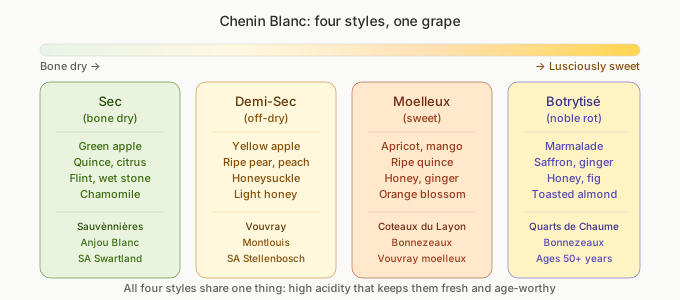
Sec — Bone Dry Chenin Blanc
Dry Chenin Blanc is having a moment, and rightly so. These wines offer the kind of precision and minerality that wine lovers associate with great Chablis or Mosel Riesling, but with a character entirely their own. Expect green apple, quince, citrus zest, a steely mineral thread, and occasionally something reminiscent of flint or wet stone. The acidity is pronounced and the finish is long.
The spiritual home of dry Chenin is Sauvènnières in the Anjou-Saumur part of the Loire Valley. It’s a tiny appellation — barely 740 acres of vines — on schist and mica soils that produce some of the most mineral, austere, age-worthy dry white wines in France. Young Sauvènnières can be almost painfully tight; give them five years and they open into something extraordinary. Domaine des Baumard and Nicolas Joly’s Clos de la Coulée de Serrant are the names to know. South Africa’s Swartland region produces brilliant dry Chenin from old bush vines — the Sadie Family and Mullineux are the modern benchmarks.
Demi-Sec — Off-Dry Chenin Blanc
This is the style most people encounter first and the most accessible entry point into the grape. A demi-sec Chenin Blanc has enough residual sugar to round out the acidity and add richness, without being sweet enough to taste like dessert. Yellow apple, ripe pear, peach, honeysuckle, and a light honey note dominate. The wine feels slightly fuller in the mouth than the sec style, with a softer edge.
Vouvray is the most famous appellation here, though it produces wines across all four sweetness levels depending on vintage conditions. In better years, producers make sec and demi-sec wines; in rich, botrytis-prone vintages, they shift to moelleux and liquoreux. The diversity within a single appellation name is one reason Vouvray can confuse beginners — and delight them once they understand it. Look for Domaine Huet, François Chidaine, and Vincent Carême as the most reliable producers.
Moelleux — Sweet Chenin Blanc
Here the grape shifts registers. Moelleux (“soft” or “mellow” in French) wines have significant sweetness — concentrated apricot, ripe quince, mango, honey, and orange blossom, all held up by the grape’s characteristic acidity so they never feel heavy or cloying. These are wines you can drink on their own or pair with rich patisserie, blue cheese, or fruit-based desserts.
Coteaux du Layon and Bonnezeaux in the Anjou region are the key appellations. The Layon river valley creates the humid autumn conditions that encourage noble rot. Wines from Bonnezeaux in particular are seriously long-lived and concentrated.
Botryitisé — Noble Rot Dessert Wines
This is where Chenin Blanc earns its place among the world’s greatest grapes. The combination of the grape’s natural acidity and the concentration added by noble rot (botrytis cinerea) produces wines of extraordinary complexity and longevity. Orange marmalade, saffron, candied ginger, dried fig, honey, and toasted almond — all balanced by an acidity that prevents any sense of heaviness and that keeps the wine alive and evolving in the bottle for decades.
Quarts de Chaume, a grand cru appellation within Coteaux du Layon, produces some of the most concentrated and long-lived examples. These wines are made in tiny quantities, harvested by hand in multiple passes through the vineyard as grapes reach botrytis at different rates, and can age for fifty years or more. Jancis Robinson has described enjoying 80-year-old examples. The price reflects this rarity and longevity, but even modest examples from Bonnezeaux and Vouvray Moelleux give a clear sense of what botrytised Chenin can achieve.
Sparkling Chenin Blanc
The Loire Valley is the second-largest sparkling wine region in France, and Chenin Blanc is the engine. The grape’s high acidity makes it a natural base for traditional-method sparkling wines that retain freshness and drive through second fermentation. Vouvray sparkling, Montlouis-sur-Loire sparkling, and the broader Crémant de Loire appellation all use Chenin as their primary grape.
These wines won’t replace Champagne in terms of complexity, but they offer something Champagne rarely does: the distinctive quince-and-chamomile floral character of Chenin in sparkling form, at a price that makes weekly drinking feasible rather than occasional. They also age better than most people expect.
Where Chenin Blanc Grows: The Key Regions
Loire Valley, France: The Spiritual Home
The Loire Valley is where Chenin Blanc makes its greatest wines and expresses its widest range. The region’s cool climate, chalky tuffeau limestone soils in Vouvray, and ancient schist and mica in Sauvènnières create very different expressions of the same grape across a relatively small geography. The Loire is also the only place where all four sweetness styles, plus sparkling, exist side by side from the same producers, often depending on a single season’s weather.
Key appellations to know: Sauvènnières (dry, austere, mineral), Vouvray (all styles, from sparkling to botrytised), Montlouis-sur-Loire (similar to Vouvray, across the river), Coteaux du Layon (sweet to very sweet), Bonnezeaux and Quarts de Chaume (the grand cru sweet wines), Anjou Blanc (dry, increasingly excellent and underrated), and Crémant de Loire (sparkling).
South Africa: The Modern Powerhouse
South Africa has more Chenin Blanc planted than anywhere else in the world, accounting for over 50% of global plantings. Until the 1990s, much of it went into bulk wine and brandy. The transformation since then has been remarkable: a new generation of producers, working with old bush vines (some over 40 years old) on granite and decomposed shale soils, are making wines that sit comfortably alongside the best the Loire produces.
South African Chenin has a different character to its French counterpart. Warmer growing conditions produce riper, more generous fruit — tropical notes of pineapple and mango alongside the apple and quince, sometimes with a rounded, almost creamy richness from old vine concentration. The Swartland is the epicentre of quality: producers like the Sadie Family, Mullineux, and AA Badenhorst have built international reputations on Swartland Chenin. Stellenbosch produces more oak-influenced, full-bodied styles. Elgin and Walker Bay, with their cooler coastal climates, produce leaner, more Loire-like wines.
Other Regions Worth Knowing
California has a long history with Chenin Blanc — it was once more widely planted than Chardonnay in the state. Today, plantings are smaller but producers in Clarksburg and the Sierra Foothills are making interesting dry and off-dry styles from old vines. Argentina produces straightforward, fresh, affordable Chenin that rarely reaches the heights of France or South Africa but offers excellent everyday value. Australia has small plantings, particularly in Western Australia, showing real promise in drier styles. The global picture is of a grape whose reputation is quietly but steadily rising.
How to Recognise Chenin Blanc Blind
Chenin Blanc is one of the more identifiable white wines in a blind tasting, once you know its tells. The challenge is that it can appear in very different forms, so the key is looking for the constants beneath the stylistic variation.
- The colour is medium to deep straw, sometimes with a golden hue even in young dry wines. Older examples or sweet styles can be deep gold. There’s rarely the pale, almost water-white appearance of young Muscadet or unoaked Pinot Grigio.
- The nose lead is almost always some form of apple — but specifically yellow or baked apple, or quince, rather than the bright green apple of Sauvignon Blanc or the stone-fruit richness of Viognier. If you smell quince, chamomile, and ginger in a white wine, Chenin Blanc should be your first hypothesis.
- The texture is slightly waxy and fuller than Sauvignon Blanc at the same acidity level. It feels more substantial in the mouth than the sharpness of the acidity would suggest.
- The acidity is consistently high — mouth-watering and persistent — across all styles. In the sweet styles, this is the key tell: the acidity remains lively even alongside high residual sugar, which distinguishes it from less structured sweet whites.
- The finish often shows ginger, quince, or a slightly honeyed quality even in dry styles. This is the aromatic echo that lingers and is one of Chenin’s most recognisable signatures.
At a blind tasting, the deductive logic runs: high acidity, slightly waxy texture, yellow/baked apple and quince on the nose, often with chamomile or ginger — you’re most likely looking at Chenin Blanc from the Loire Valley or South Africa. If the tropical fruit (pineapple, mango) is prominent, lean South Africa. If the profile is more mineral and tight, lean Loire. If there’s genuine complexity, concentration, and a honeyed quality without feeling flabby, you may be in the sweet wine category from Anjou.
Chenin Blanc Food Pairing: More Versatile Than You Think
Chenin Blanc’s high acidity and range of sweetness levels make it one of the most food-friendly white wines on the table. Its acidity cuts through fat and richness; its fruit weight gives it substance alongside more flavourful dishes; and the sweeter styles open up a completely different set of pairing options.
- Dry Chenin Blanc works beautifully with pork (especially pork belly, where the acidity cuts the fat), veal, roast chicken with herbs, fish in cream sauce, and goat’s cheese (particularly from the Loire — a regional pairing of rare elegance). Sauvènnières with a piece of fresh chèvre is one of the most satisfying simple pairings in all of wine.
- Off-dry Chenin Blanc is the go-to for Southeast Asian cuisine — spicy curries, Thai fish dishes, Vietnamese pho. The slight sweetness tempers the heat; the acidity refreshes the palate; the aromatic complexity matches the flavour intensity of the food. Also excellent with smoked salmon, duck with fruit sauce, and terrine or pâté.
- Sweet and botrytised Chenin shines with blue cheese, foie gras, apricot tarts, Tarte Tatin, and any dessert built around stone fruit. The classic Loire pairing of Coteaux du Layon with a simple apricot tart is one of those combinations that makes you understand why people spend their lives in pursuit of these matches.
- Sparkling Chenin is essentially an aperitif wine, but it works with oysters, light canapés, fresh goat’s cheese, and anything you’d reach for Champagne with — at a significantly lower price.
One thing to avoid across all Chenin Blanc styles: aggressively tannic red meat preparations like a rare beef steak or lamb rack. The wine’s delicacy — even in its fullest-bodied forms — will be overwhelmed. Save those pairings for our food and wine pairing guide.
Does Chenin Blanc Age Well?
Yes — and this is one of the facts that most surprises people. Great dry and sweet Chenin Blanc from the Loire Valley is among the most age-worthy white wine in the world, rivalling premier cru white Burgundy and the great Rieslings of the Mosel and Alsace. The grape’s extraordinary acidity acts as a preservative, and the best examples from Sauvènnières or Vouvray can evolve positively for 20–30 years. The sweet wines from Quarts de Chaume and Bonnezeaux can age for half a century or more.
With age, dry Chenin develops beeswax, honey, and toasted almond notes, becoming richer and rounder while retaining the acidity that keeps everything alive. Sweet Chenins develop extraordinary complexity — dried fruits, spice, marmalade, a savoury depth — that is genuinely unique and has no close equivalent in white wine.
For everyday drinking, a young Anjou Blanc or South African dry Chenin is perfect as it is. But if you find an affordable Vouvray at a good vintage and can leave it for three to five years, the transformation in the bottle is remarkable and entirely worth the wait. See our wine tasting guide for how to evaluate wines that have some age on them.
Bottles Worth Trying: From Entry-Level to Special Occasion
Rather than citing specific vintages (which go out of date), here are the producers and appellations to look for at different price points.
- Under £15 / under $20 — Look for Anjou Blanc, a basic Vouvray sec, or a South African Chenin Blanc labelled simply as such. Entry-level Swartland Chenin from producers like Ken Forrester or Spice Route offers excellent value. A supermarket-tier Vouvray demi-sec from Sauvion is a reliable introduction.
- £15–30 / $20–40 — François Chidaine’s Montlouis-sur-Loire. Domaine Baumard’s Sauvènnières. Domaine Huet’s entry Vouvray cuvees. Mullineux Kloof Street Chenin Blanc from South Africa. Any of these will significantly expand your understanding of what Chenin can do.
- £30–60 / $40–80 — Domaine Huet’s single-vineyard Vouvray cuvees (Le Haut Lieu, Le Mont, Clos du Bourg). Nicolas Joly’s Sauvènnières. Mullineux Old Vines Chenin. These are wines that require and reward attention.
- Special occasion — Quarts de Chaume Grand Cru from Domaine des Baumard or Pierre Bise. Clos de la Coulée de Serrant from Nicolas Joly. Domaine Huet’s Vouvray Moelleux in a great vintage. These are wines that justify the category of “great wine” in the full sense.
Frequently Asked Questions About Chenin Blanc
What does Chenin Blanc taste like?
Chenin Blanc tastes different depending on its style, but most versions share notes of yellow apple, quince, ripe pear, chamomile, and ginger, with a consistently high and mouth-watering acidity. Dry styles from the Loire Valley add mineral, flint-like notes; warmer-climate versions from South Africa are fuller and more tropical, with pineapple and mango. Sweet and botrytised styles develop orange marmalade, honey, saffron, and toasted almond with remarkable complexity. A slightly waxy texture and long, ginger-tinged finish appear across most styles.
Is Chenin Blanc sweet or dry?
Chenin Blanc can be both — this is one of its most remarkable characteristics. It is produced in bone-dry (sec), off-dry (demi-sec), sweet (moelleux), and lusciously sweet botrytised styles, as well as traditional-method sparkling wine. The same grape, the same appellation (Vouvray, for example), can produce completely different sweetness levels depending on the vintage and the winemaker’s decision. Always check the label: sec means dry, demi-sec means off-dry, moelleux means sweet.
Where does Chenin Blanc come from?
Chenin Blanc originated in France’s Loire Valley, where it has been grown since at least the 9th century. Today it is also widely grown in South Africa (where it is the most planted variety, known as Steen), California, Argentina, Australia, and other New World regions. The Loire Valley and South Africa are considered the world’s two leading Chenin Blanc regions in terms of quality.
What food goes well with Chenin Blanc?
Chenin Blanc is one of the most food-versatile white wines available. Dry styles pair beautifully with pork, veal, roast chicken with herbs, fish in cream sauce, and goat’s cheese (particularly Loire chèvre). Off-dry styles are outstanding with Southeast Asian cuisine, spicy food, smoked salmon, duck with fruit sauce, and terrine. Sweet and botrytised Chenin pairs with blue cheese, foie gras, apricot tart, and stone fruit desserts. Sparkling Chenin works as an aperitif and with oysters.
How long does Chenin Blanc age?
Great Chenin Blanc from the Loire Valley — particularly Sauvènnières, Vouvray, and the sweet wines of Quarts de Chaume and Bonnezeaux — is among the most age-worthy white wine in the world. The grape’s extraordinary natural acidity acts as a preservative. Dry and off-dry examples from top producers can age 10–30 years; the best botrytised wines can evolve for 50 years or more. Even modest entry-level Vouvray benefits from 3–5 years in bottle.
Is Chenin Blanc similar to Chardonnay?
They share some surface characteristics — both are white wines that can be oaked or unoaked, both have stone and tropical fruit aromas in certain styles, and both are highly versatile. But the key differences are significant. Chenin Blanc has much higher natural acidity than Chardonnay, which gives it greater ageing potential and makes it more food-friendly. Chenin also has a far wider stylistic range, from sparkling to botrytised dessert wines. Chardonnay is more neutral and adapts to the winemaker’s hand; Chenin has a stronger varietal fingerprint (quince, chamomile, ginger, waxy texture) that persists across styles and regions.