
Prosecco vs Champagne vs Cava: all three are sparkling, all three are served cold in tall glasses, and all three make an occasion feel more festive. But beyond the bubbles, they are genuinely different wines — made in different countries from different grapes by different methods, with different flavour profiles and very different price tags. Understanding the differences takes about five minutes and will change how you shop for sparkling wine forever.
The short version: Champagne is the most complex and expensive, made by a labour-intensive bottle-fermentation method in northern France. Prosecco is the freshest and most affordable, made by a quicker tank method in northeast Italy. Cava sits interestingly in between — made by the same bottle-fermentation method as Champagne but in Spain, at a fraction of the price. Read on for the full picture.
In this article
- 1 The Single Most Important Difference: How the Bubbles Are Made
- 2 Champagne: The Benchmark
- 3 Prosecco: The Fresh, Fruity Option
- 4 Cava: The Underrated Middle Ground
- 5 Head-to-Head: When to Choose Which
- 6 Serving and Storage Tips
- 7 Frequently Asked Questions
- 7.1 What is the main difference between Prosecco and Champagne?
- 7.2 Is Cava the same as Champagne?
- 7.3 Which is sweeter — Prosecco, Champagne or Cava?
- 7.4 Can you call all sparkling wine Champagne?
- 7.5 What is the best sparkling wine for the money?
- 7.6 What food pairs best with Champagne, Prosecco and Cava?
The Single Most Important Difference: How the Bubbles Are Made
Everything else — the taste differences, the price differences, the texture of the bubbles — flows from one fundamental distinction: the production method. There are two ways to create a sparkling wine.
The Traditional Method (Méthode Traditionnelle)
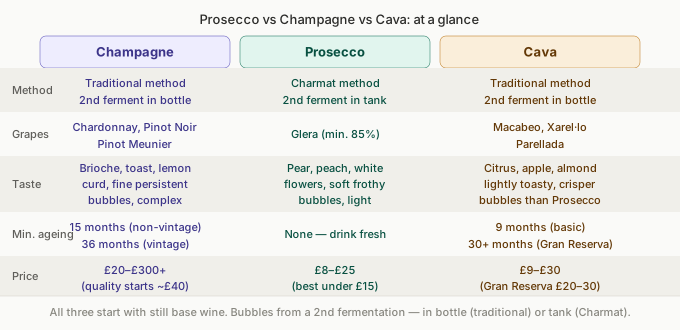
Used by both Champagne and Cava. A still base wine is bottled with a small addition of yeast and sugar (the liqueur de tirage). The yeast consumes the sugar, producing alcohol and carbon dioxide — but because this second fermentation happens inside the sealed bottle, the CO₂ has nowhere to escape and dissolves into the wine, creating bubbles. The spent yeast (lees) then sits in contact with the wine for a minimum aging period, adding complexity: the bread dough, brioche, and toasty qualities that characterise both Champagne and quality Cava.
The minimum lees contact is 15 months for non-vintage Champagne (36 months for vintage), and 9 months for basic Cava (up to 30+ months for Gran Reserva). This extended contact between wine and decomposing yeast cells — autolysis — is the source of those savoury, nutty, bready notes. It also partly explains the price: the wine is sitting in a bottle in a cellar for over a year before it can be sold. The result is finer, more persistent bubbles and greater overall complexity.
The Charmat Method (Tank Method)
Used by Prosecco. The second fermentation happens in a large, pressurised stainless-steel tank rather than in individual bottles. This is faster, cheaper, and much more scalable — one tank can do the work of thousands of bottles simultaneously. The resulting wine is bottled under pressure to retain the CO₂.
Because the wine spends much less time in contact with its lees, Prosecco does not develop those toasty, yeasty, complex secondary aromas. Instead, it retains the fresh, primary fruit character of the Glera grape: pear, peach, white flowers, light citrus. The bubbles are slightly larger and softer than in traditional-method wines — more frothy and less persistent. This is not a flaw; it’s exactly what Prosecco is designed to be: a fresh, accessible, fruit-forward sparkling wine meant to be drunk young.
Champagne: The Benchmark
Champagne is produced exclusively in the Champagne region of northeastern France, roughly 150 kilometres east of Paris. It is the only wine in the world legally permitted to call itself Champagne — the appellation is both geographically and legally protected across the EU and in many countries worldwide. Using the word “Champagne” for any other sparkling wine is prohibited.
The grapes: Three are authorised: Chardonnay (white), Pinot Noir (red), and Pinot Meunier (red). Most non-vintage Champagne is a blend of all three across multiple vintages, which allows houses to maintain a consistent house style regardless of annual variation. Blanc de blancs is made from Chardonnay only (the lightest, most delicate style); blanc de noirs from Pinot Noir and/or Pinot Meunier (fuller, more structured).
What it tastes like: The hallmarks are brioche, toast, and lemon curd from the lees aging, with a high, precise acidity and persistent, fine bubbles. On the fruit side: green apple, citrus, sometimes stone fruit. With age, these evolve toward honey, mushroom, and oxidative complexity. The structure is significantly more layered than Prosecco or basic Cava.
Sweetness levels: Most Champagne is Brut (very dry, less than 12g/l residual sugar). Brut Nature or Zero Dosage has essentially no added sugar. Extra Dry is paradoxically slightly sweeter than Brut. Sec and Demi-Sec are noticeably sweet and excellent with dessert.
Price: Entry-level non-vintage from major houses (Moët & Chandon, Veuve Clicquot) typically £25–45. Grower Champagnes — small producers who grow their own grapes and make their own wine, often offering more distinctive terroir character — typically £35–70. Prestige cuvees (Dom Pérignon, Krug, Salon) cost £100–400+. Vintage Champagnes from top years and great vineyards can reach thousands.
When to choose Champagne: When complexity and occasion matter most. A great Champagne is genuinely irreplaceable at that level; nothing else quite replicates the combination of autolytic depth, terroir precision, and fine-bubble texture that the best examples deliver.
Prosecco: The Fresh, Fruity Option
Prosecco comes from the Veneto and Friuli-Venezia-Giulia regions in northeast Italy, and is made predominantly from the Glera grape (minimum 85%). It is Italy’s most exported wine and the world’s best-selling sparkling wine by volume — in part because the Charmat method allows it to be produced at scale and sold at accessible prices.
What it tastes like: Prosecco’s character is defined by fresh, primary fruit: pear, peach, melon, white flowers, sometimes a light citrus note. There is little or no yeasty, toasty complexity — the wine is deliberately made to preserve the fresh, aromatic character of the grape. The bubbles are softer and frothier. The overall impression is light, easy, and appealing.
Prosecco DOC vs DOCG: The basic Prosecco DOC covers a wide geographic area and represents the affordable everyday tier. The Prosecco DOCG appellations — Conegliano Valdobbiadene Prosecco Superiore and Asolo Prosecco — are from hillside vineyards with stricter quality requirements and a noticeably more complex flavour profile. Within Valdobbiadene, the single-vineyard Cartizze (just 107 hectares) is the most prestigious and intense expression of Prosecco, with a floral, honeyed richness and slightly higher residual sugar.
Frizzante vs Spumante: Most Prosecco is Spumante (fully sparkling). Frizzante has lighter, gentler bubbles — closer to a fizzy water than a sparkling wine. Both are legitimate styles; which you prefer is entirely personal.
When to choose Prosecco: Aperitivo, welcome drinks, Aperol Spritz (Prosecco is the base), brunch, anything casual. Its softness and fruit-forward character make it the easiest sparkling wine to drink without food. At under £15 for a good DOC bottle, it is genuinely excellent value.
Cava: The Underrated Middle Ground
Cava is Spain’s answer to Champagne: made by exactly the same traditional bottle-fermentation method, but using Spanish grapes in Spain’s Catalonia region (primarily the Penèdes area near Barcelona), and sold at a significantly lower price. The first Cava was made in 1872, explicitly inspired by Champagne, and the method has been refined over 150 years.
The grapes: The traditional trio is Macabeo (freshness and acidity), Xarel·lo (body and structure, with a distinctive earthy, almond quality), and Parellada (delicacy and floral notes). Chardonnay and Pinot Noir are increasingly permitted. The grape composition is one of the reasons Cava tastes different from Champagne despite identical production: these are Spanish varieties with their own character, not northern French ones.
What it tastes like: Citrus, apple, almond, and a light mineral quality, with toasty or nutty notes in the longer-aged styles. Generally drier and crisper than Prosecco, with finer bubbles, and more savoury than most entry-level Champagne at the same price. The Xarel·lo grape gives Cava an earthy, almost oxidative character that is distinctly Spanish and quite different from anything you’d find in France or Italy.
Cava’s ageing tiers:
- Cava (no designation) — minimum 9 months lees aging. Fresh, light, citrus-forward. The everyday tier.
- Cava Reserva — minimum 15 months. Starts to develop some autolytic complexity. Good value mid-tier.
- Cava Gran Reserva — minimum 30 months. Significantly more complexity — almond, toast, brioche notes comparable to entry Champagne. Often the best value buy in all of sparkling wine.
- Cava de Paràge — minimum 36 months, from a single estate. The premium artisan tier, equivalent to Grower Champagne in concept.
When to choose Cava: When you want traditional-method complexity without the Champagne price. A Cava Gran Reserva at £15–25 competes seriously with non-vintage Champagne at £35–45. It is also the best pairing for Spanish food — tapas, jambón ibérico, pa amb tomàquet — where the regional match creates a natural harmony that Champagne, however good, cannot quite replicate.
Head-to-Head: When to Choose Which
By Occasion
- Wedding toast — Champagne if budget allows; Cava Gran Reserva if hosting a large group. Prosecco is fine but will feel slightly casual for a formal ceremony.
- Aperitivo or welcome drinks — Prosecco. Its lightness and fresh fruit make it ideal before food and much easier to drink in multiples.
- Dinner pairing — Champagne or Cava, both of which have the structure and acidity to work alongside food. Cava with Spanish and Mediterranean food; Champagne with almost anything.
- Gift — Champagne (it signals the occasion). A good Grower Champagne in the £40–60 range is a genuinely impressive gift without being extravagant.
- Everyday treat — Prosecco or Cava, depending on whether you want fresh and fruity (Prosecco) or a bit more complexity (Cava Reserva).
- Brunch — Prosecco. The Aperol Spritz was invented for this. Alternatively a glass of Cava with pa amb tomàquet if you want something slightly more substantial.
By Budget
- Under £15 — Prosecco DOC or Cava (basic). Both excellent at this price. Prosecco for freshness; Cava for a bit more character.
- £15–25 — Cava Reserva or Gran Reserva, or a Prosecco Superiore DOCG from Valdobbiadene. The Cava at this price rivals Champagne at twice the price in complexity.
- £25–45 — Entry-level non-vintage Champagne from major houses. Good, consistent, well-made — but compare it with a Gran Reserva Cava and you may be surprised how close they are.
- £45–80 — Grower Champagne. The most interesting tier: individual producers making wines that express specific villages and vineyards, quite different from the blended house styles.
- £80+ — Prestige cuvee Champagne or Vintage. Genuinely exceptional territory — complex, age-worthy, completely distinctive. If you open a bottle of Krug, you will understand immediately why nothing else quite does what Champagne does.
Serving and Storage Tips
- Temperature: All three should be served at 6–8°C (well chilled, not icy). If you have a fridge full, pull the bottle an hour before serving. If coming from a room-temperature rack, 20–30 minutes in an ice bucket does the job.
- Glassware: A tulip-shaped glass (narrower at the rim than at the bowl) is better than the traditional flute for Champagne and Cava — it allows more aroma to develop. Flutes are fine for Prosecco where you want to preserve the fresh, simple fruit character. Avoid wide coupe glasses: the large surface area kills the bubbles too quickly.
- Opening: Never pop and spray. Hold the cork firmly, twist the bottle (not the cork), and ease the cork out slowly — aim for a gentle sigh rather than a bang. This preserves bubbles and prevents wine loss.
- Once opened: Use a sparkling wine stopper and refrigerate. Champagne and Cava, with their finer bubbles and higher pressure, hold carbonation slightly better than Prosecco — but all three are best finished within one to three days. See our guide to how long wine lasts once opened for more detail.
- Non-vintage vs vintage: Non-vintage Champagne and Cava are blended for consistency and designed to be drunk young. Vintage wines (single year on the label) have ageing potential and should be stored lying down at a stable cool temperature if you plan to keep them.
For more guidance on sparkling wine and the broader world of wine styles, see our wine basics guide.
Frequently Asked Questions
What is the main difference between Prosecco and Champagne?
The primary difference is the production method. Champagne undergoes its second fermentation inside individual bottles (traditional method), producing fine, persistent bubbles and complex notes of brioche, toast, and lemon curd through extended lees contact. Prosecco uses large tanks for the second fermentation (Charmat method), resulting in a fresher, fruitier wine with pear and peach aromas, softer bubbles, and no toasty complexity. Champagne is also significantly more expensive, partly because of the labour-intensive bottle-by-bottle production process.
Is Cava the same as Champagne?
Cava and Champagne use the same production method (traditional method, bottle fermentation, extended lees contact) but they are different wines. Cava is made in Spain, primarily in Catalonia, from Spanish grape varieties (Macabeo, Xarel·lo, Parellada) rather than Champagne’s French varieties (Chardonnay, Pinot Noir, Pinot Meunier). The Spanish grapes give Cava a distinctive character — citrus, apple, earthy almond — that is clearly different from Champagne’s profile. Cava is also significantly cheaper. At the Gran Reserva tier, the quality gap with entry-level Champagne narrows considerably.
Which is sweeter — Prosecco, Champagne or Cava?
Most Prosecco is technically Brut or Extra Dry, but the fresh fruit character of the Glera grape makes it taste slightly sweeter and more approachable than equivalently-labelled Champagne or Cava. Most Champagne and Cava sold as Brut is crisp and dry. If you find Champagne or Cava too austere, try Extra Dry Prosecco (slightly sweeter) or Demi-Sec Champagne (noticeably sweet). All three come in a range of sweetness levels from Brut Nature (bone dry) to Demi-Sec (sweet).
Can you call all sparkling wine Champagne?
No. Champagne is a legally protected name that can only be used for sparkling wine produced in the Champagne region of France, from authorised grape varieties, using the traditional method, and subject to strict regulations set by the CIVC (Comité Champagne). Using the name Champagne for any other sparkling wine is prohibited under European Union law and in most export markets. Prosecco, Cava, Crémant, Sekt, and American “champagnes” (a historical exception that is being phased out) are all separate categories with their own rules.
What is the best sparkling wine for the money?
Cava Gran Reserva offers the best value in all of sparkling wine for most buyers. At £15–25, you get a traditional-method wine with 30+ months of lees aging, producing real complexity — almond, toast, citrus — that competes directly with non-vintage Champagne at £35–45. Prosecco DOC from a quality producer under £15 is the best value for a fresh, easy sparkling wine for casual occasions. If budget is no constraint, a Grower Champagne at £40–60 offers something neither Cava nor Prosecco can replicate: the specific terroir character of great Champagne vineyards in an artisan-made wine.
What food pairs best with Champagne, Prosecco and Cava?
Champagne pairs beautifully with almost any food: oysters and other shellfish are the classic match (the mineral acidity amplifies the brininess of the oyster), but Champagne also works with fried food (fish and chips, tempura), sushi, smoked salmon, white-fleshed fish, and mild soft cheeses. Prosecco is best as an aperitivo or with light canapés, prosciutto-wrapped melon, or mild antipasti. Cava is excellent with Spanish food — jambón ibérico, manchego, tapas — as well as with most of the same dishes as Champagne. All three pair well with anything fried, as the acidity and bubbles cut through fat and reset the palate.