
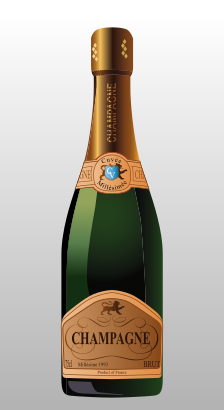
If you have ever picked up a bottle of Champagne and seen the letters NV on the label without knowing what they mean, you are in the majority. Non-vintage — abbreviated NV — is not a sign of lesser quality. It is actually how around 95% of all Champagne is made, and for many of the world’s greatest Champagne houses, the NV cuvee is their most important wine: the expression that defines their house style, the bottle that their reputation rests on, and the one that drinkers worldwide buy again and again for its consistency and reliability. Understanding what NV means — and how it differs from vintage Champagne — changes the way you approach every Champagne purchase.
In this article
What Does NV Mean in Champagne?
NV stands for non-vintage. It means the Champagne in the bottle is a blend of wines from two or more different harvest years rather than grapes harvested in a single year. If you look at the label of a non-vintage Champagne, you will not see a year printed on the front — the absence of a vintage year is the clearest sign that you are holding an NV wine.
The blending of multiple harvests is not a compromise or a cost-cutting measure. It is a centuries-old craft that sits at the heart of what makes Champagne distinctive. The Champagne region in north-eastern France has one of the most northerly and climatically unpredictable growing climates of any major wine region. Historically, weather conditions varied so dramatically from year to year that no single harvest could reliably produce wine of consistent quality or sufficient quantity on its own. The solution developed by the great Champagne houses was to blend wines from multiple years — combining the character of the current harvest with reserve wines from previous years — to produce a wine that was both reliable in style and superior in balance to any single year’s production alone.
How Non-Vintage Champagne Is Made
The Base Wine
Each year after harvest, the cellar master — the chef de cave — produces still wines from the current harvest’s grapes. This forms the base wine, which makes up the majority of the final NV blend, typically between 60 and 90% of the total. The base wine provides the fresh fruit character and primary character of that year’s grapes.
Reserve Wines
The second component is reserve wine — wine from previous harvests that has been held back and preserved specifically for blending into future NV cuvees. Reserve wines give the NV blend its depth, complexity, and continuity with previous releases. A house with extensive reserve wine stocks can draw on wines from five, ten, or even twenty previous vintages, adding layers of character that no single-year wine can provide.
Krug takes this to its most extreme expression: their Grande Cuvee NV blends over 120 different base wines from ten or more different vintages, creating a wine of extraordinary complexity from the deliberate use of many years simultaneously. At the other extreme, a smaller house might blend three or four vintages. The number of vintages used, the proportion of reserve wine, and the specific selection of individual wines are all cellar-master decisions that define what makes one house’s NV different from another’s.
Ageing Requirements
By law, non-vintage Champagne must be aged for a minimum of 15 months in the cellars before release, of which at least 12 months must be spent on the lees (the dead yeast cells from the secondary fermentation in bottle). This lees ageing is responsible for Champagne’s signature toasty, brioche-like, biscuity character: the yeast cells break down over time in a process called autolysis, releasing compounds that add complexity, creaminess, and that characteristic yeasty depth.
Many quality-focused producers age their NV wines significantly longer than the legal minimum. Bollinger, for example, ages its Special Cuvee NV for around three years before release — double the minimum. The extra time on lees adds further complexity and integration, producing a wine that is noticeably richer and more developed than the legal minimum allows.
Disgorgement and Dosage
After ageing on lees, the wine undergoes remuage (riddling) to collect the spent yeast sediment in the neck of the bottle, followed by dégorgement (disgorgement), during which the sediment is expelled. A small quantity of wine and sugar — the dosage — is added to top up the bottle and determine the final sweetness level. For most NV Champagne, the dosage produces a Brut style, with fewer than 12 grams of sugar per litre.
Non-Vintage vs Vintage Champagne
The distinction between NV and vintage Champagne is one of philosophy as much as production.
- Non-vintage is about consistency: the house style, reproducible year after year, regardless of what the weather produced. When you buy Moët & Chandon Brut Impérial NV in 2024, you expect it to taste essentially the same as it did in 2020. The cellar master’s job is to make that happen.
- Vintage is about expression: the specific character of an exceptional single year, allowed to speak for itself without the moderating influence of reserve wines from other harvests. Vintage Champagne is only declared in years the house considers outstanding — typically three to four times per decade at most. It must age for a minimum of three years before release (double the NV minimum), and many houses age their vintage wines for five to ten years or more.
The practical implications for the buyer:
- Price: NV Champagne is almost always significantly less expensive than vintage from the same house. The extended ageing and limited production of vintage wines commands a substantial premium.
- Consistency: NV delivers the same reliable character every time. Vintage varies — sometimes thrillingly, sometimes disappointingly — with the conditions of that year.
- When to drink: NV is designed to be opened now. It is balanced, integrated, and at its best on release (though a year or two of additional cellaring rarely hurts a quality NV). Vintage Champagne is built for ageing: it is often closed and austere when first released, opening up and developing over five to twenty years in the cellar.
- Which is better? Neither. They serve different purposes. NV is the everyday Champagne, the celebratory aperitif, the reliable gift. Vintage is the special occasion wine, the collector’s bottle, the expression of a remarkable year. The best NV from a great house can be more complex and rewarding than a mediocre vintage from a lesser producer.

How to Read a Non-Vintage Champagne Label
A standard NV Champagne label contains several pieces of useful information:
- No vintage year: the clearest sign that the wine is non-vintage. If there is no year on the front label, it is NV.
- Sweetness level: Brut Nature (0–3 g/L sugar, bone dry), Extra Brut (0–6 g/L), Brut (0–12 g/L, the most common), Extra Dry or Extra Sec (12–17 g/L, misleadingly named — slightly sweet), Sec (17–32 g/L, noticeably sweet), Demi-Sec (32–50 g/L, sweet), Doux (50+ g/L, very sweet). Most NV Champagne is Brut.
- Blanc de Blancs: made exclusively from Chardonnay. Typically lighter, more mineral, and citrus-driven. Ages well.
- Blanc de Noirs: made from Pinot Noir and/or Pinot Meunier without skin contact (hence white wine from red grapes). Fuller bodied, more structured, with red fruit character.
- Rosé NV: either a blend of red and white base wines (the most common method in Champagne) or from brief skin contact. Generally slightly fuller in body than white NV.
- Disgorgement date (DG): some houses print the disgorgement date on the back label. This tells you exactly when the wine’s ageing on lees ended and the clock began ticking. An NV disgorged recently will taste fresher and more vivid; one disgorged two or three years ago will be more developed and toasty.
What Is MV (Multi-Vintage) Champagne?
In recent years, some houses have begun labelling wines as MV (multi-vintage) rather than NV. Technically, these are the same thing — both involve blending wines from multiple harvests. The MV designation is partly a marketing decision: “non-vintage” can sound negative to some consumers, whereas “multi-vintage” sounds intentional and positive.
Some houses use MV to signal a slightly different approach: rather than aiming for perfect year-to-year uniformity, the MV bottling is allowed to reflect subtle differences between releases while still expressing the house style. Jacquesson’s numbered cuvee system is the most famous example: rather than calling their wine NV, they number each release sequentially (Cuvee 745, 746, and so on), explicitly acknowledging that each release is slightly different while sharing the same fundamental character.
If a bottle says MV, treat it as NV for practical purposes unless the house specifically explains how their approach differs.
Outstanding Non-Vintage Champagnes to Know
The following houses are consistently cited by wine professionals for the quality of their NV cuvees:
- Bollinger Special Cuvee NV — aged around three years, with a high proportion of reserve wines and significant Pinot Noir (around 60%). Rich, full-bodied, and complex with apple, brioche, and toasted nut character. One of the most consistently excellent NV Champagnes at any price.
- Krug Grande Cuvee NV — the most complex NV Champagne produced, blending 120+ wines from 10+ vintages. Extraordinarily rich, layered, and long-lived. Priced at a premium that reflects the production approach. Each release is numbered (the current release number is printed on the back).
- Pol Roger Brut Reserve NV — elegant, precise, and consistently reliable. A high Chardonnay content gives it freshness and finesse. The house of Churchill’s favourite.
- Taittinger Brut Reserve NV — notably Chardonnay-dominant (40%) for a major NV, giving it a lighter, more delicate character than most. Good value for the quality level.
- Louis Roederer Collection NV — Roederer’s NV has been transformed in recent years, now carrying the vintage year of its base wine on the label. Uses biodynamic farming and a deliberately higher proportion of reserve wines than most. One of the most innovative NV Champagnes on the market.
- Billecart-Salmon Brut Reserve NV — particularly known for elegance and freshness. One of the most reliable mid-price NV Champagnes, with consistent quality across every release.
- Gosset Grande Reserve NV — aged longer than most NV Champagnes, producing a richer, more developed character. Excellent value for a Champagne of its complexity.
Serving and Storage
Temperature: serve at 8–10°C. Too warm and the wine loses its freshness and the bubbles become aggressive; too cold and the aromas are suppressed. Chill in the fridge for three to four hours before serving, or in an ice bucket (half ice, half water) for 20–30 minutes.
Glassware: a tulip-shaped glass or a wider white wine glass rather than a traditional tall flute. The flute concentrates the bubbles but suppresses the aromas — the wider glass allows the wine’s complexity to open up. This is now the preference of most wine professionals and of several Champagne houses themselves.
Storage: most NV Champagne is designed to be drunk within one to three years of purchase (after disgorgement). Unlike vintage Champagne, NV is not built for extended cellaring in most cases. Store horizontally in a cool, dark place away from vibration. If you know the disgorgement date, aim to drink the wine within two years of it.
Food pairing: NV Brut Champagne is one of the most versatile aperitif wines in existence. It pairs naturally with oysters, sushi, fried food (the acidity and bubbles cut through fat brilliantly), soft cheeses, smoked salmon, and most light starters. For a broader look at how Champagne compares to Prosecco and Cava in terms of production method, taste, and food pairing, see our complete Prosecco vs Champagne vs Cava guide.
Frequently Asked Questions
What does NV mean on a Champagne bottle?
NV stands for non-vintage. It means the Champagne is a blend of wines from two or more different harvest years, rather than grapes from a single year. If there is no vintage year printed on the label, the Champagne is non-vintage. NV does not indicate lesser quality — it is the standard production method for around 95% of all Champagne, and many of the world’s greatest Champagne houses consider their NV cuvee their most important and representative wine.
What is the difference between vintage and non-vintage Champagne?
Non-vintage Champagne blends wines from multiple harvest years to produce a consistent house style, year after year. Vintage Champagne is made from grapes harvested in a single exceptional year, declared by the house when they believe the harvest is outstanding enough to stand alone. Vintage Champagne is produced in smaller quantities, aged for longer (minimum three years vs fifteen months for NV), and is generally more expensive. NV delivers reliability and consistency; vintage delivers the character of a specific year. Neither is inherently better — they serve different purposes.
Is non-vintage Champagne lower quality than vintage?
No. Many Champagne houses treat their NV cuvee as their most important wine and invest significant resources in maintaining its quality. Krug Grande Cuvee NV is widely considered one of the finest Champagnes produced, regardless of vintage status. The blending of multiple years, when done by a skilled cellar master with deep reserve wine stocks, can produce wines of greater complexity and balance than any single year could achieve. The NV/vintage distinction is about style and purpose, not a hierarchy of quality.
How long does non-vintage Champagne last?
Most non-vintage Champagne is designed to be consumed within one to three years of purchase, and ideally within two years of its disgorgement date (which some houses print on the back label). Unlike vintage Champagne, NV is blended and aged to be ready now, not to develop further in the cellar. Storing an NV for extended periods rarely improves it — the fresh fruit character and lively bubbles that define the style diminish over time. There are exceptions: complex, high-reserve-wine NV wines like Krug Grande Cuvee can develop well for five or more years, but these are the outliers.
What are reserve wines in Champagne?
Reserve wines are still wines from previous harvest years that Champagne houses hold back specifically to blend into future non-vintage cuvees. After each harvest, a portion of the still wines produced is set aside and stored in tanks or barrels. These wines add depth, complexity, and continuity to the NV blend — they are what allow the house to maintain a consistent style even when the current year’s harvest produces grapes of very different character. A house with deep reserve wine stocks has a significant advantage in producing consistent, complex NV Champagne. Some houses, like Krug, blend wines from ten or more different previous vintages in their NV.
What does Brut mean on a Champagne label?
Brut refers to the sweetness level of the Champagne. A Brut Champagne contains fewer than 12 grams of residual sugar per litre and tastes dry to off-dry. It is the most common sweetness level for non-vintage Champagne and suits most palates and most food contexts. Drier styles include Extra Brut (0–6 g/L) and Brut Nature or Zero Dosage (0–3 g/L, with no added sugar). Sweeter styles include Extra Dry (12–17 g/L, confusingly slightly sweeter than Brut despite its name), Sec, Demi-Sec, and Doux. Most NV Champagne purchased everyday is Brut, and this is the recommended starting point for anyone new to Champagne.