
In a New York bar in 2024, a room full of drinkers tasted two unlabelled glasses of sparkling wine side by side. Sixty-seven percent picked the English one over the Champagne. It was not a fluke: in May 2025, Nyetimber’s Blanc de Blancs won Champion Sparkling Wine at the International Wine Challenge, the first time in the competition’s 34-year history that the trophy went to a wine made outside Champagne. Wine in England has gone, in less than four decades, from a punchline to a genuine rival to the wine world’s most prestigious sparkling category — and the story of how that happened involves Roman legionaries, a couple of American retirees, a piece of French geology that happens to resurface as the White Cliffs of Dover, and, eventually, Champagne’s own biggest houses buying land in Kent. This is that story, along with where England’s wine regions actually are, what grows there, and what to expect in the glass.
In this article
- 1 English Wine, at a Glance
- 2 A Surprisingly Old Story: Romans, Monks, and the Domesday Book
- 3 The 1952 Revival and the 1988 Eureka Moment
- 4 Why English Chalk Makes World-Class Sparkling Wine
- 5 England’s Wine Regions
- 6 The Grapes: Chardonnay, Pinot Noir, Pinot Meunier — and Bacchus
- 7 When Champagne Started Buying Land in Kent
- 8 The Blind Tastings That Changed Everything
- 9 PDO and How English Wine Is Classified
- 10 What English Wine Actually Tastes Like
- 11 Should You Try English Wine?
- 12 The Numbers Behind the Boom
- 13 Visiting England’s Wine Country
- 14 Frequently Asked Questions About Wine in England
- 14.1 Is English wine actually good?
- 14.2 Why is English sparkling wine compared to Champagne?
- 14.3 Where are England’s main wine regions?
- 14.4 When did the modern English wine industry start?
- 14.5 Have Champagne houses actually invested in English vineyards?
- 14.6 What is Bacchus, and why is it important to English wine?
English Wine, at a Glance
- Main style: traditional-method sparkling wine — same method, same grapes, as Champagne.
- Key grapes: Chardonnay, Pinot Noir, and Pinot Meunier for sparkling; Bacchus for still white wine.
- Main regions: Kent, Sussex, Hampshire, and Surrey, with Essex and Cornwall/Devon on the rise.
- Scale: over 900 vineyards across roughly 4,000 hectares, production up fourfold in fifteen years.
- The pitch: the same Cretaceous chalk that underlies Champagne, cooled further by a maritime climate.
- Recent milestone: Nyetimber’s 2016 Blanc de Blancs won Champion Sparkling Wine at the 2025 International Wine Challenge — the first non-Champagne wine ever to do so.
- Champagne houses now invested: Taittinger (Domaine Evremond, Kent) and Pommery (with Hattingley Valley, Hampshire).
A Surprisingly Old Story: Romans, Monks, and the Domesday Book
Wine in England is not, whatever the recent headlines suggest, a new idea. Viticulture arrived with the Romans around 43 AD, and vineyards were maintained through the following centuries by monasteries, which had both the land and the institutional patience that winemaking demands. The Domesday Book, England’s exhaustive 1086 land survey commissioned by William the Conqueror, records dozens of vineyards scattered across the country — evidence detailed enough that Nyetimber, centuries later, would name one of its top cuvées “1086” in a nod to the estate’s own mention in that survey.
That medieval wine culture did not survive intact. The dissolution of the monasteries in the 1530s removed much of the institutional backbone behind English viticulture, and a gradually cooling climate through the following centuries, sometimes called the Little Ice Age, made ripening wine grapes an increasingly marginal, unreliable proposition in a country never far from the edge of what a vine could tolerate. For roughly four hundred years, English wine survived mostly as a historical footnote rather than a living industry.
The 1952 Revival and the 1988 Eureka Moment
The modern industry’s official starting point is usually dated to 1952, when Major-General Sir Guy Salisbury-Jones planted Hambledon Vineyard in Hampshire, England’s first commercial vineyard of the modern era. For decades afterward, English wine remained a small, largely still-wine curiosity, built around cold-hardy German and hybrid grape varieties like Müller-Thurgau, Reichensteiner, and Seyval Blanc — varieties chosen for their ability to ripen reliably in a marginal climate, not for any particular ambition to rival serious wine regions elsewhere.
The real turning point came from two American retirees. Stuart and Sandy Moss bought the Nyetimber estate in West Sussex in 1986 and, in 1988, made a decision nobody in England had seriously tried before: planting Chardonnay, Pinot Noir, and Pinot Meunier specifically to make traditional-method sparkling wine, exactly as Champagne does. It was a considerable gamble — those grapes had never been grown at scale in England with sparkling wine as the explicit goal — and it paid off spectacularly. Nyetimber’s first release, a 1992 Blanc de Blancs that reached the market in 1997, won a gold medal at the International Wine and Spirit Competition and effectively proved the concept overnight. Within a decade, English producers were planting the Champagne trio across Sussex, Kent, Hampshire, and Surrey in earnest, and a genuine industry began to take shape around it.
Why English Chalk Makes World-Class Sparkling Wine
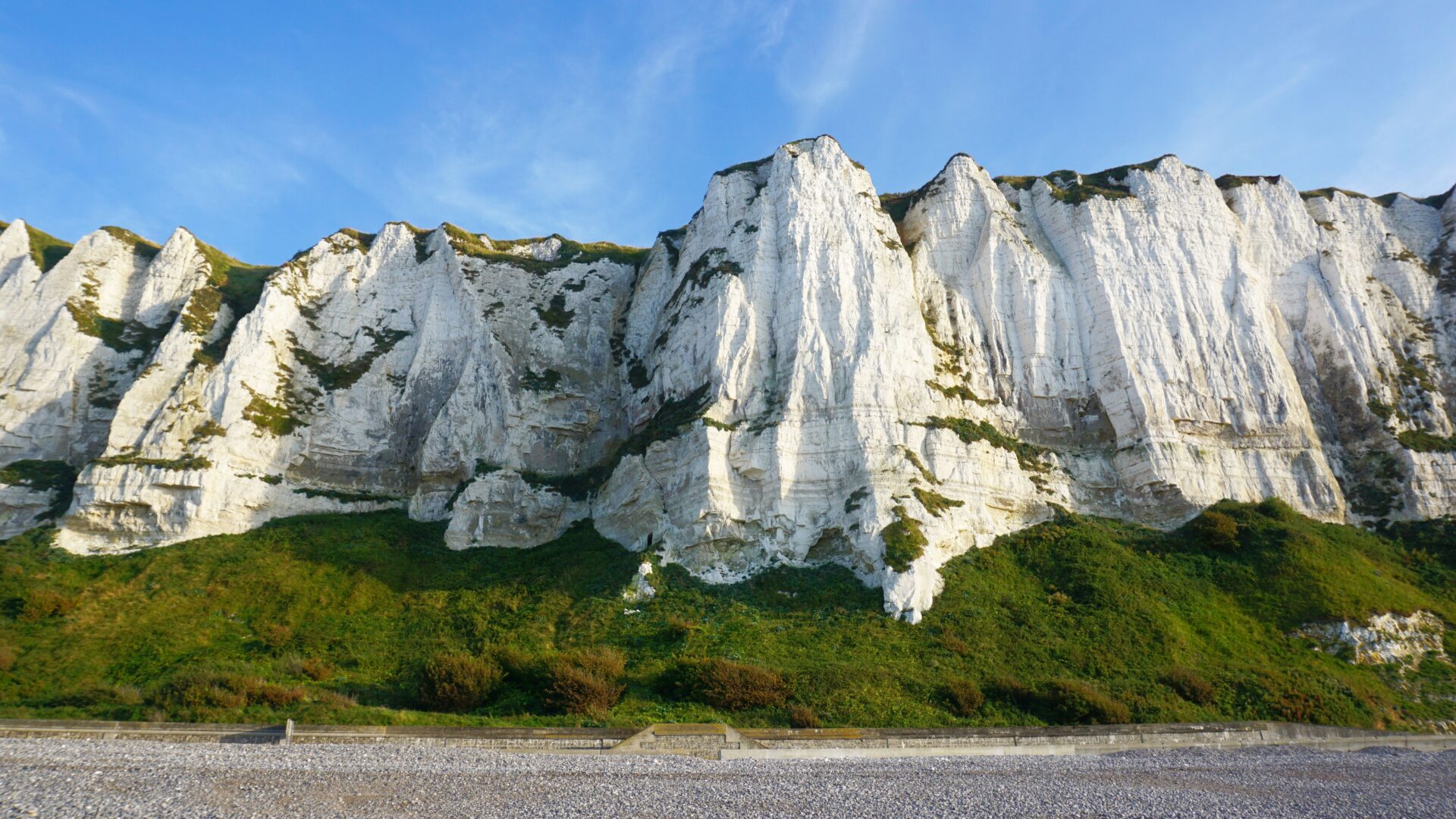
The geological case for English sparkling wine is almost too neat to be true, except that it is genuinely accurate: the same Cretaceous-era chalk formation that underlies Champagne’s vineyards runs continuously beneath the English Channel and resurfaces in southern England, most visibly as the White Cliffs of Dover. Chalk is prized in both places for the same practical reasons — it drains excess water efficiently, which matters enormously in a damp climate, while its mineral-rich composition adds a distinctive precision and saline quality to the wine grown in it. When English producers point out that their soil is, geologically speaking, the exact same chalk found in Champagne’s Cote des Blancs, they are not exaggerating for marketing purposes.
Geology alone would not have been enough without a second factor: climate change. England’s climate has always been, at least in principle, suitable for growing the same cool-climate grapes used in Champagne — but for most of the 20th century it was simply too cold and unreliable to ripen them consistently. Average UK temperatures have risen enough in recent decades that the reliable ripening window has widened considerably, effectively shifting England into something like the climate Champagne itself enjoyed a few decades ago. Several English producers and researchers describe this directly: as Champagne’s own climate warms and its producers debate how to adapt, England has, almost by accident, become one of the few wine regions in the world that reads as a net beneficiary of a warming climate rather than a casualty of it.
England’s Wine Regions
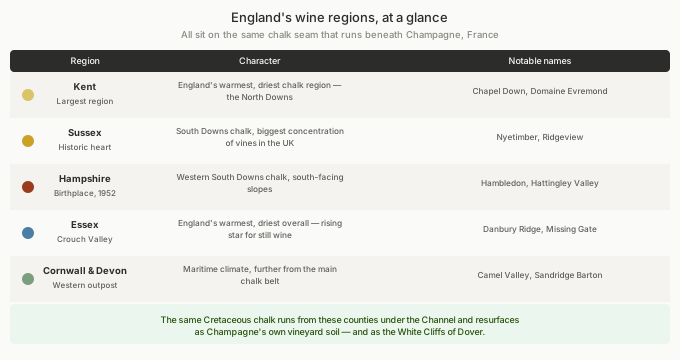
Kent, traditionally nicknamed “the Garden of England” for its agricultural richness, is now the country’s largest wine region by area, centred on the North Downs chalk ridge. It offers the warmest, driest conditions of any major English wine county, which brings reliable ripening in a country where that is never entirely guaranteed. Kent is home to Chapel Down, England’s largest and most widely recognised winery, and, as of 2017, to Domaine Evremond, Champagne house Taittinger’s own English vineyard project near Canterbury.
Sussex, split into East and West, is the historic heart of English sparkling wine and holds the largest concentration of vines anywhere in the country, spread across the chalk of the South Downs. This is Nyetimber’s home county, alongside Ridgeview, another pioneering estate founded in 1995 that has gone on to supply sparkling wine for royal banquets and win trophies at the Champagne & Sparkling Wine World Championships. Sussex was also the first English wine region to achieve a formal Protected Designation of Origin specific to itself.
Hampshire holds a special place in English wine history as the birthplace of the modern industry, thanks to Hambledon’s founding in 1952. Its portion of the South Downs offers similar chalk and south-facing slopes to neighbouring Sussex, and the county is now home to Hattingley Valley, which entered a partnership with Champagne house Pommery in 2014.
Further afield, Essex‘s Crouch Valley has emerged as a genuine rising star over the past decade, offering England’s warmest and driest overall conditions thanks to a climate moderated by the Crouch and Blackwater rivers, alongside water-retaining London clay soil. Rather than sparkling wine, Crouch Valley has built its reputation on genuinely ambitious still Chardonnay and Pinot Noir, ripening reliably enough to attract investment from California’s Jackson Family Wines and collaboration from respected Burgundy producers. Further west, Cornwall and Devon form a smaller, more maritime outpost of English wine, led by Camel Valley, which has built a reputation on its own account somewhat separate from the South East’s chalk-driven story.
The Grapes: Chardonnay, Pinot Noir, Pinot Meunier — and Bacchus
For sparkling wine, English producers overwhelmingly use the same three grapes as Champagne: Chardonnay, Pinot Noir, and Pinot Meunier, fermented using the identical traditional method of a second, bottle-triggered fermentation. England’s generally cooler, more marginal climate than Champagne’s own tends to produce grapes with higher natural acidity and leaner, greener fruit — crisp apple and citrus rather than Champagne’s riper stone fruit and peach — which shows up clearly in a side-by-side tasting of the two, even when the winemaking and grape varieties are otherwise identical.
For still wine, England has developed its own genuine signature grape: Bacchus, a German crossing of Silvaner, Riesling, and Müller-Thurgau, prized for ripening reliably in a cool climate while still delivering real aromatic character — vivid notes of elderflower, gooseberry, and green apple that draw an obvious comparison to Sauvignon Blanc. Bacchus has become England’s default answer to “what does a good English still white actually taste like,” much the way Chardonnay and Pinot Noir answer the sparkling question. Red wine remains a much harder proposition in England’s marginal climate, though Pinot Noir and the hardier German crossing Dornfelder both produce workable, food-friendly still reds in favourable vintages.
When Champagne Started Buying Land in Kent
Perhaps the clearest external endorsement English wine has received came not from critics but from Champagne’s own biggest names choosing to invest directly. In 2014, Champagne Pommery entered a joint venture with Hampshire’s Hattingley Valley. The following year, Champagne Taittinger went considerably further, acquiring a 69-hectare former apple farm near Chilham, Kent, after a deliberate two-and-a-half-year search for exactly the right chalk-rich, south-facing site. That project, named Domaine Evremond after the 17th-century figure credited with popularising Champagne at the English royal court, has since grown to more than 60 hectares under vine, drawn in excess of £17 million in investment, and released its first commercial wine, the Classic Cuvée Edition 1, in early 2025 to strong critical reviews.
What makes this significant is not simply the money involved, but the signal it sends: Champagne’s own most storied producers concluded that southern England’s chalk and climate genuinely could produce fine sparkling wine, and were willing to put serious capital behind that judgement rather than treating English wine as a curiosity to watch from a comfortable distance.
The Blind Tastings That Changed Everything
English sparkling wine’s reputation has been built substantially on blind tastings, where labels and reputational prestige cannot influence the result. In a widely reported 2016 tasting held in Paris, of all places, Nyetimber’s Blanc de Blancs was preferred by a majority of expert tasters over several prestigious Champagne house cuvées, including Billecart-Salmon’s Grand Cru bottling — a result that made international headlines precisely because it inverted the expected outcome so completely. That result was not an isolated fluke: wines from Nyetimber, Gusbourne, and Ridgeview have gone on to repeatedly place well against established Champagne houses in blind tastings conducted by Master of Wine panels in the years since.
The most significant single result came in May 2025, when Nyetimber’s 2016 Blanc de Blancs Magnum won the Champion Sparkling Wine trophy at the International Wine Challenge, scoring 97 points from the judging panel. It was the first time in the competition’s 34-year history that the top sparkling wine prize had gone to a wine made outside Champagne — a genuinely historic result for the category, and the clearest evidence yet that English sparkling wine’s quality is no longer a matter of polite, patronising encouragement but of straightforward competitive fact. Wine Enthusiast’s guide to English wine regions covers this same shift from the ground, region by region.
PDO and How English Wine Is Classified
English wine is organised under the Protected Designation of Origin system, the same broad EU-derived framework used across much of Europe, though it works somewhat differently here than in a strictly hierarchical system like France’s AOC. English PDOs, such as the Sussex PDO, unify wine primarily by regional style and production standards rather than ranking one designated zone above another in prestige — there is no English equivalent yet of Champagne’s own internal grand cru and premier cru hierarchy. Kent, despite its scale and reputation, has not pursued a formal PDO of its own, on the reasonable grounds that its wines’ quality speaks clearly enough without the additional designation.
What English Wine Actually Tastes Like
English sparkling wine’s calling card is bright, high acidity paired with lean, green-tinged fruit: crisp green apple, lemon, and white flowers, typically with a chalky, saline minerality running underneath, and, in wines with real bottle age on the lees, a gentle brioche and biscuit character similar to good Champagne. Compared directly with Champagne, English sparkling wine generally reads as leaner and more citrus-driven, where Champagne tends toward riper stone fruit and a rounder overall texture — a genuine stylistic difference rather than English wine simply being a lesser copy of the French original. Bacchus-based still whites lean aromatic and herbaceous, with elderflower and gooseberry notes that pair naturally with seafood, shellfish, and goat’s cheese, similar in spirit to a cool-climate Sauvignon Blanc. For more on how to put language to sensations like these, see our guide to describing wine taste.
Should You Try English Wine?
If you enjoy Champagne’s traditional method but want to explore something with its own distinct character rather than a direct substitute, English sparkling wine is genuinely worth seeking out, and no longer requires any apologetic framing to recommend. Prices sit below top-tier Champagne but above basic Cava or Prosecco, reflecting both a smaller scale of production and genuinely serious quality rather than novelty pricing. For the fuller landscape of how sparkling wine varies by method and origin more broadly, our guide to the types of wine and comparison of Prosecco, Champagne, and Cava are useful places to see where English wine fits alongside styles you may already know.
The Numbers Behind the Boom
The scale of England’s transformation is easy to understate. In 1989, when a public vineyard survey first became compulsory, England had just 876 hectares of vines spread across 442 vineyards — a small, scattered hobbyist industry by any international standard. Today the country counts more than 900 vineyards and over 220 wineries across roughly 4,000 hectares, and WineGB, the trade body representing English and Welsh wine, describes viticulture as the UK’s fastest-growing agricultural sector. Total production has increased roughly fourfold over just the past fifteen years, with the growth accelerating sharply in the most recent decade rather than plateauing.
Sales figures still put the category firmly in context, and it is worth being honest about scale rather than overselling the comparison: English sparkling wine sold around 6.2 million bottles in 2023, against roughly 299 million bottles of Champagne sold the same year. England is not remotely close to Champagne in volume, and is unlikely to be for a very long time given the sheer difference in scale between the two industries. What has changed is not England’s size relative to Champagne, but the ceiling on its quality — a small, young industry can still make world-class wine, and increasingly does, even while remaining a fraction of Champagne’s overall output. Jancis Robinson’s reporting on foreign investment in English wine tracks this story as it continues to develop.
Visiting England’s Wine Country
For visitors, England’s wine country has become a genuine day-trip destination from London, something that would have sounded faintly absurd twenty years ago. Sussex and Kent’s vineyards sit within about ninety minutes of central London by car or train, and estates including Nyetimber, Ridgeview, Chapel Down, Rathfinny, and the newly opened Domaine Evremond all now offer public tours, tastings, and, in several cases, restaurants or overnight stays built around the vineyard itself. Plumpton College, in East Sussex, doubles as both the UK’s dedicated centre for wine research and training and a useful stop for anyone wanting the more academic side of the story, having taught the country’s only English-language undergraduate degrees in wine business and production since its dedicated wine centre opened in 2014.
Frequently Asked Questions About Wine in England
Is English wine actually good?
Yes, particularly its sparkling wine, which has repeatedly performed well against established Champagne houses in blind tastings judged by wine professionals. In May 2025, Nyetimber’s Blanc de Blancs Magnum won Champion Sparkling Wine at the International Wine Challenge, the first time in the competition’s 34-year history that a wine made outside Champagne took the top prize.
Why is English sparkling wine compared to Champagne?
Southern England sits on the same Cretaceous chalk formation that underlies Champagne, which runs beneath the English Channel and resurfaces as the White Cliffs of Dover. English producers also use the same three grapes, Chardonnay, Pinot Noir, and Pinot Meunier, and the identical traditional method of bottle fermentation that Champagne uses, making the comparison a matter of genuine shared geology and method, not just marketing.
Where are England’s main wine regions?
The main regions are Kent, Sussex, Hampshire, and Surrey, all in the south east, sitting on chalk formations similar to Champagne’s. Essex’s Crouch Valley has become a significant region for still wine thanks to its especially warm, dry microclimate, and a smaller western outpost exists in Cornwall and Devon with a more maritime climate.
When did the modern English wine industry start?
The modern industry is usually dated to 1952, when Hambledon Vineyard was planted in Hampshire. The real turning point came later, in 1988, when American owners Stuart and Sandy Moss planted Chardonnay, Pinot Noir, and Pinot Meunier at Nyetimber in Sussex specifically to make Champagne-style sparkling wine, releasing their acclaimed first vintage in 1997.
Have Champagne houses actually invested in English vineyards?
Yes. Champagne Pommery entered a joint venture with Hattingley Valley in Hampshire in 2014, and Champagne Taittinger acquired land in Kent in 2015 to establish Domaine Evremond, releasing its first wine in 2025. Both moves are widely seen as a significant endorsement of English wine’s quality from within the Champagne industry itself.
What is Bacchus, and why is it important to English wine?
Bacchus is a German-bred grape crossing Silvaner, Riesling, and Müller-Thurgau, valued for ripening reliably in England’s cool climate while still producing genuinely aromatic wine, with notes of elderflower, gooseberry, and green apple. It has become England’s signature still white grape, playing a similar defining role for English still wine that Chardonnay and Pinot Noir play for English sparkling wine.