
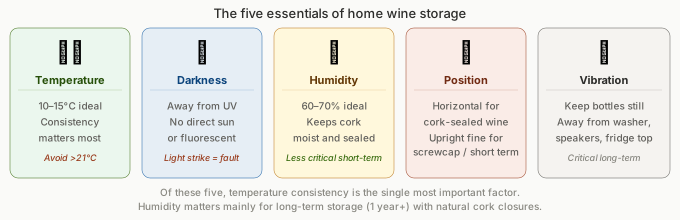
Most people store wine the wrong way — not because they do not care, but because nobody explained the five things wine actually needs. Temperature consistency is the single most important factor. Darkness comes second. The others — humidity, bottle position, and vibration — matter depending on how long you are storing and what type of closure the bottle has. The good news is that a proper wine cellar is not necessary. Any cool, dark, undisturbed corner of a home can work perfectly well for most wines over most timescales. What kills wine is not a lack of specialist equipment — it is heat, light, and temperature fluctuation.
In this article
The Five Storage Essentials
1. Temperature: The Most Important Factor
The ideal storage temperature for wine is 10–15°C (50–59°F), with most sources citing 13°C (55°F) as the single best target. But the precise number matters less than consistency. A wine stored at a constant 18°C will age more gracefully than wine bouncing between 10°C and 22°C in the same week. Temperature swings cause the liquid inside the bottle to expand and contract, which can push small amounts of wine past the cork and allow air in — gradually oxidising the contents.
What heat actually does to wine: high temperature accelerates ageing, which sounds positive but is not. Accelerated ageing collapses the structure of the wine prematurely, stripping out fruit and complexity before they have had time to develop properly. A bottle that should drink well in 2030 may peak and fade by 2027 if stored too warm. Above 21°C, wine deteriorates noticeably. Above 30°C — a summer garage or attic — it can be ruined within days.
Practical rule: anywhere in your home that stays cool and stable year-round is suitable. The concern is not so much “is it exactly 13°C” as “will it hit 28°C in July because it is near an exterior wall?”
2. Darkness: The Second Priority
UV light — from direct sunlight or from fluorescent tubes — degrades wine through a process called light strike. UV radiation breaks down organic compounds in the wine, creating sulfurous reduction compounds that produce an unpleasant, musty, damp-cardboard character. Light strike can occur relatively quickly — an unprotected bottle in direct sunlight for a few hours can show noticeable off-flavours.
Wine bottles are tinted (green, brown, or dark blue glass) specifically to filter some UV, but coloured glass is not a complete solution — it reduces exposure, it does not eliminate it. The practical answer is simply to store wine somewhere that does not receive direct sunlight or regular exposure to strong artificial light. Standard household LED bulbs pose minimal risk unless they are very bright and close to the bottle. Fluorescent tubes are more concerning and worth avoiding for long-term storage.
3. Humidity: Important for Long-Term Cork Closure
Humidity in the 60–70% range keeps natural cork closures moist and properly sealed. If the air around the wine is too dry (below 50%), corks can dry out, shrink slightly, and allow small amounts of air into the bottle — gradually oxidising the wine. This is the main reason traditional wine cellars are built underground: the earth provides naturally stable humidity alongside stable temperature.
However, humidity matters primarily for long-term storage (a year or more) with natural cork closures. For wines with screwcaps, synthetic corks, or glass stoppers, humidity is irrelevant — these closures do not dry out. For wines you plan to drink within six months to a year, humidity is unlikely to be an issue even with natural corks, unless your home is exceptionally dry (below 40% relative humidity). If you live in a very dry climate, storing bottles on their sides helps — the wine itself keeps the cork moist from the inside regardless of ambient humidity.
4. Bottle Position: Horizontal for Cork, Upright for Screwcap
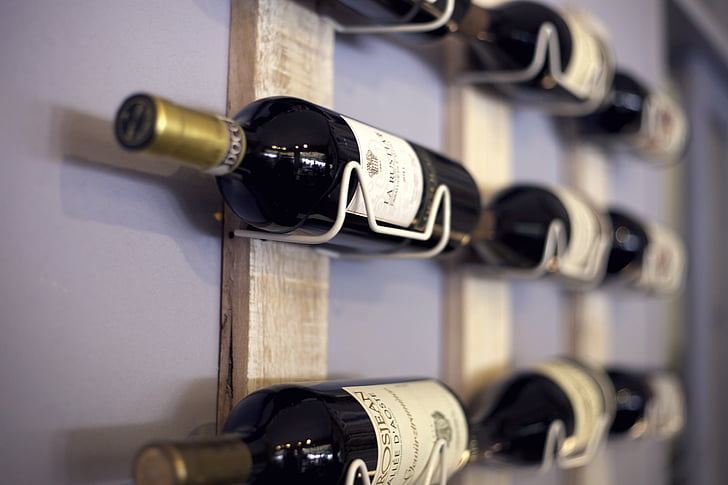
Cork-sealed bottles should be stored horizontally — on their sides. This keeps the wine in contact with the cork from inside the bottle, maintaining its moisture and preventing it from drying out and shrinking. A wine rack is the simplest way to achieve this; wooden cases from the wine merchant are also designed for horizontal storage and work equally well.
Screwcap-sealed bottles can be stored upright without any concern — the screwcap creates a reliable airtight seal regardless of orientation. Synthetic corks (the plastic or rubber stoppers used in some wines) also do not dry out, so upright storage is acceptable, though horizontal is still fine. When in doubt, store everything horizontal — it is never a mistake for any bottle type.
5. Vibration: Keep Bottles Still
Sustained vibration is not good for wine, particularly for wine being aged for several years or more. Vibration disturbs sediment (in older red wines), prevents tannin precipitation (a key part of the natural ageing process), and creates ongoing low-level physical stress in the wine that can dull its complexity over time. The concern is not that a bottle will spoil from occasional movement, but that chronic vibration — from a nearby washing machine, a compressor fridge running on the same shelf, a stereo system, or heavy foot traffic — disrupts the subtle process of long-term development.
Practical advice: the top of a running refrigerator is one of the worst places to store wine (vibration + warmth). Near a washing machine is similarly poor. A dedicated wine rack or cardboard box sitting on a solid floor in a quiet space is perfectly adequate. You do not need to tiptoe around your bottles or cushion each one individually — just avoid placing wine where it is subject to constant mechanical vibration.
The Best Places to Store Wine at Home Without a Cellar
Interior Cupboard or Wardrobe
The best home storage option for most people. An interior cupboard on an interior wall — not exposed to outside temperatures — stays relatively cool and very dark, maintains stable temperature year-round, and is insulated from vibration. Choose a low shelf rather than a high one (heat rises), and a spot that is not opened dozens of times a day. The back of a bedroom wardrobe, behind hanging clothes, is particularly good: the clothing provides additional insulation and the space is naturally dark and undisturbed.
Under the Stairs
A traditional solution that works well when the stair cupboard is not heated and is not on an exterior wall. The triangular shape can accommodate a small wine rack efficiently, and the space tends to maintain a reasonably stable, cool temperature in most homes. Avoid under-stair spaces in modern homes with underfloor heating running nearby, or in older homes where the stairs are on an exposed external wall.
Under the Bed
Unconventional but genuinely effective, particularly in apartments. Under a bed is dark, protected from light, maintains a relatively stable temperature (interior rooms in most homes are more consistent than kitchens or rooms with large windows), and is free from vibration. Use a low-profile wine rack or keep bottles in their original cardboard case on their sides. This is probably the best no-cost solution for apartment dwellers.
Wine Fridge (Dedicated Cooler)
If you regularly buy wine to age for a year or more, a dedicated wine fridge is the most practical investment beyond improvised storage. A quality wine fridge maintains the correct temperature consistently (impossible to achieve in most improvised locations during a hot summer), controls humidity, filters light through tinted glass, and produces less vibration than a regular refrigerator compressor.
A 20–50 bottle single-zone wine fridge set to 12–14°C handles the storage needs of most home collectors. Dual-zone fridges allow reds and whites to be kept at different temperatures. As Cult Wines advises, as a rule of thumb: if the cost of a cooling unit represents less than 25% of your annual wine-buying budget, it might be time to consider investing in one.
Places to Avoid
- On top of or near the refrigerator: warmth from the motor, constant compressor vibration, and often near a window. Probably the most common and most damaging wine storage mistake.
- On top of kitchen cabinets: heat rises, kitchens run hot, and the location is often near light sources. Wine stored here degrades faster than almost anywhere else in the home.
- Near a window: temperature fluctuation from day to night, and potential UV light exposure. Even a north-facing window creates temperature swings that are damaging over time.
- In the kitchen generally: heat from the oven and hob, temperature variation from cooking, and often near light sources. The kitchen is convenient but almost always the worst room in the house for wine storage.
- In an uninsulated garage or attic: extreme temperature swings from season to season, often reaching 35°C+ in summer and dropping to near-freezing in winter. Genuinely damaging for any wine beyond a few weeks.
- In a regular domestic fridge for more than a few weeks: too cold (2–5°C vs the ideal 10–15°C), too dry (no humidity control), and with constant compressor vibration. Fine for chilling wine before serving, not for storage.
How Long Can You Store Wine at Home?
For most wines in reasonably good home storage conditions (cool, dark, stable), the following timelines apply:
- Light whites, rosé, Prosecco: buy to drink within 1–2 years. These wines are made for freshness and will not improve with home storage beyond that. Keep them cool and drink them young.
- Quality white wines (white Burgundy, Riesling, serious Chenin Blanc): 2–5 years at good home temperatures. Wine fridges recommended for anything beyond 3 years.
- Everyday reds: 2–3 years. Made for early drinking, not long cellaring.
- Serious reds (Barolo, Bordeaux, Rioja Reserva, quality Syrah): 5–10+ years in a dedicated wine fridge or cool, genuinely stable location. Standard home storage can work for 3–5 years with care; beyond that, a wine fridge is increasingly important.
For a detailed breakdown of which specific wines are worth cellaring and for how long, see our guides to which white wines age well and what vintage wine means — the latter explains how to use the vintage year on a label to work out where a wine is in its development.
Frequently Asked Questions
How do you store wine at home without a cellar?
The best options for storing wine at home without a cellar are: an interior cupboard on an interior wall (away from exterior temperatures), the space under a stair, the floor of a wardrobe in a cool room, or under a bed. All of these locations are naturally dark, relatively cool and temperature-stable, and free from vibration. Store cork-sealed bottles on their sides. Keep wine away from the kitchen, above the refrigerator, near windows, or in the garage — all of these expose wine to heat or temperature fluctuation. For more than 10–20 bottles or for ageing wine beyond 2–3 years, a dedicated wine fridge is the most practical solution.
What is the ideal temperature to store wine at home?
The ideal wine storage temperature is 10–15°C (50–59°F), with 13°C (55°F) commonly cited as the single best target. However, consistency matters more than the exact number — a wine stored at a constant 17°C will fare better than wine fluctuating between 10°C and 22°C. Anything above 21°C risks accelerating ageing and degrading the wine’s complexity. Above 30°C — as can happen in uninsulated garages or attics in summer — wine can deteriorate within days. A regular kitchen or living room at 20–21°C year-round is acceptable for wines you plan to drink within 6–12 months, but not for longer-term storage.
Should wine be stored upright or on its side?
Bottles sealed with natural cork should be stored on their sides (horizontally), so the wine keeps the cork moist from inside the bottle. A cork that dries out can shrink and allow air into the bottle, leading to oxidation. Bottles sealed with screwcaps can be stored upright without any risk, since the screwcap does not require moisture to maintain its seal. Synthetic corks also do not dry out, so upright storage is acceptable. If in doubt, storing everything on its side is never a mistake regardless of closure type.
Is it OK to store wine in a regular fridge?
A regular domestic fridge is acceptable for short-term storage of a few days to a few weeks, but not for long-term wine storage. Domestic fridges are too cold (typically 2–5°C versus the ideal 10–15°C for storage), too dry (the low humidity can dry out natural corks over months), and subject to constant vibration from the compressor motor. They also absorb food odours that can affect the wine over time. Use the fridge for chilling wine before serving and for keeping opened bottles for a few days, but store wine you intend to keep for weeks or months somewhere else.
Can you store wine in a garage?
Do I need a wine fridge to store wine properly?
No — a wine fridge is not necessary for storing wine you plan to drink within a year or two. A cool, dark, stable location such as an interior cupboard, under-stair space, or the floor of a bedroom wardrobe works well for most wines over most timescales. A wine fridge becomes genuinely useful when you are storing more than 15–20 bottles, when you are ageing wine for 3 years or more, or when your home environment does not have a naturally cool and stable spot. For serious collectors, or for anyone buying wine specifically for long-term ageing, a dedicated wine fridge is the most practical and reliable solution.