
The received wisdom is that red wines age and white wines don’t. Like most generalisations about wine, it is partly true and mostly misleading. The majority of white wines are made to be consumed within one to three years of the vintage, while their fresh fruit aromas and acidity are at their most vivid. But a distinct minority of white wines — those with the right combination of acidity, extract, and structure — develop extraordinary complexity with age, producing flavours and textures that no young wine can replicate. Understanding which whites belong to which category, and why, turns you from someone who might accidentally cellar the wrong bottles into someone who can make deliberate, rewarding choices.
In this article
Why Most White Wines Don’t Age Well
The primary reason red wines age better than most whites is tannin. Tannins — from grape skins, seeds, and oak — are natural antioxidants that slow the chemical reactions that cause wine to deteriorate. White wines, fermented without their skins in almost all cases, have very little tannin and are therefore more vulnerable to oxidation and the breakdown of their aromatic compounds.
Without tannin acting as a preservative, the qualities that make a white wine enjoyable — fresh fruit aromatics, floral notes, clean citrus — fade relatively quickly. A Sauvignon Blanc that smells wonderful at one year can taste flat and slightly oxidised at five. A simple Pinot Grigio drunk three years after harvest may still be technically sound but will have lost much of what made it appealing.
What replaces tannin in age-worthy whites is acidity. High acidity slows chemical reactions and preserves the wine’s structure over time, in the same way that acid preserves food. A wine with very high acidity — Riesling, Chenin Blanc, Chablis — has a natural defensive mechanism against deterioration. The second factor is extract and complexity: wines made from grapes of genuine ripeness and concentration, from low-yielding vines in good terroir, have more to give as they develop. A simple, high-yield Chardonnay has little to reward with age; a Meursault from a great producer has layers that take a decade to fully reveal.
A third factor applies to sweet whites: residual sugar is a natural preservative, which is why the world’s longest-lived white wines are sweet wines — Sauternes, German TBA Riesling, Tokaji Aszú. The combination of high sugar and high acidity can allow these wines to remain vibrant for 50 years or more.
What Happens When White Wine Ages
When a white wine ages successfully, the transformation is genuine and striking. The changes happen across colour, aroma, and flavour simultaneously.
Colour deepens from pale straw or green-tinged to gold, then amber, as the wine oxidises gradually in bottle. A pale, watery Riesling at one year may show deep gold at fifteen. This is normal and expected in a wine designed to age; it becomes a fault only if oxidation is excessive.
Primary aromas — fresh fruit, floral notes, citrus — gradually fade or transform. The bright lemon of a young Riesling becomes something closer to lime marmalade, then honey and stone fruit, then — uniquely in Riesling — the famous petrol or kerosene note caused by a compound called TDN (trimethyl-dihydronaphthalene). This note, which emerges after five or more years, is one of wine’s most polarising and most intensely debated aromas. Those who love aged Riesling tend to find it complex and thrilling; beginners often find it surprising or off-putting before they understand what it is.
Tertiary aromas develop in their place: beeswax, honey, toasted hazelnut, dried apricot, mushroom, lanolin, and earthy notes. A great aged white Burgundy at ten years has a complexity of nutty, savoury, honeyed notes that no young wine — however expensively made — can replicate. The texture also changes, becoming rounder, more integrated, and less angular as the acidity softens and the flavour compounds bind together.
Which White Wines Age Well
Riesling: The Outstanding Age-Worthy White
Riesling is almost universally considered the white grape with the greatest ageing potential of any variety. Its extraordinary natural acidity — among the highest of any major grape — acts as a powerful preservative, and the combination of acidity with either residual sugar (in off-dry and sweet styles) or intense fruit extract (in bone-dry styles) gives it a structural foundation that sustains development for decades.
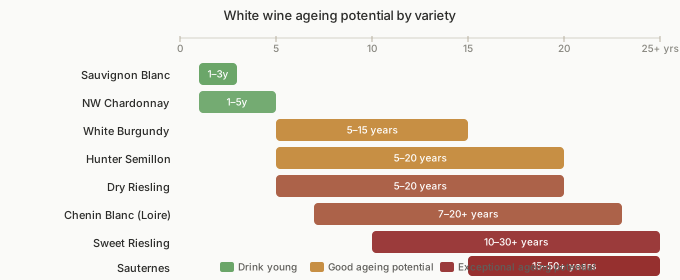
Dry Riesling (German trocken, Alsatian, or Australian Clare/Eden Valley) from a quality producer can develop beautifully over 5–20 years. The wines move from crisp citrus and green apple to stone fruit, honey, and the distinctive petrol note. Off-dry and Spätlese Riesling from the Mosel or Rhine can age 10–25 years. Late-harvest styles (Auslese, Beerenauslese, Trockenbeerenauslese, Eiswein) can age 30–50 years or more in great vintages. An 1811 Pfalz Riesling has reportedly been tasted and found remarkable — two centuries of ageing for a white wine.
For a full exploration of Riesling’s character and how its sweetness levels work, see our Riesling food pairing guide.
White Burgundy (Chardonnay): Terroir’s Finest Expression
Most Chardonnay — particularly from warm-climate New World regions — is best drunk within one to five years. The ripe, generous fruit and oak character that make it immediately appealing are not built for long development. But white Burgundy from the Cote de Beaune (Meursault, Puligny-Montrachet, Chassagne-Montrachet, and particularly Chablis) is a different proposition entirely. These wines have genuine acidity, mineral depth, and the extract that comes from low yields and great terroir, and they develop extraordinary complexity over 5–15 years.
A Meursault from a great producer at ten years develops hazelnut, beeswax, honey, and a savoury depth that makes it one of the most complex whites in the world. Premier Cru and Grand Cru white Burgundy from top producers can age for 20–30 years. Chablis in particular can age extraordinarily well — Jancis Robinson has tasted and enjoyed 40-year-old Chablis. The mineral, chalk, and citrus structure of the appellation’s unique terroir sustains development that most oaked Chardonnay cannot.
Chenin Blanc: The Loire’s Long-Lived Secret
Chenin Blanc from the Loire Valley — particularly Savernières (dry, powerful, mineral), Vouvray (sec through moelleux), and Montlouis — is one of wine’s most under-appreciated ageing propositions. The grape’s combination of very high natural acidity, complex aromatic profile, and — in sweeter styles — residual sugar gives it outstanding longevity. Dry Chenin Blanc can age 7–15 years; a sweet Vouvray moelleux can age for 30–50 years in top vintages.
Aged Chenin Blanc develops a distinctive character: beeswax, honey, dried apricot, lanolin, mushroom, and a particular waxy richness that is unlike any other aged white wine. South African Chenin Blanc, from older vines in the Swartland and Stellenbosch, also shows genuine ageing potential in premium versions, though generally over shorter timescales than the great Loire examples.
Sémillon: Two Great Traditions
Sémillon ages remarkably well in two very different styles. Hunter Valley Sémillon from New South Wales, Australia, is one of the wine world’s most distinctive age-worthy whites. Harvested at low alcohol and low ripeness, it appears almost invisible when young — barely any aroma, watery texture, piercing acidity. But aged 10–20 years it transforms completely: beeswax, lanolin, toast, lemon curd, and a honeyed richness emerge from virtually nowhere. This transformation is unique to Hunter Semillon and one of the wine world’s genuine surprises.
White Bordeaux (Sémillon blended with Sauvignon Blanc, particularly from Pessac-Léognan) also ages very well. Dry white Graves develops a rich, complex, waxy, honeyed character over 10–20 years. Botrytised Sémillon from Sauternes ages extraordinarily — the combination of high sugar, high acidity, and the flavour compounds produced by Botrytis cinerea allows top Sauternes to develop and hold for 50 years or more.
Other Notable Age-Worthy Whites
- Alsatian whites — Riesling (the best ages 15+ years), Pinot Gris (Vendange Tardive and Sélection de Grains Nobles 20–30+ years), and Gewurztraminer (SGN 15–25+ years). The fuller-bodied, more textured Alsatian style gives more longevity than many comparably priced whites.
- Vintage Champagne — made only in the best years and aged on the lees for extended periods, vintage Champagne can develop extraordinary complexity over 20–40 years. The autolytic complexity (brioche, biscuit, chalk) deepens; the fruit becomes richer; the mousse becomes finer and more integrated.
- White Rioja (Viura) — traditionally-styled white Rioja, aged in oak for extended periods, is one of Spain’s most distinctive whites. The oxidative, nutty, caramelised style (think grilled pineapple, hazelnut, smoked oak) develops through ageing and is intentionally produced in a style designed for longevity.
- Vin Jaune (Jura, France) — aged under a flor yeast film in used barrels without topping, producing an oxidative, nutty, Sherry-adjacent white that can age for 50‐70 years. One of wine’s great curiosities and among the longest-lived whites in existence.
- Tokaji Aszú (Hungary) — botrytised Furmint with extraordinary acidity and sugar concentration. Top vintages age for 50–100 years. The acidity is so pronounced it sustains the wine long after the sweetness has evolved into something more complex and savoury.
White Wines Best Drunk Young
These wines are at their best within one to three years of the vintage. Ageing them risks losing their primary appeal without gaining compensating complexity:
- Sauvignon Blanc (most examples) — the grape’s primary appeal is its fresh, grassy, citrus and tropical aromatics. These fade quickly with age. Most Sauvignon Blanc, including Marlborough and basic Loire examples, is best within two to three years. Complex, terroir-driven Sancerre can age 5–10 years, but this is the exception.
- Pinot Grigio (Italian style) — made for immediate freshness. Drink within two years.
- Prosecco and most sparkling wines (non-vintage) — best when young and fresh. Non-vintage Champagne is also intended for relatively prompt consumption despite its three-year minimum lees ageing.
- Muscadet — drink within two to three years for freshness. Muscadet sur lie with extended ageing (the rarer, older-release versions) can develop, but basic Muscadet is best young.
- Vinho Verde, Albariño (most examples), Picpoul — drink within two years. Their appeal is lightness and freshness, not complexity.
- New World Chardonnay (entry level) — made for immediate drinking. The fruit fades without compensating development.
How to Store White Wine for Ageing
The conditions that allow white wine to age well are identical to those for red wine, with one additional consideration: whites should be stored slightly cooler if possible.
- Temperature: 10–14°C (50–58°F). Consistent temperature is more important than the exact number; fluctuations accelerate ageing and can cause premature oxidation. White wine destined for long ageing is best stored at the lower end of this range.
- Darkness: UV light degrades wine rapidly. Bottles should be away from any light source, natural or artificial.
- Humidity: 60–70% humidity prevents the cork from drying out, which would allow air into the bottle. Store bottles horizontally to keep the cork in contact with the wine.
- Vibration: Minimise vibration, which disturbs the sediment and can accelerate undesirable chemical reactions.
- Closure type matters: Screwcap-sealed whites age slightly differently to cork-sealed ones because screwcaps exclude all oxygen rather than allowing the micro-oxygenation that natural cork permits. Screwcap wines from cool, high-acid regions (Clare Valley Riesling, for example) can age beautifully — often with more freshness retained than cork-sealed equivalents.
How to Tell If a White Wine Will Age Well
A useful rule of thumb from Wine Enthusiast: open a bottle and nurse it over a few hours. If it improves as it opens up and develops in the glass — if an hour’s exposure to air makes it taste more interesting rather than less — it is likely to age well in bottle. If it fades quickly once open, drink it young.
The structural indicators to look for in a young wine: high acidity (the wine makes your mouth water), genuine fruit concentration (not just fresh and fruity but deep and persistent), and mineral complexity. Entry-level, high-yield, simple wines rarely age well regardless of variety. The quality of the producer and the vintage matter as much as the grape.
For more on how acidity functions as a preservative — and how to identify high-acid wines by taste — see our wine tasting terms guide, which explains acidity, extract, and finish in plain language.
Frequently Asked Questions
Which white wines age the best?
Riesling is widely considered the white grape with the greatest ageing potential. Dry Riesling from quality German, Alsatian, or Australian producers can develop beautifully over 10-20 years; sweet Riesling (Auslese, TBA, Eiswein) can age 30-50+ years. White Burgundy (Chardonnay from Meursault, Puligny-Montrachet, Chablis) is the most celebrated age-worthy white in the world and develops extraordinary complexity over 5-15 years at Premier Cru level. Chenin Blanc from the Loire (Savennières, Vouvray) can also age 10-30+ years. Hunter Valley Semillon from Australia and Sauternes complete the list of whites with genuine, transformative ageing potential.
How long can white wine be kept?
Most white wines should be drunk within one to three years of the vintage. Wines in this category include most Sauvignon Blanc, Pinot Grigio, Prosecco, basic Chardonnay, Albariño, and Vinho Verde. Age-worthy whites — white Burgundy, quality Riesling, Chenin Blanc, Sémillon — can be kept 5-20 years depending on the producer and vintage. The longest-lived whites — Sauternes, German TBA Riesling, Tokaji Aszú, Vin Jaune — can age 50 years or more. The key indicator is not variety alone but quality: a great producer in a great vintage from a cool, high-acid terroir will always outlast an entry-level example of the same grape.
Does Chardonnay age well?
It depends on the style and origin. Most Chardonnay — particularly warm-climate New World examples — is best drunk within one to five years, when the ripe fruit and oak character are at their most vivid. White Burgundy from the Côte de Beaune (Meursault, Puligny-Montrachet, Chassagne-Montrachet) at Premier Cru and Grand Cru level can develop extraordinary complexity over 10-20 years. Chablis, with its higher acidity and more mineral character, also ages very well over 5-15 years. The rule: the cooler the climate, the higher the acidity, and the better the producer, the more ageing potential the Chardonnay will have.
What is the petrol smell in aged Riesling?
The petrol or kerosene aroma in aged Riesling comes from a chemical compound called TDN (trimethyl-dihydronaphthalene), which develops in Riesling as it ages in bottle, particularly in wines from warm, sunny growing seasons. It is not a fault — it is a recognised and celebrated characteristic of mature Riesling. The aroma typically begins to emerge after five years and becomes more pronounced with further age. Some wine drinkers find it complex and thrilling; others find it unusual until they understand what it is. It is one of the most distinctive and polarising aromas in all of wine.
Should you keep white wine in the fridge?
A domestic refrigerator is not suitable for long-term wine storage. It is too cold (typically 3-5°C versus the ideal 10-14°C for ageing), too dry (which can dry out the cork and allow air in), vibrates from the compressor motor, and opens frequently causing temperature fluctuations. For short-term storage of a few weeks, a fridge is fine. For ageing white wine over months or years, you need either a dedicated wine fridge set to 10-14°C or a proper cellar with consistent temperature and humidity. A wine fridge is a practical and relatively affordable solution for most home collectors.
How can you tell if white wine has gone bad?
A white wine that has gone past its peak rather than properly aged will show several signs: the colour is deep amber or brown rather than gold; the aroma is flat, lifeless, or smells like vinegar, sherry, or old cardboard; the acidity that should give the wine structure has faded, leaving the wine tasting thick and slightly sweet in an unpleasant way. Contrast this with a properly aged white, which will have deepened in colour to gold but still shows vibrant acidity, complex new aromas (honey, beeswax, hazelnut), and a long finish. The difference between a wine that has aged well and one that has simply deteriorated is mostly a matter of the wine’s inherent quality and whether the right conditions were maintained during storage.