
Ham has a reputation as an easy, crowd-pleasing centerpiece, but it is genuinely one of the harder proteins to pair wine with well, precisely because it is rarely just one thing. A single ham dinner can be salty, sweet, smoky, and fatty all at once, sometimes in the same bite, and a wine built to handle only one of those qualities can be overwhelmed by the others. The good news is that once you know which style of ham you are actually serving, the right wine becomes a fairly reliable call. This guide covers what to pour with honey-glazed, smoked, dry-cured, and prosciutto-style ham, why big tannic reds are the one style to generally avoid, and how to pick a single crowd-pleasing bottle when your table is serving ham alongside half a dozen other dishes.
In this article
- 1 Wine and Ham, at a Glance
- 2 Why Ham Is Trickier to Pair Than It Looks
- 3 Honey-Glazed and Brown Sugar Ham
- 4 Smoked Ham
- 5 Dry-Cured and Country Ham
- 6 Prosciutto and Charcuterie-Style Ham
- 7 Pairing for a Holiday Table with Many Dishes
- 8 Red or White with Ham?
- 9 What to Avoid: Why Big Tannic Reds Clash with Ham
- 10 Quick Reference: Wine for Every Ham Style
- 11 Frequently Asked Questions About Wine and Ham
Wine and Ham, at a Glance
- Honey-glazed or brown sugar ham: off-dry Riesling, Gewürztraminer, or Prosecco.
- Smoked ham: Pinot Noir or Zinfandel.
- Dry-cured or country ham: Cava, Champagne, or a crisp rosé.
- Prosciutto and charcuterie-style ham: Prosecco or Lambrusco, the classic Italian match.
- Best all-round holiday choice: an off-dry Riesling or a dry sparkling wine — both flex across most preparations.
- Generally avoid: big, tannic reds like Cabernet Sauvignon, which can taste metallic against ham’s salt.
Why Ham Is Trickier to Pair Than It Looks
Most proteins present one or two flavour dimensions to plan around; ham routinely presents four at once. Curing and brining make it genuinely salty, smoking adds a distinct savoury intensity, a sugar or fruit glaze adds real sweetness on top of that, and the meat itself carries significant fat. A wine chosen to handle only the saltiness, for instance, can be blindsided by the sweetness of a honey glaze, tasting suddenly thin and sour by comparison, while a wine chosen only for the sweetness can feel cloying against a drier, more savoury smoked ham. The most reliable wines for ham share two traits regardless of style: enough acidity to cut through fat and salt, and, ideally, at least a touch of sweetness to match whatever glaze is involved, following the same core logic covered in our guide to wine pairing principles.
Salt specifically works against a very particular wine component: tannin. Salt makes tannin taste sharper, more bitter, and sometimes distinctly metallic, which is exactly why a big, tannic red — exactly the style many people instinctively reach for with a large roasted centerpiece — is usually the wrong call for ham, however well it might suit beef or lamb. Our guide to tannin in wine covers this salt-and-tannin interaction in more depth, and it is worth understanding once, since it explains most of the specific recommendations below.
Honey-Glazed and Brown Sugar Ham
A honey-baked or brown-sugar-glazed ham, the classic Easter and Christmas centerpiece, is the style where sweetness in the wine matters most. A fundamental rule of pairing sweet food is that the wine needs to be at least as sweet as the dish, or it will taste flat and stripped by comparison — pour a bone-dry red next to a caramelised, sugar-glazed ham and the wine will taste thin and sour rather than complementary. An off-dry Riesling, ideally a German Kabinett or a similarly gently sweet style, is the most reliable match: its acidity cuts the ham’s fat and salt while its residual sugar mirrors the glaze. Gewürztraminer, with its aromatic spice and floral notes, works especially well when the glaze includes clove, cinnamon, or other warm spices. For something with bubbles, a lightly sweet Prosecco or a Moscato d’Asti brings the same sugar-matching logic with the added lift of carbonation, which helps reset the palate between rich, sticky bites.
If the glaze leans fruity — pineapple, apricot, or orange marmalade rather than straight brown sugar — a fruit-forward rosé or a soft, fruity Chenin Blanc from Vouvray can pick up on those specific notes even more directly than a straightforward Riesling would.
Smoked Ham
Smoked ham, whether it is a classic spiral-cut smoked ham or something closer to Black Forest style, brings a deep, savoury intensity that a wine with real fruit and moderate structure handles better than a delicate white does. Pinot Noir is the most reliably excellent match: its bright acidity cuts smoke and salt cleanly, its silky, low tannin avoids the salt-and-tannin clash described above, and its red-fruited character rounds out the ham’s savoury edge rather than fighting it. For a bigger, more assertive smoked ham, especially one with a caramelised crust, Zinfandel offers more fruit-forward intensity and a touch more body without tipping into harsh, salt-amplified tannin, since Zinfandel’s tannin is typically softer and its fruit riper than a Cabernet Sauvignon’s.
If you would rather stay with white wine, an off-dry Gewürztraminer or a fuller-bodied Viognier both handle smoked ham’s intensity well, the former through aromatic spice, the latter through a slightly oily, textured richness that mirrors the meat’s own fattiness.
Dry-Cured and Country Ham
Dry-cured styles — American country ham, Spanish jamón, or a similarly intensely salty, concentrated preparation — push saltiness to its most extreme, and sparkling wine is the most dependable answer across nearly all of them. High acidity combined with active carbonation is a genuinely effective combination against heavy salt: the bubbles physically help lift and refresh the palate between bites in a way still wine cannot quite match. A brut-style Cava or Champagne both work extremely well and at very different price points, and a crisp, dry rosé, still or sparkling, is a similarly reliable choice if you would rather stay off traditional sparkling wine entirely.
If red wine is a firm requirement at the table, look toward lighter, higher-acid, lower-tannin styles rather than anything structured: Cabernet Franc from the Loire Valley (labelled Chinon or Bourgueil) or a simple, juicy Beaujolais both bring enough acidity to stand up to dry-cured ham’s intensity without the tannin-and-salt clash a bigger red would introduce.
Prosciutto and Charcuterie-Style Ham
Thin-sliced prosciutto, served cold as part of a charcuterie board rather than as a roasted centerpiece, calls for a lighter touch than any of the styles above. Prosecco is the classic Italian answer for good reason: its gentle fizz and fresh, uncomplicated fruit cut through prosciutto’s fat without competing with its delicate, salty flavour, and the pairing has centuries of Italian practice behind it. Lambrusco, a lightly sparkling, often slightly sweet red from Emilia-Romagna — prosciutto’s own home region — is a genuinely traditional local pairing worth seeking out if you can find a well-made example, since the two are regularly served together in the region where both originate. A crisp, unoaked white like Pinot Grigio or a dry Italian rosé both round out the options for a lighter charcuterie spread that includes prosciutto alongside cheese and olives.
Pairing for a Holiday Table with Many Dishes
Ham rarely appears alone on a holiday table; it usually sits alongside roasted vegetables, a tangy cranberry sauce, mashed potatoes, and a handful of other dishes each with their own flavour demands. In that setting, prioritise flexibility over a theoretically perfect single-dish match. An off-dry Riesling is the single most versatile choice on this entire list: its acidity and gentle sweetness handle the ham itself, its aromatic character stands up to cranberry sauce and other sweet-tart sides, and its moderate alcohol keeps it easy to drink across a long meal. A dry sparkling wine is the other genuinely safe bet for a mixed table, since its acidity and carbonation reset the palate between very different dishes better than almost any still wine can.
Red or White with Ham?
There is no single correct answer, but white and sparkling wine have a genuine structural advantage with most ham preparations, since they typically bring both the acidity and the touch of sweetness ham benefits from, without the tannin that can clash with salt. Red wine can absolutely work, but it demands more care in selection: stick to lighter-bodied, lower-tannin, higher-acid styles — Pinot Noir, Gamay, Cabernet Franc — and avoid big, structured reds built for red meat generally, which are the styles most likely to taste harsh and metallic against ham’s saltiness. If your table is genuinely split between red and white drinkers, Pinot Noir is the most dependable red to put out, since it is the one major red style built to handle ham about as well as a good white does.
What to Avoid: Why Big Tannic Reds Clash with Ham
It is worth naming the mistake directly, since it is the single most common misstep at a ham dinner: reaching for a big, structured red — a young Cabernet Sauvignon, a Bordeaux blend, a bold Syrah — out of habit, simply because it is a large roasted meat centerpiece. Ham’s high salt content interacts specifically badly with firm tannin, amplifying its bitterness and creating a harsh, sometimes metallic sensation that neither the wine nor the ham show on their own. This is not a matter of personal taste so much as a fairly reliable chemical mismatch, and it applies most strongly to precisely the reds many drinkers instinctively pour for a big holiday meal. If you already have a bottle of Cabernet Sauvignon or similar open and want to serve it anyway, pairing it with a lower-salt side dish rather than the ham directly is a reasonable compromise.
Quick Reference: Wine for Every Ham Style
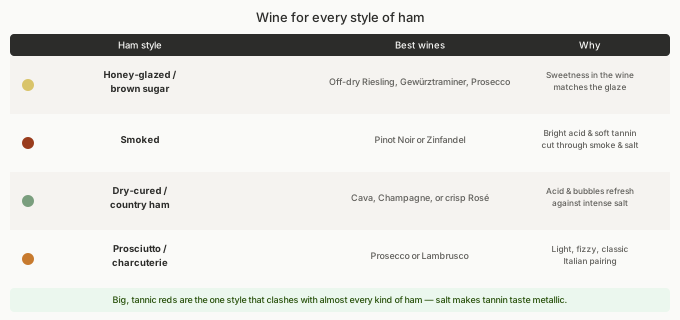
- Honey-glazed / brown sugar: off-dry Riesling, Gewürztraminer, Prosecco, or Moscato d’Asti.
- Smoked: Pinot Noir, Zinfandel, or off-dry Gewürztraminer.
- Dry-cured / country ham: Cava, Champagne, dry rosé, or Cabernet Franc.
- Prosciutto / charcuterie: Prosecco, Lambrusco, or Pinot Grigio.
- Whole holiday table: off-dry Riesling or dry sparkling wine.
- Generally avoid: Cabernet Sauvignon and other big, tannic reds.
For other specific pairings, see our guides to wine with lamb, wine with salmon, and wine with pasta.
Frequently Asked Questions About Wine and Ham
What is the best wine to pair with ham?
It depends on the style of ham, but an off-dry Riesling is the most broadly reliable choice, since its acidity cuts through fat and salt while its gentle sweetness matches a glaze without tasting flat. Dry sparkling wine, such as Cava or Champagne, is the other consistently safe option, particularly for saltier, dry-cured styles.
Should you drink red or white wine with ham?
White and sparkling wine generally have an advantage with ham, since they typically bring acidity and a touch of sweetness without the tannin that can clash with salt. Red wine can work well too, but it is best to choose lighter-bodied, lower-tannin styles like Pinot Noir rather than big, structured reds, which tend to taste harsh against ham’s saltiness.
Why does red wine sometimes taste bad with ham?
Ham’s high salt content interacts poorly with firm tannin, the drying compound found in many red wines, making the tannin taste sharper, more bitter, and sometimes distinctly metallic. This effect is strongest with big, structured reds like Cabernet Sauvignon, which is why lighter, lower-tannin reds such as Pinot Noir generally pair much better with ham.
What wine goes with honey-glazed ham?
An off-dry Riesling is the most reliable match, since the wine should be at least as sweet as the glaze to avoid tasting flat and sour by comparison. Gewürztraminer works particularly well if the glaze includes warm spices like clove or cinnamon, and a lightly sweet Prosecco or Moscato d’Asti offers the same sugar-matching logic with added carbonation.
What wine pairs well with smoked ham?
Pinot Noir is the most reliable match, since its bright acidity cuts through smoke and salt while its soft tannin avoids clashing with the ham’s saltiness. Zinfandel offers a bolder, more fruit-forward alternative for a more intensely smoked or caramelised ham, and off-dry Gewürztraminer is a strong white wine option as well.
What is the traditional wine pairing for prosciutto?
Prosecco is the classic Italian pairing for prosciutto, its gentle fizz and fresh fruit cutting through the fat without overwhelming the meat’s delicate, salty flavour. Lambrusco, a lightly sparkling red from Emilia-Romagna, prosciutto’s own home region, is another genuinely traditional local pairing worth seeking out.