
There is only one rule for pairing wine with pasta, and it applies regardless of whether you’re eating spaghetti, rigatoni, pappardelle, or gnocchi: match the wine to the sauce, not the pasta shape. A bolognese needs the same wine whether it’s on tagliatelle or penne. A light tomato marinara calls for the same wine as a cherry tomato sauce. The pasta is neutral; the sauce is what you’re pairing with.
This guide covers every major pasta sauce type — tomato, cream, pesto, seafood, meat ragù, and more — with specific wine recommendations for each and the reasoning behind why each pairing works. Think Italian first: the regional principle (“what grows together goes together”) is your most reliable shortcut. The wines of Italy evolved alongside its pasta traditions, and matching them almost always works.
In this article
- 1 Tomato-Based Sauces: The High-Acid Match
- 2 Cream-Based Sauces: Richness Needs a Clean Counterpoint
- 3 Pesto and Herb-Based Sauces: Go Herbal and Dry
- 4 Seafood Pasta: Dry, Mineral, Unoaked
- 5 Mushroom and Truffle Pasta: Earth Calls for Earth
- 6 Vegetable and Lighter Sauces
- 7 Lasagne: Think Bigger
- 8 Quick Reference: Wine for Every Pasta Sauce
- 9 Frequently Asked Questions
Tomato-Based Sauces: The High-Acid Match
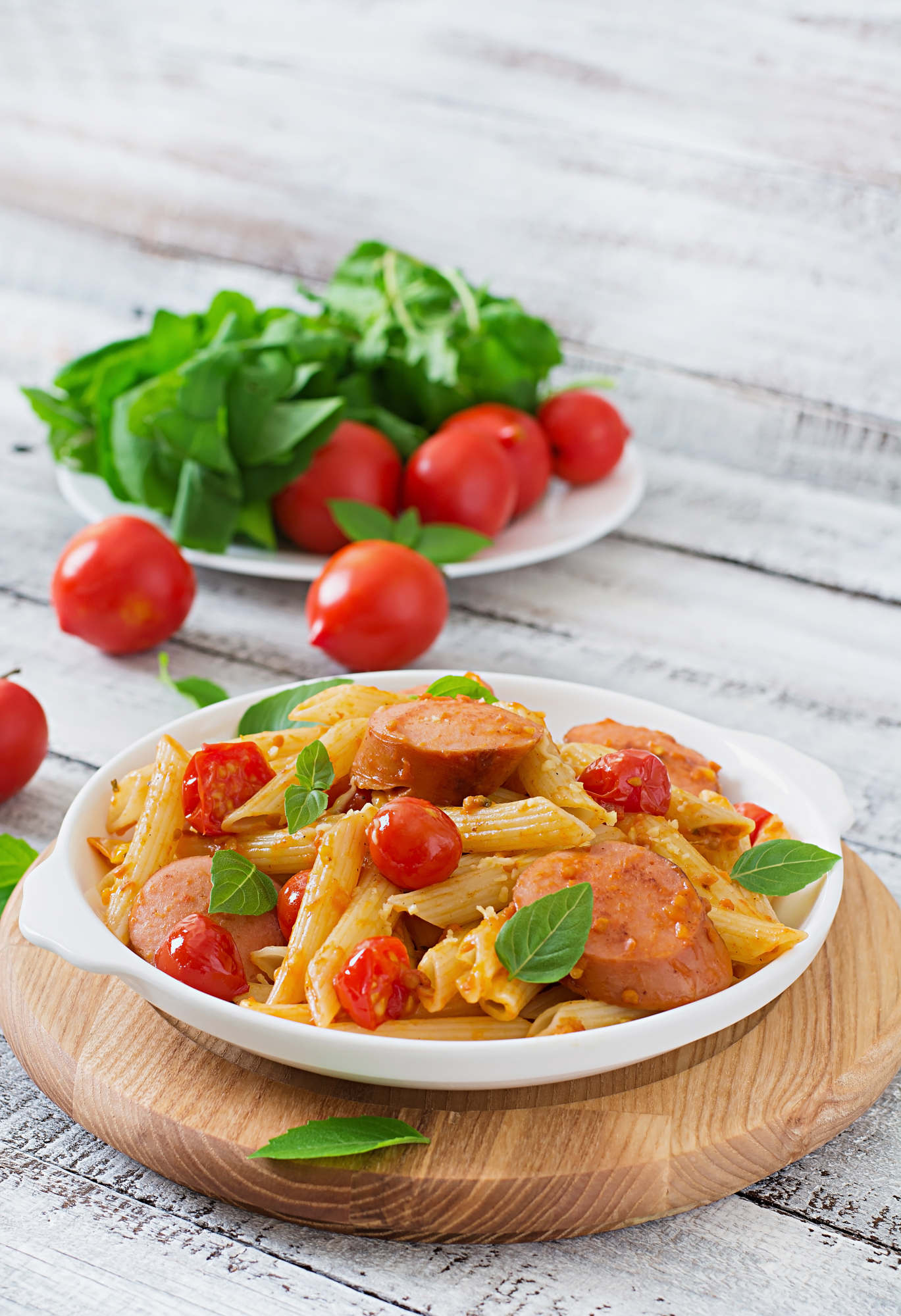
Tomato sauce is highly acidic, and this single characteristic drives the entire pairing strategy. A wine that doesn’t have enough acidity to match the tomato will taste flat, thin, and slightly off — the sauce overwhelms it. The key is to bring a wine with its own confident acidity to the table, one that can stand alongside the tomato rather than being swamped by it.
The most important rule: avoid heavily oaked wines with tomato pasta. Oak creates bitter, metallic notes that clash with tomato’s acidity and create an unpleasant aftertaste. Light, unoaked or lightly oaked reds are the answer every time.
Marinara, Pomodoro, Arrabbiata
Simple tomato sauces — marinara (chunky tomato with garlic and herbs), pomodoro (smooth, pure tomato), and arrabbiata (tomato with chilli) — are the most forgiving of any pasta type for wine pairing. The tomato is the star and the wine simply needs to meet it with matching acidity and moderate fruit.
- Chianti or Chianti Classico — the textbook pairing. Sangiovese’s high acidity and cherry-tomato character mirror the sauce precisely. The “what grows together goes together” principle at its most literal: Chianti and tomato-based cooking evolved in the same Tuscan kitchen. A basic Chianti at £12–18 is one of the best-value pasta pairings in existence.
- Barbera d’Asti — the hidden gem answer. Barbera has even higher natural acidity than Chianti, very low tannin, and vivid cherry fruit. It cuts through tomato sauce effortlessly and is significantly more food-friendly than its price (usually £12–20) suggests.
- Montepulciano d’Abruzzo — dark cherry, medium tannin, excellent acidity. A particularly good match for arrabbiata, where the wine’s fruit softens the chilli heat.
- Dry Italian white — for summer, or when you simply want white wine: a crisp Verdicchio or Pinot Grigio works well with a fresh, light tomato sauce. The acidity handles the tomato; the wine’s neutrality doesn’t compete with the herbs.
Bolognese and Meat Ragù
Bolognese is a more complex proposition than simple marinara: slowly cooked ground beef and pork, enriched with milk or cream, tomato, wine, and soffritto, simmered for hours until the flavours develop deep, meaty umami. The dish’s richness and depth mean you want a more structured wine — more body, more tannin, more complexity — while still keeping the acidity high enough to cut through the fat.
- Chianti Classico Riserva — the accessible premium option. The extra aging adds tobacco, leather, and earthy depth that echoes the slow-cooked sauce beautifully.
- Barolo or Barbaresco — for a special occasion. Nebbiolo’s extraordinary tannin-acid-fruit structure makes it a magnificent partner for a rich bolognese. Rosso di Langhe at £20–30 provides much of the same character at a more everyday price.
- Lambrusco Secco — the authentic Emilian answer. Bolognese is from Bologna, and in Emilia-Romagna the traditional pairing is dry sparkling Lambrusco: its acidity and gentle effervescence cut through the fat in a way no still wine quite replicates. Often overlooked and excellent value.
- Aglianico — from southern Italy (Taurasi, Aglianico del Vulture). High tannin, high acidity, dark fruit, earthy minerality. A serious choice for a serious bolognese.
Cream-Based Sauces: Richness Needs a Clean Counterpoint
Cream sauces — carbonara, alfredo, cacio e pepe (technically not cream but still richly fat-based), tagliatelle with cream and prosciutto — have a completely different pairing logic to tomato. The dominant element is fat and richness, not acidity. The wine’s job is either to cut through that richness with acidity (a crisp white) or to complement it with matching creaminess (a fuller white). Both approaches work; the choice is personal.
Carbonara
Spaghetti carbonara — eggs, guanciale, Pecorino Romano, black pepper, no cream — is rich and savoury with a silky egg-based sauce. A crisp, unoaked Italian white is the classic match: its acidity cuts through the egg fat and refreshes the palate. Frascati (the traditional Roman white, made near where carbonara originated) is the regional pairing. Soave Classico, Gavi di Gavi, or a light Pinot Grigio from Friuli all work well.
For a red wine option: a lightly chilled Pinot Noir is a surprisingly good match — its low tannin doesn’t fight the eggs, and its earthy, savoury character echoes the guanciale. Not the expected call, but genuinely delicious.
Alfredo, Cream Sauces, and Tagliatelle with Butter
Richer cream sauces without the savoury punch of guanciale or Pecorino need either a white wine with enough body to match the richness, or a high-acid white to cut through it cleanly.
- Lightly oaked Chardonnay — the classic complementary pairing. A white Burgundy village-level (Macon, Saint-Véran, or Chablis with a little richness) mirrors the cream’s texture while providing the acidity to keep things lively. A good Californian or Australian Chardonnay works if not too heavily oaked.
- White Burgundy (Meursault, Pouilly-Fuissé) — for a special occasion. The nutty, creamy character of Meursault alongside a rich tagliatelle al burro is one of French-Italian cooking’s overlooked pleasures.
- Prosecco or Franciacorta — sparkling wine with cream pasta is an underrated combination. The bubbles cut through the fat in the same way Lambrusco cuts through bolognese, and the yeasty notes echo the pasta’s flavour.
Cacio e Pepe and Cheese-Based Sauces
Cacio e pepe — Pecorino Romano, black pepper, pasta water — has a particular salty, peppery intensity. A crisp white with enough character to handle the salt and spice: Grechetto, Verdicchio, or a light, mineral Riesling trocken. The Riesling’s peppery quality (from its terpene profile) echoes the dish’s signature spice in a satisfying way.
Pesto and Herb-Based Sauces: Go Herbal and Dry
Fresh basil pesto — basil, garlic, pine nuts, Parmigiano, olive oil — is vibrant, herbal, and rich with olive oil. The pairing principle: a wine with its own herbal character, good acidity, and no heavy oak. An oaked wine will compete with and flatten the fresh basil. Unoaked is the way.
- Vermentino (Sardinian or Ligurian) — the outstanding match. Its herbal, citrus, and slightly saline character echoes the fresh basil and garlic with precision. Liguria is where pesto originates, and Ligurian Pigato or Vermentino is the regional pairing that earned its reputation.
- Sauvignon Blanc — particularly from the Loire (Sancerre, Pouilly-Fumé) or New Zealand Marlborough. The herbaceous notes (grass, herb, citrus) complement the basil; the acidity cuts through the olive oil.
- Unoaked Pinot Grigio (Italian, not Alsatian) — lighter and more neutral, allows the pesto to shine without any competing oak or oak-adjacent flavours.
- Dry rosé — a Provençal or Italian rosé works well in summer, particularly with pesto pasta served at room temperature or with fresh vegetables.
For aglio e olio (garlic, olive oil, chilli): the same logic applies but simpler — any crisp, dry Italian white handles this dish. The dish is about garlic and olive oil; the wine just needs to be dry and clean.
Seafood Pasta: Dry, Mineral, Unoaked
Seafood pasta — spaghetti alle vongole (clams), linguine ai frutti di mare (mixed seafood), scampi, and prawn or mussel dishes — is almost always best served with a dry, mineral, unoaked white wine. The briny, delicate character of the seafood is easily overwhelmed by oak or tannin, and the tomato (when present) adds acidity that needs a matching wine.
- Soave Classico — the classic vongole match. Its mineral, almond-tinged, slightly saline character echoes the brine of the clams. Soave Classico (from the historic hillside zone) is significantly better than basic Soave — worth seeking out.
- Falanghina (Campania) — particularly good with frutti di mare. Its mineral, floral, and citrus notes complement seafood across the board.
- Vermentino (Sardinian) — saline, herbal, crisp. If you’re eating vongole, a Sardinian Vermentino is the best all-purpose option after Soave.
- Gavi di Gavi (Cortese grape, Piedmont) — light, crisp, nutty, mineral. Excellent with scampi or prawn pasta.
- Picpoul de Pinet — the southern French alternative. The “lips stinger” acidity was literally designed for seafood and handles pasta dishes accordingly.
- Muscadet (Loire Valley, Melon de Bourgogne) — lean, mineral, and overtly saline in the best Muscadet Sevre et Maine. The best value match for clam pasta anywhere in white wine.
One exception: pasta with canned tuna, anchovies, or other preserved fish (pasta alla puttanesca) is more assertive and can handle a light, un-oaked red. A young Nero d’Avola from Sicily or a Frappato work well alongside the olives and capers in puttanesca.
Mushroom and Truffle Pasta: Earth Calls for Earth
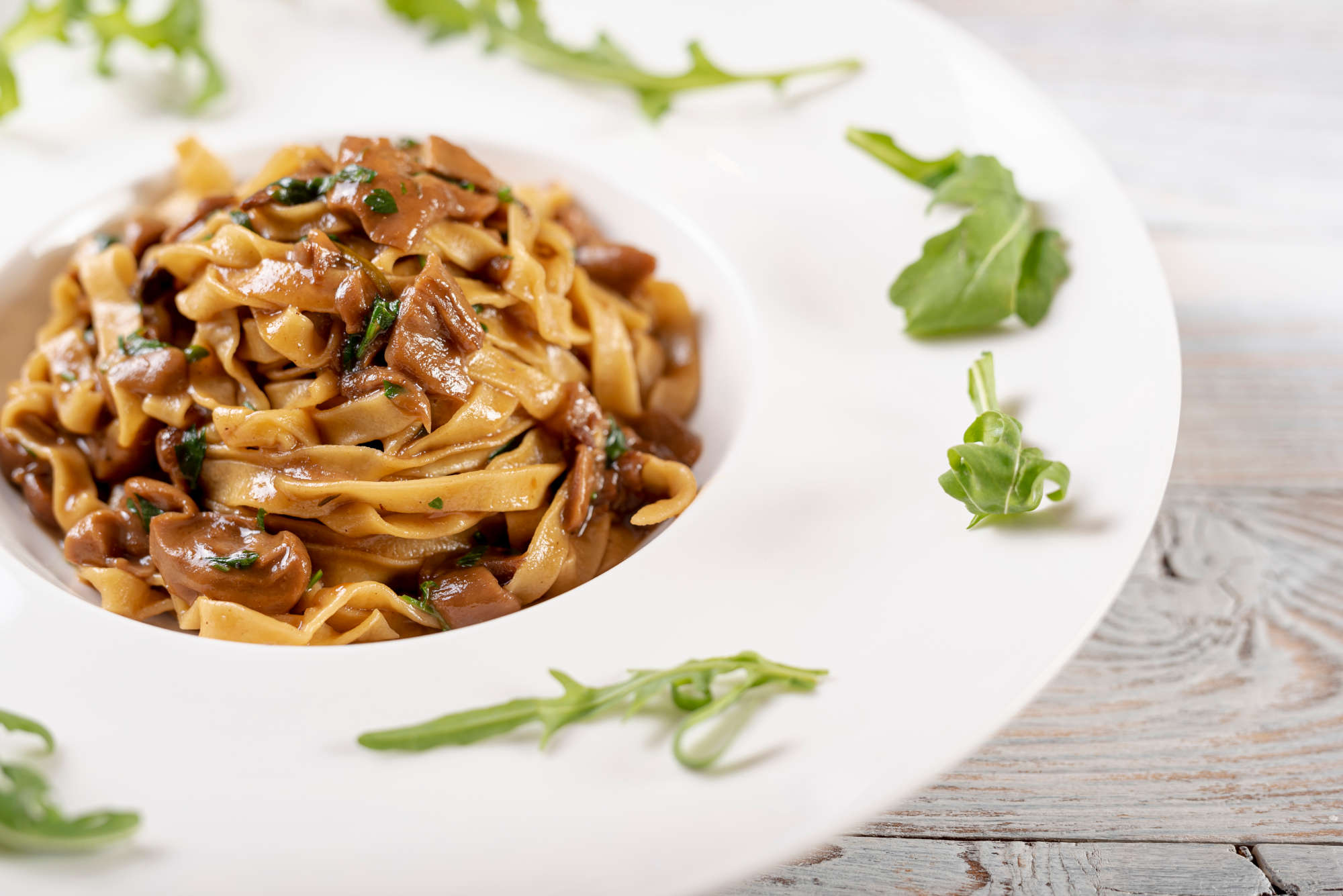
Mushroom pasta — tagliatelle with porcini, tagliolini with truffle, pasta boscaiola — has a distinctive earthy, umami quality that is one of the most gratifying matches for red wine. The pairing logic: wines with their own earthy, forest-floor character echo the mushrooms; wines with dark fruit add depth rather than competing.
- Pinot Noir — the most elegant match. Burgundy Pinot Noir’s earthy, dried rose, and forest-floor character (the sous-bois quality) finds a natural partner in porcini. An Oregon or New Zealand Pinot works nearly as well at a lower price. Serve slightly below room temperature.
- Barbera — particularly good when the mushrooms are in a cream sauce. The acidity cuts through the cream; the cherry fruit complements the earthy mushrooms.
- Nebbiolo (Barolo, Barbaresco, or a simpler Langhe Nebbiolo) — the natural Piedmontese pairing, since truffle pasta is a signature dish of Piedmont and Barolo is its wine. The earthy, tar, and rose complexity of Nebbiolo alongside truffle pasta is one of Italian cuisine’s transcendent combinations.
- Oaked Chardonnay — for mushroom cream sauce without meat. The buttery creaminess of a white Burgundy or lightly oaked Italian Chardonnay handles the mushrooms and cream simultaneously.
Vegetable and Lighter Sauces
Pasta primavera, pasta with roasted vegetables, pasta with ricotta, and other light vegetable-based dishes are the most flexible category — they pair with almost anything that is well-made and dry. A light Italian white (Pinot Grigio, Verdicchio, Arneis from Piedmont) or a dry rosé are generally the best calls. The wine should be fresh and dry; anything with significant oak or tannin will overpower the vegetables.
Pasta with roasted peppers or aubergine: a medium-bodied Italian red — Montepulciano d’Abruzzo, Cerasuolo d’Abruzzo (a serious rosé), or a light Sangiovese — handles the sweet, caramelised vegetable flavour well. Pasta with artichoke is notoriously difficult (artichoke makes many wines taste metallic) — a dry Vermentino or Falanghina is the safest answer.
Lasagne: Think Bigger
Lasagne is the most complex pasta dish for wine pairing because it combines meat sauce, béchamel, cheese, and pasta in layers. You need a wine with both the structure to handle the richness and the acidity to cut through the béchamel. Lighter wines are overwhelmed; heavily tannic wines feel too heavy.
- Chianti Classico Riserva — the most recommended match. The extra body and aging complexity suits the dish’s weight; the Sangiovese acidity handles the tomato in the meat sauce.
- Barbera d’Asti — for those who prefer something slightly lighter but still structured. The acidity cuts through the béchamel brilliantly.
- Barolo or Aglianico — for a special occasion lasagne. These wines have the heft, complexity, and tannin to match a rich, slow-cooked lasagne without being overpowered.
Quick Reference: Wine for Every Pasta Sauce
- Marinara / pomodoro — Chianti, Barbera d’Asti, Montepulciano d’Abruzzo
- Arrabbiata (spicy tomato) — Montepulciano d’Abruzzo, Primitivo, Nero d’Avola
- Bolognese / meat ragù — Chianti Classico Riserva, Barolo, Lambrusco Secco, Aglianico
- Carbonara — Soave Classico, Gavi, Frascati, light Pinot Noir
- Alfredo / cream sauce — lightly oaked Chardonnay, white Burgundy, Prosecco
- Cacio e pepe — Grechetto, Verdicchio, dry Riesling
- Pesto — Vermentino, Sauvignon Blanc, unoaked Pinot Grigio
- Aglio e olio — any crisp, dry Italian white (Pinot Grigio, Verdicchio, Soave)
- Vongole / seafood — Soave Classico, Falanghina, Vermentino, Muscadet
- Puttanesca — Nero d’Avola, Frappato, light Sangiovese
- Mushroom pasta — Pinot Noir, Barbera, Nebbiolo (Langhe)
- Truffle pasta — Barolo, Barbaresco, Langhe Nebbiolo
- Lasagne — Chianti Classico Riserva, Barbera, Barolo
- Primavera / light vegetable — Pinot Grigio, Arneis, dry rosé
For the broader principles behind these pairing choices — how acidity, tannin, and intensity matching work across all foods — see our food and wine pairing guide. For a deeper look at the Italian wines mentioned throughout (Chianti, Sangiovese, Barbera), our Sangiovese guide is a useful companion.
Frequently Asked Questions
What wine goes with pasta?
The best wine for pasta depends entirely on the sauce. Match the wine to the sauce, not the pasta shape: tomato-based sauces call for high-acid Italian reds like Chianti or Barbera; cream sauces call for a crisp or lightly oaked white like Chardonnay or Soave; pesto calls for a herbal dry white like Vermentino or Sauvignon Blanc; seafood pasta calls for a dry mineral white like Soave, Falanghina, or Muscadet; mushroom pasta is best with Pinot Noir or Barbera. Italian wines are usually the best first choice because their natural acidity and moderate alcohol make them ideal partners for pasta.
What wine goes with tomato pasta sauce?
Tomato pasta sauce is highly acidic, so it needs a wine with matching acidity. The best choices are high-acid Italian reds: Chianti or Chianti Classico (Sangiovese) is the classic and most versatile recommendation, Barbera d’Asti is the hidden gem (even higher acidity, lower price), and Montepulciano d’Abruzzo is an excellent value option. Avoid heavily oaked wines, which create a metallic clash with tomato’s acidity. For a white wine option, a crisp Verdicchio or dry Italian Pinot Grigio works with lighter tomato sauces.
What wine goes with pasta carbonara?
The classic match for pasta carbonara is a crisp, dry Italian white: Soave Classico, Gavi di Gavi, Frascati (the local Roman white), or a light Friulian Pinot Grigio. The wine’s acidity cuts through the rich egg and guanciale fat and refreshes the palate between bites. For a red wine option, a lightly chilled Pinot Noir with soft tannins works surprisingly well — its low tannin doesn’t fight the eggs, and its earthy, savoury character echoes the guanciale. Avoid heavily oaked wines or high-tannin reds, both of which clash with the egg-based sauce.
What wine goes with pesto pasta?
Pesto pasta pairs best with a herbal, unoaked dry white wine. Vermentino from Sardinia or Liguria is the outstanding match — its herbal, citrus, and slightly saline character echoes the fresh basil and garlic. Sauvignon Blanc (Loire Valley or Marlborough) is the second-best choice, with its green herb and citrus notes. Unoaked Pinot Grigio is a simpler but reliable option. Avoid oaked wines, which compete with and flatten the fresh basil. Pesto is from Liguria, and the regional Ligurian pairing — Pigato or Vermentino — is genuinely earned.
Is red or white wine better with pasta?
It depends entirely on the sauce. Red wine is better with meat-based sauces (bolognese, meat ragù, puttanesca, mushroom pasta) and with tomato sauces that have a meaty component. White wine is better with cream-based sauces, seafood pasta, pesto, and lighter vegetable dishes. Some sauces (carbonara, simple tomato) work well with both. The pasta shape makes no difference to this choice — the same sauce on spaghetti or rigatoni needs the same wine. Italian wines in both colours generally outperform their non-Italian equivalents for pasta, because their natural acidity was calibrated alongside Italian cuisine.
What wine goes with spaghetti bolognese?
Spaghetti bolognese pairs best with Chianti Classico (ideally Riserva for extra body and complexity), Barbera d’Asti, or Lambrusco Secco (the traditional Emilian sparkling red). For a special occasion, Barolo or Barbaresco (Nebbiolo-based) are exceptional — their tannin and acidity match the dish’s richness and depth. The key requirement is high acidity to cut through the fat and moderate-to-firm tannins to handle the meat. Avoid heavily oaked wines, which fight the tomato; and avoid light, delicate reds, which are overwhelmed by the slow-cooked sauce.