
Pairing wine with steak is treated as one of the few settled questions in food and drink: big red, done. Most of the time the reflex works — but “big red” is right for the wrong reason, and it fails often enough to be worth understanding why. The variable that actually decides the wine is fat: how much marbling the cut carries, and whether the cooking and the sauce add more of it or strip it away. A heavily marbled ribeye and a trimmed fillet are both “steak” and want almost opposite bottles. This guide covers what wine goes with steak cut by cut, why the classic pairing works at the chemical level, and the cases where the steakhouse default is the wrong call.
In this article
- 1 What Wine Goes with Steak, at a Glance
- 2 A 900-Year-Old Habit — and the Wine Has Changed Completely
- 3 What Actually Makes Red Wine and Steak Work
- 4 Match the Cut, Not the Word “Steak”
- 5 Ribeye, Strip and Other Marbled Cuts
- 6 Fillet and Lean, Tender Cuts
- 7 Sirloin, Flank and Skirt: Lean but Full-Flavoured
- 8 T-Bone and Porterhouse: The Tuscan Answer
- 9 How You Cook It Changes the Wine
- 10 Sauces and Butters Move the Target
- 11 Do You Need to Spend Big?
- 12 Quick Reference: Wine for Every Steak
- 13 Frequently Asked Questions About Wine and Steak
What Wine Goes with Steak, at a Glance
- Ribeye and other marbled cuts: Cabernet Sauvignon, Syrah/Shiraz, or Malbec.
- Fillet / filet mignon (lean, tender): Pinot Noir or Merlot — not a big Cabernet.
- Sirloin / rump: Merlot, Grenache blends, or a mid-weight Cabernet.
- New York strip: Cabernet Sauvignon or Rioja Reserva.
- T-bone and porterhouse: Sangiovese — Chianti Classico or Brunello.
- Flank, skirt, hanger: Malbec or Zinfandel, especially with a marinade or chimichurri.
- Well-done steak: soften the wine — Merlot or Grenache, not a young, tannic Cabernet.
A 900-Year-Old Habit — and the Wine Has Changed Completely
The link between serious red wine and red meat in Britain and its cultural exports is old enough to have a founding date: 1152, when Eleanor of Aquitaine married Henry Plantagenet, soon Henry II of England, and the vineyards of Bordeaux and Gascony passed to the English crown for the next three centuries. Access to that market turned Bordeaux into an export machine. By the early 1300s something like 900,000 hectolitres of wine a year were shipped from Bordeaux to England — reportedly the largest single shipping trade in the world at the time — carried each autumn by a “vintage fleet” of hundreds of ships.
Here is the part that undercuts the modern rule. The wine the British drank with their roast beef for the first several hundred years of that trade was pale. The word claret comes from the Old French clairet, a light, clarified wine, and medieval Bordeaux red was closer in colour and weight to a modern rosé than to anything a sommelier would pour with a steak today. The deep, tannic, structured style now treated as compulsory with beef is the newer invention. It took shape in the 1660s, when estates such as Château Haut-Brion began making a darker, longer-macerated, age-worthy “New French Claret” and selling it at a premium — the wine Samuel Pepys singled out in a London tavern in 1663 as having “a good and most particular taste that I never met with.” So the pairing is genuinely ancient; the idea that steak demands a wall of tannin is only a few centuries old, and it was a commercial strategy before it was a rule of thumb.
What Actually Makes Red Wine and Steak Work
Astringency — the drying, grippy feeling from a tannic red — happens because tannins bind to proteins in your saliva, especially proline-rich proteins, and those protein–tannin complexes clump together and drop out of solution. The loss of salivary lubrication is what your mouth reads as “dry.” A 2011 review in the journal Molecules by Jacqui McRae and James Kennedy sets out the mechanism: tannin–salivary-protein aggregation and precipitation is the core of the sensation.
A bite of steak intervenes in that process. The meat is dense with protein, and if it is marbled, fat — and both give the tannins something else to grab before they reach your saliva. The wine’s grip lands on the food instead of your palate, so a tannic red tastes softer alongside steak than it does on its own, while the fat that would otherwise coat your tongue gets scrubbed away between bites. It is the same logic behind pairing tannic wine with hard cheese, and it runs both ways: the wine makes the meat taste cleaner, the meat makes the wine taste smoother.
Two things follow, and they are where “just order a big red” breaks down. First, the effect scales with fat: the more marbling a cut has, the more tannin it can absorb and tame, and the bigger the wine it can carry. A very lean cut gives a powerful tannic wine almost nothing, so the grip stays in your mouth and the pairing turns harsh. Second, alcohol itself slightly loosens the tannin–protein bond, so a warm-climate red at 15% already feels softer than its tannin reading suggests. The rule that actually works is not “big red with steak” but “match the weight of the wine to the fat on the plate” — the argument our wine pairing principles guide makes for every protein.
Match the Cut, Not the Word “Steak”
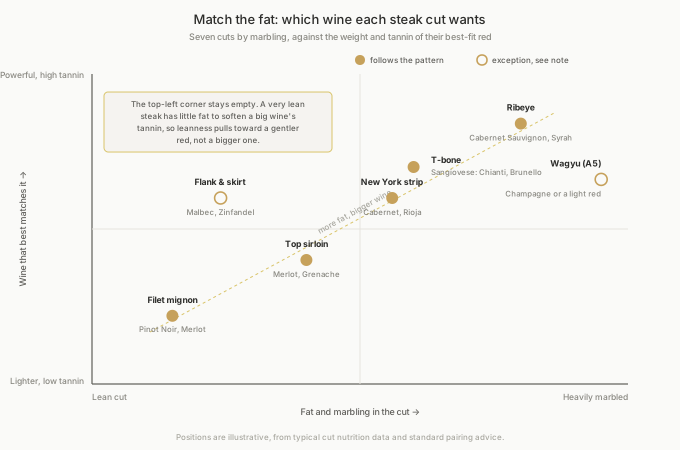
The chart below plots seven common cuts by how much fat and marbling they carry against the weight and tannin of the wine that suits them. Most sit on a fairly straight diagonal — more fat, bigger wine — and the two that break the pattern do so for reasons worth knowing. Wine Folly’s steak pairing guide reaches much the same conclusions from the wine side.
Ribeye, Strip and Other Marbled Cuts
This is where the steakhouse cliché earns its keep. A ribeye is the fattiest common steak — its intramuscular fat can run several times that of a trimmed strip — and that marbling is exactly the buffer a powerful, tannic wine needs. Cabernet Sauvignon is the textbook answer: firm tannin, dark fruit and cedar meeting rendered fat head-on and coming out balanced. Syrah or Shiraz works just as well and adds a peppery note that suits a charred crust. Malbec from Mendoza is the plush, less oaky option, and Zinfandel handles a fatty cut under a sweet barbecue rub. A New York strip is leaner but still well-marbled, and takes the same grapes at slightly lower volume — a mid-weight Cabernet, or a Rioja Reserva, rather than the biggest bottle on the list.
Fillet and Lean, Tender Cuts
Fillet — filet mignon, tenderloin, chateaubriand — is the cut most people pair badly. It is prized for texture, not flavour: very tender, very lean, mild, usually served rare to medium-rare. Put a young, powerful Cabernet next to it and there is not enough fat or savoury intensity in the meat to absorb the tannin, so the wine tastes coarse and the delicate meat is flattened. The better choice is a lighter, lower-tannin red. Pinot Noir is the classic: silky, high-acid, aromatic, happy to sit beside a subtle piece of meat rather than shout over it. Merlot is the other dependable answer — a little more flesh than Pinot, softer tannin than Cabernet, plummy and accommodating, and our guide to what Merlot tastes like explains why it flatters lean meat so reliably. If the fillet arrives under a rich sauce or wrapped in bacon, step up to a medium Bordeaux blend, because now there is fat in play.
Sirloin, Flank and Skirt: Lean but Full-Flavoured
Sirloin and rump sit in the middle — leaner than a ribeye, beefier than a fillet — and a Merlot, a Grenache-based southern Rhône blend, or a moderate Cabernet all work. Flank, skirt and hanger are the exception on the chart. They are genuinely lean, but they carry an intense, almost mineral beefiness, they are cooked hot and fast for a heavy char, and they are often marinated — all of which wants a punchier wine than the fat alone would predict. Malbec is the natural partner, especially with an Argentine chimichurri of garlic, parsley and vinegar. That is no accident: Malbec is the grape Bordeaux abandoned after the catastrophic frost of 1956, and Argentina rebuilt around it until it became the default wine for the national asado — a story our Malbec guide tells in full. Zinfandel and a robust Côtes du Rhône are strong alternatives.
T-Bone and Porterhouse: The Tuscan Answer
A T-bone and its larger sibling the porterhouse are two steaks joined by a bone: a strip on one side, a wedge of fillet on the other. That split personality is a pairing problem — the strip wants structure, the fillet wants restraint — and central Italy settled it centuries ago. Bistecca alla fiorentina, the tall Florentine T-bone grilled rare over wood, is served with Tuscan Sangiovese: a Chianti Classico, or a Brunello di Montalcino for a serious night. Sangiovese’s high acidity and sour-cherry, savoury profile cut the fat without the tannic mass of a Cabernet, so it flatters the tender side of the steak instead of steamrolling it — the acid-forward structure our Sangiovese guide describes. A medium Bordeaux blend or a Rhône red does the job too, but try the Italian pairing first.
How You Cook It Changes the Wine
Doneness matters more than most pairing advice admits. A rare steak keeps its juice and a faint iron note, and that moisture softens the impression of a young, tannic wine — a rare ribeye can carry a bigger, more youthful Cabernet than the same cut cooked through. A well-done steak is the opposite: drier, more crust, less fat and juice left to buffer the wine, so a fierce young red tastes harsh beside it. For well-done meat, drop back to a softer, fruitier wine with gentler tannin — a Merlot, a Grenache blend, a riper Malbec — or a red with a few years of age, since tannin mellows over time. Heavy grill char pushes the same way: smoke and a thick crust suit savoury, structured wines such as Syrah and Zinfandel, and overwhelm anything delicate.
Sauces and Butters Move the Target
Once a sauce is on the plate, pair with the sauce as much as the meat.
- Peppercorn sauce (steak au poivre): a peppery Syrah, ideally Northern Rhône, matches spice with spice; a brambly Zinfandel also works.
- Béarnaise or a rich butter sauce: the tarragon and warm butter suit an oaked Pinot Noir, or a rich white — a Meursault-style Chardonnay is a classic bistro move with steak béarnaise.
- Blue-cheese butter or a Roquefort crust: you need weight and a little sweetness against the salty funk — a jammy Zinfandel, an Amarone, or a glass of Port.
- Chimichurri or salsa verde: Malbec for the regional match, or a Cabernet Franc whose own herbal, peppery streak echoes the parsley and garlic.
- Mushroom or red-wine jus: earthy sauces pull toward Pinot Noir or a Rhône red rather than a fruit-forward Cabernet.
Do You Need to Spend Big?
No, and the chemistry is on your side. The tannin–fat interaction does not care what the wine cost, and a fatty steak is unusually good at making an inexpensive, slightly rough young red taste smoother than it is. A £10–15 Argentine Malbec, Chilean Cabernet or Côtes du Rhône will handle most steaks well. If a young, tannic bottle tastes tight on opening, decant it for 30 to 60 minutes — our guide to decanting explains why aeration takes the edge off. Save a mature, expensive bottle for a plainly cooked, top-quality cut where you will actually notice it, not a heavily sauced steak that will bury it.
Quick Reference: Wine for Every Steak
- Ribeye / rib steak: Cabernet Sauvignon, Syrah/Shiraz, Malbec.
- New York strip: Cabernet Sauvignon, Rioja Reserva, mid-weight Bordeaux blend.
- Fillet / filet mignon: Pinot Noir, Merlot.
- Rump / top sirloin: Merlot, Grenache blend, moderate Cabernet.
- T-bone / porterhouse: Sangiovese — Chianti Classico or Brunello.
- Flank / skirt / hanger: Malbec, Zinfandel, Côtes du Rhône.
- Well-done, any cut: Merlot, Grenache, aged red — not a young tannic Cabernet.
- Steak frites, casual: Beaujolais or a light Loire red, lightly chilled.
For the next protein along, our wine with lamb guide follows the same cut-and-cooking logic.
Frequently Asked Questions About Wine and Steak
What is the best wine to pair with steak?
For a marbled cut like ribeye or New York strip, Cabernet Sauvignon is the most reliable choice: its firm tannin is balanced by the fat in the meat, and Syrah, Shiraz and Malbec work equally well. But the ideal wine depends on the cut. A lean fillet is better with a lighter Pinot Noir or Merlot, a T-bone suits Tuscan Sangiovese, and a well-done or heavily charred steak needs a softer, fruitier red than a young Cabernet. Match the weight of the wine to the fat on the plate rather than defaulting to the biggest bottle.
Why does red wine go so well with steak?
Red wine tannins cause astringency by binding to proteins in your saliva and precipitating out, which dries the mouth. The protein and fat in a bite of steak give those tannins an alternative target, so they bind to the food instead of your palate. A tannic red then tastes softer and rounder with steak than on its own, while the wine’s grip and acidity clear fat from your tongue between bites. The effect works in both directions, which is why the pairing feels so natural.
What wine goes with filet mignon?
A lighter, lower-tannin red. Filet mignon is very lean and mild, so a big, young Cabernet Sauvignon overwhelms it and tastes harsh because there is little fat to soften the tannin. Pinot Noir is the classic match — silky and aromatic without being heavy — and Merlot is the other dependable option, with soft tannins and plummy fruit. If the fillet comes with a rich sauce or wrapped in bacon, you can move up to a medium-bodied Bordeaux blend.
Does the doneness of the steak change the wine?
Yes. A rare steak keeps more juice and a faint iron note, both of which soften the impression of a young, tannic wine, so it can carry a bigger, more youthful red. A well-done steak is drier, with more browned crust and less fat left to buffer the wine, so a fierce young Cabernet tastes astringent next to it. For well-done meat, choose a softer, fruitier wine such as Merlot or Grenache, or a red with some bottle age, since tannin mellows over time.
Can you drink white wine with steak?
It is not the obvious move, but it works in specific cases. A rich, oaked white with real body — a Meursault-style Chardonnay or a white Rhône — pairs well with steak in a butter or béarnaise sauce, and it is a genuine tradition with steak frites. A very lean cut like fillet, served simply, can also take a full-bodied white. White wine lacks the tannin that handles heavy marbling, so it is a poor match for a fatty ribeye, but it is far from banned.
What is a good inexpensive wine for steak?
A £10–15 Argentine Malbec, Chilean Cabernet Sauvignon or Côtes du Rhône pairs well with most steaks. A fatty cut is unusually forgiving of a cheaper, slightly rough young red, because the meat’s fat and protein round off the tannin and make the wine taste smoother than its price suggests. Decant a tight young bottle for half an hour before serving. Reserve an expensive, mature wine for a plainly cooked premium cut, where its subtlety will not be lost under sauce or char.