
You open a bottle of wine, pour a couple of glasses, and put the cork back in. Three days later you wonder: is it still drinkable? How long does wine last once opened depends on the wine type, storage temperature, and how well you resealed it — and the answers vary far more than most people expect. This guide gives you the exact numbers for every wine style, the science behind them, and the tools that can dramatically extend how long opened wine stays enjoyable.
The short version: most wines last 3 to 5 days after opening if stored correctly. Sparkling wines go flat faster. Fortified wines last weeks. Natural wines can fade in under 24 hours. And a handful of simple techniques can add days to any of those windows. Read on for the full picture by wine type.
In this article
- 1 Why Wine Goes Bad After Opening: The Science in Two Minutes
- 2 How Long Wine Lasts Once Opened: By Wine Type
- 3 How to Tell if an Opened Wine Has Gone Bad
- 4 Preservation Tools: What Actually Works
- 5 The Five Most Common Mistakes with Opened Wine
- 6 Frequently Asked Questions
- 6.1 How long does red wine last once opened?
- 6.2 How long does white wine last once opened?
- 6.3 How long does sparkling wine last once opened?
- 6.4 Should you put opened red wine in the fridge?
- 6.5 How long does Port or Sherry last once opened?
- 6.6 Does wine go bad in the fridge?
- 6.7 Can you cook with wine that has gone off?
Why Wine Goes Bad After Opening: The Science in Two Minutes
Wine is made to be a sealed, oxygen-free environment. The moment you pull the cork or unscrew the cap, two things start happening simultaneously, and both work against you.
The first is oxidation. Oxygen reacts with the alcohol and phenolic compounds in wine, dulling the fruit aromas, flattening the freshness, and eventually producing acetaldehyde — that stale, bruised-apple taste that signals a wine past its best. In reds, oxidation also strips tannin and colour, making the wine appear brick-orange at the rim. In whites, it deepens the colour to amber. The higher the alcohol and tannin content, the more slowly oxidation takes hold, which is why a big Cabernet Sauvignon outlasts a delicate Pinot Grigio after opening.
The second process is bacterial activity. Acetic acid bacteria, which occur naturally in wine, are kept dormant by the sealed, sulphur-dioxide-protective environment of a corked bottle. Once opened, oxygen feeds these bacteria, which begin converting alcohol into acetic acid and acetaldehyde. This is the process that turns wine into vinegar. The speed depends on temperature (warmer = faster), the wine’s sulphur dioxide levels, and how much surface area is exposed to air.
Temperature is your most powerful lever. Lower temperatures slow both oxidation and bacterial activity significantly. This is why even red wine should go into the fridge once opened — just bring it back to room temperature before serving. A wine left on a kitchen counter at 21°C will deteriorate in half the time of the same wine stored at 12°C.
How Long Wine Lasts Once Opened: By Wine Type
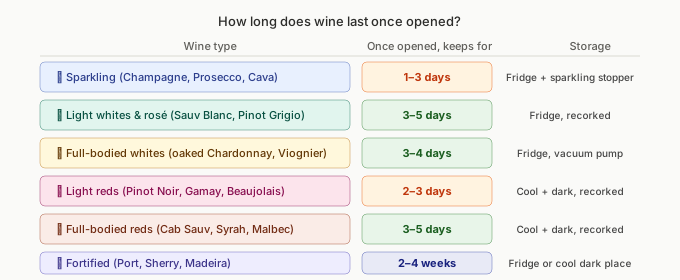
Sparkling Wine: 1–3 Days (Act Fast)
Sparkling wine has two things working against it once opened: oxidation and carbonation loss. The dissolved CO₂ that creates the bubbles begins escaping from the moment you pop the cork, and no amount of storage will bring it back. A bottle of Prosecco left open overnight becomes flat and slightly vinegary by morning. Champagne, thanks to its higher bottle pressure (around 6 atmospheres vs Prosecco’s 3), holds its fizz slightly longer.
With a proper sparkling wine stopper and refrigeration, you can realistically preserve drinkable bubbles for 1 to 3 days. The wine will still be slightly less lively than the first pour, but entirely acceptable. Without a stopper, drink it the same evening. The teaspoon-in-the-neck trick that circulates on the internet has been tested repeatedly and does not work — it is a myth.
Storage: Fridge, upright, with a sparkling wine stopper. Serve within 24 hours ideally; 3 days maximum.
White Wine and Rosé: 3–5 Days
Light-bodied whites — Sauvignon Blanc, Pinot Grigio, Muscadet, Albariño — are high in acidity, which acts as a natural preservative and gives them a slightly longer window than you might expect. Refrigerated and tightly resealed, these wines are typically at their best through day three and still perfectly drinkable on day five. After that, the fruit becomes muted and the wine starts to feel flat.
Full-bodied whites — oaked Chardonnay, Viognier, Roussanne — are more vulnerable. These wines were exposed to more oxygen during their winemaking process (barrel aging, battonage), so they’re more sensitive to further oxidation once open. Drink these within 3 to 4 days and keep them in the fridge from the moment you recork. A vacuum pump stopper is a sensible investment if you drink this style regularly.
Rosé behaves like a light white — 3 to 5 days refrigerated. The bright, fresh fruit character fades first. Day-five rosé is still technically drinkable but you’ll miss everything that made it appealing.
Storage: Fridge (always), tightly recorked or with a wine stopper. Never leave white wine out at room temperature once opened.
Red Wine: 2–5 Days Depending on Style
Red wine benefits from its tannin content. Tannins are natural antioxidants — they react with oxygen before the wine itself does, effectively absorbing the oxidative hit and slowing deterioration. This is why a full-bodied, tannic red like Cabernet Sauvignon or Syrah will outlast a lighter, low-tannin red like Pinot Noir after opening.
As a practical guide: light reds (Pinot Noir, Gamay, young Beaujolais, Grenache) last 2 to 3 days. Medium-bodied reds (Merlot, Sangiovese, Tempranillo) last 3 to 4 days. Full-bodied, tannic reds (Cabernet Sauvignon, Barolo, Syrah, Malbec) last 4 to 5 days and occasionally improve on day two or three as the wine has time to breathe in the bottle.
The refrigerator question: yes, put opened red wine in the fridge. The lower temperature slows oxidation significantly. Remove it 20 to 30 minutes before serving to bring it back to the right temperature. Many wine drinkers resist this step and are surprised by how much longer their wine stays fresh when they adopt it.
Storage: Fridge after opening (retrieve before serving), tightly recorked or with a stopper. For full-bodied reds, a vacuum pump adds an extra day or two.
Fortified Wines: 2–4 Weeks
Port, Sherry, Madeira, Marsala, and other fortified wines are the most resilient category by far. Their elevated alcohol content (typically 17–20%) creates a hostile environment for bacteria and slows oxidation dramatically. An opened bottle of Ruby Port will remain enjoyable for 2 to 3 weeks with the cork replaced; an opened Tawny Port can hold for up to a month refrigerated.
Madeira is a special case: it has already been deliberately oxidised during production through heating and extended aging. An opened bottle of Madeira can last years without deteriorating — you can leave it on the shelf almost indefinitely. Marsala behaves similarly. These are the wines you can open for a recipe and forget about without guilt.
Vintage Port is the exception within the category: its higher complexity and lower sulphur levels mean it fades more quickly once decanted — typically within 24 to 48 hours.
Storage: Fridge for most (except Madeira/Marsala, which can stay at room temperature), tightly corked. Vintage Port: drink the same day or next day.
Natural and Low-Sulphur Wines: 1–2 Days
Natural wines, made with minimal or no added sulphur dioxide, are significantly more vulnerable after opening than conventional wines. Sulphur dioxide is the main antimicrobial and antioxidant preservative in wine; remove it and the wine has much less protection against oxidation and bacteria. Some natural wines fade noticeably within hours; most should be consumed within one to two days of opening. Treat them like vegetables: fresh, perishable, best consumed soon after opening.
A counterintuitive exception: some natural wines — particularly those made in an oxidative style or with skin contact — can actually hold up better than their delicate appearance suggests. The best approach is to smell and taste on day two. You’ll know immediately.
How to Tell if an Opened Wine Has Gone Bad
Your nose is your best tool. Before pouring a glass of a wine that’s been open for a few days, smell it. The signs are unmistakable once you know what to look for.
- Vinegar or nail-polish remover smell — the most reliable sign of spoilage. Acetic acid (vinegar) or ethyl acetate (nail polish) indicates bacterial activity has overtaken the wine. At a mild level, this is a flaw; at a strong level, the wine is undrinkable.
- Flat, stale, or musty smell — oxidation has stripped the fruit. The wine smells like a wet newspaper or damp cardboard. This is past its best but not necessarily dangerous.
- Colour change — a white wine that has turned deep amber, or a red wine with a brown, brick edge that wasn’t there before. Visual confirmation of oxidation.
- Bubbles in a still wine — a very slight fizz in a wine that should be still indicates unwanted secondary fermentation. This is spoilage; don’t drink it.
- Flat taste with no fruit — the acidity remains but the flavour has hollowed out. The wine isn’t technically bad, but there’s nothing enjoyable left.
A slightly faded opened wine is still safe to drink — it won’t make you ill. The question is whether it’s worth the glass. If in doubt, pour a small taste rather than a full glass, assess it, and decide from there. Cooking wine is always an option for bottles that are past their drinking best but not obviously spoiled.
Preservation Tools: What Actually Works
The market for wine preservation tools has expanded significantly in recent years, ranging from a simple rubber stopper to needle-based systems that can keep a wine fresh for months. Here is an honest assessment of each category, from cheapest to most sophisticated.
Re-corking or a Basic Stopper (~£0–5)
Reinserting the original cork (turned upside-down, since the wine-soaked end is less hygienic) or using a basic rubber stopper limits but does not stop air contact. For a wine you’ll finish within 24 hours, this is perfectly adequate. For longer storage, it does the minimum. A simple stopper is a sensible kitchen drawer item; it’s not a preservation system.
Vacuum Pump (~£10–15)
A vacuum pump removes air from the opened bottle and creates a partial vacuum above the wine. The Vacu-Vin is the best-known example. This is a meaningful improvement over a basic stopper — testing suggests vacuum pumps extend freshness by one to two additional days. The limitation is that the vacuum is imperfect (some oxygen always remains) and the seal degrades each time you open the bottle. Best for wines you’ll finish within four to five days total.
Inert Gas Spray (~£10–18)
Products like Private Preserve spray a blend of argon, nitrogen, and CO₂ into the bottle before resealing. These inert gases are heavier than air and settle on the wine’s surface, creating a physical barrier that prevents oxygen contact. This works significantly better than a vacuum pump, especially if you’re precise about the technique: pour your glass, immediately insert the nozzle, spray for two to three seconds, then reseal. Sloppiness reduces effectiveness considerably. At roughly £10–18 for a can covering around 120 uses, this is excellent value.
Coravin and Needle Systems (~£150–400+)
The Coravin is a different concept entirely: rather than opening the bottle and then trying to preserve it, the Coravin inserts a thin needle through the cork, dispenses wine, and replaces the extracted volume with argon gas. The cork re-seals itself when the needle is removed, so the wine inside is never exposed to oxygen at all. The remaining wine can stay fresh for months or, in some cases, years.
This is the gold standard for collectors, restaurants, and anyone who regularly wants a single glass from an expensive bottle. At £150–400 for the device plus ongoing argon capsule costs, it’s a significant investment. It pays for itself quickly if you’re regularly opening bottles you can’t finish, particularly bottles above £50.
Transfer to a Smaller Bottle (Free)
One overlooked technique: transfer leftover wine into a smaller, clean bottle (a 375ml half-bottle is ideal) and fill it to the neck to minimise headspace. Less air contact means slower oxidation. This is the free version of inert gas preservation and works surprisingly well for an extra day or two, especially combined with refrigeration. Wine shops and supermarkets often sell half-bottles that can be repurposed this way.
The Five Most Common Mistakes with Opened Wine
- Leaving opened wine at room temperature. The single most damaging thing you can do. Bacteria multiply faster and oxidation accelerates at room temperature. Fridge every time, even for red wine.
- Putting the cork back wrong-end up. The wine-soaked end of the cork is contaminated with bacteria and tartrates. Flip it before reinserting, or use a stopper.
- Believing the teaspoon trick. Inserting a teaspoon into the neck of a sparkling wine bottle to preserve carbonation is a widely repeated myth with no scientific basis. Use a sparkling wine stopper.
- Keeping wine on the kitchen counter for days. Light and heat both accelerate degradation. Even at room temperature, counter storage is significantly worse than a cool, dark cupboard.
- Half-finished bottles left in a warm car. A car’s interior can reach temperatures that destroy wine in hours. If you’re travelling with an opened bottle, keep it in a cool bag or consume it the same day.
For more on storing wine properly long-term — unopened bottles as well as opened ones — see our guide to wine basics and storage fundamentals. And if you want to put your palate to the test on freshness differences between day-one and day-three wine, a home blind tasting is a surprisingly instructive experiment.
Frequently Asked Questions
How long does red wine last once opened?
Most red wines last 3 to 5 days once opened, depending on the style. Light reds like Pinot Noir and Gamay last 2 to 3 days. Medium-bodied reds like Merlot and Sangiovese last 3 to 4 days. Full-bodied, tannic reds like Cabernet Sauvignon, Syrah, and Malbec last 4 to 5 days and sometimes improve on day two or three. Refrigerate after opening and bring back to room temperature before serving.
How long does white wine last once opened?
White wine lasts 3 to 5 days once opened if refrigerated and tightly recorked. Light whites like Sauvignon Blanc and Pinot Grigio tend to last towards the 5-day end. Full-bodied, oaked whites like Chardonnay and Viognier are more sensitive to oxidation and are best consumed within 3 to 4 days. Always refrigerate white wine immediately after opening, even if you plan to drink it within hours.
How long does sparkling wine last once opened?
Opened sparkling wine stays bubbly for 1 to 3 days with a proper sparkling wine stopper and refrigeration. Without a stopper, it loses its fizz within a few hours. Champagne holds its carbonation slightly longer than Prosecco because it is bottled at higher pressure. The teaspoon-in-the-neck trick does not work. Drink sparkling wine as soon as possible after opening for best quality.
Should you put opened red wine in the fridge?
Yes. Refrigerating opened red wine significantly slows oxidation and bacterial activity, extending its drinkable life by one to two days. The wine will be too cold to drink straight from the fridge, so remove it 20 to 30 minutes before serving to let it come back up to the right temperature. This one habit makes a noticeable difference to how long opened red wine stays enjoyable.
How long does Port or Sherry last once opened?
Most Ports and Sherries last 2 to 4 weeks once opened, thanks to their elevated alcohol content (17–20%) which inhibits bacteria and slows oxidation. Ruby Port: 2 to 3 weeks in the fridge. Tawny Port: 3 to 4 weeks refrigerated. Fino and Manzanilla Sherry are exceptions — these lighter, more delicate styles should be treated like white wine and consumed within 3 to 5 days. Madeira can last years once opened due to its oxidative production process.
Does wine go bad in the fridge?
Yes, wine will eventually go bad even in the fridge, but refrigeration significantly slows the process. The cold temperature reduces oxidation and bacterial activity, extending the drinkable life of most wines by one to two days compared to room temperature storage. The fridge is not a preservation system; it is a delay. For longer preservation, use a vacuum pump, inert gas spray, or a Coravin system in combination with refrigeration.
Can you cook with wine that has gone off?
Yes, in most cases. A wine that is slightly oxidised or past its drinking best is still perfectly usable for cooking, where the heat and other ingredients will mask the faded quality. Avoid using wine that smells strongly of vinegar or nail polish remover (a sign of significant acetic acid), as these off-flavours can be amplified by cooking. As a general rule: if you would not drink it, think twice before cooking with it.