
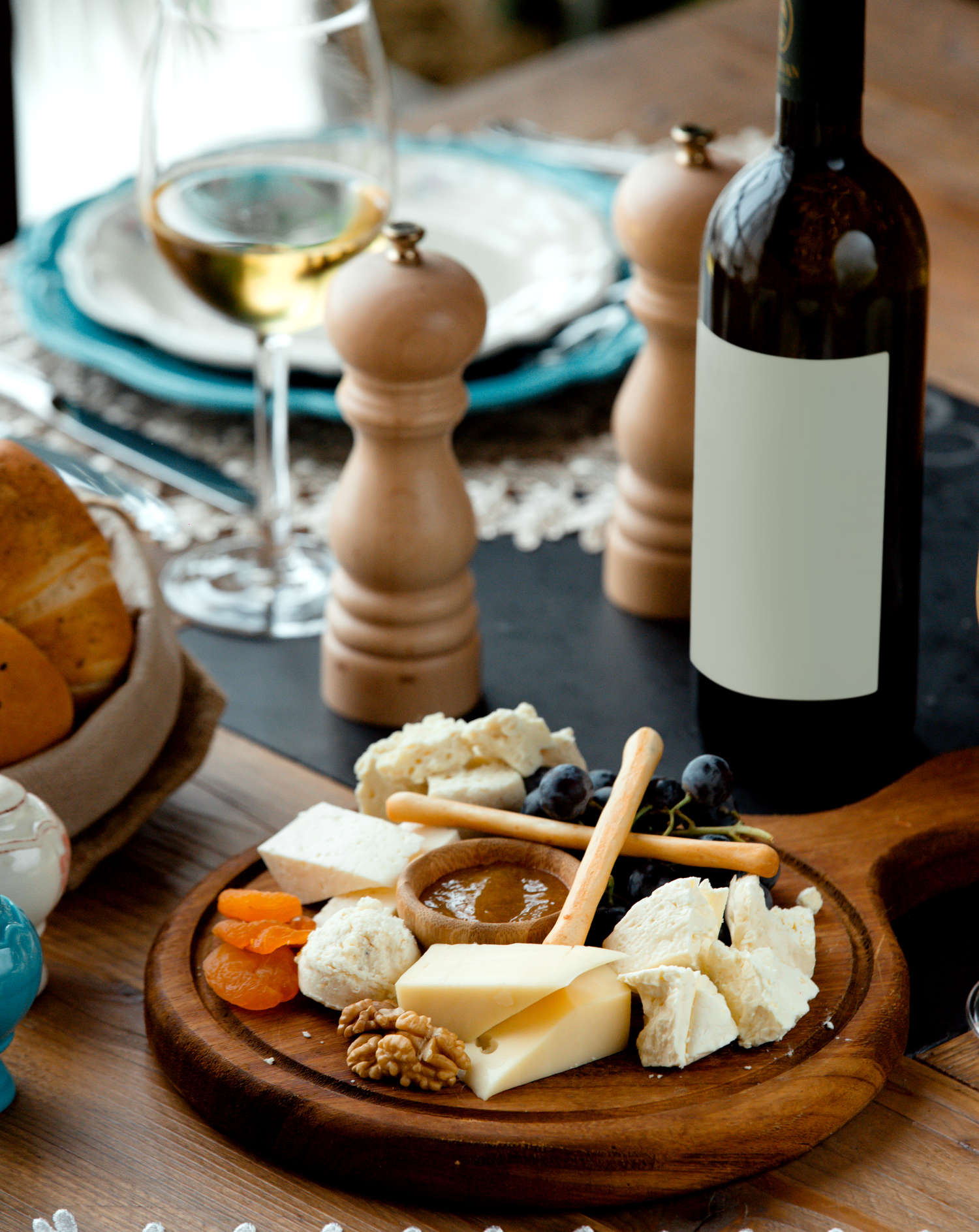
Wine and cheese. Few phrases carry more automatic prestige. You picture a rustic table, a great bottle of red, a generous board of assorted fromages, everyone happy. It’s a beautiful image. It’s also, fairly often, a suboptimal pairing — and understanding why is where the real fun begins.
Wine and cheese pairing is one of the most rewarding things to get right at the table, and one of the most misunderstood. The received wisdom — red wine with cheese, always — turns out to be one of gastronomy’s most persistent myths. White wines, sparkling wines, and even sweet wines routinely outperform the classic red in blind cheese pairings. This guide explains why, gives you the principles to make the call yourself, and walks through every major cheese category with concrete recommendations you can use tonight.
In this article
- 1 Why Wine and Cheese Work Together (The Science Is Genuinely Interesting)
- 2 The Big Myth: Red Wine and Cheese Don’t Always Work
- 3 The Three Principles of Wine and Cheese Pairing
- 4 Wine and Cheese Pairing by Cheese Type
- 4.1 Fresh Cheeses: Goat Cheese, Ricotta, Mozzarella, Feta
- 4.2 Bloomy Rind Cheeses: Brie, Camembert, Brillat-Savarin
- 4.3 Washed-Rind Cheeses: Epoisses, Reblochon, Taleggio, Munster
- 4.4 Semi-Soft Cheeses: Gouda (young), Fontina, Havarti, Raclette
- 4.5 Hard and Aged Cheeses: Cheddar, Comté, Parmesan, Manchego, Gruyère
- 4.6 Blue Cheeses: Roquefort, Gorgonzola, Stilton, Cashel Blue
- 5 The Cheeseboard Problem: One Wine, Many Cheeses
- 6 The 8 Classic Wine and Cheese Pairings Worth Knowing
- 7 Practical Tips for Your Next Wine and Cheese Night
- 8 Frequently Asked Questions About Wine and Cheese Pairing
Why Wine and Cheese Work Together (The Science Is Genuinely Interesting)
The pairing isn’t just cultural tradition. There’s real chemistry happening. Cheese is rich in fat and protein, and when you take a bite, those fats coat your palate and temporarily dull your ability to taste. Wine’s acidity and alcohol cut through that coating, refreshing your palate and making the next bite of cheese taste better. Meanwhile, the cheese softens the wine’s astringency and rounds out its edges. It’s a feedback loop of improvement — each one making the other more enjoyable.
A study conducted at ChemoSens in France found that cheese improved the perception of fruit aromas in wine, reduced the duration of astringency in reds, and heightened the taste of whites. In other words, the pairing is biochemically legitimate. A 2006 study at UC Davis found the reverse caveat: in most cases, wine’s prized characters — fruit, acidity, tannin, oak — became obscured when tasted alongside cheese. The cheese won. Which is useful data for what not to open alongside a great bottle you want to show off.
Both products also share a fundamental process: fermentation. Wine and cheese are both alive with microbial activity, shaped by the same basic forces of time, temperature, and environment. It’s no accident that they’ve been paired in European culture for millennia. The Roman legions carried both. Medieval monks refined both in adjacent cellars. The Renaissance table celebrated both. The pairing has been tested across centuries of eating.
The Big Myth: Red Wine and Cheese Don’t Always Work
Here is the thing most people don’t want to hear: heavy, tannic red wine is actually one of the most difficult partners for most cheeses.
The problem is tannin. Tannins are polyphenols derived from grape skins, seeds, and stems — the compounds that give red wine its grip and drying sensation. When tannins meet the casein proteins and fats in soft, creamy cheeses, they bind to both the cheese and your saliva simultaneously. The result is a chalky, bitter, drying sensation that makes both the wine and the cheese taste worse. Neither shines. Both lose.
There’s also geography to consider. Brie de Meaux comes from the Île-de-France, where historically it would have been consumed with lighter, more acidic wines from nearby regions — not the heavily extracted Cabernets that dominate modern wine lists. In Normandy, where Camembert originates, the traditional pairing is cider: bright acidity, effervescence, gentle fruit. No aggressive tannin. French tradition quietly supports the chemistry.
None of this means red wine and cheese is wrong — it means the right red wine with the right cheese matters enormously. The reds that work best with cheese tend to be lighter, lower in tannin, and higher in acidity: Pinot Noir, Gamay, Dolcetto, Grenache, Loire Cabernet Franc. The big structured reds — Cab Sauv, Barolo, Syrah — need a cheese with enough age, fat, and flavour intensity to withstand them.
The Three Principles of Wine and Cheese Pairing
Before diving into specific pairings, here are the three principles that explain almost every good match. Once you’ve internalised these, you can improvise at a cheese counter without looking anything up.
1. Match Intensity
A delicate wine cannot survive a powerful cheese. A powerful wine will obliterate a delicate cheese. You want both to be playing at roughly the same volume. Fresh mozzarella is soft, mild, and gentle — it belongs with a crisp Pinot Grigio or a light sparkling wine, not a full-bodied Barolo that would swallow it whole. A three-year aged Manchego is dense, salty, and complex — it can hold its own against a structured Rioja Reserva or even a vintage Champagne.
2. What Grows Together, Goes Together
This is the most reliable shortcut in the pairing world. Wines and cheeses from the same region have co-evolved over centuries, often sharing the same soil, the same climate, and the same culinary traditions. The match was worked out by generations of farmers and winemakers before anyone wrote a pairing guide.
The Loire Valley is the classic example. Sancerre — made from Sauvignon Blanc on Kimmeridgian limestone soils — is the canonical match for Crottin de Chavignol, a small goat cheese made by herders grazing their animals on those same soils. The wine’s grassiness and mineral acidity mirror the cheese’s tang; the cheese’s creaminess softens the wine’s sharpness. They grew up together and they understand each other.
More examples: Compté with Vin Jaune from the Jura. Manchego with Amontillado Sherry from Andalusia. Pecorino Romano with a bold Sangiovese from Tuscany. Munster with Alsatian Gewurztraminer. Champagne with Brie de Meaux, both from northern France. When in doubt, go regional.
3. Complement or Contrast
The two main strategies in any pairing. Complement: find flavours in the wine that echo flavours in the cheese. Earthy Pinot Noir with earthy, mushroomy Gruyère. Buttery Chardonnay with buttery Brie. Nutty Amontillado Sherry with nutty aged Manchego. Like recognises like, and the result feels harmonious and complete.
Contrast: find flavours that balance by opposition. Salty, pungent blue cheese with a lusciously sweet Sauternes — the salt amplifies the wine’s sweetness, and the sweetness softens the cheese’s aggression. Tangy, acidic goat cheese with crisp, acidic Sauvignon Blanc — the shared acidity creates brightness rather than clash, and the wine’s fruit fills in what the cheese lacks. Opposites that don’t just tolerate each other; they improve each other.
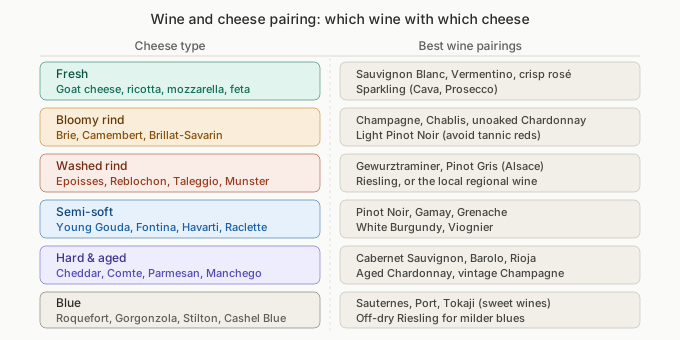
Wine and Cheese Pairing by Cheese Type
The most practical way to approach pairing is by cheese category. There are six main families, and each has a reliable set of wine partners.
Fresh Cheeses: Goat Cheese, Ricotta, Mozzarella, Feta
Fresh cheeses are young, unaged, soft, and often tangy or milky. They’re the lightest category, and they call for the lightest wines — high acidity, crisp, unoaked. Sauvignon Blanc is the textbook answer, especially for goat cheese. The wine’s grassiness and acidity mirror the cheese’s tang, and the pairing has the satisfying click of two pieces that were made for each other. Sancerre and Crottin de Chavignol is the pinnacle.
Other good matches: Vermentino, Picpoul, Muscadet, young Albariño, crisp rosé, Cava or Prosecco. Feta — salty and tangy — also works beautifully with dry Assyrtiko from Santorini, the regional match that stops conversation at dinner tables. Avoid anything oaky, full-bodied, or tannic. The cheese will disappear.
Bloomy Rind Cheeses: Brie, Camembert, Brillat-Savarin
These are the creamy, white-rinded cheeses with mushroomy, buttery interiors that intensify as they ripen. Young, firm brie is relatively mild and works with a wider range of wines. Ripe, runny brie is more pungent and demands something with acidity and finesse to cut through the richness.
Champagne is the famous match, and it earns its reputation. The acidity and bubbles slice through the fat like a palate reset button between every bite, and the yeasty notes of both the wine and the cheese rind resonate with each other. Traditional-method sparkling wines — Crémant, Cava, Franciacorta — work on the same principle. Chablis or unoaked Chardonnay is an excellent alternative. A light, young Pinot Noir can work with a firmer brie. What doesn’t work: big tannic reds. The chemistry is genuinely bad.
Washed-Rind Cheeses: Epoisses, Reblochon, Taleggio, Munster
The “stinky” cheeses. Their orange rinds are formed by washing in brine, beer, or sometimes wine or spirits, which encourages specific bacteria that produce intensely pungent, meaty, gamy aromas. The interior, however, is often milder and creamier than the smell suggests. These are wines’ most difficult partners — and the ones most likely to expose a mismatch.
The regional solution is almost always right: Alsatian whites. Gewurztraminer — with its aromatic intensity, residual sugar, and exotic spice — is powerful enough to stand alongside pungent Munster without being overwhelmed. Pinot Gris from Alsace works for slightly milder washed rinds. For Epoisses, a Burgundy white (the same region) is classic. For Reblochon, try a Roussette de Savoie. For Taleggio, a northern Italian white. The pattern is consistent: when you find yourself facing a truly funky cheese, look for the wine that comes from the same place.
Semi-Soft Cheeses: Gouda (young), Fontina, Havarti, Raclette
This is the most versatile category — mild to medium-flavoured, with a springy or semi-creamy texture that doesn’t fight most wines. Young Gouda is nutty and mild; Fontina is earthy and slightly nutty; Havarti is creamy and buttery; Raclette is melty and rich. None of them is particularly aggressive.
You have more latitude here. Light to medium reds work well — Pinot Noir, Gamay, Grenache, a juicy Barbera, Loire Cabernet Franc. So do medium-bodied whites — white Burgundy, Viognier, Roussanne. Raclette with a Fendant (Swiss Chasselas) is a regional match of rare elegance. When in doubt with a mixed board of semi-soft cheeses, a light, fruit-forward red or a textured white covers most of them adequately.
Hard and Aged Cheeses: Cheddar, Comté, Parmesan, Manchego, Gruyère
This is where red wine finally finds its natural home. Hard, aged cheeses are dense, complex, often salty, and full of the savoury amino acid crystals that develop during long maturation. Their intensity and texture can absorb tannin rather than clash with it — the protein and fat in aged cheese actually bind tannin molecules and carry them away, which is why a full-bodied red that would overwhelm a soft cheese feels completely integrated here.
Cabernet Sauvignon, Rioja Reserva, Barolo, and Bordeaux blends all work beautifully with aged Cheddar, Manchego, or Pecorino Romano. Compté with Vin Jaune from the Jura is a celebrated regional pairing of nutty complexity. Parmesan and Chianti is a classic Italian match. Gruyère with an earthy Pinot Noir is an earthy-on-earthy complement that works every time. Vintage Champagne is also exceptional here — its aged complexity meets the cheese’s complexity, and the acidity still cuts the fat.
Blue Cheeses: Roquefort, Gorgonzola, Stilton, Cashel Blue
Blue cheeses are simultaneously the most challenging and the most rewarding to pair. Their saltiness, sharpness, and sometimes overwhelming pungency make most dry table wines suffer. The great insight here is that salt and sweet is a powerful combination — one of the most reliable contrast pairings in all of gastronomy.
Sauternes and Roquefort is considered by many French gastronomes to be the greatest wine and cheese pairing in existence. The honey-and-botrytis sweetness of Sauternes — with its concentrated apricot, peach, and marmalade — hits the salty, tangy Roquefort with a shock of contrast that elevates both to something greater than either alone. Port and Stilton is the British version: classic for a reason, rich without being cloying, the tawny or LBV Port matching the cheese’s crystalline intensity.
For milder blues — Cashel Blue, Fourme d’Ambert, young Gorgonzola Dolce — an off-dry Riesling often works better than a dessert wine. The acidity keeps everything alive and the residual sugar provides just enough sweetness to balance the salt without overpowering the more delicate cheese.
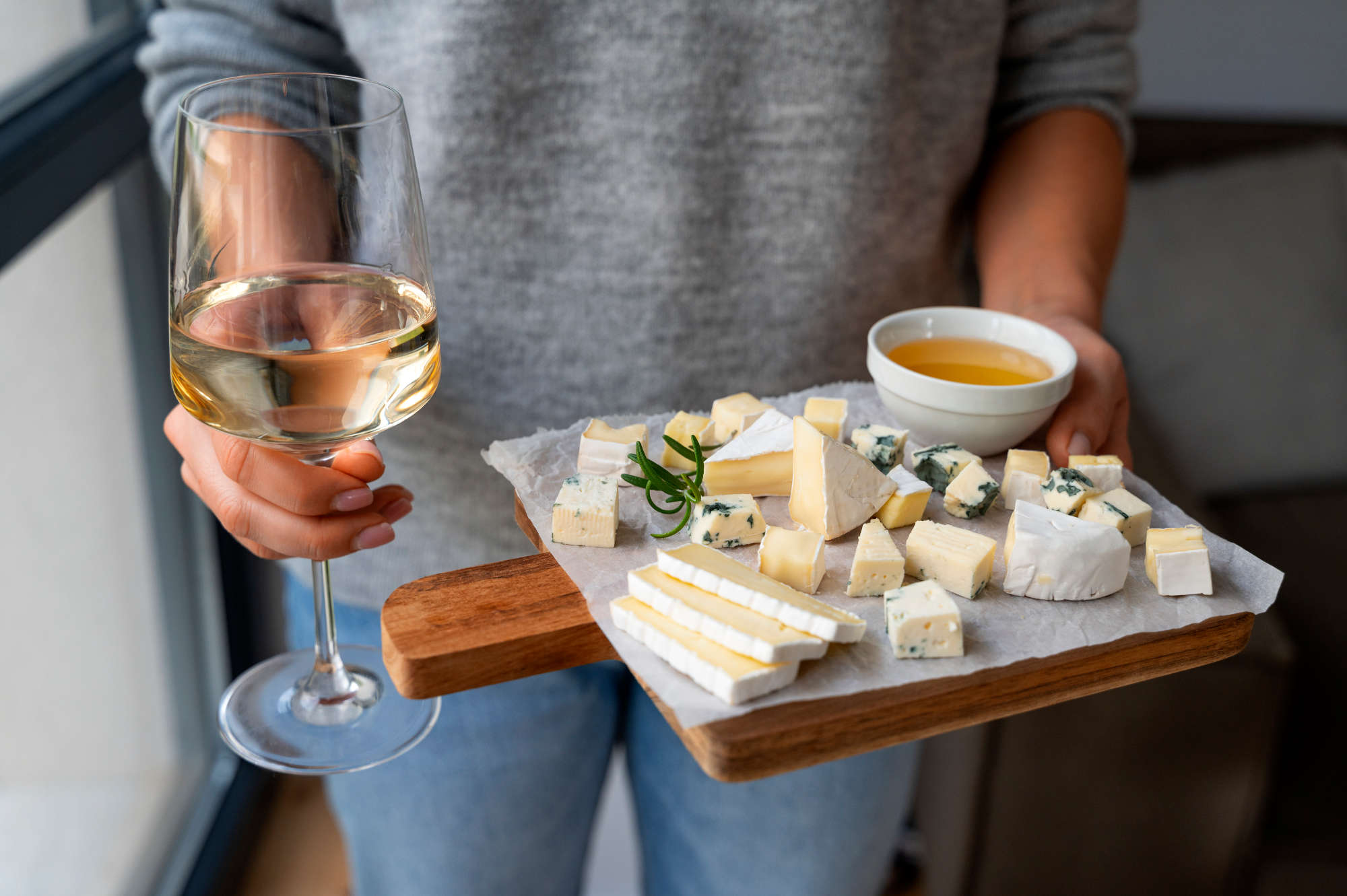
The Cheeseboard Problem: One Wine, Many Cheeses
The cheeseboard is the real-world challenge. You’ve assembled five different cheeses — a fresh goat, a ripe Brie, a hard Comté, a washed-rind Epoisses, and a crumble of Roquefort. Which single wine works across all of them?
The honest answer: no single wine is perfect for all five. The practical answer: a few styles come closest.
- Sparkling wine (Champagne, Crémant, Cava) is the most versatile option across a mixed cheeseboard. The acidity and effervescence work with almost everything except the most intense blues, and the texture cuts through fat across the range.
- Off-dry Riesling or Alsatian Gewurztraminer handles the widest range of cheese intensities, from mild to pungent. Their aromatic weight can stand alongside challenging cheeses that defeat most other wines.
- A medium-bodied, low-tannin red — Malbec, Merlot, Grenache, Cotes du Rhône — is the compromise choice when the table insists on red. It won’t excel with every cheese, but it won’t clash disastrously either. Avoid anything high in tannin.
- Build the board around the wine rather than the other way around. If you’re serving a great Burgundy red, choose cheeses that work with it: harder cheeses, milder aged styles, nothing bloomy or washed-rind.
The 8 Classic Wine and Cheese Pairings Worth Knowing
These are the pairings that have stood the test of time and palates across multiple generations. Each one demonstrates a different principle.
- Champagne + Brie de Meaux. Acidity and fat. The bubbles reset the palate between every bite, and both share a yeasty richness that creates resonance rather than competition.
- Sancerre + Crottin de Chavignol. Regional match and acidity alignment. Limestone soil, Sauvignon Blanc, goat’s milk: the same terroir expressed in two forms.
- Sauternes + Roquefort. Contrast. Sweet and salty locked in one of gastronomy’s most memorable arguments, which both sides win.
- Port + Stilton. Same principle as Sauternes/Roquefort. Rich, nutty tawny Port against crystalline, sharp British blue.
- Cabernet Sauvignon + aged Cheddar. Intensity match. Blackcurrant and tannin against dense, savoury, slightly sharp cheese that absorbs both.
- Gewurztraminer + Munster. Regional and aromatic. The only wine aromatic and powerful enough to take on Alsace’s most pungent cheese, from the same region.
- Pinot Noir + Gruyère. Complementary earthiness. Earthy, mushroomy notes in both, with the cheese’s nuttiness finding an echo in the wine’s forest-floor character.
- Barolo + Parmigiano-Reggiano. Italian classics meeting on equal terms. The cheese’s crystalline saltiness and umami intensity can absorb Barolo’s famous tannins; the wine’s dried-rose aroma plays against the cheese’s complexity.
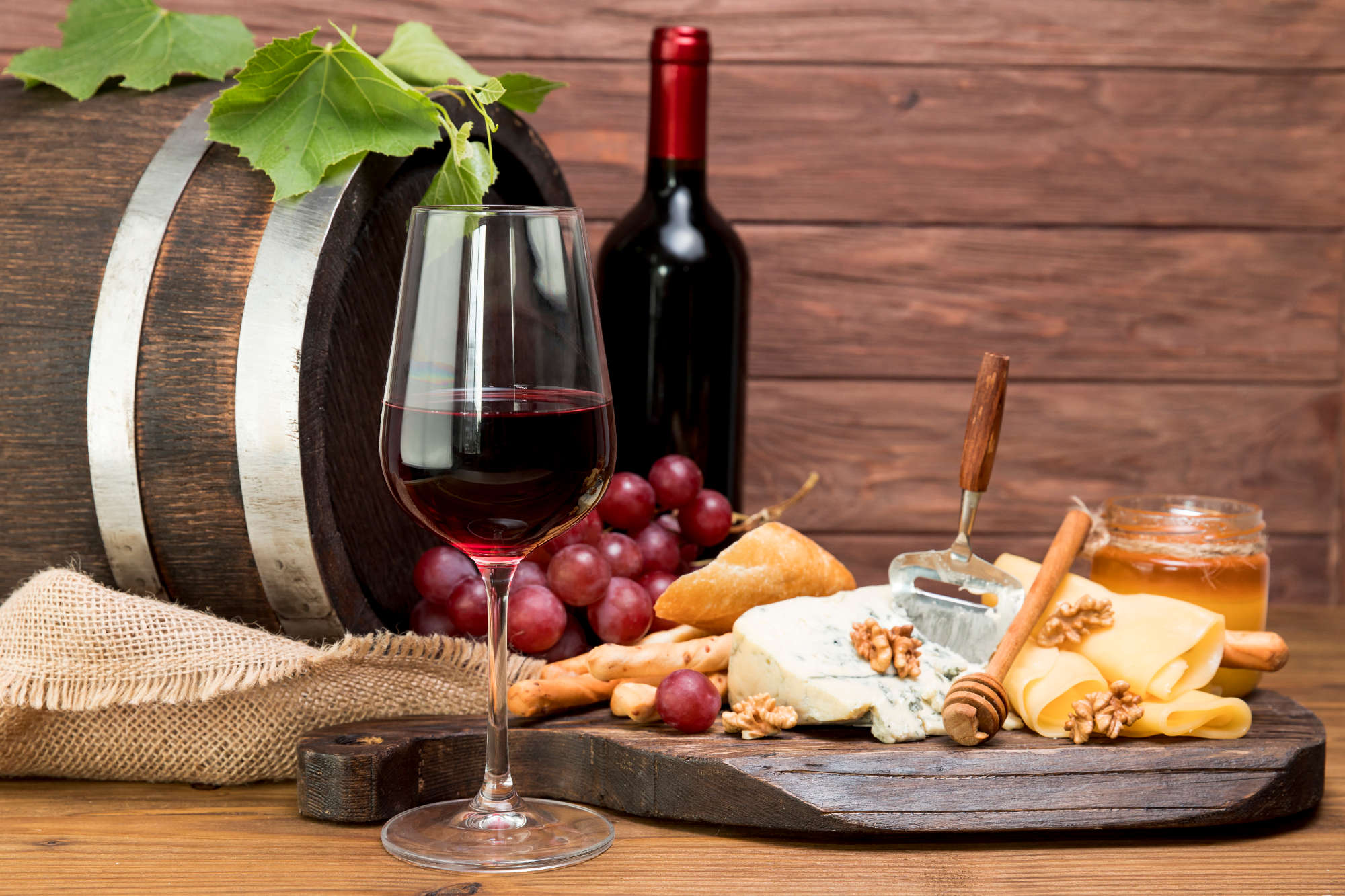
Practical Tips for Your Next Wine and Cheese Night
- Serve cheese at room temperature. Cold cheese loses much of its flavour. Take it out of the fridge 30–60 minutes before serving. This applies to every cheese category.
- Start with lighter wines and milder cheeses. Work your way up in intensity, just as you would with a tasting flight. Fresh cheeses and sparkling or crisp whites at the beginning; aged and blue at the end.
- Don’t neglect white wine. If you only reach for red, you’re cutting yourself off from the best pairings for at least half the cheese world. A good Riesling or Chardonnay will outperform most reds across a mixed board.
- Try the regional principle at least once. When you find a wine and a cheese from the same region, try them together before reading anything about it. The discovery that the pairing works is more memorable than being told it should.
- Use honey and jam strategically. Alongside a cheese board, a small pot of good honey creates a bridge between sweet wines and salty cheeses, softening transitions and opening up pairings that might otherwise clash.
- Bread and crackers matter. Plain, unflavoured crackers or sourdough bread neutralise the palate between wines and cheeses. Flavoured crackers can interfere with both.
For more on how to apply pairing principles beyond cheese, see our guide to food and wine pairing fundamentals. And if you want to practice your palate on these pairings, try incorporating a few into your next blind wine tasting at home.
Frequently Asked Questions About Wine and Cheese Pairing
What are the basic rules for wine and cheese pairing?
Three principles cover most situations. First, match intensity: delicate cheeses with lighter wines, bold cheeses with fuller wines. Second, use the regional shortcut: wines and cheeses from the same region (Sancerre with goat cheese from the Loire, Champagne with Brie from northern France) almost always work. Third, choose between complement (matching similar flavours) or contrast (balancing opposites, like sweet wine with salty blue cheese). Apply these three and you'll make a good choice far more often than not.
Does red wine really go well with cheese?
It depends entirely on the cheese. Heavy, tannic red wines can clash with soft and creamy cheeses because tannins bind to milk proteins and create a bitter, chalky sensation. However, red wine works very well with hard, aged cheeses like Cheddar, Manchego, Parmesan, and Comté — whose density and saltiness can absorb tannin. Lighter reds (Pinot Noir, Gamay, Grenache) are more versatile across cheese types than big structured reds. White wine and sparkling wine pair successfully with a wider range of cheeses.
What wine goes best with a mixed cheeseboard?
Sparkling wine (Champagne, Crémant, Cava) is the most versatile choice across a mixed board. Its acidity and effervescence work with almost all cheese styles. An off-dry Riesling or Alsatian Gewurztraminer covers the widest range from mild to pungent. If you want red, choose a medium-bodied, low-tannin option like Grenache, Malbec, or a Côtes du Rhône rather than a big Cabernet or Barolo.
What wine pairs with blue cheese?
Sweet wines are the classic and most successful partners. Sauternes with Roquefort is considered one of the greatest pairings in gastronomy — the honey-sweet wine balanced against the salty, tangy cheese is a contrast pairing of rare harmony. Port with Stilton is the British equivalent. For milder blues like Cashel Blue or young Gorgonzola Dolce, an off-dry Riesling often works better than a full dessert wine.
What wine goes with goat cheese?
Sauvignon Blanc is the classic and most reliable choice. The wine's crisp acidity, grassiness, and citrus notes echo the tangy, bright character of fresh goat cheese, and the combination has a satisfying click that experienced tasters recognise immediately. Sancerre with Crottin de Chavignol is the most celebrated example — both from the Loire Valley's limestone soils. Crisp rosé and sparkling wines also work well.
Should you serve wine before or after cheese?
In French tradition, cheese is served after the main course and before dessert, meaning the wine from the main course is already on the table. In British and American tradition, cheese is often served at the end of a meal alongside port or dessert wine, or as a standalone course with a selected bottle. For a dedicated wine and cheese tasting, it helps to start with lighter wines and milder cheeses, progressing toward more intense pairings. Always bring cheese to room temperature before serving.