
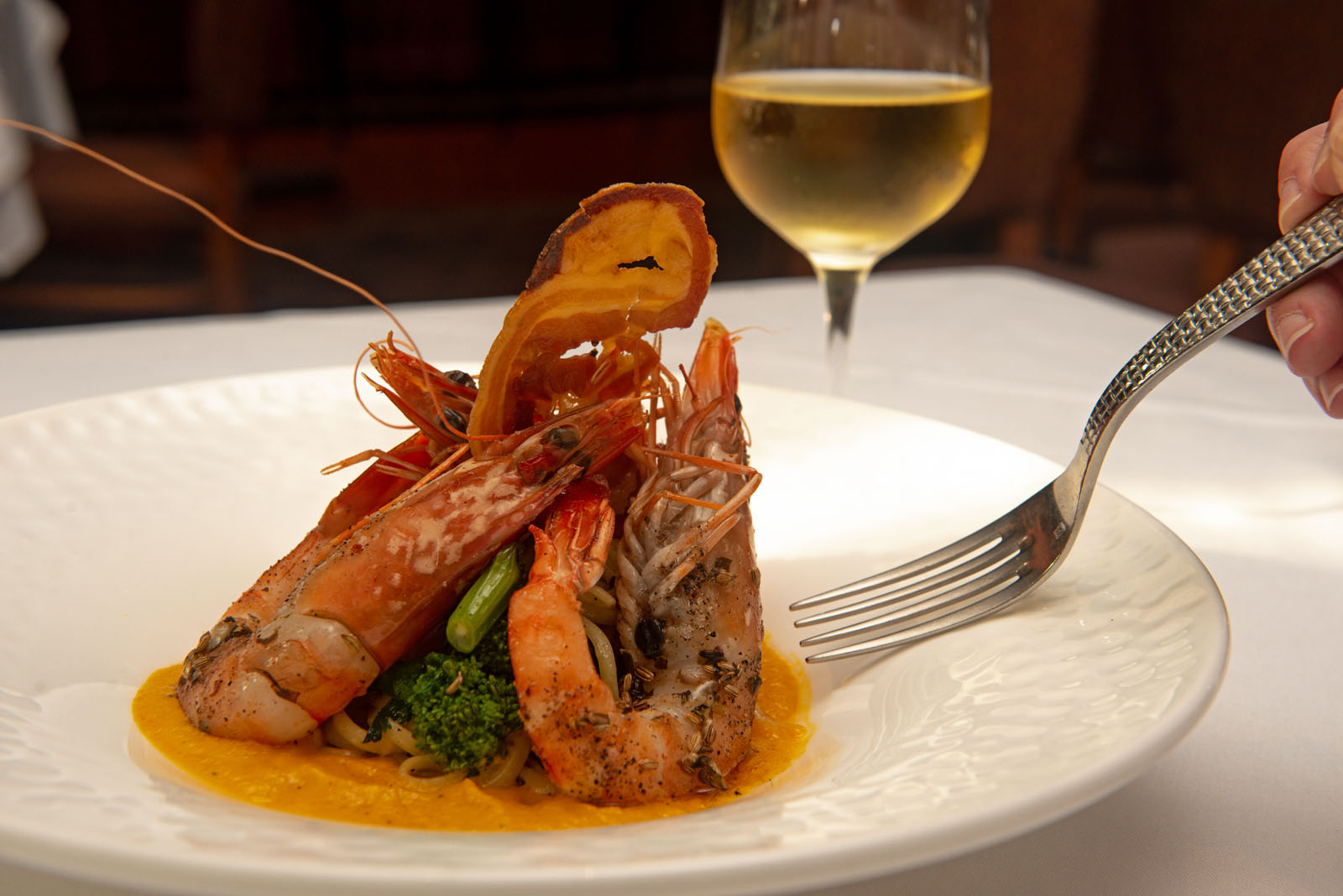
Chardonnay is the world’s most widely planted white grape, and the most common advice you will hear about pairing it with food — “it goes with chicken and fish” — is true but almost useless. Chardonnay can taste like anything from a bone-dry, mineral Chablis to a rich, oaky, butterscotch-inflected California Chardonnay, and those two wines behave very differently at the table. The practical key to Chardonnay food pairing is not the grape, it’s the style: how much oak, how much body, how much acidity. Match those to the dish and the pairing almost always works.
In this article
The Two Styles: Unoaked vs Oaked
Everything in Chardonnay food pairing flows from this distinction.
Unoaked Chardonnay — fermented and aged in stainless steel rather than oak barrels — is lean, crisp, and fruit-forward. Chablis is the benchmark: chalky, mineral, high acid, with green apple and citrus rather than butter or vanilla. Other examples include Macon-Villages, most entry-level white Burgundy, and unoaked New World styles labelled specifically as such. These wines pair like Sauvignon Blanc but with slightly more body and less grassiness. They suit delicate, light-preparation dishes where you want the wine’s acidity to refresh rather than its texture to match.
Oaked Chardonnay — fermented and/or aged in oak barrels, often with malolactic fermentation to convert sharp malic acid into softer lactic acid — is rounder, richer, and more textured. Meursault, good white Burgundy, many Californian and Australian examples in the £18–40 range. These wines carry flavours of vanilla, toast, hazelnut, butter, and cream alongside fruit. They pair differently: they need richness and texture to match, and they handle dishes that would overwhelm an unoaked style.
The simplest pairing rule: pair lighter unoaked Chardonnay with lighter food; pair richer oaked Chardonnay with richer food. The wine’s weight should match the dish’s weight.
Seafood: Chardonnay’s Natural Home
Seafood and Chardonnay is one of white wine’s most reliable partnerships, but the style of wine should match the richness of the preparation.
Unoaked Chardonnay with Seafood
The clean, high-acid profile of unoaked Chardonnay (particularly Chablis) is ideal for the most delicate seafood. Oysters with Chablis is one of the great classic pairings: the wine’s chalk-mineral, saline character echoes the brine of the oyster in a way that feels almost geological. The oysters were grown in Kimmeridgian limestone seabed; the Chablis vines grow in the same limestone. The pairing is a coincidence of terroir.
Sushi and sashimi also suit unoaked Chardonnay well — the wine’s clean citrus and mineral notes complement raw fish without the oak that would compete with the delicate flavours. White fish (sole, plaice, sea bass) simply prepared — steamed, poached, or baked with lemon and butter — is classic unoaked Chardonnay territory. Prawns, scallops in a simple preparation, and clam dishes also work well.
Oaked Chardonnay with Seafood
Richer, fattier, or more strongly flavoured seafood suits oaked Chardonnay’s weight and texture. Lobster is the classic oaked Chardonnay pairing — the wine’s buttery creaminess echoes the richness of the meat, and its acidity cuts through the butter you inevitably serve it with. Lobster bisque, with its concentrated richness and cream, is another natural. Crab — dressed crab, crab cakes, crab linguine with butter — similarly suits a fuller Chardonnay. Salmon, particularly pan-seared or roasted with a butter or cream sauce, is one of the most reliable oaked Chardonnay pairings: the wine’s texture matches the fish’s fatty richness. Smoked fish — smoked haddock, smoked salmon — has enough intensity to sit alongside an oaked style without being overwhelmed.
Poultry, Pork and Meat
Roast chicken is Chardonnay’s most consistent all-round meat pairing, working with both styles but particularly well with oaked. The crispy, caramelised skin of a roast chicken echoes the toasty, nutty character of an oaked Chardonnay; the wine’s acidity cuts through the fat; and the fruit character complements the meat’s mild savouriness. Roast chicken with a cream or butter sauce is even better: this is the version that calls for a Meursault or a good California Chardonnay.
Roast pork — particularly pork tenderloin, pork loin with apple, or slow-roasted shoulder — works well with a lightly oaked Chardonnay. The wine’s fruit character (apple, pear) echoes the pork’s natural sweetness; the acidity handles the fat. Pork with a cream or mustard sauce specifically calls for oaked Chardonnay.
Turkey with traditional trimmings (roast potatoes, stuffing, light gravy) suits a fuller-bodied Chardonnay well. The mild, slightly sweet flavour of turkey meat finds a natural partner in a lightly oaked white Burgundy or a restrained California Chardonnay. Avoid very heavily oaked styles, which can overpower the turkey’s delicacy.
Veal escalopes, particularly with a cream sauce, is the classic French preparation for a fine white Burgundy. The wine’s texture and body match the dish without the tannin of red wine that would overpower the delicate veal.
Pasta and Risotto
Chardonnay is excellent with pasta and risotto, as long as the sauce matches the style. The same principle applies: cream and butter call for oaked Chardonnay; lighter preparations suit unoaked.
- Fettuccine Alfredo / cream pasta — the textbook match for oaked Chardonnay. The wine’s butter and cream notes mirror the sauce; the acidity prevents the dish from feeling heavy.
- Risotto — mushroom risotto with oaked Chardonnay is one of the best combinations in Italian-adjacent food. The earthy, umami mushrooms echo the wine’s savoury oak character; the creamy rice texture matches the wine’s body. Seafood risotto (lobster, scallop, prawn) also suits oaked Chardonnay beautifully.
- Pasta primavera / light olive oil pasta — unoaked Chardonnay. The light, fresh preparation needs a wine with more acidity and less weight.
- Carbonara — a lightly oaked or fuller unoaked Chardonnay handles the egg richness and guanciale fat while the acidity keeps things lively.
- Avoid: heavily tomato-forward pasta with oaked Chardonnay. Tomato’s acidity fights the oak’s vanilla and creates an unpleasant clash. Unoaked Chardonnay handles tomato sauce better.
Cheese
Chardonnay and cheese is a natural combination, but the pairing depends heavily on the cheese type and the wine style.
Oaked Chardonnay suits rich, creamy cow’s milk cheeses: Brie, Camembert, Comté, Gruyère, Havarti, Fontina, triple-cream styles. The wine’s own buttery, toasty character finds a natural echo in these cheeses. Comté alongside a good Burgundy Chardonnay is a particularly fine combination: the cheese’s nuttiness and the wine’s hazelnut and oak notes are almost designed for each other.
Unoaked Chardonnay suits fresher, lighter cheeses: goat’s cheese, mild Mozzarella, Havarti, young Manchego. The wine’s acidity complements the tang and freshness of these cheeses without the oak competing.
Avoid: very sharp aged cheeses (aged Cheddar, Parmigiano with oaked Chardonnay — the sharpness fights the vanilla); pungent washed-rind cheeses (Epoisses, Munster) — these need the sweetness of Riesling to handle the funk; and very assertive blue cheeses, which overpower Chardonnay’s fruit.
Vegetables and Vegetarian Dishes
Chardonnay is one of the better white wines for vegetarian food because its body and texture handle dishes that might overwhelm lighter, more acidic whites.
- Mushroom dishes (mushroom risotto, mushroom pasta, mushroom tart) — earthy mushrooms pair beautifully with oaked Chardonnay’s savoury, nutty character. This combination works at every price level.
- Butternut squash, sweet corn, sweet potato — the slight sweetness of these vegetables finds a complementary partner in oaked Chardonnay’s ripe fruit and mild sweetness from oak. Corn on the cob with butter is a surprisingly good oaked Chardonnay match.
- Asparagus — unoaked Chardonnay. One of the notoriously difficult vegetables for wine, but an unoaked Chablis-style Chardonnay with its mineral and citrus character handles it well.
- Roasted root vegetables — caramelised from roasting, these suit a lightly oaked Chardonnay whose own toasty notes echo the roasting character.
- Avoid: very sharp green vegetables (broccoli rabe, olives, capers, artichoke) with oaked Chardonnay — these acidic, bitter vegetables fight the oak and flatten the wine.
What Not to Pair with Chardonnay
- Spicy food — unlike off-dry Riesling, Chardonnay has no residual sugar to temper heat. Spice overwhelms its delicate fruit and can make the wine taste flat and bitter.
- Heavy tomato sauces with oaked Chardonnay — the acidity of tomato fights the vanilla and oak character, producing an unpleasant metallic clash. Unoaked Chardonnay handles tomato better.
- Very sweet dishes — Chardonnay’s dryness means it tastes sour and thin against sweet food. Do not serve it alongside a fruit tart or sweet dessert.
- Strongly flavoured red meat — Chardonnay lacks the tannin structure to complement lamb, beef, or duck with rich, dark sauces. These need red wine.
- Heavily vinegared or pickled dishes — vinegar’s acidity overwhelms even Chardonnay’s refreshing acidity, producing a flat, soupy impression in the mouth.
Quick Reference: Chardonnay Style to Food
- Unoaked / Chablis style — oysters, sushi, white fish (poached/steamed), prawns, asparagus, goat’s cheese, light pasta, salads
- Lightly oaked / white Burgundy village — roast chicken, salmon, pork, mushroom risotto, Comté, Gruyère, pasta carbonara, veal
- Fully oaked / Meursault or California — lobster, crab, cream sauces, Fettuccine Alfredo, smoked fish, Brie, rich poultry dishes
- Aged white Burgundy — roast pork, mature cheese (Comté, aged Cheddar), truffle dishes, turbot, complex cream sauces
Chardonnay is the backbone of white Burgundy, and understanding how the great wines of Meursault and Puligny-Montrachet relate to food is the best way to see what the grape can do. Our Burgundy wine guide covers the full classification in depth. For a broader look at the principles behind food and wine pairing, see our food and wine pairing guide.
Frequently Asked Questions
What food pairs best with Chardonnay?
The best foods for Chardonnay depend on the wine’s style. Unoaked or lightly oaked Chardonnay pairs best with seafood (oysters, white fish, prawns, sushi), light poultry, asparagus, and fresh cheeses. Fuller, oaked Chardonnay pairs best with richer dishes: lobster with butter, crab, roast chicken with cream sauce, mushroom risotto, Fettuccine Alfredo, smoked salmon, and creamy cheeses like Brie, Gruyère and Comté. The simplest rule: match the weight of the wine to the weight of the dish. Lighter Chardonnay with lighter food; richer Chardonnay with richer food.
Does Chardonnay go with chicken?
Yes — roast chicken is one of Chardonnay’s most consistent and reliable pairings. Both oaked and unoaked styles work, depending on the preparation. Roast chicken with crispy skin suits an oaked Chardonnay, whose toasty, nutty character echoes the caramelised skin. Chicken with a cream or butter sauce calls for a fuller oaked Chardonnay. Poached chicken in a light broth or with lemon and herbs suits a crisper, unoaked style. In general, the richer the chicken preparation, the more body and oak the Chardonnay can handle.
Does Chardonnay go with seafood?
Yes, Chardonnay is one of the best wines for seafood, but match the style to the preparation. Unoaked Chardonnay (Chablis, Macon) suits delicate seafood: oysters, sushi, poached white fish, clams, and scallops in simple preparations. Oaked Chardonnay suits richer seafood: lobster with butter, crab, salmon, smoked haddock, and anything in a cream or butter sauce. The classic pairing is Chablis with oysters (one of wine’s great combinations) or Meursault with lobster bisque.
What cheese goes with Chardonnay?
Oaked Chardonnay pairs best with rich, creamy cow’s milk cheeses: Brie, Camembert, Comté, Gruyère, Havarti, Fontina, and triple-cream styles. Unoaked Chardonnay suits lighter, fresher cheeses: goat’s cheese, fresh Mozzarella, and young Manchego. Avoid very sharp aged cheeses (aged Cheddar, Parmigiano), pungent washed-rind cheeses (Epoisses, Munster), and strong blue cheeses with Chardonnay — these all overwhelm the wine’s fruit character. The colour rule: pale, light-yellow cheeses tend to suit Chardonnay; darker, aged, or strongly flavoured cheeses belong with red wine.
What is the difference between oaked and unoaked Chardonnay for food pairing?
Unoaked Chardonnay is lean, crisp, and fruit-forward, with high acidity and no vanilla or toast character. It suits lighter, fresher dishes: delicate seafood, salads, light pasta, fresh cheeses, and vegetables. Oaked Chardonnay is fuller, creamier, and richer, with vanilla, toast, hazelnut, and butter notes added by barrel aging. It suits richer dishes: lobster, roast chicken, cream sauces, mushroom risotto, crab, and creamy cheeses. Pairing oaked Chardonnay with a delicate dish will overwhelm it; pairing unoaked with a very rich dish will make the wine taste thin. Match the weight of the wine to the weight of the food.
Does Chardonnay go with pasta?
Yes, Chardonnay pairs well with pasta when the sauce matches the wine’s style. Cream-based pasta sauces (Fettuccine Alfredo, carbonara, mushroom cream) suit oaked Chardonnay — the wine’s butter and cream notes echo the sauce while the acidity prevents the dish feeling heavy. Seafood pasta (linguine with clams, scallops, or prawns) suits lighter Chardonnay. Pasta primavera or light olive oil-based pasta suits unoaked Chardonnay. Avoid pairing heavily tomato-forward pasta with oaked Chardonnay — the tomato acidity clashes with the oak’s vanilla character.