Mushrooms and wine have something that most food-and-wine pairings don’t: a shared vocabulary. The earthy, forest-floor, umami-rich character of wild mushrooms is precisely the same aromatic territory that aged red wine explores as it develops in bottle. When a mature Burgundy Pinot Noir releases aromas of damp earth, dried leaves, and truffle, it is using the same flavour language as a bowl of sautéed porcini. This is why the pairing works so consistently and so well: the two are not being combined despite their differences but because of their similarities.
The specifics depend on which mushroom you’re using, how it’s prepared, and what role it plays in the dish. A simple sautéed button mushroom and a porcini-and-truffle pasta are very different pairing propositions. This guide covers both, by variety and by dish.
In this article
Why Mushrooms and Wine Work So Well
Two properties of mushrooms drive the pairing logic. First, umami: mushrooms are one of the richest natural sources of glutamates, the compounds responsible for the fifth taste. Umami in food has a notable effect on wine — it softens the perception of tannins, making tannic reds feel rounder and more integrated. This is why an earthy, high-tannin Barolo that might feel austere alongside most foods becomes approachable and almost silky alongside a rich porcini dish. The mushrooms do the structural work that years in a cellar would otherwise have to accomplish.
Second, shared aromatic compounds: the earthy, forest-floor, slightly animal character of wild mushrooms contains compounds that are chemically similar to those found in aged red wines — particularly in Pinot Noir, Nebbiolo, and aged Grenache. The pairing isn’t just a matter of both tasting “earthy”; they are genuinely resonating at a molecular level. This is rare in food-and-wine pairing, and it explains why the combination produces something greater than the sum of its parts.
Pairings by Mushroom Variety
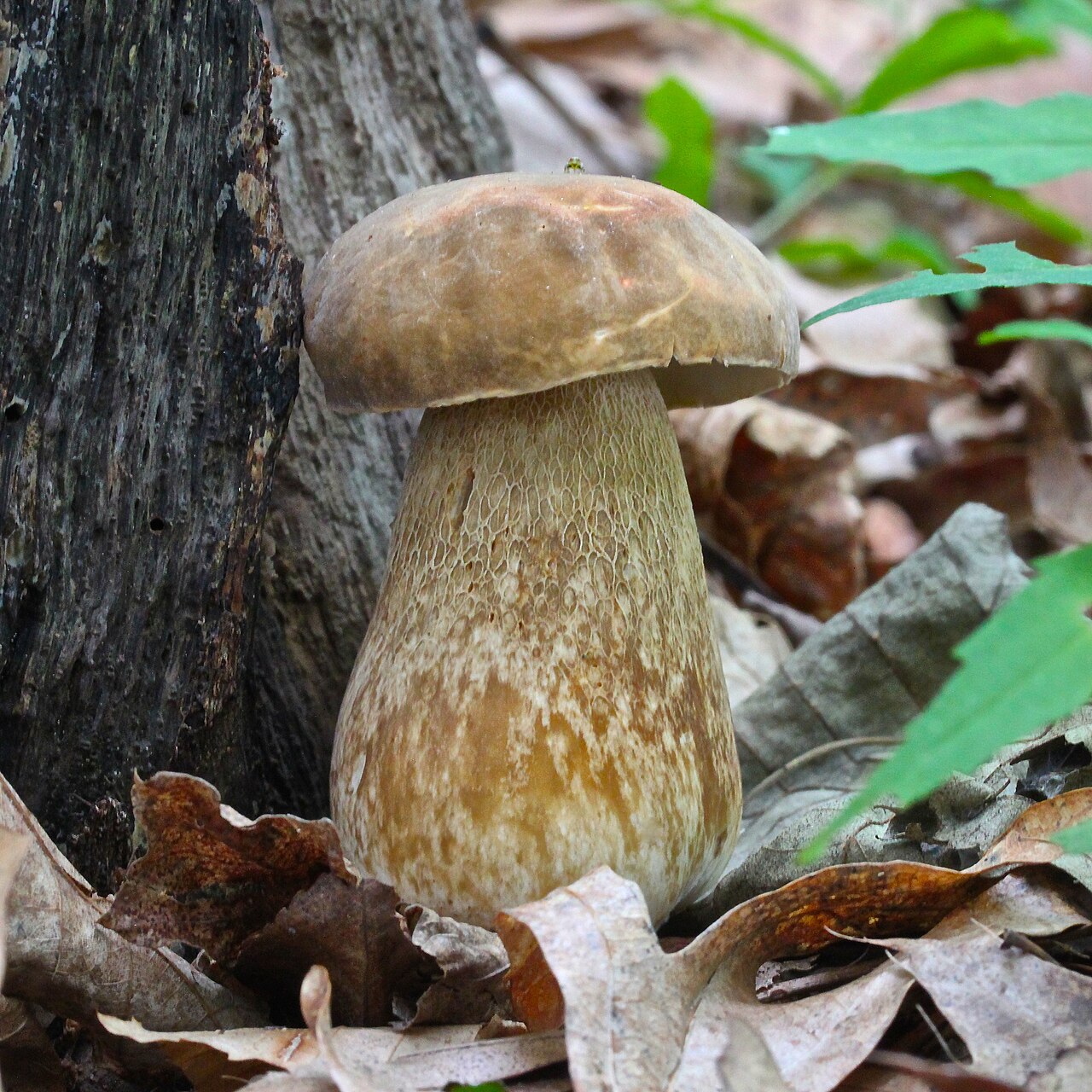
Porcini: The Pinnacle Pairing
Porcini (ceps in France, Steinpilz in Germany) are the most prized edible mushroom in European cuisine, with an intense, nutty, deeply earthy flavour that concentrates dramatically when dried. They are the mushroom that most demands a serious wine, and they reward it.
- Barolo or Barbaresco — the classic Italian match for porcini. Nebbiolo’s extraordinary complexity — dried rose, tar, leather, truffle, iron — finds a natural echo in porcini’s nutty, forest depth. Porcini risotto or porcini pasta with a Barolo is one of Italian cuisine’s great combinations. A younger, more accessible Langhe Nebbiolo delivers much of the same character at a fraction of the price.
- Burgundy Pinot Noir (Premier Cru level) — Gevrey-Chambertin, Nuits-Saint-Georges, or Vosne-Romanée with porcini is the French answer. The wine’s forest-floor and earth notes mirror the mushroom precisely; its acidity handles the richness of the sauce or risotto.
- Aged white Burgundy — a Meursault or Puligny-Montrachet with 5–10 years of age brings oxidative, nutty, complex notes that pair beautifully with porcini in a cream sauce. White wines with bottle-age complexity work where young, oaky whites would struggle.
Truffle: Maximum Complexity
Truffle demands the most complex, most developed wine you can open. Its intensely earthy, musky, almost animal character is overpowering alongside most food and requires a wine with equivalent complexity and age.
- Aged red Burgundy (Grand Cru or Premier Cru) — the benchmark pairing. A Chambertin or Corton-Charlemagne with 10–15 years of age brings dried fruit, leather, and truffle notes that resonate with the ingredient itself. This is expensive territory; a village Burgundy from a great producer with some age is a more realistic entry point.
- Aged Barolo — Nebbiolo is the Italian truffle partner par excellence. The traditional Piedmontese pairing of tagliolini with white truffle and Barolo is arguably the finest mushroom-wine combination in the world.
- Vintage Champagne — an underappreciated truffle pairing. The autolytic complexity (brioche, chalk, hazelnut) of aged Champagne combined with its fine acidity provides a very different but equally rewarding counterpoint to truffle’s earthiness.
Chanterelles: Elegance Over Power
Chanterelles are golden, delicately fruity, and peppery — less intensely earthy than porcini, more elegant. They respond to lighter wines that echo their delicacy rather than overpowering it.
- White Burgundy (Meursault or Puligny-Montrachet) — the outstanding chanterelle pairing, particularly when sautéed in butter. The wine’s hazelnut and cream character echoes both the mushroom and the cooking fat. One of the great white wine and food combinations in French cuisine.
- Village-level Burgundy Pinot Noir (Volnay, Beaune) — lighter than Gevrey, with more red fruit and less earth. Matches chanterelles without overwhelming their more delicate character.
- Viognier or Chenin Blanc — for an aromatic white pairing. Both have the body and richness to handle chanterelles’ peppery complexity, and the floral character creates a complementary rather than matching pairing.
Portobello: The Meat Substitute
Portobello mushrooms are the meatiest of all — dense, juicy, with concentrated umami that makes them effective as a vegetarian substitute for steak. They can handle wines of much greater weight and tannin than most mushroom dishes.
- Cabernet Sauvignon — grilled portobello with a good Cabernet (Napa, Bordeaux, Maipo Valley) is the closest thing in mushroom cooking to the classic steak-and-Cab pairing. The wine’s blackcurrant, cedar, and firm tannins match the mushroom’s meaty density.
- Syrah / Shiraz — a Northern Rhône Syrah brings smoke, pepper, and olive character that echoes a grilled portobello beautifully. Australian Shiraz adds fruit generosity that also works well alongside the mushroom’s richness.
- Full-bodied Merlot — slightly softer than Cabernet but with enough plum and dark fruit to match portobello’s intensity. A good Pomerol or Washington State Merlot are both excellent choices.
Shiitake and Cremini: The Everyday Pairing
Shiitake have a smoky, umami-rich depth; cremini (baby portobello) are nuttier and milder. Both are medium-intensity mushrooms that suit medium-bodied wines — enough presence to match the earthiness without the power needed for porcini or portobello.
- Pinot Noir (New Zealand, Oregon, or lighter Burgundy) — the most versatile red for this category. Its red fruit, gentle earthiness, and soft tannins sit comfortably alongside shiitake and cremini in any preparation.
- Merlot — black cherry, plum, and subtle earth. A good everyday match for cremini-based dishes, pasta, and sautées.
- Oaked Chardonnay — for shiitake in cream sauce or butter. The wine’s hazelnut and cream character complements the mushrooms’ nutty-buttery quality when cooked.
Oyster, Enoki and Button: Light Touch
The most delicate mushrooms — mild, subtle, sometimes slightly briny (oyster) or grassy (enoki) — suit lighter wines that enhance rather than overwhelm their gentle character.
- Unoaked or lightly oaked Chardonnay — clean acidity and restrained fruit are perfect alongside these subtler varieties.
- Pinot Grigio (Italian style) — neutral enough to let the mushroom’s delicacy show, with just enough acidity to refresh the palate.
- Sauvignon Blanc — for oyster mushrooms with herbs or in Asian preparations. The herbal, citrus character provides a bright counterpoint.
Pairings by Dish
Mushroom Risotto
Mushroom risotto is the single most discussed mushroom-wine pairing for good reason: the combination of earthy mushrooms, starchy rice, Parmesan, and butter creates a rich, complex dish that rewards a correspondingly complex wine.
Pinot Noir is the outstanding match: its earthiness echoes the mushrooms, its acidity cuts through the rice starchiness and butter, and its moderate tannins do not overwhelm the delicacy of the dish. A village Burgundy, an Oregon Pinot, or a New Zealand Pinot from a cooler site are all excellent. For porcini risotto specifically, moving up to a Langhe Nebbiolo or a light Barbaresco elevates the pairing further.
White Burgundy (Meursault or Puligny-Montrachet) is the finest white wine option, particularly for lighter mushroom risottos where the focus is on chanterelles or oyster mushrooms rather than porcini. The wine’s creamy, nutty texture mirrors the risotto’s own character.
Mushroom Pasta and Tagliatelle
For porcini pasta or tagliatelle with a rich mushroom sauce, Barolo is the prestige answer and a Langhe Nebbiolo is the everyday alternative. The earthiness and structure of Nebbiolo-based wines is a definitive match for the dish’s depth. Sangiovese (Chianti Classico Riserva) is an excellent and more accessible option — its acidity handles the tomato if present, and its savoury cherry character complements the mushrooms without competing.
Mushrooms on Toast and Simple Preparations
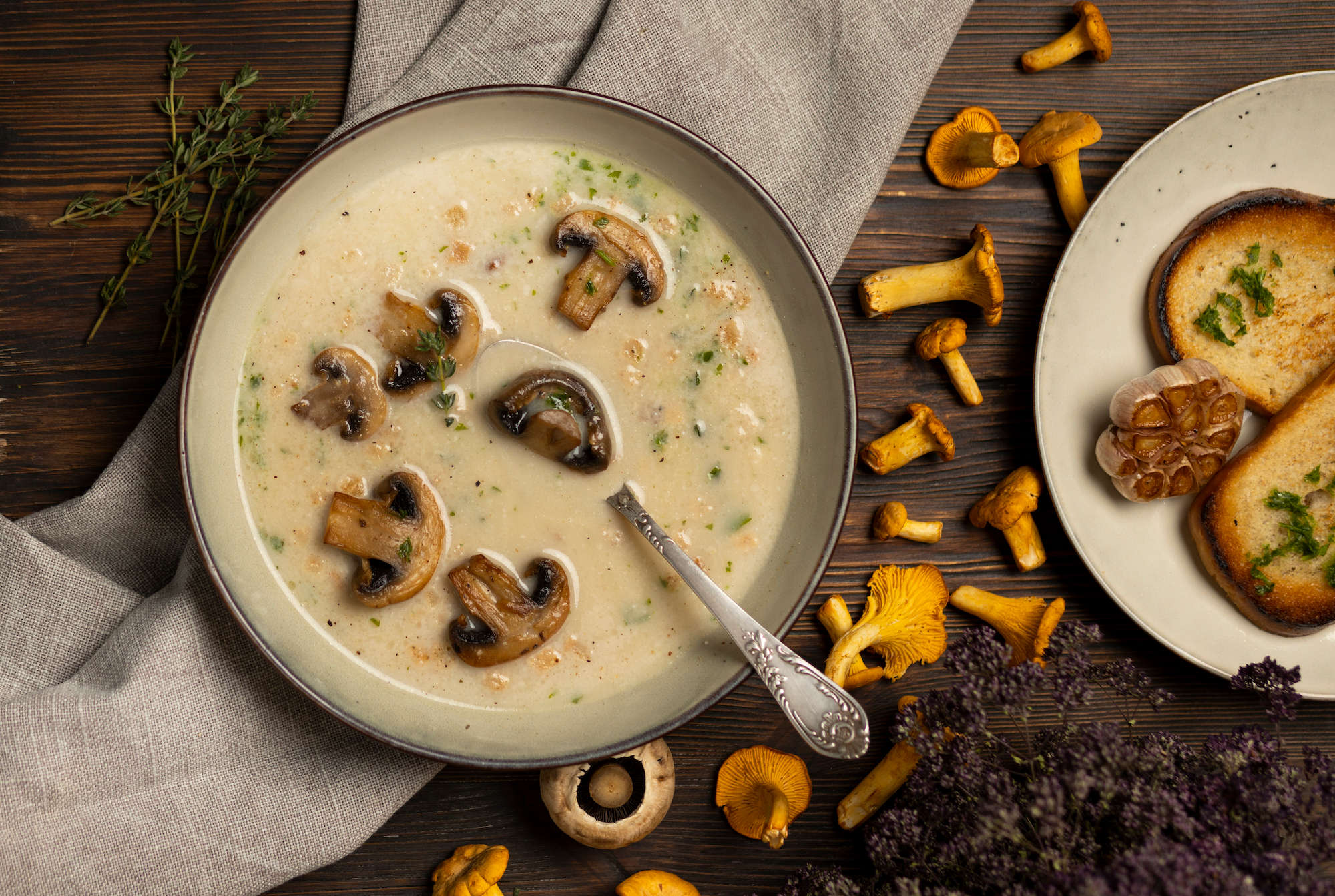
Simple preparations — sautéed mushrooms on sourdough toast, mushroom soup, a mushroom omelette — call for modest wines that do not overpower the dish. A village-level Pinot Noir (Bourgogne Rouge, Oregon Willamette) or an unoaked Chardonnay serve best here. The dish’s simplicity should guide you toward the lighter end of each variety’s spectrum.
Mushrooms in Meat Dishes
When mushrooms appear alongside or within a meat dish — beef bourguignon, chicken with mushroom sauce, veal marsala, steak with porcini butter — the wine pairing pivots toward the meat rather than the mushroom alone. The mushroom adds umami and earthiness that reinforces an earthy red; it rarely changes the fundamental direction of the pairing. Beef-and-mushroom dishes suit Cabernet Sauvignon, Merlot, or Syrah. Chicken-and-mushroom dishes suit Pinot Noir or a lighter Chardonnay. Veal marsala — with its sweet-savoury Marsala wine sauce and mushrooms — suits a medium Chardonnay or a light Pinot Noir.
Asian Mushroom Dishes
Shiitake mushrooms in soy-sauce based Asian cooking — stir-fries, ramen, Japanese donburi, Chinese braised dishes — create a sweet-salty-umami environment that calls for different wines than European mushroom preparations.
- Off-dry Riesling — the versatile Asian food pairing. The residual sugar tempers the soy’s saltiness; the high acidity cuts through the richness; the aromatic complexity echoes the dish’s own aromatics.
- Pinot Noir — a lighter, slightly chilled Pinot Noir handles soy-based mushroom dishes better than most reds because its low tannin does not clash with the salt, and its red fruit provides a complementary contrast.
- Blanc de Noirs Champagne — for a more adventurous pairing, the savoury, umami-inflected quality of a Pinot Noir-based Champagne echoes the soy character and provides refreshing acidity.
Quick Reference
- Porcini (risotto, pasta) — Barolo, Barbaresco, Langhe Nebbiolo, aged Burgundy Pinot Noir, mature white Burgundy
- Truffle — aged Grand Cru Burgundy, aged Barolo, vintage Champagne
- Chanterelles — Meursault, white Burgundy, village Pinot Noir (Volnay, Beaune), Viognier
- Portobello (grilled) — Cabernet Sauvignon, Syrah, full-bodied Merlot
- Shiitake / cremini — Pinot Noir, Merlot, oaked Chardonnay (cream sauce)
- Oyster / enoki / button — unoaked Chardonnay, Pinot Grigio, Sauvignon Blanc
- Mushroom risotto — Pinot Noir, white Burgundy, Langhe Nebbiolo
- Mushroom pasta — Barolo, Chianti Classico Riserva, Langhe Nebbiolo
- Asian mushroom dishes (soy) — off-dry Riesling, Pinot Noir, Blanc de Noirs Champagne
- Mushrooms in beef dishes — Cabernet Sauvignon, Merlot, Syrah
For more on why Pinot Noir is the outstanding mushroom wine — and the earthy complexity that makes it one of the great food wines — see our Burgundy wine guide. For an overview of how umami and intensity matching work across food and wine pairing more broadly, our food and wine pairing guide covers the underlying principles.
Frequently Asked Questions
What is the best wine to pair with mushrooms?
Pinot Noir is the most versatile and consistently excellent wine for mushroom dishes. Its earthy, forest-floor character shares the same aromatic vocabulary as mushrooms, its moderate tannins are softened by mushrooms’ umami, and it works across a wide range of varieties from shiitake to porcini. For the most prized wild mushrooms (porcini, truffle), move up to Nebbiolo (Barolo, Barbaresco) or aged Burgundy. For delicate mushrooms like chanterelles in butter, white Burgundy (Meursault, Puligny-Montrachet) is the finest white wine match.
What wine goes with mushroom risotto?
Pinot Noir is the outstanding match for mushroom risotto. The wine’s earthy depth echoes the mushrooms, its acidity cuts through the rice starch and butter, and its gentle tannins don’t overwhelm the dish. A village Burgundy, Oregon Pinot Noir, or New Zealand Pinot are all excellent. For porcini risotto, a Langhe Nebbiolo or light Barbaresco elevates the pairing further. White Burgundy (Meursault) is the best white wine option, particularly for lighter, butter-forward mushroom risottos where chanterelles or oyster mushrooms are used rather than porcini.
Does red or white wine go better with mushrooms?
Red wine is generally better with earthy, intense mushroom varieties (porcini, portobello, shiitake) because its earthiness echoes the mushroom’s own character and its tannins are softened by the umami. White wine is better for delicate mushrooms (chanterelles, oyster, enoki) and for cream-based mushroom dishes where the wine’s texture needs to match the sauce’s richness. Meursault or other oaked Chardonnay with chanterelles in butter is one of the great white wine-mushroom pairings. In practice, Pinot Noir sits between the two extremes and works with almost every mushroom variety.
What wine pairs with porcini mushrooms?
Barolo and Barbaresco are the classic porcini partners — Nebbiolo’s extraordinary complexity (dried rose, tar, leather, truffle, iron) resonates with porcini’s intense, nutty, earthy depth. The pairing is a cornerstone of Piedmontese cuisine. Aged Burgundy Pinot Noir at Premier Cru level (Gevrey-Chambertin, Nuits-Saint-Georges) is the French equivalent and equally excellent. For a more accessible option, Langhe Nebbiolo delivers much of the same earthy, complex character at a fraction of the price. Mature white Burgundy (Meursault with 5+ years of age) works beautifully with porcini in cream sauce.
Why does Pinot Noir pair so well with mushrooms?
Pinot Noir pairs well with mushrooms for two connected reasons. First, both share the same aromatic vocabulary: the earthy, forest-floor, damp-earth character that develops in aged Pinot Noir is chemically similar to the aroma compounds in wild mushrooms. Second, mushrooms’ umami content softens Pinot Noir’s tannins, making the wine taste rounder and more integrated alongside mushroom dishes than it would alongside most other foods. This combination of aromatic resonance and structural softening makes Pinot Noir the most reliable and most consistently excellent wine for mushroom dishes at every level.
What wine goes with truffle?
Truffle demands the most complex wine you can open. Aged red Burgundy (Grand Cru or Premier Cru, with 10+ years of age) is the pinnacle — the wine’s own developed truffle, dried fruit, and forest notes harmonise with the ingredient at the highest level. Aged Barolo is the Italian equivalent and equally extraordinary, particularly with the classic Piedmontese preparation of tagliolini with white truffle. Vintage Champagne is an unexpected but wonderful truffle partner: the autolytic complexity and fine acidity provide a different but equally compelling counterpoint to truffle’s earthiness.